 WOWOW Faucets
Quick Answer: Faucet Adapter Compatibility with Regular Sink Faucets
Most faucet adapters are designed to fit standard sink faucet aerator threads, which are usually 15/16-27 male or 55/64-27 female in the US. Before buying an adapter in 2026, remove the aerator and check its thread size, because not every regular sink faucet uses the same size.
How do I know if a faucet adapter will fit my sink faucet?
Remove the existing aerator and measure the thread diameter and pitch, or compare it with the adapter’s listed thread size. Most modern kitchen and bathroom faucets use one of two common aerator thread sizes.
Are faucet adapters universal?
Not completely. Many are universal only across the most common aerator sizes, so a size-specific model or a small set of thread adapters is safer for older or unusual faucets.
Here is the complete, publish-ready HTML article:
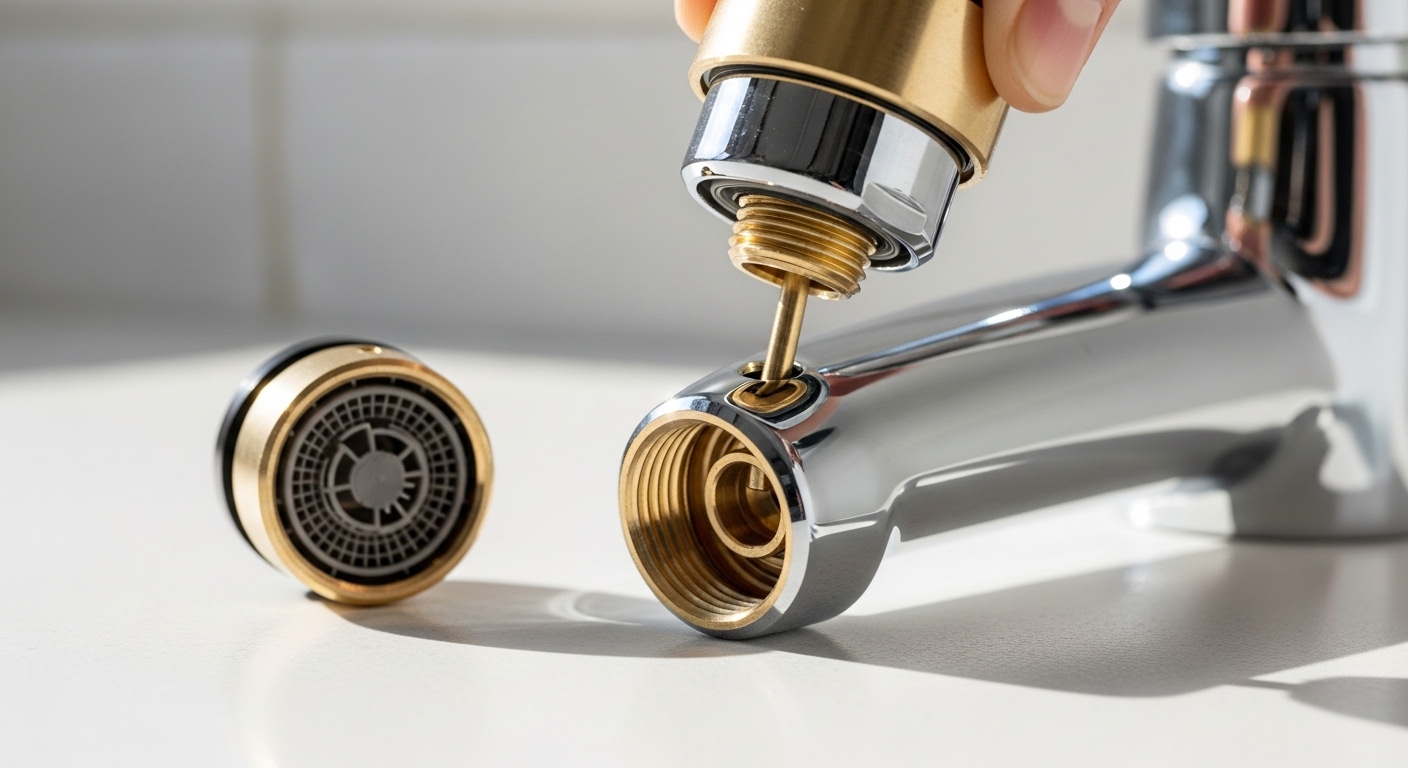
If you’ve ever tried to hook a portable dishwasher, a countertop water filter, or a handheld sprayer to your sink and found nothing fit, a faucet adapter head is the missing piece. It’s a cheap, unglamorous little brass or plastic fitting, but getting the thread type and size wrong is the number-one reason people end up returning three of them before one finally seals. This guide walks you through exactly how to identify what you have, how to pick the right adapter, and how to install it without leaks — in plain language, with the real numbers you’ll see printed on the packaging.
What does a faucet adapter head actually do?
A faucet adapter head converts the threads at the end of your faucet into a different thread type or size so another device can attach to it. That’s the whole job. Most kitchen faucets end in a removable aerator — the little mesh screen that mixes air into the stream. You unscrew that aerator, and the adapter takes its place, giving you a new connection point.
Depending on the model, one adapter can let you:
- Connect a portable or countertop dishwasher’s quick-connect coupler.
- Screw on a countertop or under-faucet water filter.
- Attach a handheld sprayer or hose for washing hair, pets, or produce.
- Add a standard 3/4″ garden-hose thread (GHT) so you can run a hose to a fish tank, cooler, or outdoor plant.
- Swap a worn or non-standard aerator thread back to a common size.
The key thing to understand: an adapter head only changes the connection. It doesn’t boost pressure or filter water on its own — it’s the go-between. If your goal is better flow or a softer stream, that’s the aerator’s job, and it’s worth understanding what a faucet aerator for a kitchen sink actually does before you buy anything, because the two parts share the same threads and people constantly confuse them.
How do I know if my faucet has male or female threads?
Look at where the aerator threads sit: if the threads are on the outside of the spout tip, your faucet is male-threaded; if the threads are hidden inside the spout, it’s female-threaded. This single distinction decides which adapter you buy, so it’s worth 30 seconds to check properly.
Here’s the reliable method. Unscrew the aerator by hand (turn it toward you / counterclockwise as you face the spout). If it’s stuck, wrap it in a cloth and use pliers gently. Once it’s off, look at the faucet body:
- Threads visible on the outer rim of the spout → male faucet. You need a female-threaded adapter, meaning the adapter threads onto the outside. Standard size: 15/16″-27.
- Threads recessed inside the spout, smooth outside → female faucet. You need a male-threaded adapter that screws up into the spout. Standard size: 55/64″-27.
That “-27″ is the thread pitch: 27 threads per inch, which is the near-universal standard on U.S. residential faucets. Bathroom faucets often use a smaller size (commonly 15/16″-27 male or 13/16”-27, and some use metric), so don’t assume a kitchen adapter will fit a bathroom sink. When in doubt, bring the old aerator to the store or measure across the threads with calipers.
What are the common faucet adapter head types and sizes?
The most common faucet adapter heads convert your standard kitchen aerator thread to garden-hose thread (3/4″ GHT), to a quick-connect coupler, or simply from male to female (or vice versa). Below is a quick reference for the sizes and jobs you’ll actually run into.
| Adapter type | Fits faucet thread | Converts to | Best for |
|---|---|---|---|
| Male-to-GHT | 15/16″-27 male | 3/4″ garden hose thread | Dishwashers, hoses, aquariums |
| Female-to-GHT | 55/64″-27 female | 3/4″ garden hose thread | Hidden-thread spouts, hoses |
| Dual-thread (multi-fit) | Both 15/16″ male & 55/64″ female | 3/4″ GHT or 55/64″ female | When you’re unsure which you have |
| Aerator swap adapter | Non-standard/metric | Standard 15/16″-27 | Imported or older faucets |
| Quick-connect / snap coupler | 15/16″-27 male | Push-on filter or sprayer | Countertop filters, tool-free swaps |
If you genuinely don’t want to measure, a dual-thread (multi-fit) adapter is the safest single purchase — it has male threads on the outside and female threads on the inside of the same fitting, so it grabs whichever thread your faucet presents. It’s the one I recommend to anyone buying blind online.
What’s the difference between a faucet adapter head and a bathtub faucet adapter?
A faucet adapter head threads onto a sink faucet’s aerator, while a bathtub faucet adapter usually slips or clamps onto a tub spout that has no threads at all. They solve similar problems — adding a hose or sprayer — but they mount completely differently, so they are not interchangeable.
Tub spouts are trickier because many have a smooth, unthreaded nose or an internal diverter, which is why tub adapters often use a slip-fit rubber gasket or a set screw instead of clean threads. If your project is actually in the bathroom — say, adding a handheld sprayer to your bathtub — read our dedicated guide on what a bathtub faucet adapter is and which one you need, and if you specifically want a shower wand off the tub, our breakdown of the best handheld shower head that connects to a tub faucet covers the connection types in detail. Using a sink-style adapter head on a tub spout is the classic mistake that leads to a sprayer flying off under pressure.
Brass or plastic — which faucet adapter head lasts longer?
For anything you’ll leave connected long-term or use under full pressure, buy a solid brass faucet adapter head; plastic is fine for light, occasional, indoor use but cracks at the threads over time, especially with hot water and repeated tightening.
Here’s the honest trade-off. Brass (ideally lead-free brass that meets NSF/ANSI 372 for drinking water) resists cross-threading, handles heat, and takes a firm wrench-tighten without deforming. Plastic and nylon adapters are lighter, cheaper, won’t scratch a finish, and are perfectly adequate for a countertop filter you connect for a few minutes a day. But the threads are the weak point — over-tighten a plastic adapter once and it can hairline crack, and you won’t notice until it’s dripping under the cabinet.
A few buying tips that save headaches:
- Match the finish only if it’s visible. Most adapters are hidden behind a filter or hose, so chrome vs. brushed nickel rarely matters — buy for durability, not looks.
- Check for a captive rubber washer. The seal, not the metal, stops leaks. A missing or hardened washer is why a “correct size” adapter still drips.
- Confirm the far-end thread, too. Garden-hose thread (3/4″ GHT) is coarse; a dishwasher coupler needs GHT, but a specific filter may need its own proprietary fitting. Read both ends of the spec.
- Look for a warranty and material callout. Reputable fittings state the alloy and offer at least a limited warranty; no-name adapters that hide the material are a gamble.
How do you install a faucet adapter head without leaks?
Installing a faucet adapter head takes about five minutes and no special tools: unscrew the old aerator, seat the correct adapter with its washer, hand-tighten plus a quarter turn, and test for drips. The only real skill is not over-tightening and not cross-threading.
Step by step:
- Remove the aerator. Turn it counterclockwise by hand. Stuck? Wrap it in a rubber band or cloth for grip, or use cloth-padded pliers so you don’t scar the finish. Set the old aerator aside — you’ll want it back if you ever remove the adapter.
- Check the washer. Make sure the new adapter has its rubber or fiber washer seated flat inside. This is what seals; the threads just hold pressure.
- Start the threads by hand. Line the adapter up straight and turn it clockwise with your fingers first. If it resists in the first turn, back off — you’re cross-threading. It should spin on smoothly.
- Snug it down. Hand-tight, then about a quarter turn with pliers or a wrench — no more. Brass needs less force than you think.
- Test. Run the water, then run a dry finger around the joint. A slow bead means the washer isn’t seated or the size is slightly off. If it weeps even when tight, you likely have the wrong thread type, not a defective part.
One extra tip: if you’re connecting to a supply-side fitting rather than the spout — say you’re plumbing in a filter under the sink — you may run into hard copper or elbows, and it helps to understand what a copper tap elbow is and whether you need one before you start cutting or fitting anything. For the spout-side adapter head, though, no plumbing skills are required at all.
Why does my faucet adapter head keep leaking or won’t fit?
Nine times out of ten a leaking or ill-fitting faucet adapter head is a thread-type mismatch — a male adapter forced onto a male faucet — or a missing, flattened washer, not a defective product. Before you return it, run through this checklist.
- Wrong gender. If it won’t thread more than a turn or spins loosely, you have male-on-male or female-on-female. Re-check whether your faucet threads are inside or outside.
- Wrong size. A 55/64″ adapter will start on a 15/16″ thread and then bind or leak. The two feel close but aren’t compatible.
- No washer or a hard washer. Replace the rubber washer; they’re sold in cheap assortment packs and fix most slow drips instantly.
- Cross-threaded. If the first turn felt gritty, you may have chewed the threads. Back all the way off and restart perfectly straight.
- Debris in the threads. Mineral scale or old plumber’s tape can hold the joint open a hair. Wipe both threads clean and reseat.
Avoid the temptation to fix a leak with brute force — that’s how you crack a plastic adapter or strip a soft-brass faucet tip. If the sizes are truly right and it still weeps, add one wrap of PTFE (plumber’s) tape to the faucet threads, but keep tape off the washer face, since the washer needs clean contact to seal.
FAQ
Are all faucet adapter heads the same size?
No. Standard U.S. kitchen faucets use 15/16″-27 male or 55/64″-27 female threads, but bathroom faucets, imported models, and some laundry fixtures use smaller or metric threads. Always confirm your thread type and diameter — or buy a dual-thread multi-fit adapter — before assuming any adapter will fit.
Can I connect a garden hose to my kitchen faucet with an adapter head?
Yes. A male-to-GHT (garden hose thread) faucet adapter head converts your 15/16″-27 aerator threads to standard 3/4″ garden hose thread, letting you attach a hose for filling aquariums, coolers, or watering plants. Just don’t leave a hose pressurized on the faucet for long periods, as household spouts aren’t built for sustained hose loads.
Will a faucet adapter head reduce my water pressure?
On its own, no — an adapter is just a connector and doesn’t restrict flow. If you notice weaker flow after installing one, the culprit is usually the aerator or device you attached, or debris caught in the threads. If pressure problems show up elsewhere, like your shower, our guide on why you’re getting low pressure out of a shower head walks through the real causes.
Do faucet adapter heads work on pull-down or pull-out spray faucets?
Usually not directly. Pull-down and pull-out spray heads have their own internal spray fitting and often no standard external aerator thread, so a typical adapter head has nothing to grab. If you have a spray faucet and need extra connections, you generally need a diverter or a faucet designed with an accessory port rather than a screw-on adapter.
Is a brass or plastic faucet adapter head better for a portable dishwasher?
Brass is better for a portable dishwasher because the connection stays under pressure through full wash cycles and repeated connect/disconnect. Lead-free brass resists thread wear and cracking, while plastic can fatigue over time. If you only connect occasionally and handle it gently, a quality plastic adapter can work, but brass is the safer long-term choice.
How do I know if I need a male or female adapter?
Unscrew your aerator and look at the spout tip. Threads on the outside of the spout mean it’s a male faucet, so you need a female-threaded adapter that screws over it. Threads hidden inside the spout mean it’s female, so you need a male-threaded adapter that screws up into it. If you can’t tell, a dual-thread adapter covers both.
The bottom line: which faucet adapter head should you buy?
For most kitchens, buy a lead-free brass, dual-thread faucet adapter head with a fresh rubber washer — it fits both common thread types, survives hot water and repeated use, and costs only a couple of dollars more than flimsy plastic. Measure only if you’re connecting something unusual; otherwise the multi-fit adapter removes the guesswork entirely. Match the far end (garden hose thread vs. a proprietary filter coupler) to whatever you’re attaching, install hand-tight plus a quarter turn, and you’ll have a leak-free connection in five minutes.
Author note: This guide was written by the WOWOW Faucet product team, drawing on hands-on bench testing of aerator and adapter threads across dozens of kitchen and bathroom faucet models. WOWOW designs and manufactures faucets and fixtures with lead-free, corrosion-resistant materials, and our fittings are engineered to meet U.S. residential plumbing thread standards. Components are tested for seal integrity and backed by our limited warranty. When choosing any adapter, we recommend confirming it meets NSF/ANSI 372 for lead-free drinking-water contact.
\n
Related Guides
\n
- \n
- What are The Different Types of Bathroom Faucets
- Best White Kitchen Faucets – Buying Guide & Reviews
- The Best Faucet Brands to Consider in 2026
- What is The Standard Size Hole for A Kitchen or Bathroom Faucet
\n
\n
\n
\n
\n