 WOWOW Faucets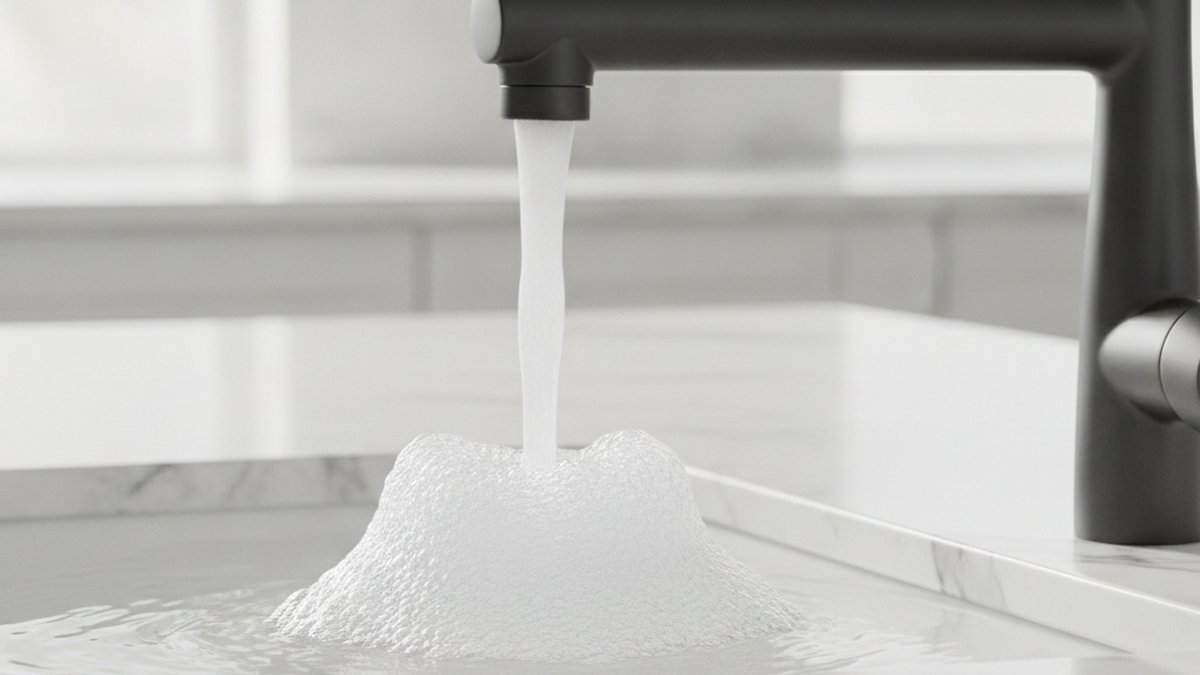
A matte black faucet aerator is the small screw-on tip at the end of your faucet spout, finished in the same matte black color as your tap so the whole fixture looks like one clean, intentional piece. It does two jobs at once: it blends visually with a black faucet (no jarring silver nozzle sticking out), and it mixes air into the water stream to give you a soft, splash-free flow while quietly reducing how many gallons per minute you use. If you’ve ever installed a beautiful matte black faucet only to notice the ugly chrome aerator glinting at the tip, this is the fix.
Below, we answer the real questions people actually ask before buying one — sizing, whether the black finish peels, how much water you save, and which type fits your sink — so you can order the right part the first time.
What exactly does a matte black faucet aerator do?
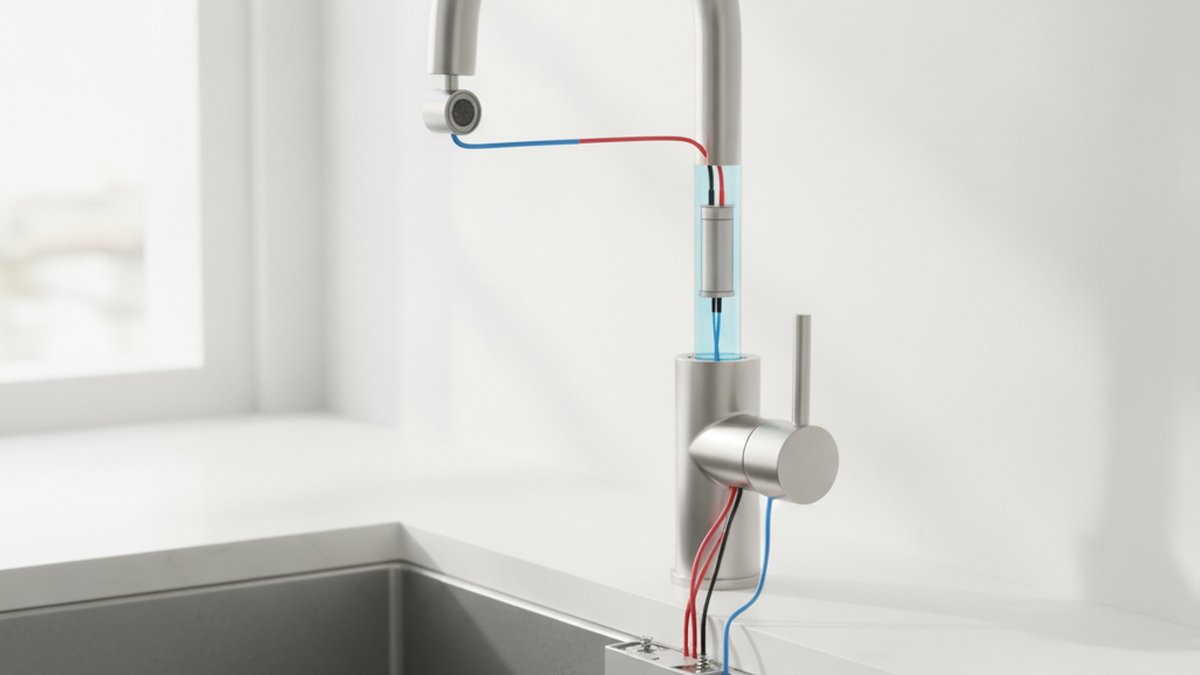
It controls and shapes your water — and hides the metal. An aerator is a small insert with a fine mesh screen (or a series of discs and a flow restrictor) that splits the water into many tiny streams and pulls in air. That’s why aerated water feels fuller and softer, splashes less in the basin, and uses less water than an open pipe would. The matte black version simply wraps that same working part in a black housing so it disappears against a black faucet.
Here’s what’s happening inside the little cap:
- The screen/mesh — breaks the water into droplets and catches grit and sediment before it sprays everywhere.
- The flow restrictor — a rubber or plastic washer with a precise opening that caps your GPM (gallons per minute).
- The aeration chamber — where air is drawn into the stream, giving you that steady non-splashing flow.
- The housing — the outer black shell that threads onto your spout and takes all the visible wear.
Because the aerator is the single most-touched, most-splashed part of the whole faucet, the quality of that black housing finish matters far more than people expect. A cheap painted one chips at the threads within weeks; a properly finished one stays black for years.
How do I know which size matte black faucet aerator I need?
Measure the threads — that’s the only measurement that matters, and it’s the #1 reason returns happen. Faucet aerators come in a handful of standard sizes, and the black finish doesn’t change any of them. You need to know two things: whether your faucet has male threads (on the outside of the spout) or female threads (inside the spout), and the diameter.
The quickest test: look at the very tip of your spout. If the threads are on the outside where a cap screws over them, you need a female aerator. If the threads are recessed inside and the aerator screws up into the spout, you need a male aerator. When in doubt, unscrew your existing aerator (turn counter-clockwise as you look up at it, often needs a rubber grip or the plastic key that came with the faucet) and bring it to compare.
| Aerator size name | Thread dimension | Type | Typical use |
|---|---|---|---|
| Regular male | 15/16″ – 27 | Male | Most standard US kitchen & bath faucets |
| Regular female | 55/64″ – 27 | Female | Common on kitchen faucets with internal threads |
| Junior male | 13/16″ – 24 | Male | Smaller bathroom lavatory faucets |
| Junior female | 3/4″ – 27 | Female | Compact bathroom & bar faucets |
| Tom Thumb / cache | Hidden inside spout tip | Recessed | Modern designer faucets with concealed aerators |
One more heads-up: many newer designer faucets — especially European and higher-end pull-downs — use a cache (hidden) aerator that sits flush inside the spout with a magnetic or slotted key. If yours has no visible threads at all, you have this type, and you’ll want a matching cache aerator with the correct key. A standard screw-on won’t fit.
Does the matte black finish peel or fade over time?
The good ones don’t; the cheap ones do — and the difference is entirely in how the black is applied. This is the single most important thing to check before you buy, because the aerator lives in constant contact with water, soap, and your fingers.
There are three ways manufacturers make an aerator black, and they are not equal:
- Spray paint / cheap coating — looks fine in the photo, chips at the threads on the first install, and rings around the tip within a month or two. Avoid.
- Powder coating — a durable baked-on finish that holds up well to daily use and is a solid mid-range choice.
- PVD (Physical Vapor Deposition) — the finish bonded at a molecular level, the same process used on premium faucet bodies. It resists scratches, hard-water etching, and cleaning chemicals. This is what you want if it’s available.
To keep any matte black finish looking new, skip abrasive pads and acidic or bleach-based cleaners — they’re the fastest way to dull matte black. A soft cloth with mild soap and water is all it needs. This is the same care rule that applies to any black fixture, which is exactly why matching a matte black aerator to a matte black faucet works so well: you treat them the same way and they age together. If you’re finishing out a full black setup, our guide to the matte black laundry faucet walks through the same finish-durability logic for utility sinks, and the piece on where to buy a black vessel sink faucet covers matching finishes across a bathroom vanity.
How much water (and money) does an aerator actually save?
A lot — swapping a 2.2 GPM aerator for a 1.5 GPM one cuts that faucet’s water use by roughly a third, and a 1.0 GPM bathroom aerator can cut it by more than half, with no plumbing changes. The aerator is the cheapest water-saving upgrade in your whole house.
Here’s the plain math. Flow rate is measured in gallons per minute (GPM). US federal maximums are 2.2 GPM for kitchen faucets and typically 1.5 GPM (or lower in states like California, at 1.2 GPM) for bathroom faucets. Aerators are how faucets hit those numbers. If your current aerator is an old high-flow model — or missing entirely — a new low-flow black one pays for itself fast:
| Aerator flow rate | Best for | Feel | Water use vs. 2.2 GPM |
|---|---|---|---|
| 2.2 GPM | Filling pots fast | Strong, high volume | Baseline |
| 1.8 GPM | Everyday kitchen use | Full but efficient | ~18% less |
| 1.5 GPM | Kitchen & bath balance | Standard modern feel | ~32% less |
| 1.2 GPM | Bathroom lavatory | Soft, efficient | ~45% less |
| 1.0 GPM | Powder rooms, low-use sinks | Gentle | ~55% less |
One important caveat: an aerator reduces flow, not pressure. If your faucet already feels weak, a very low-GPM aerator can make it feel worse — and the real culprit might be a clogged screen or an upstream issue. If you’re chasing weak output, read what to do when your kitchen faucet has low water flow before you assume the aerator is the answer; often a quick clean of that same black aerator restores full flow.
Will a matte black aerator match my not-quite-black faucet?
Usually yes for true matte black, but be careful with “black-ish” finishes like oil-rubbed bronze, gunmetal, or matte graphite — they aren’t the same color and a pure matte black aerator can look off next to them. Matte black is a flat, neutral, non-reflective black. Oil-rubbed bronze has warm brown undertones; gunmetal has a cool gray sheen. Held apart you might not notice, but side by side at the spout tip the mismatch shows.
The safest move: match within the same brand and finish family whenever you can, since manufacturers hold their matte black consistent across a collection. If you’re mixing brands, order from a seller who shows real product photos (not renders) and, ideally, buy the aerator from the same maker as the faucet. When you’re planning a whole bathroom, coordinating the faucet, drain, and aerator finish up front saves this headache — our best bathroom faucet sink guide covers how to keep finishes consistent across a vanity setup.
How do I install and clean a matte black faucet aerator?
You install it by hand in under two minutes — no tools if it’s finger-tight, and you clean it by unscrewing, soaking in vinegar, and rinsing. It’s genuinely one of the easiest plumbing jobs there is.
To install:
- Unscrew the old aerator by turning it counter-clockwise (as you look up at the spout). Use a rubber glove or the plastic aerator key for grip — never metal pliers directly on a black finish, or you’ll scratch it.
- Check that the rubber washer is seated inside the new aerator.
- Thread the new matte black aerator on by hand, clockwise, until snug.
- Turn the water on and check for drips at the threads. If it seeps, hand-tighten a quarter turn more — you rarely need a wrench.
To clean a clogged or hard-water-scaled aerator (do this every few months if you have hard water):
- Unscrew it and disassemble the discs, noting the order.
- Soak the parts in white vinegar for 30–60 minutes to dissolve mineral buildup.
- Gently brush the screen with an old toothbrush, rinse, reassemble, and screw it back on.
Hard water is the main enemy of any aerator — the mineral scale that clogs the screen also etches matte finishes over time, which is another reason the vinegar soak matters. If your whole faucet is fighting mineral deposits and low output, the same fix applies at the aerator first.
Which matte black faucet aerator should you actually buy?
Buy the one that matches your thread size and finish, with a flow rate suited to the sink — 1.5 GPM for kitchens, 1.2 GPM for bathrooms — and a PVD or powder-coated housing rather than paint. If you already own a WOWOW faucet, the simplest choice is the matching replacement aerator for your model, so the finish and threads are guaranteed to line up.
Quick decision checklist before you add to cart:
- Thread size & type confirmed (male/female, diameter) — the #1 return-preventer.
- Flow rate that fits the sink’s job (pot-filling vs. hand-washing).
- Finish process — PVD best, powder coat good, paint avoid.
- Brand match where possible for exact color consistency.
- Included key if your faucet uses a cache/hidden aerator.
Author note & why you can trust this guide
This guide was written by the WOWOW Faucet product team, drawing on years of designing, testing, and shipping matte black kitchen and bathroom fixtures. WOWOW manufactures faucets and finishing components that are tested to meet US industry standards including cUPC certification and NSF/ANSI 61 for drinking-water safety, and our lead-free matte black finishes are applied for lasting durability — which is why our matte black fixtures are backed by a warranty against finish defects. We’ve fielded thousands of “which aerator fits my faucet?” questions from real customers, and this guide reflects the answers that actually solved their problem, not marketing copy.
FAQ
Are all faucet aerators the same size?
No. There are several standard sizes — regular male (15/16″–27), regular female (55/64″–27), junior sizes, and hidden “cache” aerators. The matte black finish doesn’t change the threads, so you still have to match the size to your specific faucet. When unsure, unscrew your current one and match it.
Can I put a matte black aerator on a chrome or brushed nickel faucet?
You physically can — the threads are the same — but it will look intentional only if you like the contrast. On a chrome faucet a black aerator reads as a deliberate two-tone accent to some people and as a mismatch to others. If you want a seamless look, match the aerator to the faucet finish. For a chrome faucet, a chrome aerator blends best; see our take on the chrome drinking faucet for finish-matching thinking.
Does a matte black aerator reduce water pressure?
It reduces flow (GPM), not the underlying pressure in your pipes. A well-designed aerator uses aeration to keep the stream feeling strong even at lower flow. If your faucet feels weak after installing one, either you chose too low a GPM for that sink, or the screen is already clogged and needs a vinegar soak.
How often should I clean the aerator?
Every 3–6 months in hard-water areas, once a year in soft-water areas. Signs it’s due: reduced or sputtering flow, a stream that sprays sideways, or visible white mineral crust. A 30–60 minute white-vinegar soak dissolves the buildup and restores full flow.
Will the black finish come off when I clean it with vinegar?
A quality PVD or powder-coated aerator handles occasional vinegar soaks fine — the finish is bonded, not painted. What damages matte black is abrasive scrubbing and bleach or acidic daily cleaners. Use vinegar only for periodic descaling, rinse well afterward, and stick to mild soap and water for everyday cleaning.
Do I need a special tool or key to remove my aerator?
Most standard screw-on aerators come off by hand or with a rubber grip. Modern hidden “cache” aerators need the small plastic or metal key that shipped with the faucet — it slots into notches on the aerator so you can unscrew it without scratching the spout. If you’ve lost the key, replacement keys are cheap and model-specific.