 WOWOW Faucets
Here is the complete, publish-ready HTML article:
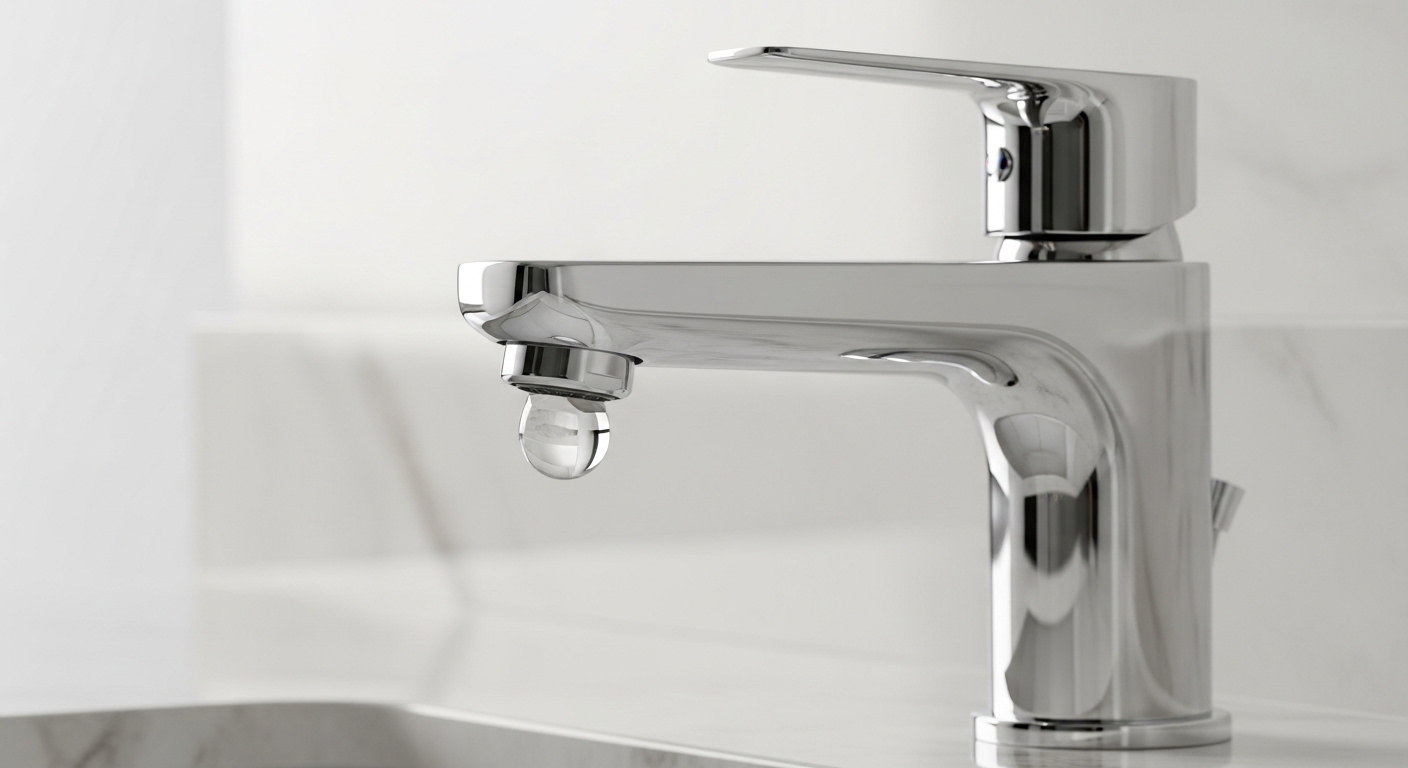
If your bathroom faucet is leaking, the good news is that 9 times out of 10 it’s a cheap, replaceable rubber or ceramic part — not a dead faucet. A steady drip from the spout, a puddle around the base, or water seeping out behind the handle each points to a different worn component, and once you know which one, the repair is genuinely a 30–45 minute DIY job with basic tools. Below I’ll walk you through pinpointing exactly where the leak is coming from, what part to replace, and how to do it without flooding your vanity — the same diagnostic order a plumber uses.
This guide covers compression, cartridge, ball, and ceramic-disc faucets — the four mechanisms inside virtually every bathroom sink faucet sold in North America. Don’t worry if you don’t know which one you have yet; we’ll figure that out as we go.
Why is my bathroom faucet dripping from the spout even when it’s fully off?
A faucet that drips from the spout when shut off has a worn seal inside the valve — specifically the cartridge, the rubber washer (on older compression faucets), or the O-rings on a ball-type faucet. The seal that’s supposed to press tight against the valve seat has hardened, cracked, or worn a groove, so a thin stream of water sneaks past.
This is the single most common bathroom faucet leak, and it’s also the most satisfying to fix because the dripping stops the instant you seat a fresh part. Here’s how the cause differs by faucet type:
- Compression faucets (two handles, you feel resistance as you tighten them off): the rubber seat washer at the bottom of the stem is worn flat. Cheapest fix of all — washers cost pennies.
- Cartridge faucets (single or double handle, smooth quarter-to-half turn): the entire cartridge has worn internally. You replace the whole cartridge, not individual seals.
- Ball faucets (single handle that moves in a dome): worn springs and rubber seats under the ball, or a scored ball.
- Ceramic-disc faucets (single handle, very smooth, premium feel): rare to leak, but when they do it’s usually mineral grit on the disc or worn inlet seals.
If your faucet is fairly new and already dripping, the cause is often a manufacturing seal issue or debris caught under a valve rather than wear — we cover that scenario in detail in our guide on why your new faucet still leaks and how to fix it.
How do I figure out exactly where my bathroom faucet is leaking from?
Dry the entire faucet completely, run it, shut it off, then watch for 60 seconds — the first place water reappears tells you which part has failed. Leak location is the fastest, most reliable diagnostic you have, so don’t skip it. Use this map:
| Where the water shows up | Most likely cause | Typical part & cost |
|---|---|---|
| Dripping from the spout tip | Worn cartridge, seat washer, or valve seat | Cartridge $10–$25 / washer $2 |
| Around / under the handle | Worn O-ring or cartridge stem seal | O-ring kit $5–$8 |
| At the base of the spout | Worn body O-rings (common on swivel spouts) | O-ring set $5–$10 |
| Underneath the sink / supply line | Loose supply nut or failed compression fitting | Re-tighten or new line $6 |
| Puddle around the deck plate | Failed plumber’s putty / gasket under the faucet | Putty or gasket $4 |
That last row matters: not every “faucet leak” is actually inside the faucet. A pool of water on the countertop is frequently a base-gasket or putty seal failure, and a puddle inside the cabinet is usually a supply-line connection — both unrelated to the valve. Look under the sink with a flashlight and dry paper towel before you ever pull a handle apart, because fixing the wrong end wastes an afternoon.
What if the leak is behind the handle, not at the spout?
Water weeping out from behind or under the handle means the O-ring or upper stem seal has failed — not the main valve seat. This is good news: it’s the easiest seal to reach. On most faucets you pop off the decorative cap, remove a single screw, lift the handle, and the O-rings are right there on the cartridge stem. A 10-pack of assorted faucet O-rings costs about $6 and will fix this. Our step-by-step walkthrough on how to repair faucet O-rings shows exactly how to size and seat them so they don’t leak again.
What tools and parts do I need before I start the repair?
You need an adjustable wrench, a Phillips and a flat screwdriver, an Allen/hex key set, plumber’s grease, white vinegar, and the correct replacement part for your faucet — that’s the entire kit for 95% of bathroom faucet leaks. Don’t buy a generic “repair kit” blindly; the part has to match your faucet’s brand and model.
- Adjustable wrench (or basin wrench for tight under-sink nuts)
- Screwdrivers — Phillips and flat-head
- Hex/Allen keys — most single-handle set screws are hex
- Replacement cartridge, O-rings, or seat washers matched to your model
- Plumber’s silicone grease — never petroleum jelly; it degrades rubber
- White vinegar & an old toothbrush — for dissolving mineral scale
- A rag or sink stopper — so dropped screws don’t vanish down the drain
To get the right part, find your faucet’s brand and model number first. It’s often laser-etched on the spout base, under the handle, or on the original paperwork. For major brands, matching the model to a parts diagram saves you a second trip — our look at finding the right Kohler faucet parts replacement catalog explains how to read a model number against a parts catalog, and the same approach works for most brands.
How do I actually fix a dripping bathroom faucet step by step?
Shut off the water, plug the drain, disassemble the handle, replace the worn part, and reassemble — in that order. Here’s the full sequence that works for cartridge and compression faucets, which together cover most bathroom sinks:
- Turn off both supply valves under the sink (turn the oval angle-stop handles clockwise until they stop). Then open the faucet to release pressure and confirm the water is truly off.
- Plug the drain with the stopper or a rag so small screws and clips can’t escape.
- Remove the handle. Pry off the decorative cap (hot/cold button) to expose the screw, or loosen the hex set screw on a single-lever handle. Lift the handle straight up.
- Pull the retaining clip or bonnet nut. A horseshoe-shaped clip holds many cartridges; needle-nose pliers remove it. Two-handle faucets have a packing nut you unscrew with a wrench.
- Extract the cartridge or stem. Pull it straight out. Note its orientation — many cartridges have a flat or tab that must line up the same way on reinstall, or your hot and cold will reverse.
- Inspect and replace. Swap the cartridge, or on a compression faucet replace the seat washer at the stem’s base and the O-rings on the stem. If the valve seat is pitted, dress it with a seat-grinding tool or replace it.
- Grease and reassemble. Coat new O-rings with plumber’s silicone grease, reinstall in reverse order, and hand-snug — don’t over-torque, which cracks seals.
- Turn the water back on slowly and test. Run it 30 seconds, shut off, and watch for any return drip.
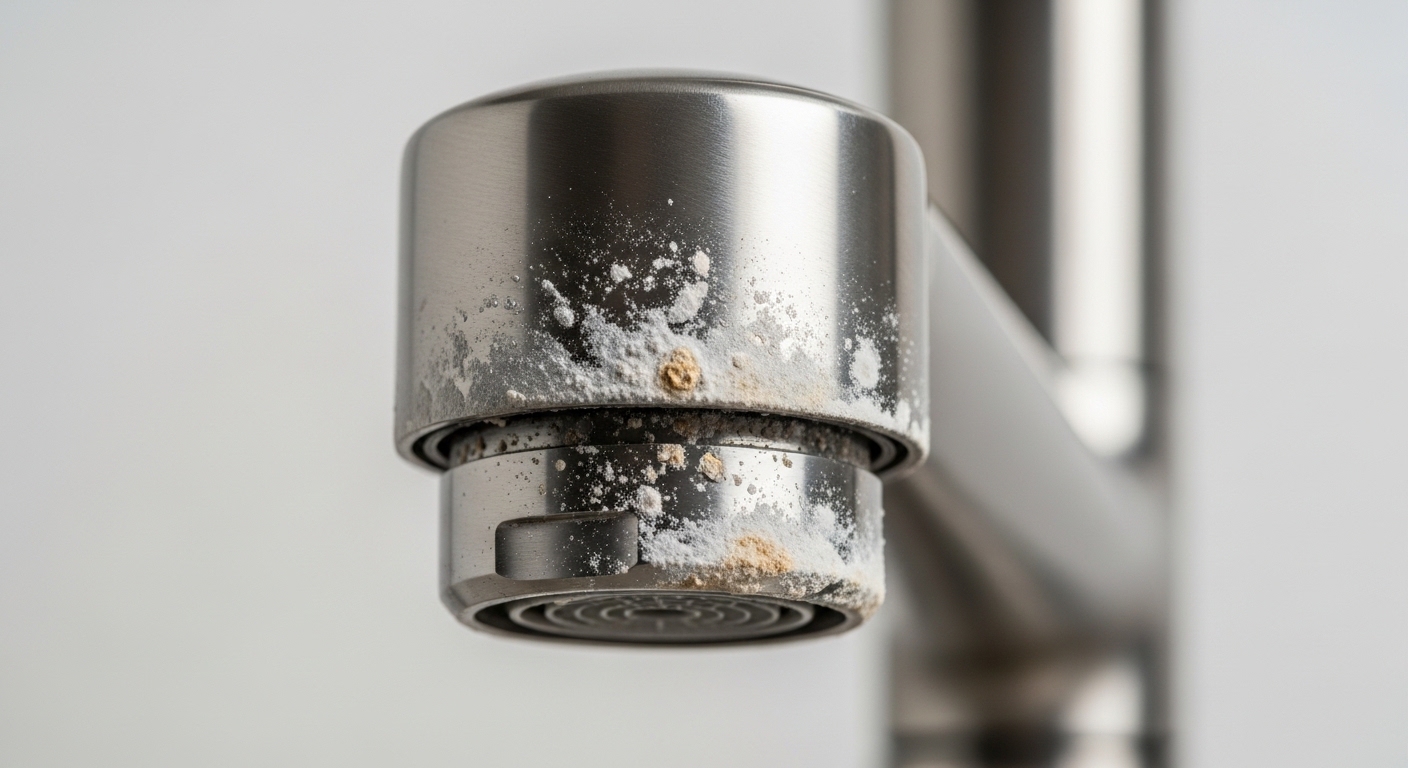
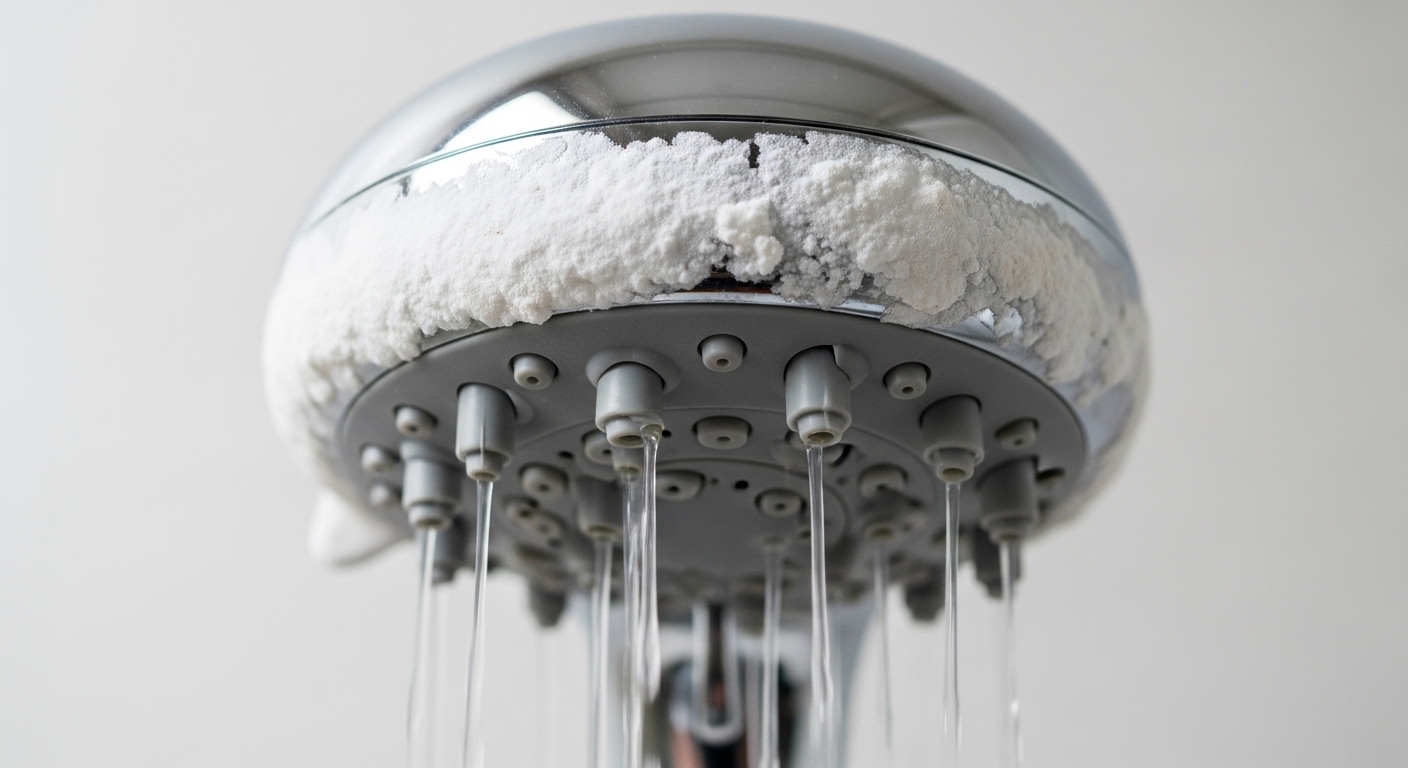
One detail people miss: if you pulled out a cartridge that was caked in white crust, the leak may return fast unless you also clean the valve body. Mineral scale holds the new seal slightly open. Soak removable metal parts in white vinegar for 10–15 minutes and brush the scale off before reassembly. Hard-water scale is the silent killer of faucet seals — the same buildup we tackle in our faucet base limescale and buildup cleaning guide.
How long should this repair take, and when is it harder than it looks?
Budget 30–45 minutes for a first-time cartridge or washer swap, and up to an hour if parts are corroded in place. The repair gets harder when the cartridge is seized by years of mineral lock — at that point you may need a cartridge-puller tool (about $15) that threads on and extracts it with leverage. If the brass faucet body itself is cracked or the threads are stripped, that’s the rare case where replacement beats repair.
Why does my bathroom faucet keep leaking even after I replaced the part?
A faucet that leaks again after a repair usually has one of three issues: the wrong replacement part, a damaged valve seat the new seal can’t conquer, or debris and scale that you didn’t clean out. The new part is only as good as the surface it seals against.
Run through this checklist if your fix didn’t hold:
- Wrong part number. A cartridge that’s “close” but not exact won’t seat properly. Re-verify against your model.
- Pitted or scored valve seat. A fresh washer can’t seal against a rough seat — resurface or replace the seat.
- Grit under the seal. A single grain of mineral or metal shaving holds the valve open. Flush the lines: with the cartridge out, briefly open the supply to blast debris clear (cover with a rag).
- Over-tightened assembly. Crushing the cartridge nut deforms seals. Snug, not gorilla-tight.
- Reused old O-rings. If you greased and reused tired O-rings instead of replacing them, they’ll fail again within weeks.
If the problem is a wobbly handle rather than a true water leak, that’s a separate fix — see how to tighten a loose, wobbly bathroom faucet handle, since a sloppy handle can mimic a leak by letting the valve sit slightly open.
Should I repair my bathroom faucet or just replace it?
Repair if the faucet body is sound and parts are available — which is the case for nearly all faucets under 12–15 years old. Replace only if the body is cracked, the finish is failing, parts are discontinued, or you’ve already rebuilt it twice. A $15 cartridge beats a $150 faucet plus install almost every time.
| Situation | Best move | Rough cost |
|---|---|---|
| Drips from spout, body is solid | Replace cartridge/washer | $5–$25 DIY |
| Leak at base, swivel spout | Replace body O-rings | $5–$10 DIY |
| Cracked brass body or stripped threads | Replace faucet | $80–$250 |
| Discontinued model, no parts | Replace faucet | $80–$250 |
| Finish peeling + leaking | Replace faucet (upgrade) | $80–$250 |
When you do upgrade, the faucet’s internal valve material is what determines how long before you’re back here fixing another leak. Solid-brass bodies with ceramic-disc cartridges last the longest. It’s worth understanding the difference between a quality body and a cheap one before you buy — our comparison of brass vs zinc faucets explains why the metal under the finish matters more than the price tag.
How do I stop my bathroom faucet from leaking again in the future?
Preventing repeat leaks comes down to controlling mineral scale, using quality cartridges, and never cranking the handle shut. Hard water and over-tightening cause the vast majority of premature seal failures. A few habits that genuinely extend faucet life:
- Close the faucet gently. Modern ceramic and cartridge valves only need a light touch; muscling them off grinds the seals.
- Descale every few months if you have hard water — vinegar on the aerator and spout keeps grit from migrating into the valve.
- Buy ceramic-disc cartridges when replacing; they outlast rubber-washer compression valves by years.
- Service the aerator, since a clogged aerator raises back-pressure that stresses seals — see our fix for a leaking faucet aerator.
- Use silicone grease, not petroleum jelly, on every O-ring you touch.
FAQ
Is a leaking bathroom faucet an emergency, or can it wait?
A small spout drip isn’t an emergency, but don’t ignore it — a faucet dripping once per second wastes roughly 3,000 gallons a year and can stain the basin. A leak under the sink or at the base is more urgent because it can damage the cabinet and grow mold, so shut off the supply valves and address that within a day or two.
Can I fix a leaking bathroom faucet without turning off the main water?
Yes — almost every bathroom sink has two individual angle-stop shut-off valves on the wall under the basin, so you only close those, not the whole house. If those local valves are seized or missing, then you’ll need to use the main shut-off. Always open the faucet afterward to confirm pressure is released before you disassemble anything.
Why is my bathroom faucet leaking only when I turn on the hot water?
A leak that appears only on the hot side points to that specific cartridge or stem, since hot water and heat cycling wear the hot-side seals faster than cold. On a two-handle faucet, simply rebuild or replace the hot-side cartridge/washer. On a single-handle faucet it’s still one cartridge, but heat is why that side failed first.
How much does it cost to fix a leaking bathroom faucet?
DIY, most repairs run $5–$25 for the part. A plumber typically charges $100–$250 for the same job depending on your area and whether parts are on hand. Because the part is cheap and the labor is the expense, a basic cartridge or O-ring swap is one of the highest-value DIY plumbing fixes you can do.
What’s the difference between a cartridge and a compression faucet when it leaks?
A compression faucet uses a rubber seat washer that you tighten down hard, and it leaks when that washer flattens — you replace just the washer. A cartridge faucet uses a sealed insert that turns smoothly, and when it leaks you replace the whole cartridge. Compression faucets are older and cheaper to fix; cartridge faucets are smoother and last longer between repairs.
Can a clogged aerator make my faucet look like it’s leaking?
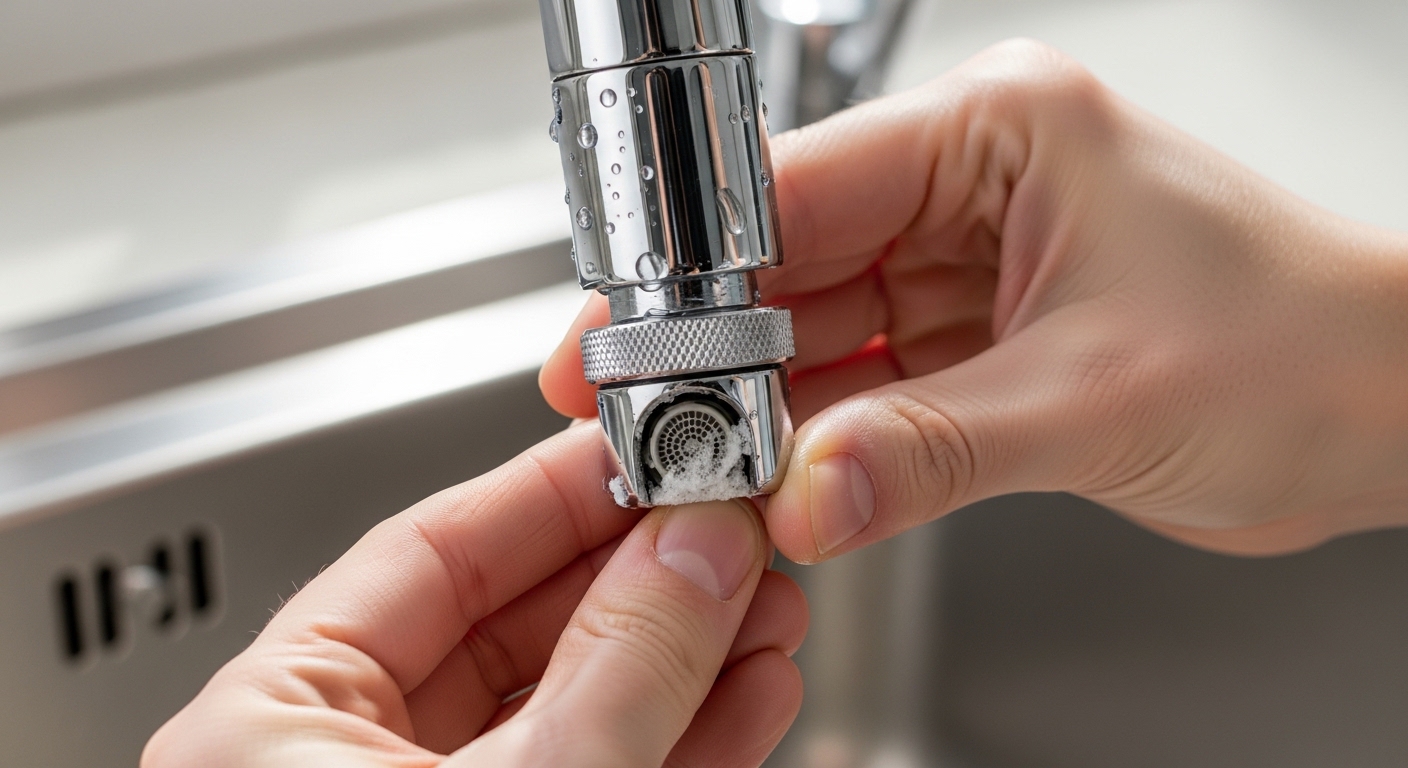
Yes. A scaled-up aerator sprays sideways and dribbles after shut-off, which is easily mistaken for a valve leak. Before you tear into the valve, unscrew the aerator, soak it in vinegar, and rinse it — if the “leak” stops, the valve was fine all along.
About the author: This guide was written by the WOWOW Faucet product and technical team, drawing on hands-on testing of single-handle, two-handle, cartridge, ball, and ceramic-disc bathroom faucets across thousands of real customer repair cases.
Why trust WOWOW: WOWOW designs and manufactures faucets and bathroom fixtures sold across North America, with products built to meet cUPC and ANSI/NSF lead-free standards. Our bathroom and kitchen faucets ship with ceramic-disc cartridges rated for 500,000+ open/close cycles and are backed by a limited lifetime warranty on the finish and function — so if a covered part ever fails, replacement cartridges and O-rings are available rather than forcing a full faucet swap. Learn more at www.wowowfaucet.com.