 WOWOW Faucets
Learning how to fix a leaky bathtub faucet single handle is one of the most satisfying DIY plumbing wins you can score in an afternoon. A single-handle tub faucet drips because the cartridge inside the valve body — the part that mixes hot and cold and seals the water off — has worn out, cracked, or filled with mineral scale. Replace that cartridge (or the small O-rings and seals around it) and the drip stops. You almost never need to open the wall, sweat a pipe, or pay a plumber’s $150–$300 call-out fee. Below, we’ll walk through exactly why it leaks, how to diagnose which part failed, and the step-by-step repair — plus when it’s genuinely time to call a pro.
Why Does My Single-Handle Bathtub Faucet Keep Dripping Even When It’s Off?
Your single-handle tub faucet keeps dripping because the internal cartridge no longer seals — usually from worn rubber seals, a cracked cartridge body, or hard-water scale wedged against the sealing surfaces. When the handle is “off,” the cartridge is supposed to block water completely. Once it wears, a thin trickle sneaks past and runs out the spout.
Here are the four most common culprits, in the order you’re most likely to find them:
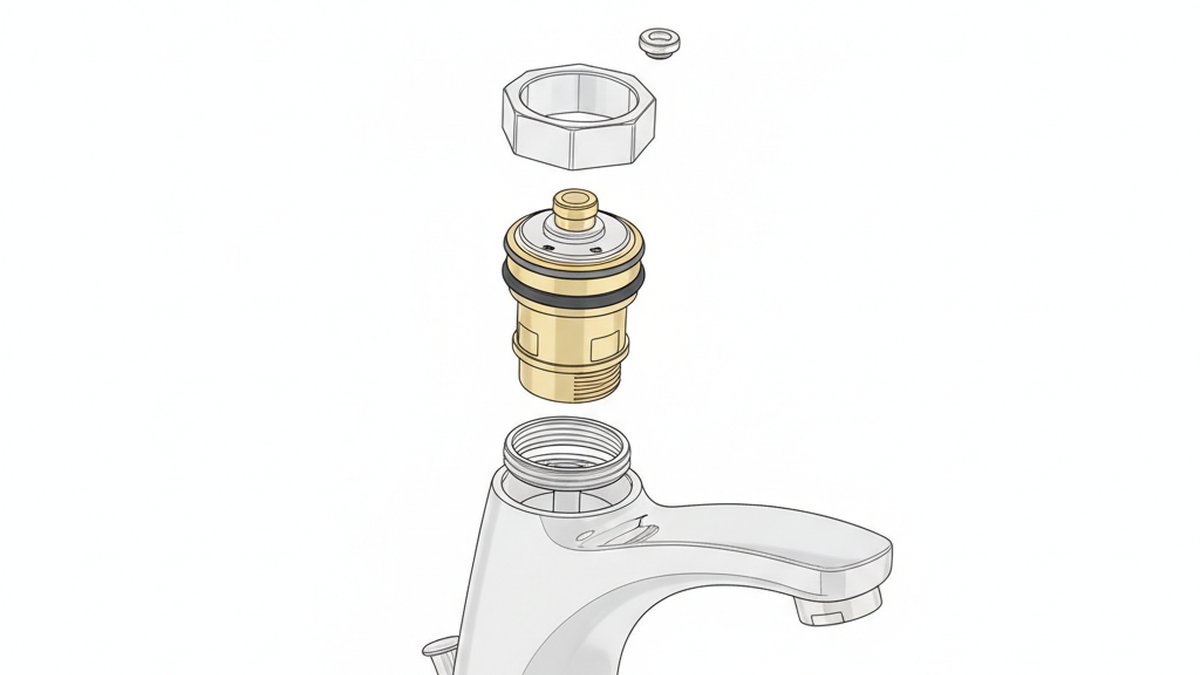
- Worn cartridge (most common): The moving core that mixes and shuts off water. Rubber seals harden and shrink over 5–10 years.
- Failed O-rings and seats/springs: On some brands (notably older Delta and Moen designs), tiny rubber seats and metal springs behind the cartridge fail before the cartridge itself.
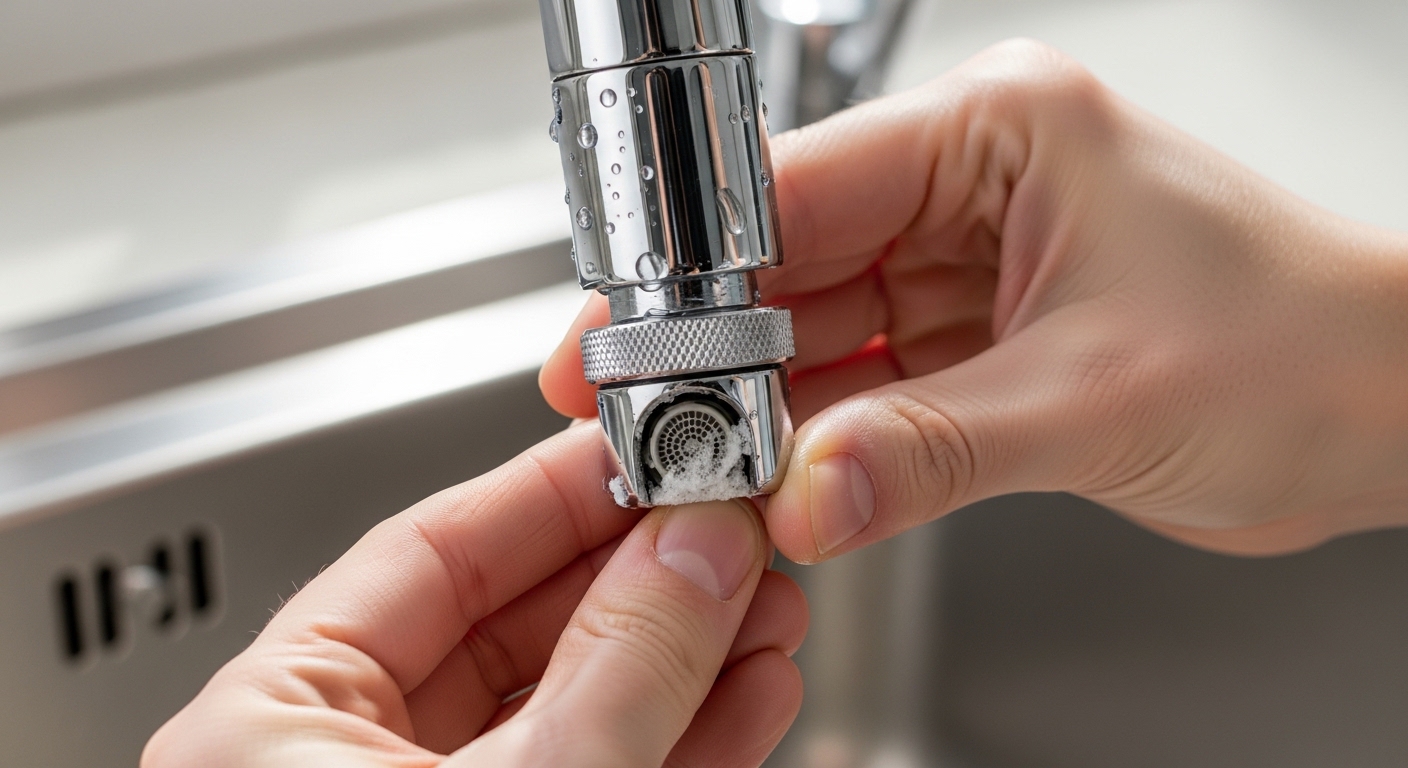
- Mineral buildup: If you have hard water (over 7 grains per gallon), calcium scale scratches the seals and holds the valve slightly open.
- A worn spout diverter: If water leaks from the tub spout while the shower is running, that’s the diverter, not the cartridge.
The good news: every one of these is a swap-in fix. You’re replacing a part, not rebuilding plumbing. If you’ve ever done a Delta faucet cartridge replacement on a single-handle faucet, the tub version follows the exact same logic — the valve is just mounted in a wall instead of on a sink deck.
How Do I Know If It’s the Cartridge or Something Else?
Diagnose the leak by watching where and when the water escapes: a drip from the spout with the handle fully off means the cartridge or its seals; water leaking from behind the handle or trim plate means an O-ring or the escutcheon seal; and a leak from the spout only while the shower runs means the diverter. Match the symptom to the part before you buy anything.
Use this quick diagnostic table to pinpoint the fault:
| Symptom | Most Likely Cause | Fix | Typical Part Cost |
|---|---|---|---|
| Drip from spout, handle off | Worn cartridge or seals | Replace cartridge | $15–$40 |
| Water seeps behind handle/trim | Failed O-ring or escutcheon seal | Replace O-rings + plumber’s grease | $5–$12 |
| Spout drips only with shower on | Worn spout diverter | Replace tub spout | $12–$30 |
| Handle hard to turn + drip | Mineral scale on cartridge | Descale or replace cartridge | $0–$40 |
| Hot & cold mixing when off | Cracked cartridge body | Replace cartridge | $20–$45 |
Nine times out of ten on a single-handle valve, the answer is the cartridge. It’s the one moving part doing all the sealing work, so it’s the first thing to wear. If you’re not sure what that part even is, our explainer on what the cartridge on a kitchen faucet is and why it matters uses the same component — the concept carries straight over to your tub valve.
What Tools and Parts Do I Need to Fix a Leaky Single-Handle Tub Faucet?
You need a small, cheap toolkit: an Allen/hex key or Phillips screwdriver, adjustable pliers or a cartridge puller, a flashlight, plumber’s grease, white vinegar for descaling, and — most importantly — the correct replacement cartridge for your exact faucet model. Buying the right cartridge is 80% of the battle.
Here’s the full checklist before you start:
- Replacement cartridge matched to your brand and model number (check behind the trim plate or the original paperwork).
- Allen/hex keys and screwdrivers — most handles use a tiny setscrew.
- Adjustable pliers or channel-locks, plus a cartridge puller tool if the cartridge is stuck (a $10 lifesaver for stubborn Moen valves).
- Plumber’s grease (silicone) — never petroleum jelly, which degrades rubber seals.
- White vinegar and an old toothbrush for scale removal.
- A rag and a bucket, plus a towel to plug the tub drain so no screws vanish down it.
One pro tip on parts: cartridges are not universal. A Moen 1222 won’t fit a Delta valve, and a Wowow single-handle cartridge is keyed to Wowow bodies. Photograph your old cartridge and the trim before you shop, or better yet, bring the old cartridge to the store. Matching parts is the same discipline you’d use on any repair — see our walkthrough on how to replace a faucet cartridge step by step for the identification method.
Step-by-Step: How to Fix a Leaky Bathtub Faucet Single Handle
To fix a leaky bathtub faucet single handle, follow these seven steps: shut off water, remove the handle, remove the trim, extract the retaining clip, pull the cartridge, install the new one, and test. Budget 30–60 minutes for your first time. Here’s the whole sequence.
Step 1 — Shut Off the Water
Turn off the water supply before touching anything. Most tubs don’t have a dedicated shutoff, so close the main water valve to the house (usually near the water heater or where the line enters). Then open the tub faucet to drain the residual pressure. Confirm the water is fully off — a surprise gush behind the wall is how a $20 job becomes a $2,000 one.
Step 2 — Remove the Handle
Look for a setscrew under the handle (often on the underside, hidden behind a small snap-off cap or an index button). Loosen it with the correct Allen key and pull the handle straight off the stem. If it’s stuck from corrosion, wiggle gently — don’t pry hard against the wall tile.
Step 3 — Remove the Trim Plate and Retaining Clip
Unscrew the escutcheon (the round trim plate against the wall) to expose the valve body. You’ll see the cartridge held in place by a small horizontal retaining clip (a U-shaped or brass clip). Pull it out with needle-nose pliers and set it somewhere it can’t roll into the drain. This clip is easy to lose and annoying to source, so guard it.
Step 4 — Pull Out the Old Cartridge
Grip the cartridge stem with pliers and pull it straight out. If it resists — and older ones often do because of scale — use a cartridge puller for your brand. Note the orientation of the old cartridge (there’s usually a notch or tab that indicates hot/cold position). Installing the new one flipped is the #1 rookie mistake and reverses your hot and cold.
Step 5 — Clean the Valve Body
Wipe out the valve housing and scrub away mineral scale with white vinegar and a toothbrush. Check the seats and springs at the back (on Delta-style valves) and replace them if they’re pitted. A clean bore means the new cartridge seals perfectly the first time.
Step 6 — Install the New Cartridge
Smear a thin film of silicone plumber’s grease on the new cartridge’s O-rings, line up the orientation notch exactly as the old one sat, and press it firmly into the valve body. Re-insert the retaining clip until it clicks fully home — a partially seated clip lets pressure blow the cartridge out.
Step 7 — Reassemble and Test
Reattach the trim plate, handle, and setscrew. Turn the main water back on slowly and open the faucet. Check for drips at the spout when off, and for leaks behind the trim. Run both hot and cold to confirm the temperature isn’t reversed. No drip? You just fixed it yourself.
If your tub actually has two handles rather than one, the process differs — that’s a different valve layout entirely, and our guide on replacing a two-handle bathtub faucet without calling a plumber covers it directly.
How Much Does It Cost to Fix a Leaky Bathtub Faucet — DIY vs. Plumber?
Fixing it yourself costs $15–$45 in parts and an hour of your time; hiring a plumber runs $150–$350 depending on your area and whether the valve body needs replacing. For a straightforward cartridge swap, DIY saves you well over $100 and isn’t harder than assembling flat-pack furniture.
| Approach | Parts Cost | Labor Cost | Time | Best For |
|---|---|---|---|---|
| DIY cartridge swap | $15–$45 | $0 | 30–60 min | Drip from spout, accessible valve |
| DIY seals/O-rings only | $5–$12 | $0 | 30 min | Leak behind handle/trim |
| Plumber — cartridge | $15–$45 | $120–$250 | 1 hr | No shutoff access, no time |
| Plumber — valve body replacement | $50–$120 | $250–$600+ | 2–4 hr | Cracked valve, in-wall corrosion |
The one scenario where the math flips toward a pro is a corroded or cracked valve body that needs to be cut out and re-soldered inside the wall. That’s real plumbing with sweated copper joints and open drywall. If you’re unsure whether your valve is salvageable, a local pro consult is worth it — our piece on finding faucet valve replacement nearby versus doing it yourself helps you decide where that line sits.
How Do I Stop My Tub Faucet From Leaking Again?
Prevent future leaks by managing hard water, using the right lubricant, and not cranking the handle shut with excess force. Cartridges fail fastest from mineral scale and over-tightening, so controlling both roughly doubles the life of the seals.
- Address hard water: If you’re above 7 grains per gallon, scale will chew through seals. A whole-home softener or periodic descaling extends cartridge life dramatically.
- Use silicone grease, not force: A properly greased cartridge seals with a light turn. If you’re muscling the handle off, something’s dry or scaled.
- Buy quality cartridges: Brass and ceramic-disc cartridges outlast cheap plastic ones by years. Spend the extra $10.
- Fix drips fast: A slow drip wastes up to 3,000 gallons a year and lets scale build on the seat. Small leaks become big ones.
Author Note & Why Trust Wowowfaucet
This guide was written by the Wowowfaucet product and repair team, drawing on hands-on bench testing of single-handle valves and thousands of customer repair questions. Wowowfaucet designs and manufactures faucets, shower systems, and tub fixtures built to cUPC and ANSI/NSF certification standards, and our single-handle valves use ceramic-disc cartridges rated for 500,000 open/close cycles. Every Wowowfaucet cartridge and finish is backed by a manufacturer’s warranty, and our replacement parts are engineered to drop into the same valve bodies we ship — so a repair five years from now stays as simple as the steps above. We test for leak-tightness, flow consistency, and finish durability before anything reaches your bathroom.
FAQ
Can I fix a leaky single-handle tub faucet without turning off the main water?
No — always shut off the water supply first. Single-handle tub valves rarely have local shutoffs, so you’ll need to close the main house valve. Skipping this step risks a high-pressure spray inside the wall the moment you pull the cartridge, which can cause serious water damage in seconds.
Why is my bathtub faucet leaking from the spout only when the shower is on?
That’s a worn spout diverter, not the cartridge. The diverter is the little valve inside the tub spout that redirects water up to the shower head. When it wears, some water leaks back down and out the spout. The fix is usually replacing the entire tub spout, which typically costs $12–$30 and takes ten minutes.
How long does a bathtub faucet cartridge last?
A quality ceramic-disc or brass cartridge lasts 5–10 years, and often 15+ in soft-water homes. Cheap plastic cartridges or hard water can cut that to 2–3 years. If yours failed early, upgrade to a brass ceramic-disc cartridge and consider your water hardness.
What if I can’t find a replacement cartridge for my faucet?
Bring the old cartridge to a plumbing supply store or match it by your faucet’s brand and model number, usually stamped on the trim or in the original paperwork. If the brand is discontinued, a universal-fit cartridge may work, but confirm the length and spline count. When in doubt, replacing the whole trim kit or valve is the reliable fallback.
Do I need plumber’s tape or grease when installing a new cartridge?
Use silicone plumber’s grease on the cartridge O-rings — never petroleum jelly, which breaks down rubber. Plumber’s tape (PTFE) is for threaded pipe connections, not the cartridge itself. A light film of silicone grease helps the cartridge seat smoothly and keeps the seals supple, preventing the next leak.
Is it worth fixing an old tub faucet or should I replace the whole thing?
If the valve body is sound and only the cartridge is worn, fixing it is far cheaper and just as durable — a $20 repair versus a $300+ replacement. Replace the whole faucet only if the valve body is cracked or corroded, or if you want a new finish and features. For most drips, the cartridge swap is the smart call.
Hello!Please sign in