 WOWOW Faucets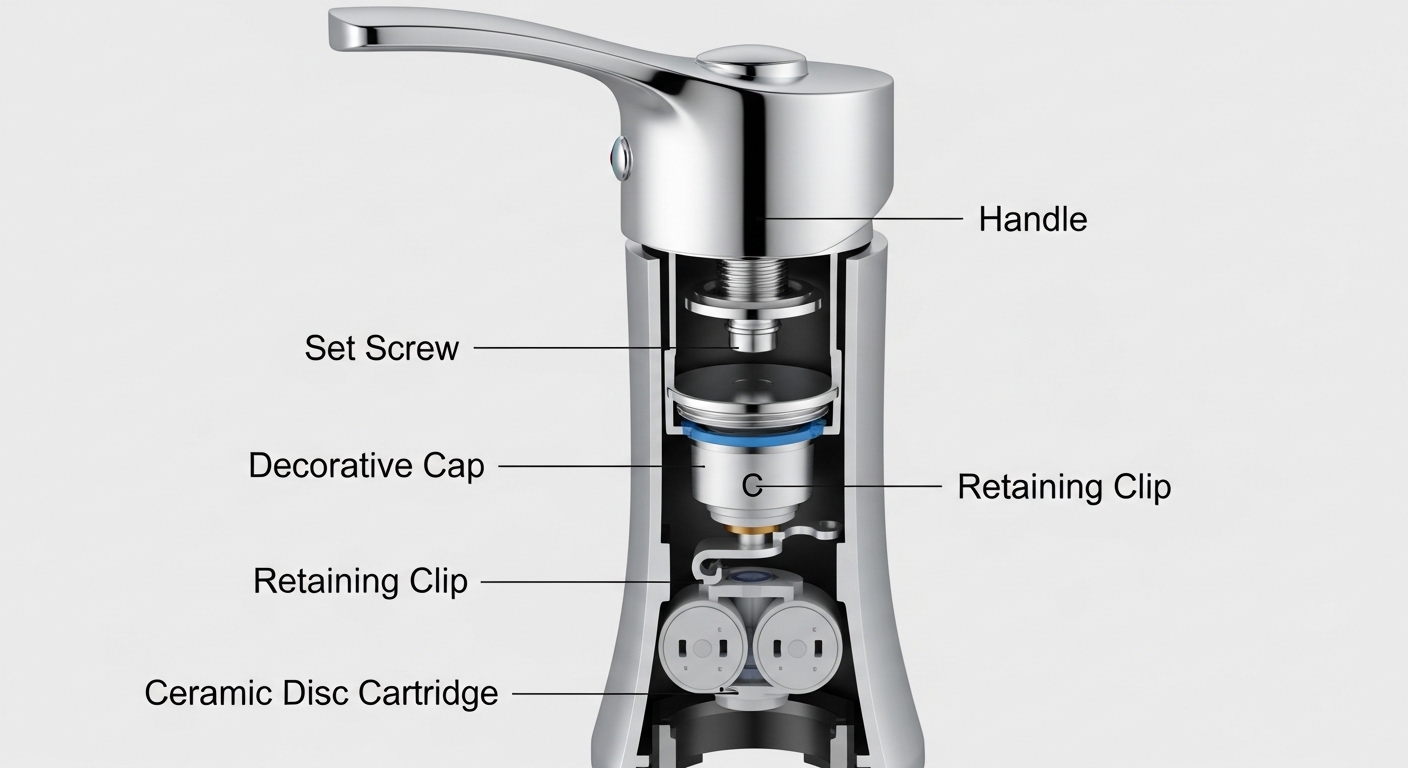
Learning how to fix a leaky faucet cartridge handle is one of the most satisfying small plumbing wins you can score, because the part that’s almost always to blame — the cartridge — is cheap, replaceable, and designed to be swapped out. If your single-handle kitchen or bathroom faucet drips after you shut it off, or water sneaks out around the base of the handle when it’s running, the cartridge inside has worn out. You don’t need a plumber, you don’t need to replace the whole faucet, and you don’t need special skills. You need the right replacement cartridge, about half an hour, and the step-by-step below.
I’ve walked hundreds of customers through this exact repair, and the pattern is always the same: people overestimate how hard it is and underestimate how much they’ll save. A plumber visit runs $125–$250; the part costs less than a pizza. Let’s get into it.
What actually causes a faucet cartridge handle to leak?
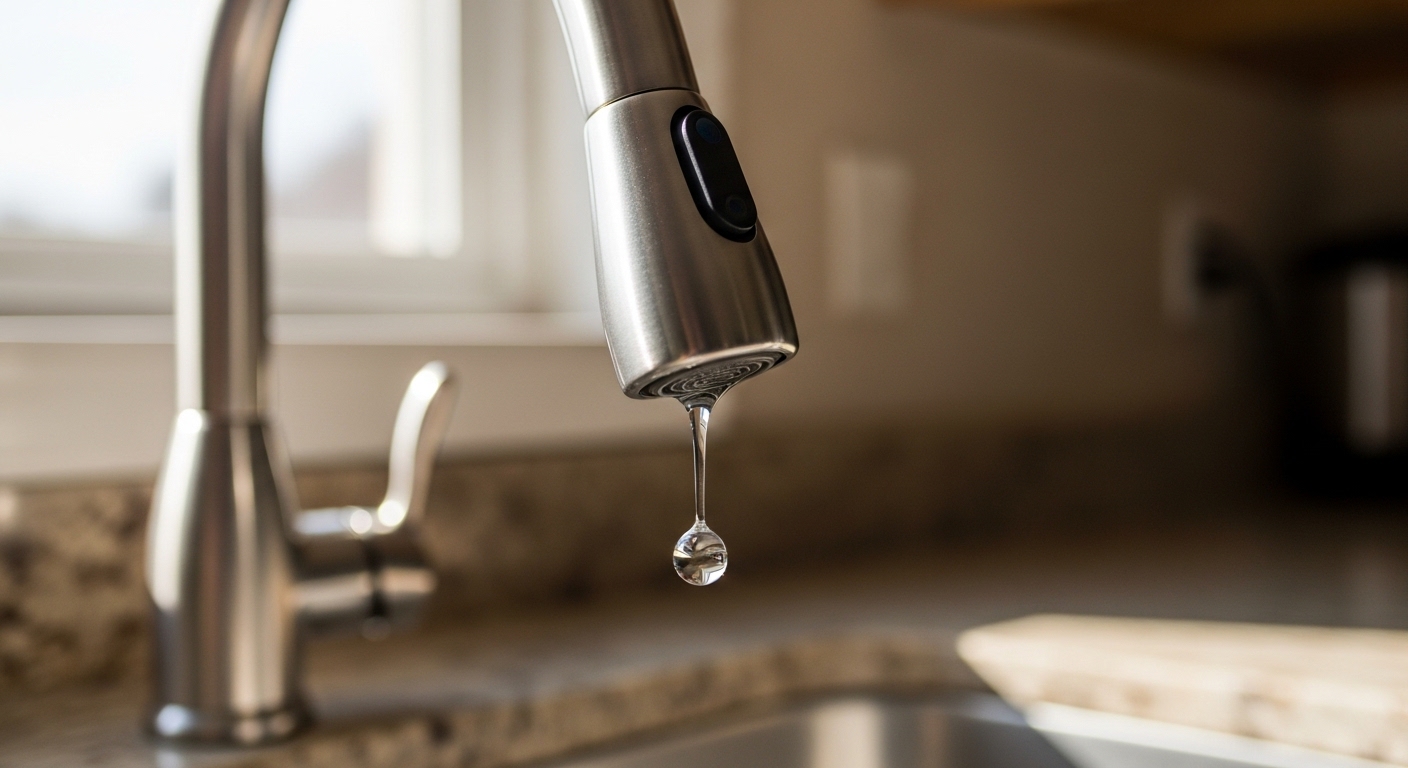
A cartridge handle leaks because the internal seals — the rubber O-rings and the ceramic or brass disc inside the cartridge — have worn down, cracked, or filled with mineral scale. The cartridge is the valve that opens and closes when you move the handle, so when it fails, water either drips from the spout (worn disc) or seeps out around the handle base (worn O-rings).
Here’s the plain-English version of what’s happening. Every time you turn the handle, the cartridge slides or rotates to let hot, cold, or mixed water through. Over years of use, three things go wrong:
- The O-rings dry out and shrink. These rubber rings seal the cartridge against the faucet body. When they harden, water escapes around the handle or down the spout. This is the single most common cause of a slow drip.
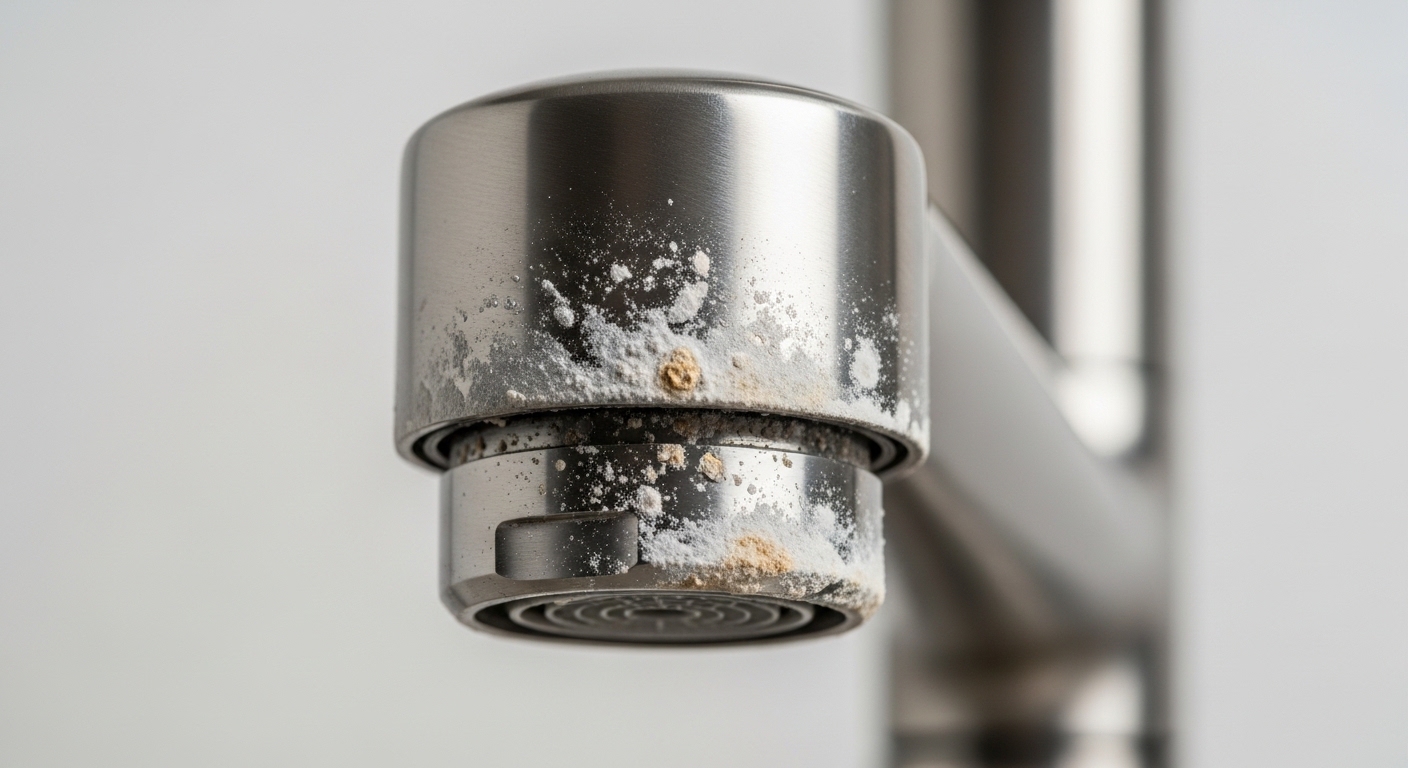
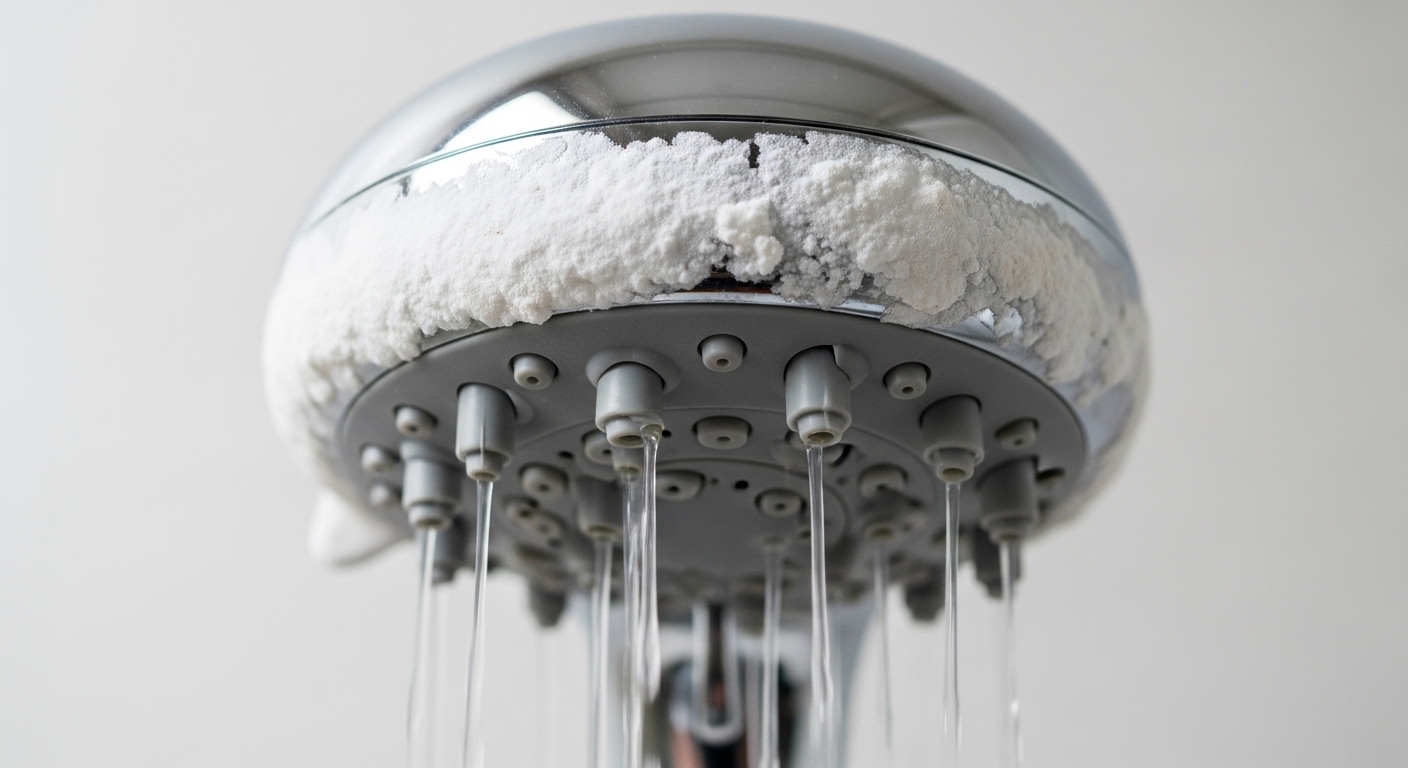
- Mineral buildup scratches the seal. Hard water leaves limescale that grinds against the ceramic disc, so it no longer closes water-tight. If you live somewhere with hard water, expect cartridges to wear faster.
- The cartridge body cracks. Cheaper plastic cartridges can split with age and temperature cycling, which causes leaks that no amount of cleaning will fix.
The good news: all three problems are solved the same way — replace the cartridge (and its O-rings) with a fresh one. If you want to go deeper on just the rubber seals, our guide on how to repair faucet O-rings covers that piece in detail, and it pairs perfectly with this cartridge swap.
How do I know if it’s the cartridge and not something else?
It’s the cartridge if your faucet drips from the spout after you shut it off, the handle feels loose or hard to turn, or water leaks around the handle when running — and you’ve already ruled out a loose connection or a bad aerator. Diagnose before you disassemble so you buy the right part once.
Run through this quick checklist:
- Drip from the spout when off? Classic worn cartridge disc. Cartridge replacement fixes it.
- Water around the handle base when running? Worn cartridge O-rings. Same fix.
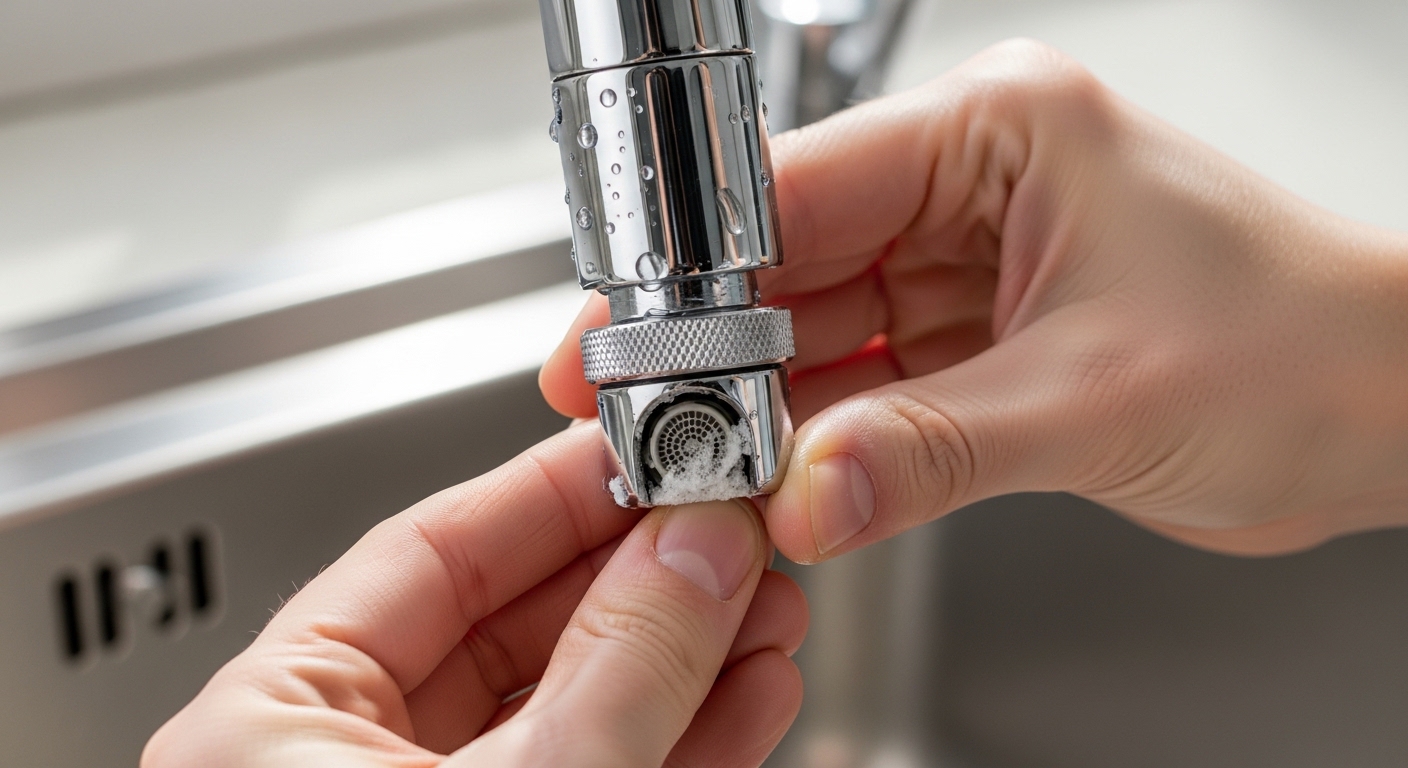
- Leak only at the very tip / sprayer? That’s often the aerator, not the cartridge — see why your faucet aerator is leaking before you tear into the handle.
- Handle just wobbly, no drip? You may only need to tighten it. Check how to fix a loose bathroom faucet handle first.
- Leak under the sink or at the base? That’s supply lines or the deck seal, covered in finding the cause when your bathroom faucet is leaking.
If your symptoms match the first two, you’re in the right place. Cartridge it is.
What tools and parts do I need to fix a leaky cartridge handle?
You need a Phillips or hex (Allen) screwdriver, an adjustable wrench or channel-lock pliers, needle-nose pliers, plumber’s silicone grease, a rag, and — most importantly — the exact replacement cartridge for your faucet model. Total cost is usually $10–$35 in parts.
The cartridge is the make-or-break part. Faucets are NOT universal — a Moen cartridge won’t fit a Delta, and even within one brand there are several cartridge styles. Get the brand and model number off the faucet (often on the underside, the original box, or the spec sheet) before you buy. If you own a Kohler, the Kohler faucet parts replacement catalog guide shows how to match your exact model so you don’t buy the wrong cartridge twice.
| Item | What it’s for | Typical cost |
|---|---|---|
| Replacement cartridge | The core fix — new valve and seals | $10–$30 |
| Silicone plumber’s grease | Lubricates O-rings so they seal and slide | $5–$8 |
| Adjustable wrench / channel-locks | Loosens retaining nut | $10–$20 |
| Hex / Phillips screwdriver | Removes handle set screw | $5–$15 |
| Needle-nose pliers | Pulls the retaining clip and old cartridge | $8–$12 |
| Cartridge puller (optional) | Frees a stuck/seized cartridge | $15–$25 |
That cartridge puller is optional but worth knowing about. On older faucets or hard-water homes, the cartridge can fuse in place with mineral deposits, and a puller saves a lot of cursing.
How do I fix a leaky faucet cartridge handle step by step?
Shut off the water, remove the handle, pull the old cartridge, install the new one in the same orientation, and reassemble. Here’s the full sequence — follow it in order and you’ll know exactly how to fix a leaky faucet cartridge handle from start to finish.
- Shut off the water. Turn the two valves under the sink clockwise until they stop. No under-sink shutoffs? Close the home’s main. Then open the faucet to release pressure and confirm the water’s truly off.
- Plug the drain. Drop in the stopper or a rag so a dropped screw or clip can’t vanish down the drain. This sounds trivial until you lose a $20 retaining clip.
- Remove the handle. Pry off the decorative cap (often hiding a hex screw), then loosen the set screw with your screwdriver or Allen key. Lift the handle straight up and off.
- Remove the trim and retaining nut. Unscrew the dome/bonnet nut or unclip the trim sleeve. Underneath you’ll see the cartridge held by a small horseshoe-shaped retaining clip.
- Pull the retaining clip. Grab it with needle-nose pliers and slide it straight out. Set it where you can find it — you’ll reuse it.
- Note the orientation, then pull the cartridge. Cartridges are keyed — there’s usually a notch or flat that must face a specific direction. Snap a phone photo first. Then pull the old cartridge straight up; twist gently or use a puller if it’s stuck.
- Compare old and new. Lay the new cartridge next to the old one. They must match in length, stem shape, and port layout. If they don’t, stop — you have the wrong part.
- Grease and install the new cartridge. Smear a thin film of silicone grease on the new O-rings. Push the cartridge in, aligning the keyed notch exactly as the old one sat. It should seat fully with no gap.
- Reinstall the clip, nut, and handle. Reverse your steps — clip in, nut snug (hand-tight plus a quarter turn, don’t crank it), handle back on, set screw tightened, cap pressed back.
- Turn the water back on slowly. Open the shutoffs gradually, then run the faucet hot and cold for 30 seconds. Check for drips at the spout and around the handle.
If everything’s dry, you’re done. If it still drips, the cartridge may be seated slightly off-key or the retaining nut isn’t fully snug — re-seat it. And if a brand-new cartridge still leaks, our breakdown of why a new faucet still leaks covers the less-obvious culprits like debris on the seat or a cracked faucet body.
Can I just clean the cartridge instead of replacing it?
Sometimes — if the cartridge is only clogged with limescale and the seals are still intact, soaking it in white vinegar for 2–4 hours and scrubbing the disc can restore a clean shut-off. But if the O-rings are cracked or the disc is scored, cleaning is a temporary patch and you should replace it.
Here’s my honest take after years of these repairs: cleaning buys you a few months at best on a cartridge that’s already failing. The part is cheap enough that if you’ve already shut off the water and pulled it out, replacing it is the smarter use of your effort. Save the vinegar trick for when you can’t get the exact replacement immediately and need a working faucet tonight. If hard water is your real enemy, descaling the whole fixture regularly — like in our faucet base limescale removal guide — extends cartridge life noticeably.
How long should a faucet cartridge last, and how do I make it last longer?
A quality brass or ceramic-disc cartridge lasts 10–20 years; a cheap plastic one might fail in 3–5. Water hardness, usage frequency, and cartridge material are the three biggest factors. You extend its life mainly by controlling mineral buildup and not over-tightening the handle.
| Cartridge type | Typical lifespan | Best for | Leak resistance |
|---|---|---|---|
| Ceramic disc | 15–20 years | Most modern single-handle faucets | Excellent |
| Brass (compression) | 10–15 years | Older two-handle faucets | Very good |
| Plastic / polymer | 3–7 years | Budget faucets | Fair |
| Ball valve (Delta-style) | 8–12 years | Classic single-handle kitchen taps | Good |
To get the long end of those ranges: don’t slam the handle shut (that grinds the disc), descale the faucet a couple of times a year if you have hard water, and when you do replace a cartridge, spend the extra few dollars on a ceramic-disc unit from the faucet’s actual manufacturer. The build quality of the faucet body matters too — solid brass bodies hold seals better than zinc, which is exactly why we break down brass vs zinc faucets for buyers who want fixtures that simply leak less over their lifetime.
Author note & why you can trust this guide
This guide was written by the WOWOW Faucet product and technical team, the same people who design, pressure-test, and warranty the faucets we sell. Every WOWOW single-handle faucet ships with a ceramic-disc cartridge rated for 500,000 open-close cycles and is tested to North American flow and durability standards (cUPC / NSF-61 compliant), backed by a limited lifetime warranty on the cartridge and finish. We’ve handled thousands of cartridge questions from real customers, and the steps above reflect what actually works on a kitchen or bathroom faucet in a normal home — not lab-only theory. When a repair is genuinely beyond a cartridge swap, we tell you, because sending someone confidently into the wrong fix is how good faucets get replaced for no reason.
FAQ
Do I need to turn off the main water supply to replace a faucet cartridge?
Not usually — most sinks have two shutoff valves directly underneath that isolate just that faucet. Turn both clockwise until they stop, then open the faucet to confirm the water’s off. Only shut the home’s main valve if your sink lacks individual shutoffs or they’re seized.
Why does my faucet still drip after I replaced the cartridge?
The three most common reasons are a cartridge installed slightly off its keyed alignment, a retaining nut that isn’t snug enough, or debris sitting on the valve seat that’s holding the new cartridge open. Re-seat the cartridge in the correct orientation, snug the nut, and flush the line. If it persists, the faucet body itself may be cracked or pitted.
How do I find the right replacement cartridge for my faucet?
Match it by brand and model number, found on the faucet’s underside, the original packaging, or the manufacturer’s spec sheet. Take the old cartridge to the store or photograph it next to a ruler. Cartridges are not interchangeable between brands, so never buy by appearance alone — a one-millimeter difference in stem length means it won’t seal.
Is replacing a cartridge cheaper than replacing the whole faucet?
Far cheaper. A cartridge costs $10–$30 and takes 30 minutes; a new faucet costs $80–$400 plus installation. Unless the faucet body is cracked or the finish is failing, a cartridge swap is almost always the right call. Replace the whole faucet only when you actually want a new style or the brass body is corroded through.
How often should I replace my faucet cartridge?
Only when it starts leaking or the handle gets stiff — there’s no fixed schedule. A good ceramic cartridge can last 15–20 years. If you’re replacing cartridges every couple of years, the real problem is hard water or a low-quality faucet body, and addressing those will save you the repeat work.
Can a leaky cartridge handle damage my faucet or sink?
A slow drip wastes water and, over time, leaves mineral stains and can corrode the faucet’s internal components. Water seeping around the handle can also reach the deck and, if ignored for months, the cabinet below. It won’t cause sudden damage, but fixing it promptly prevents staining and keeps a small repair from becoming a bigger one.