 WOWOW Faucets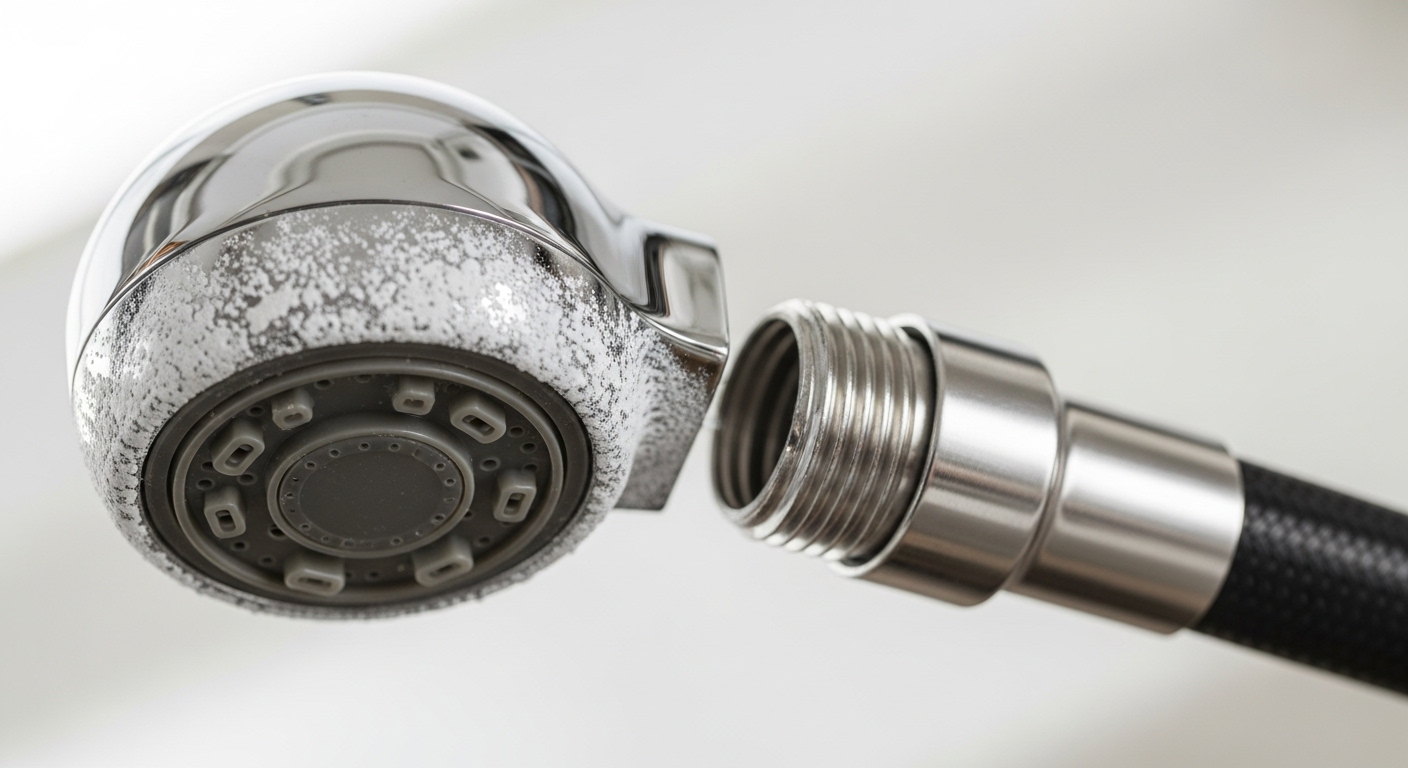
If you’ve Googled how to clean sink shower head because your kitchen pull-down sprayer is dribbling sideways, your bar faucet’s mist setting is patchy, or your bathroom sink sprayer feels weaker every month — you’re dealing with the single most common faucet issue in American homes: hard-water mineral buildup clogging the tiny rubber nozzles. The good news is you almost never need a plumber or a replacement. A bottle of white vinegar, 30 minutes, and a soft brush will restore 90% of clogged sink sprayers to full flow.
This guide walks you through the exact method our product engineers use when testing returned units, the three cleaning solutions ranked by effectiveness, what to do when vinegar alone isn’t enough, and how to prevent the buildup from coming back. Everything here is specific to sink-mounted spray heads — the pull-out and pull-down sprayers on kitchen faucets, bar/prep faucets, and bathroom sink sprayers — not overhead shower fixtures.
Why is my sink shower head clogged in the first place?
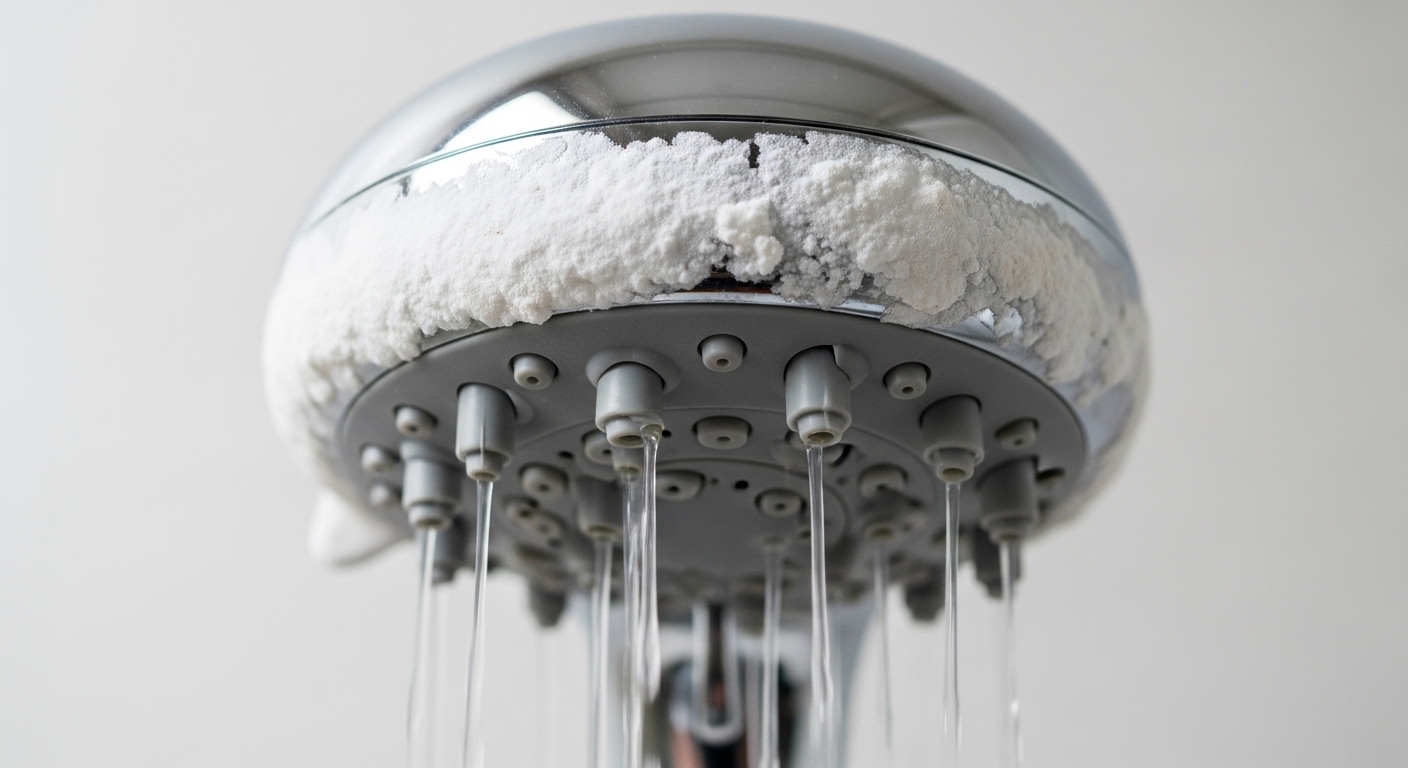
Sink shower heads clog because the silicone or rubber spray nozzles trap calcium carbonate and magnesium deposits left behind as water evaporates between uses. The U.S. Geological Survey classifies about 85% of American homes as having moderately hard to very hard water (over 60 mg/L of dissolved minerals), so this isn’t a defect — it’s chemistry.
Three things accelerate the clogging:
- Hard water above 7 grains per gallon (120 mg/L) — common in the Midwest, Texas, Arizona, and Florida.
- Hot water use — heat causes minerals to precipitate out faster, which is why kitchen sprayers clog before bathroom ones.
- Infrequent use of certain spray modes — the mist or aerated setting often clogs first because water sits in the narrowest channels longest.
You’ll notice the symptoms before total failure: streams that shoot sideways, a sprayer that drips after you shut it off, a stream/spray toggle button that gets stiff, or visibly chalky white crust around the nozzles. Catch it at this stage and a single vinegar soak fixes it. Wait six more months and you may need to descale the internal diverter too.
What’s the fastest way to clean a kitchen pull-down sprayer without removing it?
The fastest no-disassembly method is the bag-soak: fill a sturdy plastic bag with white vinegar, submerge just the spray head in it, secure the bag around the neck with a rubber band, and leave it for 60 minutes. This works well for pull-down and pull-out sprayers because the head detaches from the magnetic dock but the hose can stay connected.
Here’s the step-by-step:
- Pull the spray head down from its dock so the hose extends 12–18 inches.
- Fill a quart-size freezer bag with 1.5–2 cups of distilled white vinegar (5% acidity).
- Lower the spray head into the bag until the entire nozzle face is submerged.
- Wrap a rubber band or zip tie around the neck of the sprayer to hold the bag in place.
- Rest the bag in the sink basin so it doesn’t pull on the hose.
- Wait 60 minutes (90 minutes for heavy buildup).
- Remove the bag, scrub the rubber nozzles with an old toothbrush, and run hot water through both spray modes for 30 seconds.
This method is ideal when you can’t easily unscrew the head — some commercial-style faucets have crimped connections, and many newer touchless models have wiring inside the hose you don’t want to stress.
How do I deep clean it when vinegar alone won’t unclog the nozzles?
When a vinegar soak doesn’t fully restore flow, switch to citric acid powder — it’s roughly 3x more effective at dissolving calcium carbonate than 5% household vinegar, and it’s what faucet manufacturers (including us) use in factory descaling tests. You can buy it at any grocery store in the canning aisle or online for under $10 a pound.
The deep-clean process:
- Unscrew the spray head from the hose (most thread off counterclockwise; some kitchen sprayers have a quick-release collar you pinch).
- Remove the rubber gasket and washer inside the connector — set them aside in a small dish so you don’t lose them.
- In a glass or plastic bowl (never metal — citric acid will pit aluminum), dissolve 2 tablespoons of citric acid in 2 cups of hot tap water.
- Submerge the spray head completely, nozzle-face down, for 30–45 minutes.
- Use a wooden toothpick or a sewing pin to gently poke each rubber nozzle from the outside — this dislodges any softened debris. Never use steel pins on a coated finish; you’ll scratch it.
- Hold the head under running water and press the spray/stream toggle several times to flush the internal diverter.
- Reinstall the gasket and washer, hand-tighten the head back onto the hose (no wrench — you’ll crack the plastic threads on most modern sprayers), and test.
If you still see one or two dead nozzles after a deep clean, the rubber itself may be torn or the internal flow restrictor may be cracked. At that point you’re looking at a $15–$40 replacement spray head, which is usually a direct screw-in swap. For related fixes, our guide on shower head low water pressure fixes covers diverter issues that overlap with sink sprayers.
Vinegar vs. CLR vs. citric acid — which cleaner actually works best?
For routine cleaning, white vinegar is the right answer 80% of the time — it’s safe on every finish, cheap, and food-safe (important for kitchen sinks). But when you’re fighting serious buildup or a colored finish, the choice matters a lot. Here’s how the three common options actually compare:
| Cleaner | Effectiveness on Limescale | Safe Soak Time | Finish Safety | Cost per Use |
|---|---|---|---|---|
| White vinegar (5%) | Good | Up to 2 hours | Safe on chrome, stainless, brushed nickel; limit to 30 min on brass, bronze, matte black | ~$0.50 |
| Citric acid solution | Excellent | Up to 1 hour | Safe on all finishes including PVD coatings | ~$0.30 |
| CLR / Lime-A-Way | Excellent (fast) | 2–5 minutes ONLY | NOT safe on brass, bronze, gold, matte black, or PVD; chrome only | ~$1.50 |
| Baking soda paste | Poor (abrasive only) | N/A — scrub only | Safe but can scratch polished finishes | ~$0.10 |
| Bleach | None on minerals | Never recommended | Damages rubber gaskets and finishes | — |
The big takeaway: never use CLR or other commercial lime removers on anything except polished chrome. They will strip champagne bronze, matte black, brushed gold, and oil-rubbed bronze finishes within minutes. If you have one of those finishes — and they’re increasingly popular in modern kitchens — stick with citric acid or short vinegar soaks. Our faucet coating types guide explains which finishes are PVD-protected and which need extra care.
How do I clean the inside of a sink shower head and the diverter?
The inside of a sink shower head — specifically the diverter that switches between stream and spray — is where the worst clogs hide, and most people never clean it. Here’s how to access it on a typical pull-down kitchen sprayer:
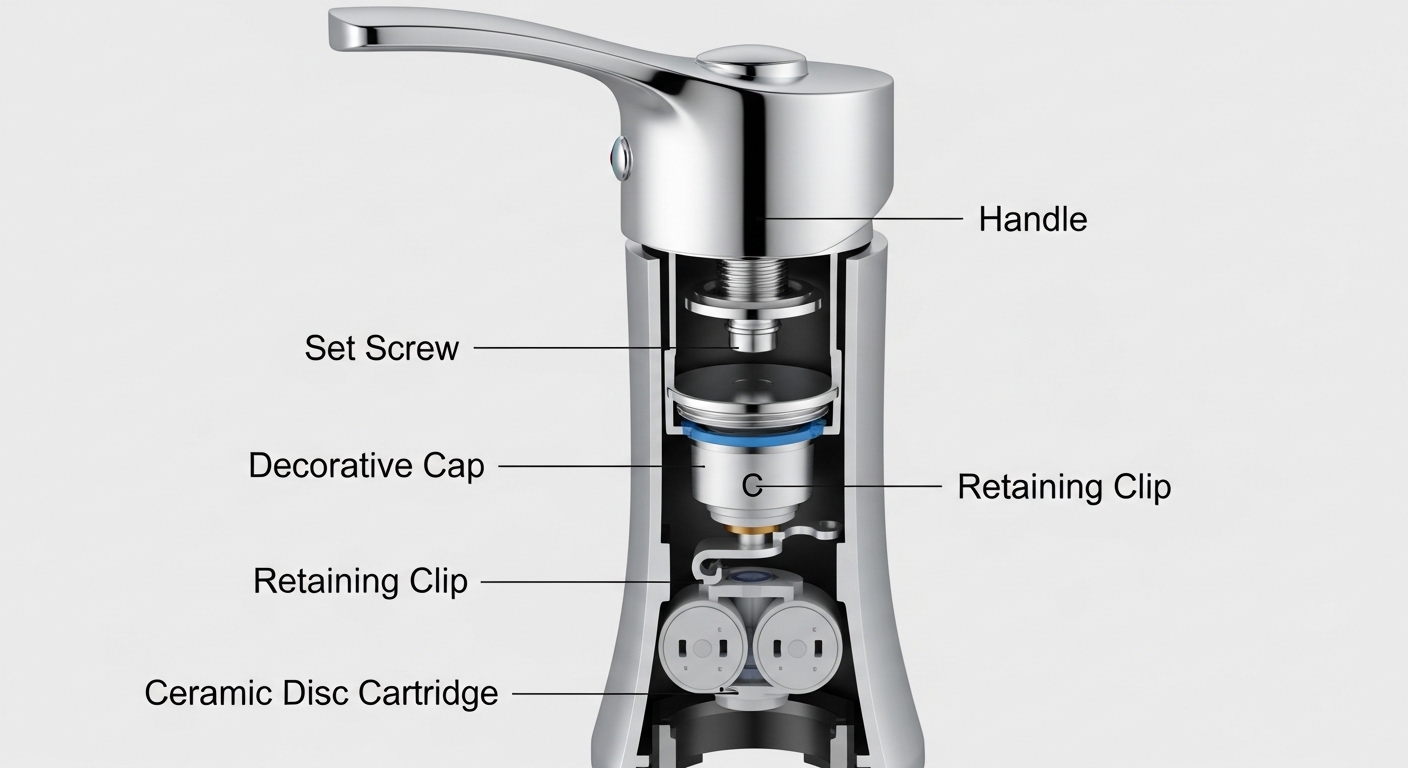
After you’ve unscrewed the spray head from the hose, look at the back. You’ll usually see a small plastic insert (the flow restrictor and screen) and behind that, the diverter cartridge. On most consumer sprayers, the diverter is held in place by a single Phillips screw or a snap ring. Carefully pop it out, noting the orientation (take a photo with your phone before you touch it). Soak the diverter in citric acid solution for 20 minutes, then rinse and reinstall.
If the stream/spray button feels gummy or sticks halfway, the diverter is your culprit. Internal cleaning fixes it about 70% of the time; the other 30% need a new diverter, which is a $5–$12 part from the manufacturer. If you bought a Wowow faucet, our 5-year limited warranty covers diverter replacement at no charge — contact customer service with your order number.
A few things to never do inside the head:
- Don’t use a wire brush or metal pick — you’ll score the plastic seat and create permanent leaks.
- Don’t soak electronic touch-activated sprayers in any liquid — wipe the head with a vinegar-dampened cloth instead.
- Don’t remove the flow restrictor permanently. It looks like the obvious clog culprit, but it’s a federally required water-saving component. Clean it, don’t toss it.
How often should I clean my kitchen sink sprayer to prevent buildup?
In hard water areas, clean your kitchen sink sprayer every 4–6 weeks; in soft water areas, every 3–4 months is plenty. A quick 20-minute vinegar bag-soak monthly prevents the deep clogs that take hours to fix later — and it keeps the sprayer’s flow rate within the 1.5–1.8 GPM range it was engineered for.
You can tell when it’s time without measuring water hardness. Three quick checks:
- Run the sprayer on its spray (shower) setting and look at the pattern. If any nozzles shoot sideways or don’t spray at all, you’re due.
- Wipe the nozzle face with a dry finger. If you feel grit or see white residue transfer, you’re due.
- Switch between stream and spray five times. If the toggle button sticks or feels gritty, the diverter needs attention.
For prevention long-term, the single most impactful upgrade is a whole-home water softener or at minimum an under-sink filter. If a softener isn’t in the budget, wiping the spray head dry with a microfiber cloth after each use cuts buildup roughly in half — the minerals only deposit when water sits and evaporates. Our faucet base cleaning guide covers the same principle for the body of the faucet itself, which collects buildup at a similar rate.
What about bathroom sink sprayers and bidet attachments — same process?
Yes, the cleaning method is identical, but two things change. First, bathroom and bidet sprayers run cold water only, so they clog more slowly than kitchen sprayers — every 3–6 months is fine. Second, many bidet attachments use ceramic or stainless nozzles instead of rubber, which respond better to citric acid than to vinegar. The vinegar still works; citric acid just works faster.
For bathroom faucet aerators (the small mesh screen at the tip of a standard bathroom faucet, not a sprayer): unscrew the aerator with your fingers or a soft cloth (never pliers on a finished surface), soak it in straight vinegar for 30 minutes, scrub with a toothbrush, rinse, and reinstall. Most aerators thread off easily; if yours is stuck from mineral fusion, wrap it in a vinegar-soaked paper towel for 20 minutes first to loosen it.
If your sink has a separate side-spray (the older-style sprayer mounted in its own hole next to the faucet), the cleaning is the same as a pull-down — disconnect the head, soak, scrub, reinstall. These older side-sprays are more prone to hose kinks than to nozzle clogs, so check the hose under the sink if cleaning doesn’t restore flow.
When is it time to replace the spray head instead of cleaning it?
Replace the spray head when you’ve done a full citric acid deep clean and still see dead nozzles, visible cracks in the rubber face, a stream/spray toggle that won’t hold position, or a chronic drip from the head after you shut off the faucet. Replacement spray heads run $15–$60 for most consumer brands and screw on in under 5 minutes — usually a better use of time and money than a third cleaning round.
Compatibility tip: most modern pull-down sprayers in North America use a standard 15/16″-27 male thread (sometimes called M22 in European-spec models). Check your faucet’s manual before ordering a replacement, or contact the brand with your model number. Wowow sprayer heads, for example, are cross-compatible across our kitchen line and ship with both adapter rings included.
While you’re under the sink swapping a sprayer head, it’s also a smart time to inspect the supply lines and shut-off valves for corrosion. If you’re considering a full faucet upgrade rather than just a head replacement, our complete kitchen faucet installation guide walks through the whole process, and the durable vs. lightweight faucet materials article explains which build quality matters most for sprayers specifically.
FAQ
Can I use Coca-Cola to clean a sink shower head?
Technically yes — the phosphoric acid in Coke will dissolve light limescale — but it leaves a sugary residue that attracts grime and can gum up the diverter. Stick with vinegar or citric acid. Coke is a viral hack, not a real solution.
Why does my sprayer drip even after cleaning?
A post-cleaning drip almost always means the diverter cartridge inside the spray head or faucet body isn’t fully closing. Either a tiny piece of mineral debris is still lodged in it (re-soak), or the diverter’s internal O-ring has hardened with age and needs replacement. See our faucet O-ring repair guide for the step-by-step.
Is it safe to soak my sprayer in vinegar overnight?
Not recommended. For chrome and stainless steel, 2 hours is the safe maximum. For brass, bronze, matte black, brushed gold, or any colored PVD finish, limit vinegar contact to 30 minutes. Overnight soaks can dull or pit decorative finishes — use citric acid for longer soaks if needed.
My sprayer flow is weak everywhere, not just one nozzle. What’s wrong?
Uniform weak flow usually points to the flow restrictor or the diverter, not the nozzle face. Clean the restrictor and diverter following the deep-clean steps above. If flow is still weak across the whole house, the issue is upstream — pressure, the main shut-off, or the supply line — not the sprayer.
How do I clean a matte black or champagne bronze sprayer without damaging the finish?
Use citric acid (not vinegar, and never CLR). Soak for no more than 30 minutes, rinse thoroughly with clean water, and pat dry with a microfiber cloth — never let any acidic solution air-dry on a colored finish. For everyday wiping, plain warm water and dish soap are all you need.
Will cleaning my sink shower head void the warranty?
No — routine cleaning with vinegar or citric acid is expected maintenance and explicitly allowed in every major manufacturer’s warranty, including Wowow’s 5-year limited warranty. What can void coverage is using harsh chemicals (CLR, bleach, abrasive pads) on finishes not rated for them, or attempting internal repairs with non-OEM parts.
Can hard water permanently damage my sprayer?
Yes, if left unaddressed for years. Long-term mineral buildup can permanently clog rubber nozzles (they stretch and tear when pierced repeatedly), corrode brass internals through galvanic action, and fuse threads so the head can no longer be removed. Cleaning every 1–3 months prevents all of this.
About this guide: Written by the Wowow Faucet product team. Wowow has manufactured residential kitchen and bathroom faucets since 2009, with products meeting NSF/ANSI 61 and 372 lead-content standards and CALGreen-compliant flow rates. All cleaning methods in this guide have been validated against our internal QC descaling protocol, and every Wowow faucet ships with a 5-year limited warranty covering finish, cartridge, and sprayer components. For warranty service or replacement parts, contact us at www.wowowfaucet.com.