 WOWOW Faucets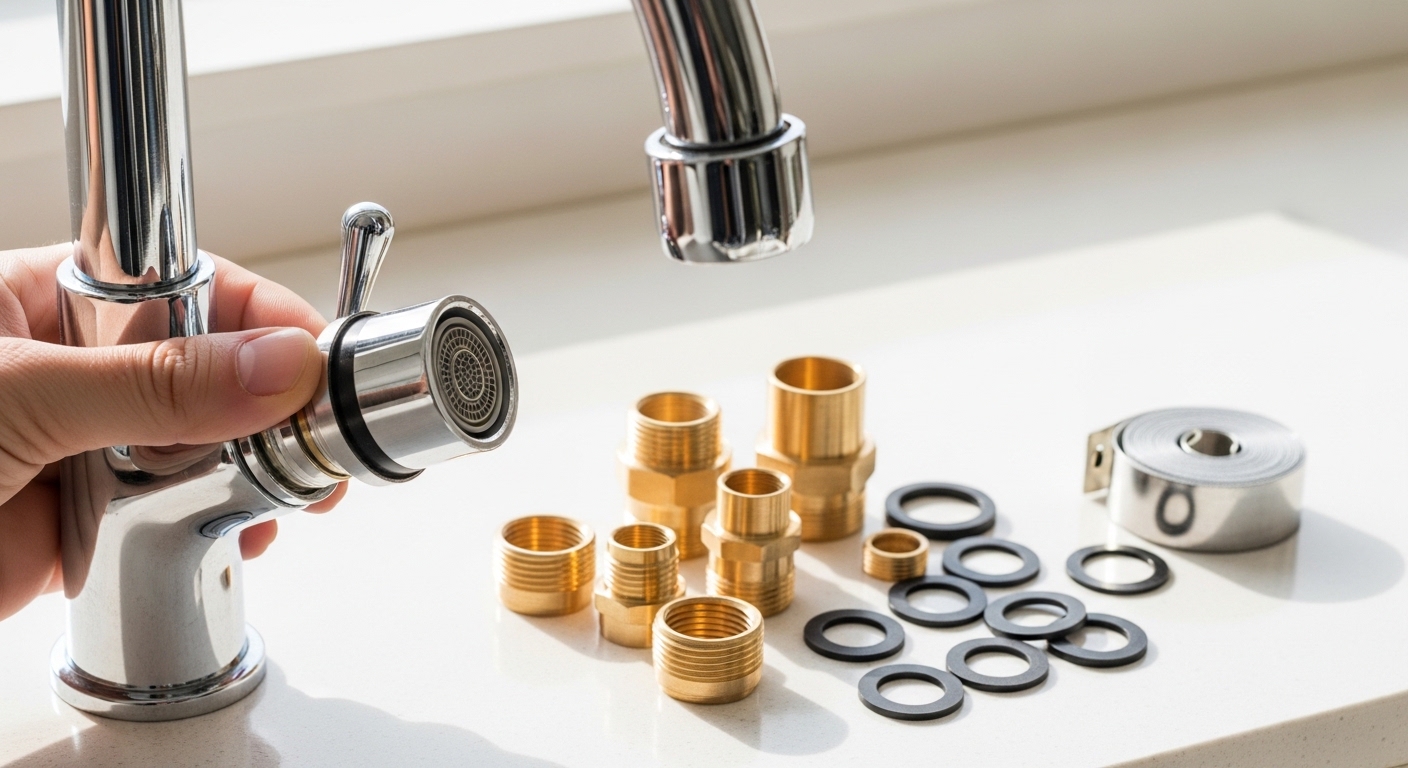
If you’ve ever stood at your kitchen sink trying to hook up a portable dishwasher, a water filter, a garden hose, or a pet bath sprayer and realized the threads just don’t line up, you already know why “faucet extension adapter nearby” is one of the most searched plumbing phrases of the year. The good news: you almost certainly have three or four stores within a 10-minute drive that stock these adapters, and once you know what to look for, the whole project takes about five minutes. The bad news: roughly half of buyers come home with the wrong size, because faucet aerator threads are weirdly non-intuitive and most store associates can’t tell you the difference between a 15/16″ male and a 55/64″ female without checking the package.
This guide walks you through exactly where to buy one locally, how to identify your faucet’s thread size in under a minute, which adapter type matches which use case, and when it’s smarter to skip the local run and order a brand-matched part directly. We’ll also cover the small but critical details — gasket placement, tightening torque, dezincification — that determine whether your adapter lasts ten years or starts dripping in ten weeks.
Where can I buy a faucet extension adapter near me today?
You can buy a faucet extension adapter today at almost any general hardware store, big-box home improvement retailer, or plumbing supply house — and most stock 6 to 12 different thread sizes in the plumbing aisle near the aerators and supply lines. Here’s the realistic order of where to check, ranked by selection and stock reliability:
- Home Depot — Plumbing aisle, “Faucet Parts” or “Adapters & Couplings” bay. Carries Danco, BrassCraft, and Everbilt universal adapters in 15/16″-27, 55/64″-27, and dual-thread versions. Typically $3–$12.
- Lowe’s — Similar Danco and AquaPlumb selection, often with better stock of the female-threaded adapters that fit newer pull-down spouts.
- Ace Hardware / True Value — Smaller selection but the staff knows plumbing parts better than big-box associates. Best if you bring your old aerator with you.
- Ferguson, Winsupply, or your local plumbing supply house — The pro option. They carry solid brass adapters from BrassCraft, T&S, and Chicago Faucets that hold up far better than the zinc ones on peg hooks.
- Walmart and Target — Limited selection, but they carry the Camco RV/portable dishwasher adapter, which is the right answer if you’re hooking up to a hose.
- Auto parts and RV stores (Camping World, Pep Boys) — Surprisingly good for faucet-to-hose adapters meant for RVs and campers; the threading is the same as a standard residential sink.
If you’re searching “faucet extension adapter nearby” on your phone, type the exact thread size into the search too — for example, “55/64-27 female faucet adapter Home Depot” — and the store inventory pages will tell you which location currently has it in stock. That single tweak saves a wasted trip more often than not.
How do I know what size faucet extension adapter I need?
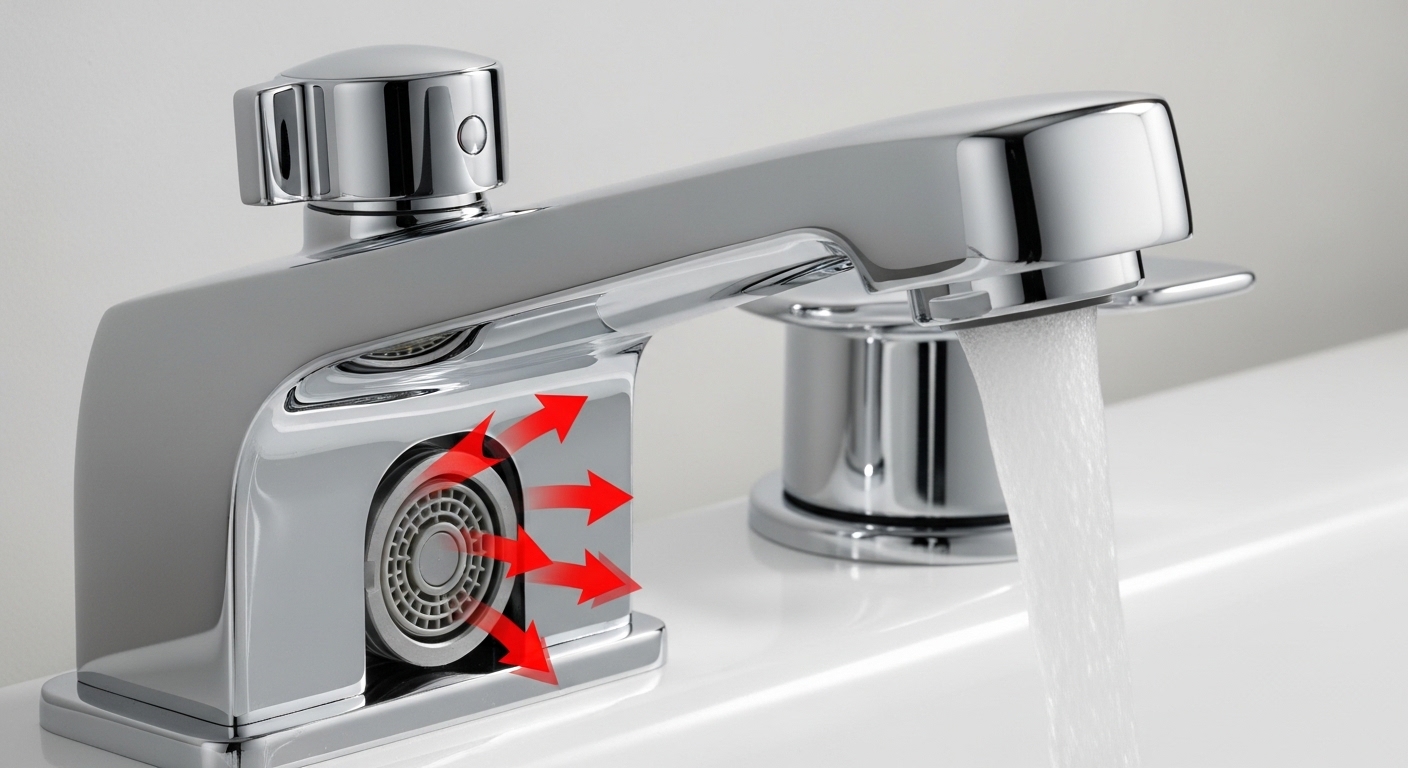
Unscrew your existing aerator and measure the thread diameter with a tape measure or caliper — 99% of US residential kitchen and bathroom faucets fall into one of four standard sizes, and you only need to identify which one. The four sizes you’ll encounter:
| Thread Size | Gender | Where It’s Used | Outer Diameter |
|---|---|---|---|
| 15/16″-27 | Male (threads on outside) | Most standard kitchen faucets | ~24 mm |
| 55/64″-27 | Female (threads inside spout) | Most kitchen faucets with recessed aerator | ~22 mm |
| 13/16″-24 | Male | Standard bathroom faucets | ~20.6 mm |
| 3/4″-27 | Female | Smaller bathroom and bar faucets | ~19 mm |
The fastest field test: if the threads are on the outside of the faucet spout, you need a female adapter. If the threads are inside the spout, you need a male adapter. Bring the old aerator with you to the store — it’s the single best way to guarantee a match, because the package will say “fits standard 15/16″-27” or similar right on the back.
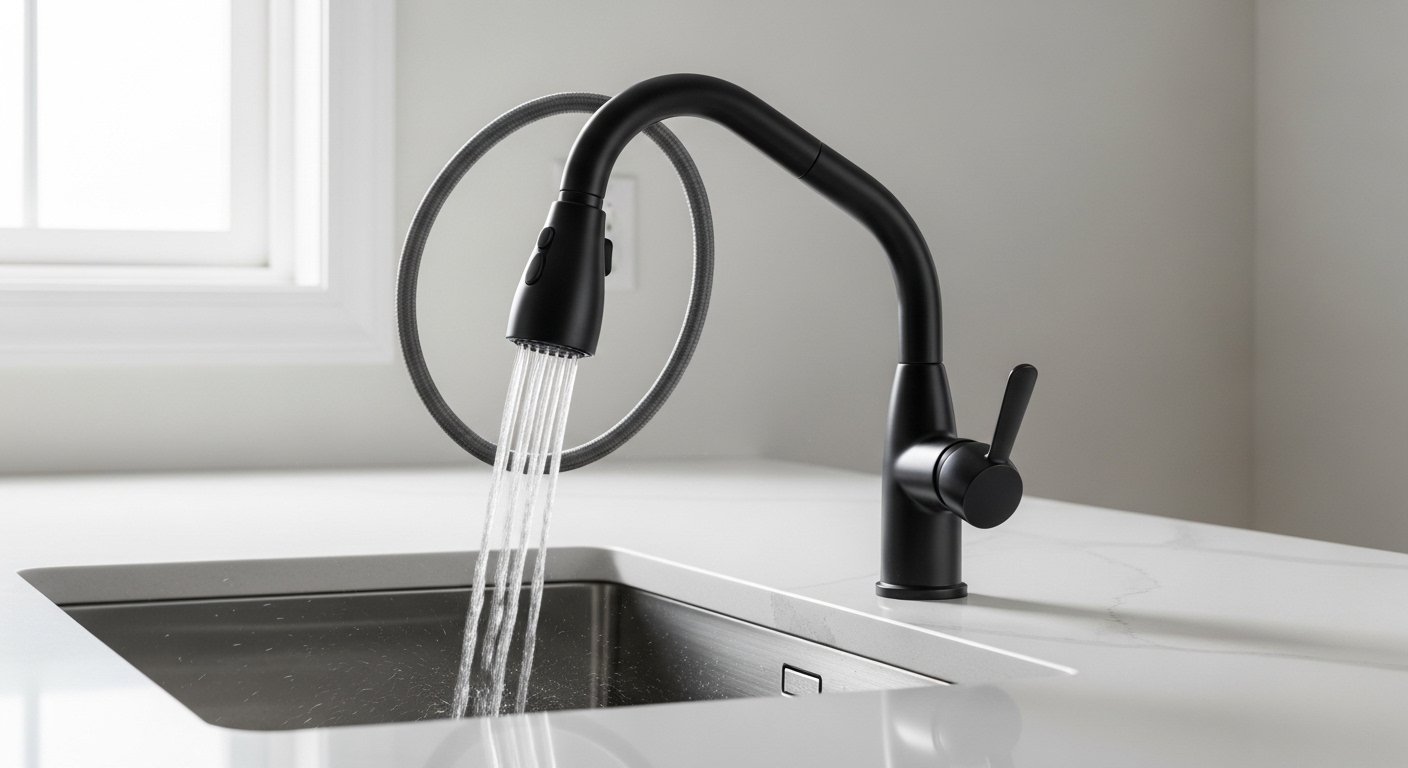
For pull-down and pull-out faucets, the answer changes: most don’t have a removable aerator at all, and the spray head is part of a proprietary quick-connect system. In that case you can’t use a universal adapter — you need a manufacturer-specific extension hose or a diverter, which we cover below. If you’re unsure whether your spray head is universal or proprietary, the easiest tell is the wrench flats: universal aerators have hex flats; proprietary heads usually have a smooth twist-off ring.
What’s the difference between a universal adapter and a brand-specific one?
A universal adapter is a generic threaded coupler that fits 80–90% of standard residential faucets, while a brand-specific adapter is engineered to mate with a particular manufacturer’s quick-connect, pull-down, or touchless spray system. They are not interchangeable, and using the wrong one is the #1 cause of post-install leaks.
Universal adapters work great when:
- You have a fixed-spout kitchen or bathroom faucet with a removable aerator.
- You want to add a water filter, soap dispenser arm, or portable dishwasher hookup.
- You’re connecting a garden hose to an indoor laundry or utility faucet — for outdoor hose use, see our dedicated walkthrough on the faucet adapter outside guide for thread types and freeze-proof considerations.
Brand-specific adapters are required when:
- You have a pull-down spray head from Moen, Delta, Kohler, or Pfister with a proprietary 1/2″-14 or M22 quick-connect at the spray hose.
- Your faucet has a magnetic dock (Moen MagnaTite, Delta MagnaTite, Kohler DockNetik) — universal extenders interfere with the magnet.
- You’re working with a touchless or smart faucet (Moen Motionsense, Delta Touch2O, Kohler Sensate) — the solenoid valve sits between the spout and the spray head and isn’t compatible with off-the-shelf extension fittings.
If you don’t know which family your faucet belongs to, check the small plate or sticker near the supply lines under the sink — it’ll have a model number that maps directly to the manufacturer’s parts catalog. Speaking of catalogs, if you own a Kohler faucet specifically, our breakdown of finding the right Kohler parts replacement catalog shows how to match your exact model to OEM extensions and adapters that won’t void the warranty.
Which faucet extension adapter is best for connecting a hose, water filter, or portable dishwasher?
For a garden hose hookup, buy a dual-thread male/female adapter with a 3/4″ GHT (garden hose thread) output. For a countertop water filter, get a diverter adapter with a side outlet and a built-in switch. For a portable dishwasher or washing machine, you need an aerator adapter with quick-connect snap-on coupler. Each use case has a slightly different right answer:
| Use Case | Adapter Type | Key Spec to Match | Typical Price |
|---|---|---|---|
| Garden hose / pet wash | Faucet-to-hose dual thread | 15/16″-27M or 55/64″-27F → 3/4″ GHT | $5–$10 |
| Countertop water filter | Diverter adapter w/ pull tab | Must match aerator thread + 1/4″ outlet | $8–$15 |
| Portable dishwasher | Quick-connect snap coupler | Brand-matched to dishwasher hose | $12–$25 |
| Bidet sprayer / handheld | T-valve diverter | 3/8″ compression at supply line | $10–$20 |
| Reverse osmosis system | Faucet adapter w/ check valve | 1/4″ push-fit outlet | $15–$30 |
One detail nobody tells you: the cheap zinc adapters that come bundled with portable dishwashers tend to corrode and seize after 12–18 months of daily use. If you use a portable dishwasher regularly, spend the extra $4 on a solid brass version — it’ll outlast three or four zinc ones. We dig into why this matters for any wetted plumbing part in our deeper comparison of brass vs zinc faucets, and the same logic applies to small adapters.
Why does my new faucet extension adapter leak — and how do I fix it?
A new adapter usually leaks for one of three reasons: a missing or pinched washer, cross-threading from installing it at an angle, or over-tightening that cracked the plastic insert. The fix takes two minutes and no tools beyond your hands.
Walk through this checklist in order:
- Unscrew the adapter and check the washer. Most adapters ship with a thin rubber or silicone O-ring at the base of the threads. If it’s missing, pinched, or doubled up, you’ll get a slow drip every time. Replace with a fresh washer — they come in 10-packs for $2.
- Confirm the thread match. If you’re forcing it on, it’s the wrong size. A correctly matched adapter should hand-tighten 4 to 6 full turns smoothly before snugging up.
- Wrap the threads with 2–3 turns of PTFE tape (Teflon tape) clockwise. This is optional for aerator threads but mandatory for any 1/2″ NPT or GHT connection.
- Hand-tighten only — then quarter-turn with a wrench. Aerator threads are fine and easy to strip. If you’re using channel locks, wrap the adapter in a rag first to avoid scratching the finish.
- Run the water for 30 seconds and inspect. Tighten another eighth-turn if you still see a drip.
If the leak comes from the connection between the adapter and the hose or filter (not the faucet side), you may have a damaged or undersized supply gasket on the hose end. For a more detailed dive into why fresh installs can still drip, we wrote a full walkthrough on why your new faucet still leaks and how to fix it that covers the same root causes affecting adapters.
Are universal faucet extension adapters safe for drinking water?
Yes — as long as the adapter is certified to NSF/ANSI 61 for drinking water contact and made from lead-free brass or food-grade plastic. Cheap zinc or unmarked die-cast adapters can leach metals into your water and should not be used on drinking water lines.
What to look for on the package:
- NSF/ANSI 61 certification — the US standard for materials in contact with drinking water.
- “Lead-free” or “≤0.25% lead” — required under the federal Safe Drinking Water Act (Reduction of Lead in Drinking Water Act).
- Solid brass or DZR (dezincification-resistant) brass — these won’t pit or shed metals in hard water.
- WaterSense or cUPC marks — extra assurance for water-efficient and code-compliant parts.
If you live somewhere with hard water (above 7 grains per gallon), buy DZR brass specifically. Standard yellow brass adapters slowly lose zinc in mineralized water — they look fine for the first year, then start crumbling on the inside. This is the same failure mode that causes off-tastes in tap water; we cover the broader picture in our piece on why tap water can develop a bitter taste, and adapter corrosion is a common but overlooked contributor.
How long does a faucet extension adapter last, and when should I replace it?
A solid brass adapter installed correctly should last 8 to 15 years; a plastic or zinc one typically fails in 1 to 3 years of regular use. The most common replacement triggers are mineral buildup at the threads, gasket degradation, and finish corrosion on chrome-plated zinc.
Replace yours when you see any of the following:
- Visible green or white crust where the adapter meets the faucet.
- A persistent slow drip even after re-seating the washer.
- Reduced water pressure or splayed spray pattern (often a clogged screen inside the adapter — sometimes solvable with a vinegar soak before replacement).
- The adapter spins freely when you try to tighten it (stripped threads).
- Discoloration of the chrome or brushed finish.
Mineral buildup is the silent killer. If your water is hard, soak the adapter in a 50/50 white vinegar and warm water solution for 30 minutes every 6 months — same routine you’d use on a clogged showerhead or aerator screen.
Should I buy locally or order online for the best price and fit?
Buy locally if you need it today and have a standard fixed-spout faucet — the price difference on a $5–$10 part isn’t worth shipping costs. Order online if you have a branded pull-down, touchless, or designer faucet, because OEM parts rarely sit on local store shelves. Here’s how the trade-offs actually shake out:
| Source | Best For | Pros | Cons |
|---|---|---|---|
| Local hardware store | Standard adapters, urgent needs | Same-day, you can see/feel the part, easy returns | Limited brand-specific options, often zinc not brass |
| Manufacturer website | Pull-down, touchless, branded faucets | Guaranteed fit, warranty preserved, OEM-grade brass | 2–5 day shipping, slightly higher price |
| Amazon / online marketplaces | Bulk packs, specialty adapters | Wide selection, customer reviews, fast Prime delivery | Counterfeits common, fit not always as described |
| Plumbing supply house | Heavy daily use, commercial | Professional-grade brass, knowledgeable staff | Shorter hours, slightly higher prices |
One smart move: call ahead. Most local stores will hold the part at the customer service desk for an hour if you give them the SKU. Search for the part number on the retailer’s website, click “Check store inventory,” and you’ll see real-time stock at every location within 25 miles. This eliminates 90% of wasted trips.
How do I install a faucet extension adapter step by step?
Installation takes 3 to 5 minutes and requires no tools beyond your hands and possibly a wrench wrapped in a soft cloth. The steps are the same whether you’re adding a filter, hose connection, or extension reach.
- Shut off the faucet (handle off, not the supply valves — adapter installs are dry).
- Unscrew the existing aerator counterclockwise by hand. If it’s stuck, wrap a rubber band around it for grip or use channel locks padded with a rag.
- Inspect and clean the faucet threads — wipe away any mineral buildup or old plumber’s tape with a damp cloth.
- Check the new adapter’s washer is seated at the base of the threads.
- Hand-thread the adapter onto the faucet clockwise, going slow for the first 2–3 turns to avoid cross-threading. It should turn easily; stop and re-start if you feel any resistance.
- Snug it down hand-tight, then add a gentle quarter-turn with padded pliers if you want extra security.
- Connect your accessory (hose, filter, diverter) to the adapter’s output.
- Turn the water on at low pressure first for 30 seconds and check every joint for drips before going full flow.
If the adapter is for a pull-down spray head extension, the procedure is different — you’ll disconnect the spray hose at the quick-connect, install the OEM extension inline, and reconnect. Don’t lubricate the O-rings on quick-connects; most are pre-lubed and adding petroleum grease can degrade the rubber.
Common mistakes to avoid when buying and installing a faucet adapter
Most adapter problems are preventable if you sidestep these five mistakes that we see again and again in customer support tickets:
- Buying without measuring. Eyeballing thread size is wrong 50% of the time. Always unscrew the old aerator first.
- Skipping the washer. The packaged O-ring is what makes the seal, not the threads themselves.
- Over-tightening with metal tools. Aerator threads strip easily. Hand-tight plus a quarter-turn is the rule.
- Mixing materials. Don’t pair a brass adapter with a chrome-plated zinc accessory in hard water — galvanic corrosion accelerates failure.
- Forgetting brand restrictions. Many faucet warranties (Moen, Delta, Kohler) are voided if you install non-OEM extensions on the spray-head side.
One more nuance: if your faucet handle has gotten wobbly while you’ve been working on it, take 5 minutes to address that too — our quick tutorial on tightening a loose bathroom faucet handle covers it, and the underlying cause is often related to the same hardware loosening that affects adapter joints.
FAQ
Does Home Depot sell faucet extension adapters that fit any faucet?
Home Depot stocks Danco, Everbilt, and BrassCraft adapters that fit most standard kitchen and bathroom faucets with removable aerators — typically 15/16″-27 male or 55/64″-27 female threads. They do not stock proprietary spray-head extensions for Moen MagnaTite, Delta MagnaTite, or Kohler Sensate; those have to be ordered from the manufacturer.
Can I use a garden hose adapter on my kitchen faucet permanently?
You can, but it’s not ideal. Garden hose adapters use GHT (3/4″ garden hose thread) which doesn’t seal perfectly against indoor aerator threads under continuous pressure — you’ll likely see slow seepage after a few months. For permanent connections (like an under-sink hose reel for car washing), install a dedicated diverter valve on the supply line instead.
Why doesn’t my pull-down faucet have a removable aerator?
Most modern pull-down spray heads from Moen, Delta, Kohler, and Pfister use a proprietary quick-connect design with the aerator screen built into the spray head itself — there’s no external thread to grab. To extend or adapt these, you need an OEM extension hose kit, not a universal adapter. Check the model number on the supply-line tag under your sink and order from the manufacturer.
Is it OK to leave an adapter on permanently, or should I remove it after use?
A high-quality solid brass adapter is fine to leave on permanently — it’s effectively just an extension of the faucet. A zinc or plastic one used for occasional tasks (portable dishwasher, garden hose) should be removed after each use to prevent corrosion and gasket compression set, which causes drips at the next use.
What’s the difference between an adapter, a diverter, and an extender?
An adapter changes thread size or type so a different accessory can connect. A diverter has a built-in valve that routes water either out the faucet or out a side port (used for filters and sprayers). An extender simply lengthens the spout reach so water comes out closer to the front of the sink — popular for helping kids reach the faucet or for filling pots and pitchers. All three look similar on the shelf, so read the package carefully.
Will a faucet extension adapter reduce my water pressure?
A well-designed adapter has negligible impact — under 0.5 GPM loss. Cheap or undersized adapters with restrictive internal screens can drop flow by 20–30%. If you notice a meaningful drop after installing one, remove and clean the internal screen, or check if your adapter has a built-in flow restrictor you can remove (some are pop-out).
Do I need to shut off the water under the sink to install an adapter?
No. Aerator-thread adapters install at the faucet spout, downstream of every valve in your system. Just turn the faucet handle off and unscrew the existing aerator — there’s no pressurized water at the install point.
About WOWOW Faucet
WOWOW Faucet engineers and manufactures premium faucets, shower systems, and bathroom fixtures backed by a limited lifetime warranty on finishes and a 5-year warranty on internal mechanics. Every faucet body is built from lead-free DZR brass that meets NSF/ANSI 61 and complies with the federal Safe Drinking Water Act’s lead content requirements. Our products are independently tested to ASME A112.18.1 / CSA B125.1 standards, and our customer support team is trained to help you identify the right OEM extension and adapter for your specific model — call or email with your model number and we’ll send you the exact part you need.
Author note: This guide was compiled by the WOWOW Faucet product engineering and technical support team, drawing on more than a decade of customer service tickets covering adapter compatibility, thread sizing, and installation troubleshooting across major US faucet brands. We update this guide annually as new spray-head and touchless designs reach the market.