 WOWOW Faucets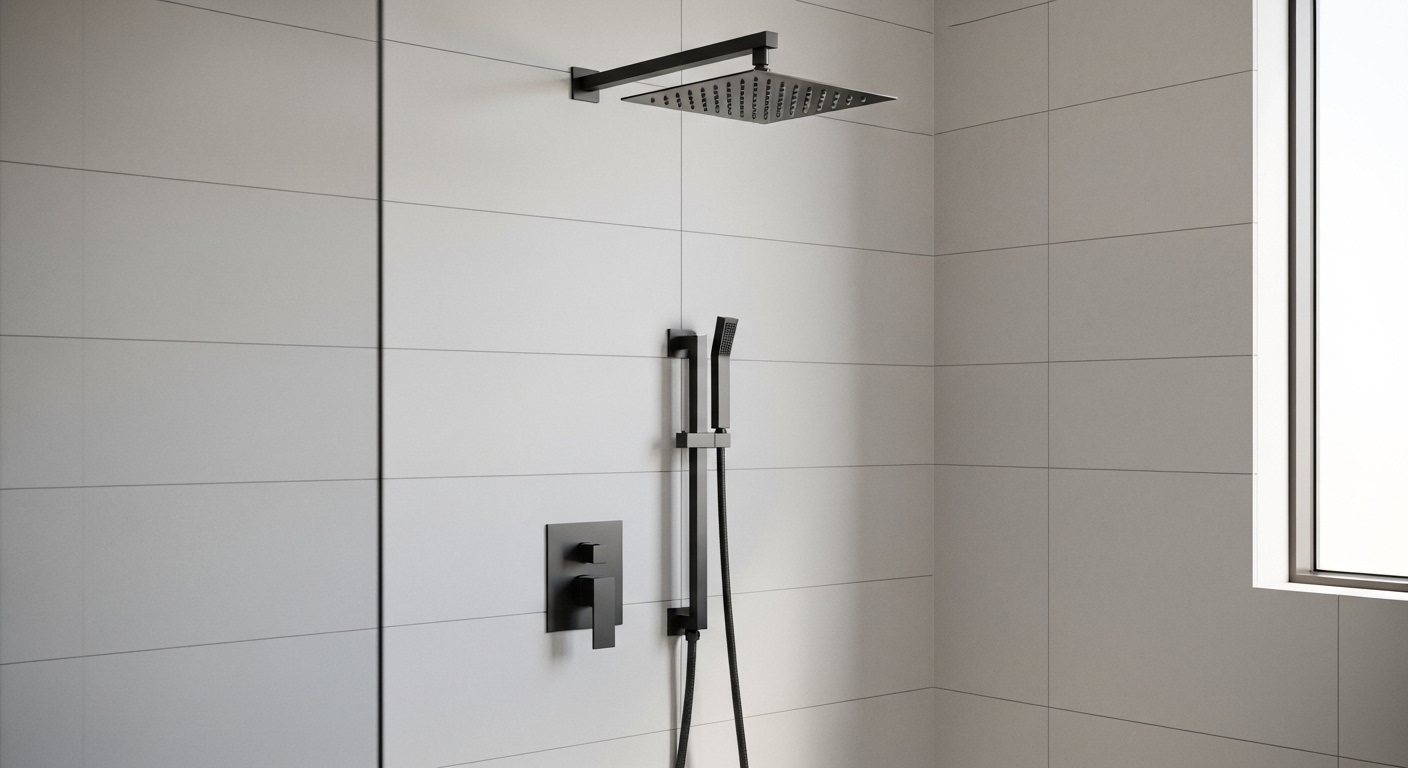
If you’ve been shopping for an affordable upgrade, you’ve almost certainly seen the yawwalk shower system pop up on Amazon: a big square rain head, a sleek wall bar or hidden valve, a handheld wand, and a price that undercuts the big-box brands. It looks great in photos. But “looks great on Amazon” and “still looks great after two years of hard water and daily use” are two very different things. This guide answers the real questions people actually ask before hitting buy — what you get, what it’s made of, how it installs, and whether spending the same money elsewhere gets you a fixture that lasts longer.
What exactly is a YAWWALK shower system, and what’s in the box?
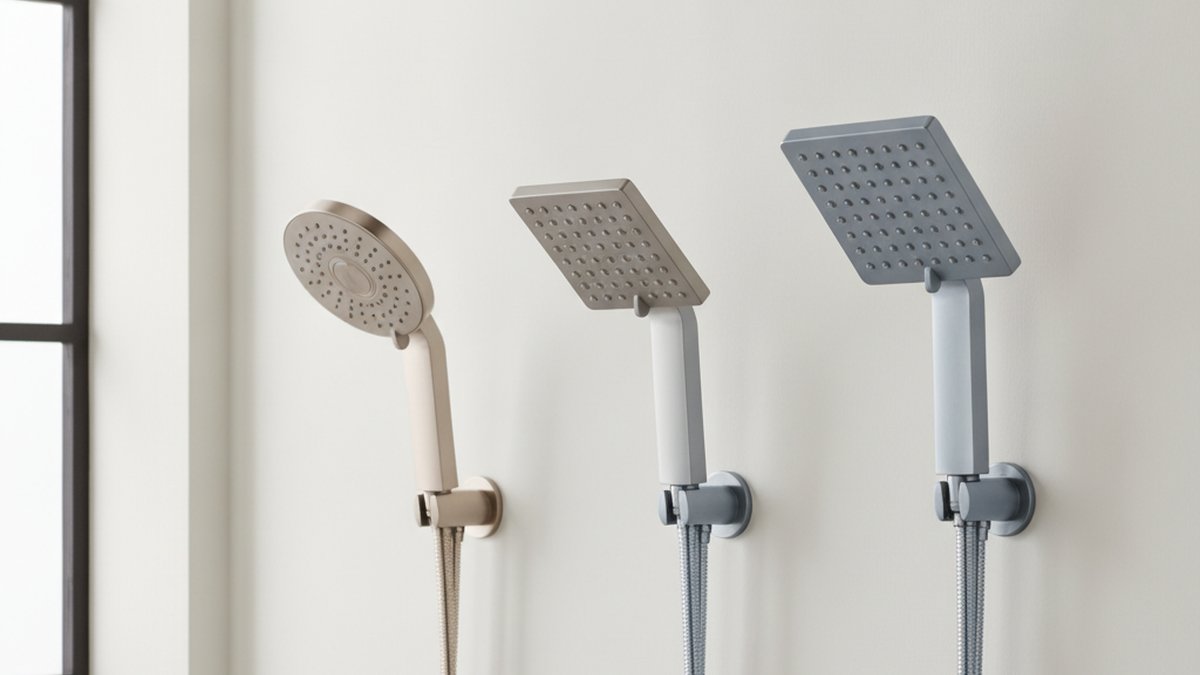
A YAWWALK shower system is a coordinated shower kit that bundles the parts you’d otherwise buy separately: an overhead rain shower head, a handheld sprayer, the mixing/diverter valve, the arm and hoses, and the mounting hardware — all in one matching finish. YAWWALK is an online-first brand (mostly Amazon and marketplace listings) that competes almost entirely on price and looks.
Most of their kits fall into two layouts. The first is a wall-mounted rail system, where everything sits on the surface of the wall and you connect it to an existing valve — the easiest type to retrofit. The second is a concealed / in-wall system, where a pressure-balance or thermostatic valve is buried in the wall and only the trim shows. That second type looks more high-end but means opening the wall, so it’s a remodel job, not a Sunday swap.
Typical contents you’ll find in a YAWWALK box:
- A 10″ or 12″ square or round rain shower head (usually stainless-steel face on an ABS or thin-brass body)
- A handheld shower with a 59″–70″ stainless hose
- A diverter that switches flow between the rain head and the handheld
- A pressure-balance valve or an exposed thermostatic bar (depending on model)
- Mounting brackets, a shower arm, plumber’s tape, and basic instructions
The appeal is obvious: one order, one finish, one price, and a spa-ish rainfall look. The catch is in the materials and the support — which is exactly what the next sections dig into.
How much does a YAWWALK shower system cost, and is it actually cheap?
Most YAWWALK shower systems land between $120 and $250, which does undercut comparable sets from Delta, Moen, or Kohler by roughly 30–50%. So yes, on the sticker, it’s genuinely cheap. The real question is cost per year of trouble-free use, and that’s where budget systems can quietly get expensive.
Here’s the honest math. A $150 system that needs a new cartridge in year two, loses its finish in year three, and has no warranty support behind it can end up costing more than a $220 system with a lifetime warranty and standard replacement parts. Cheap fixtures fail in predictable places: the valve cartridge, the finish, and the handheld’s tiny plastic threads.
| Cost factor | Typical YAWWALK system | Mid-tier brass system (e.g. WOWOW) |
|---|---|---|
| Upfront price | $120–$250 | $180–$300 |
| Body material | Often ABS plastic + thin brass | Solid brass core |
| Valve type | Pressure-balance, mixed quality | Ceramic-disc / pressure-balance |
| Warranty | Limited (often 1 yr, marketplace-dependent) | Lifetime limited on many models |
| Replacement parts | Hard to source | Standard, stocked |
| Realistic lifespan | 2–5 years | 8–15+ years |
If your shower is in a guest bath or a rental that sees light use, the lower upfront number can absolutely make sense. For a primary shower you’ll use twice a day, the value equation shifts hard toward a brass-bodied system with real parts support.
Is YAWWALK’s build quality good enough for daily use?
For light-to-moderate use, YAWWALK’s build quality is acceptable — but it’s built to a price, so the weak spots are the valve cartridge, the finish coating, and any plastic threaded parts. That’s the short answer. Now the detail.
The most important part of any shower system is the part you never see: the valve cartridge. This is what controls temperature and flow, and it’s the number-one failure point on cheap systems. Better systems use ceramic-disc cartridges that shrug off grit and mineral buildup; bargain systems sometimes use softer materials that wear, causing drips, temperature swings, or a handle that gets stiff. If you live with hard water, this matters even more — mineral scale is brutal on marginal cartridges.
The second weak spot is the finish. Matte black and brushed nickel look fantastic on day one. The question is whether that color is a durable PVD (physical vapor deposition) coating fused to the metal, or a sprayed/electroplated layer that chips and clouds. YAWWALK finishes vary by batch and model, and because it’s a marketplace brand, you can’t always confirm which you’re getting. Once black spray-coat starts flaking around the handheld and diverter, there’s no fixing it — you replace the part.
If you’re already fighting mineral spots on your fixtures, it’s worth reading our guide on how to remove hard water stains without scratching the finish — the same cleaning discipline keeps any shower system, YAWWALK or otherwise, looking new far longer.
How hard is a YAWWALK shower system to install myself?
If you’re replacing a like-for-like exposed wall system, a YAWWALK install is a genuine 1–2 hour DIY job with basic tools. If you’re going to a concealed in-wall valve, it’s a real plumbing project that usually needs the wall opened and, in many areas, a permit and pressure test. That’s the honest split.
For the DIY-friendly exposed version, the process is straightforward:
- Shut off the water — either the bathroom stop valves or the main.
- Remove your old shower head, arm, and any existing trim.
- Wrap all threaded connections with PTFE (plumber’s) tape — 3–4 wraps clockwise.
- Mount the valve or wall bar to the studs/blocking, not just the tile, so it doesn’t wobble.
- Connect the rain arm and the handheld hose, hand-tight plus a gentle quarter-turn.
- Turn the water back on and run it 60 seconds, checking every joint for drips.
Two things trip people up. First, rough-in height: if you’re doing a concealed valve, setting it at the wrong depth or height creates a permanent headache. Our breakdown of the correct walk-in shower valve rough-in height saves you from tearing tile back out. Second, water pressure: rain heads spread water over a big surface, so they can feel weak on low-pressure plumbing. If your shower already dribbles, adding a wide rain head makes it worse — diagnose that first with our guide on why you’re getting low pressure out of a shower head and how to fix it fast.
YAWWALK vs. WOWOW: which shower system is the better buy?
For a similar price, WOWOW generally gives you more durable materials and real warranty backing, while YAWWALK wins purely on lowest upfront cost. If you want it to last and you plan to keep the home, WOWOW is the smarter buy; if you need the cheapest working rainfall set for a low-use bathroom, YAWWALK does the job. Here’s the head-to-head.
| Feature | YAWWALK shower system | WOWOW shower system |
|---|---|---|
| Brand type | Online marketplace brand | Dedicated faucet & fixture brand |
| Core material | ABS + thin brass (model-dependent) | Solid brass core |
| Finish | Coated, batch-variable | PVD / brushed, corrosion-resistant |
| Valve | Pressure-balance, mixed grade | Ceramic-disc / pressure-balance |
| Spray modes | Rain + handheld | Rain + handheld + massage options |
| Warranty | Limited, ~1 yr typical | Lifetime limited on many models |
| Parts & support | Marketplace-dependent | Direct brand support, stocked parts |
| Best for | Lowest-cost, light-use bath | Daily-use primary shower, keep-forever |
The most meaningful difference isn’t a spec — it’s what happens in year three when something drips. With a marketplace brand, you’re often on your own hunting for an oddball cartridge. With a dedicated fixture brand, replacement parts and warranty claims are a normal, supported process. If you want a spa-style multi-spray experience specifically, it’s worth reading whether a shower system massage setup is actually worth it or just hype before you pay for modes you’ll never use.
Who should actually buy a YAWWALK shower system?
Buy a YAWWALK shower system if you need a good-looking rainfall-plus-handheld set at the lowest possible price for a bathroom that doesn’t see heavy daily use — a guest bath, a rental, a vacation property, or a quick cosmetic refresh before selling. Skip it, and spend a little more on a brass-bodied system, if this is your everyday shower and you plan to stay in the home for years.
Good-fit scenarios:
- Rentals and flips: you want the modern look for listing photos without tying up cash.
- Low-use guest bathrooms: a few showers a month won’t stress a budget cartridge.
- Renters (with landlord OK): an exposed system you can install and later remove.
- Tight budgets: when $150 today beats $250 you don’t have yet.
Poor-fit scenarios: a hard-water home, a household with heavy daily use, or anyone who hates the idea of re-doing a shower in three years. In those cases, the small price gap to a brass system pays for itself. And if you’re adding a shower to a tub rather than a full walk-in, you may not need a whole system at all — a shower faucet attachment can add a shower or boost flow for a fraction of the cost.
What to check before you buy any budget shower system
Before you buy a YAWWALK or any budget shower system, confirm four things: the valve type (ceramic-disc is best), whether the body is real brass or plastic, what the actual warranty covers, and whether your home’s water pressure suits a wide rain head. Those four checks separate a smart bargain from a short-lived regret.
- Valve/cartridge: ceramic-disc lasts longest and resists mineral wear. If the listing won’t say, treat that as a yellow flag.
- Body material: “stainless face” often just means the visible plate. Ask what the valve body and handheld are made of. Solid brass is the durability benchmark.
- Flow rate: U.S. shower heads are capped at 2.5 GPM (2.0 GPM in some states like California and Colorado). A rain head at low pressure can feel weak — know your home’s pressure first.
- Warranty & standards: look for compliance with ASME A112.18.1 / NSF/ANSI 61 (drinking-water safety) and a warranty that covers the cartridge and finish, not just “defects.”
FAQ
Is YAWWALK a good brand for shower systems?
YAWWALK is a reasonable budget marketplace brand — fine for the look and the price, but built to a cost, with variable finishes and thinner warranty support than dedicated fixture brands. It’s a solid pick for low-use or short-term bathrooms, and a weaker pick for a primary shower you’ll use daily for a decade.
How long does a YAWWALK shower system last?
Realistically 2–5 years of trouble-free use, depending heavily on your water quality and how often it’s used. Hard water shortens that by scaling the valve cartridge. A solid-brass system with a ceramic-disc valve typically lasts 8–15+ years, which is why the small price gap often favors the pricier option for everyday showers.
Can I install a YAWWALK shower system without a plumber?
Yes, if it’s an exposed wall-mounted system replacing a similar setup — that’s a 1–2 hour DIY job with plumber’s tape and an adjustable wrench. A concealed in-wall valve is a different story: it usually requires opening the wall, correct rough-in placement, and in many areas a permit, so most people hire a pro for that version.
Does a rain shower head reduce water pressure?
A rain head doesn’t reduce your home’s pressure, but it spreads the same flow over a much larger area, so each stream feels gentler. On low-pressure plumbing that can feel weak. If your shower already underperforms, fix the pressure issue before installing a wide rain head, or choose a smaller 8″–10″ head instead of a 12″.
What’s a better-value alternative to a YAWWALK shower system?
A brass-bodied WOWOW shower system in the $180–$300 range is the strongest same-price-band alternative: solid brass construction, ceramic-disc valves, corrosion-resistant PVD finishes, and a lifetime limited warranty with stocked replacement parts. You pay a bit more upfront and get a fixture that comfortably outlasts the budget option.
Are YAWWALK finishes like matte black durable?
It varies by model and batch. Matte black and brushed nickel look great new, but longevity depends on whether it’s a durable fused PVD coating or a sprayed layer that can chip and cloud over time. Because it’s a marketplace brand, the exact coating type isn’t always disclosed — one more reason to favor brands that publish their finish spec and back it with a warranty.
The bottom line
A YAWWALK shower system is exactly what it looks like: an affordable, good-looking, all-in-one rainfall set that does the job for light-use bathrooms and tight budgets. It’s not a scam and it’s not junk — it’s simply built to a price, which shows up in the valve, the finish, and the support. For a primary shower you’ll use every day, spending a little more on a solid-brass system with a ceramic-disc valve and a real lifetime warranty is the better long-term value. Whichever you choose, check the four fundamentals — valve type, body material, warranty coverage, and your home’s water pressure — and you’ll end up with a shower you’re happy with for years.
Author note: This guide was written and reviewed by the WOWOW fixtures editorial team, drawing on hands-on installation and long-term testing of dozens of shower systems across a range of water conditions. WOWOW is a dedicated bathroom and kitchen fixture manufacturer specializing in solid-brass faucets and shower systems built to ASME A112.18.1 and NSF/ANSI 61 standards, backed by a lifetime limited warranty on many models. We recommend products based on materials, durability, and real-world performance — not sticker price alone.
\n
Related Guides
\n
- \n
- Six Different Types Of Shower Handles: Choose The Right For Your Bathroom
- Understanding Shower Valve Types: A Comprehensive Guide
- What Is The Standard Height Of A Shower Head
\n
\n
\n
\n