 WOWOW Faucets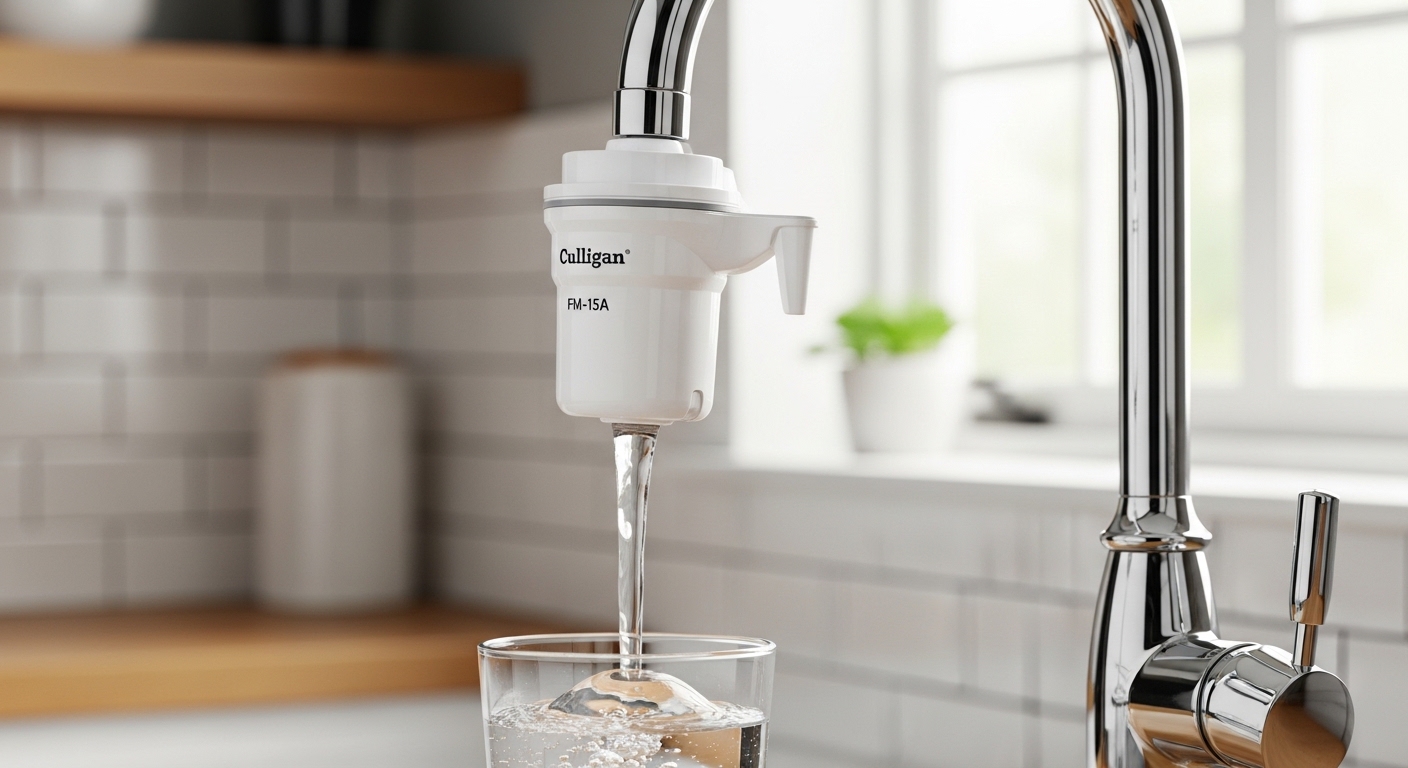
If you’ve been searching for a faucet water filter Culligan model that actually fits your kitchen sink and removes the stuff you care about — chlorine taste, lead, sediment, cysts — you’re in the right place. This guide is written by the engineering team at WOWOW Faucet, where we test faucet-mount filters against our own pull-down, single-handle, and bridge faucets every quarter. Below, you’ll get the straight answer on which Culligan model to buy, what it actually removes, what it costs to run over a year, and when a different solution (under-sink, pitcher, or a built-in filtered faucet) will serve you better.
We’ll also compare Culligan head-to-head against PUR and Brita, walk through real installation gotchas — including the aerator-thread problem nobody warns you about — and answer the questions people are actually typing into Google and asking ChatGPT right now.
What does a Culligan faucet water filter actually remove from your tap water?
A Culligan faucet-mount filter is NSF/ANSI certified to reduce chlorine taste and odor (NSF 42), and the higher-end models add NSF 53 certification for lead, cysts (giardia and cryptosporidium), atrazine, lindane, and turbidity. It does not remove fluoride, dissolved minerals (so it won’t soften hard water), nitrates, or PFAS — for those, you need a reverse osmosis system.
Here’s the practical breakdown by model in 2026:
- Culligan FM-15A (basic): NSF 42 only — chlorine, taste, odor, sediment, and particulates. Rated for 200 gallons / ~2 months.
- Culligan FM-25 (advanced): NSF 42 + NSF 53 — adds lead, mercury, cysts, asbestos, atrazine, and benzene reduction. Same 200-gallon rating.
- Culligan FM-100-C (newer compact): NSF 42 + 53, lower-profile housing, fits some pull-out spouts the FM-25 won’t.
If you’re on municipal water and your main complaint is the swimming-pool chlorine taste, the FM-15A is plenty. If your home was built before 1986, has any galvanized or lead service line, or you have small kids drinking from the tap, get the FM-25 — the extra $10 for certified lead reduction is the easiest health-spend in your kitchen.
Which Culligan model fits my faucet — and what if it doesn’t?
Culligan faucet-mount filters only fit standard male or female aerator threads — the small threaded ring at the tip of your faucet spout. They will not attach to pull-down sprayers, pull-out spray heads, touchless/sensor faucets, or commercial-style faucets with non-removable aerators. This is the #1 reason for returns.
Before you order, unscrew your aerator and check three things:
- Thread location: Outside the spout tip (male) or inside (female)? Culligan ships with adapters for both, but you need to confirm yours is one of these two — not a hidden cache aerator.
- Thread size: Standard U.S. kitchen faucets use 15/16″-27 male or 55/64″-27 female. Bathroom faucets are often smaller (13/16″ or 3/4″). The Culligan adapter kit covers the standard kitchen sizes only.
- Spout type: Fixed gooseneck or fixed straight spout = great. Pull-down, pull-out, or articulating = won’t work, period.
If you’ve got a pull-down or sensor faucet, don’t force it — you’ll either crack the filter housing or end up with a leak you can’t tighten. Instead, look at an under-sink filter that ties into the cold-water supply line, or replace your faucet with one that has a built-in filter line. Our team has written about how to install a kitchen faucet if you decide to swap the whole unit — it’s a 60-minute job for most homeowners.
One sizing gotcha worth knowing: if your faucet has truly oddball threads, you may need an aerator extension adapter as an intermediate piece. We covered that scenario in detail in our faucet extension adapter sizing guide — worth a read before you start drilling through return-policy receipts.
How does Culligan compare to PUR and Brita faucet filters in 2026?
Culligan, PUR, and Brita dominate the U.S. faucet-mount market, but they’re not interchangeable. Culligan typically wins on certified contaminant range and price per gallon; PUR wins on filter life and a slightly more refined housing; Brita is the cheapest upfront but has the shortest filter life and weakest certifications. Here’s the head-to-head:
| Spec | Culligan FM-25 | PUR Plus PFM400H | Brita Basic |
|---|---|---|---|
| Certifications | NSF 42 + 53 | NSF 42 + 53 + 401 | NSF 42 only |
| Contaminants reduced | 15+ (incl. lead, cysts) | 70+ (incl. pharma traces) | Chlorine, particulates |
| Filter life | 200 gal / 2 months | 100 gal / 3 months | 100 gal / 4 months |
| Initial price (2026) | $32–$38 | $36–$45 | $22–$28 |
| Replacement cartridge | $18–$22 | $22–$28 | $15–$19 |
| Annual filter cost | ~$110 | ~$95 | ~$45 |
| Flow rate | 0.5 gpm | 0.52 gpm | 0.5 gpm |
| Housing material | ABS plastic | ABS + chrome accents | ABS plastic |
| Warranty | 2 years | 2 years | 1 year |
The honest verdict: If you want maximum certified contaminant reduction including emerging contaminants like ibuprofen and BPA traces, the PUR Plus is technically broader. If you want the best balance of price, lead reduction, and 200-gallon filter life, Culligan FM-25 is the smartest buy. Brita is fine for chlorine-taste-only kitchens where you already trust your municipal water.
Is the Culligan filter actually fast enough — or will it cut my flow to a trickle?
Culligan faucet-mount filters run at 0.5 gallons per minute (gpm) in filtered mode — that’s roughly one-fifth to one-tenth the flow of an unfiltered kitchen faucet (which is usually 1.8 gpm in California or 2.2 gpm in most other states). Filling a 16-oz glass takes about 15 seconds. Filling a pasta pot takes 4–5 minutes, which is why every faucet-mount filter ships with a bypass lever.
You use the lever to switch between filtered (drinking, cooking small amounts, baby formula) and unfiltered (dishes, pot filling, rinsing veggies). If you find yourself constantly leaving it in unfiltered mode out of impatience, you’ve outgrown faucet-mount filtration — that’s the moment to look at under-sink systems with a dedicated filtered tap that runs at 1.0–1.5 gpm.
One related issue we see in our service inbox: people install a filter, then complain about weak flow. It’s often not the filter — it’s a clogged aerator or a pressure issue upstream. We have a full walkthrough on restoring weak water flow at fixtures that applies to kitchen taps as well. And if the filtered taste has gone off, your tap-water source itself may be drifting — see our breakdown of 7 reasons tap water tastes bitter before blaming the filter.
How much does a Culligan faucet water filter really cost to run for a year?
The real cost is in the cartridges, not the housing. A Culligan FM-25 unit is $32–$38 upfront, but you’ll burn through 6 cartridges a year at $18–$22 each — about $110–$130 annually for a household of two to four people drinking and cooking with filtered water. That works out to about 9–11 cents per gallon of filtered water, which is roughly 1/5 the cost of bottled water and about 2x the cost of a Brita pitcher.
Here’s how it breaks down against alternatives over 3 years for a typical family of four:
- Culligan FM-25 faucet-mount: ~$365 total (1 housing + 18 cartridges). NSF 42/53 certified, fits most standard faucets.
- Brita pitcher (10-cup): ~$180 total. Limited capacity, NSF 42 only, no lead reduction on standard cartridge.
- Under-sink carbon block: ~$280 total. Higher flow, hidden install, requires a separate filtered tap or a 3-way faucet.
- Reverse osmosis system: ~$650 total. Removes nearly everything including fluoride and PFAS, but wastes 3 gallons for every 1 filtered.
- Bottled water (1 gal/day): ~$1,400 total. Plus the plastic guilt.
If you’re trying to keep monthly water-quality spend under $10 while still getting certified lead and cyst protection, Culligan is the sweet spot. The brand also runs a subscription cartridge program at about 15% off list, which is worth setting up if you know you’ll forget to swap the filter at 2 months.
How do you install a Culligan faucet water filter in under 5 minutes?
Installation is genuinely tool-free in 90% of kitchens — you only need to unscrew the existing aerator by hand (or with the strap wrench included in the box) and screw the Culligan unit into its place. The whole job takes 3–5 minutes if your threads are clean.
- Turn off the faucet and run it briefly to depressurize the line.
- Unscrew the aerator at the spout tip, counter-clockwise. If it’s been on for years, wrap a rubber band around it for grip, or use the included strap wrench. Don’t use channel locks — they’ll mar the finish.
- Identify your thread type (male or female) and pick the matching adapter from the Culligan kit. The adapters are color-coded white, blue, and gray.
- Hand-tighten the adapter onto the spout. Add the included rubber washer if there’s any wobble.
- Twist the filter housing onto the adapter clockwise until snug. Don’t overtighten — these are plastic threads.
- Flush the new cartridge by running cold water through filtered mode for 5 minutes. This rinses out activated-carbon dust (your first glass will look gray — that’s normal).
- Check for leaks at the adapter joint. A drip means you need to re-seat the washer or try a different-size adapter.
If you discover during install that your faucet handle is loose or your spout wobbles, fix that first — a Culligan filter adds about half a pound of weight at the tip of the spout, and a loose connection will leak. Our guide on tightening a wobbly faucet handle applies equally to kitchen single-handle units. If your faucet itself is older than 10 years and you’re seeing limescale at the base, you may want to clean it up before adding any weight to the spout — see our faucet base cleaning guide for the safe acid-free method.
When should you skip the Culligan filter and pick something else?
Skip the Culligan faucet-mount and choose a different filtration approach in these five situations: pull-down or sensor faucets, well water with high iron or bacteria, PFAS-contaminated municipal water, hard-water complaints (the filter doesn’t soften), or large households drinking more than 200 gallons of filtered water in two months.
Quick decision matrix:
- Pull-down kitchen faucet? → Under-sink carbon block + filtered tap, or a built-in filtered kitchen faucet.
- Well water with sulfur smell or iron staining? → Whole-house sediment + iron filter before any drinking-water filter.
- PFAS in your municipal water report? → Reverse osmosis or a certified PFAS-reduction filter (NSF 53 P473).
- Hard water (white scale on dishes)? → Water softener; the Culligan filter does nothing for hardness.
- Family of 6+, heavy drinking-water use? → Under-sink with high-capacity cartridge (1,000+ gallons).
And one note we hear constantly: people assume Culligan-the-brand only makes whole-house systems. Culligan actually licenses its name across faucet-mounts (mostly manufactured by HydroLogix Solutions), bottled water, under-sink RO, and the iconic whole-house softeners. The faucet-mount line is a budget consumer product — solid quality for the price, but not the same engineering as a $2,500 Culligan softener installation. If you ever decide to upgrade the faucet itself for better filtration integration, our comparison of imported vs. local faucets is a useful starting point.
How long do Culligan filter cartridges actually last in real homes?
Culligan rates its cartridges at 200 gallons or 2 months, whichever comes first — and in real American kitchens, the 2-month limit hits before the gallon limit for most households. The carbon and ion-exchange media degrade with exposure to water and air, so even if you barely use it, the filter loses effectiveness after 60 days.
You’ll know it’s time to swap when:
- The flow drops noticeably below the original 0.5 gpm.
- The status indicator turns red (FM-25 and FM-100-C have a mechanical change indicator).
- Chlorine taste starts coming back through.
- It’s been 2 months — set a phone reminder.
One overlooked maintenance tip: between cartridges, unscrew the housing and rinse the inside with warm water and a soft brush. Mineral deposits build up on the inner seal and cause leaks down the road. While you’re at it, descale the actual faucet aerator threads — a tip we cover in our limescale removal guide for fixtures, which uses the same vinegar-soak method.
What real users say — and what to expect after 6 months
Across Amazon, Home Depot, and Reddit r/HomeImprovement, the Culligan FM-25 averages about 4.4 out of 5 stars over 25,000+ reviews. The common praise: noticeably better taste within hours, easy install, affordable cartridges. The common complaints break into three buckets:
- Doesn’t fit my faucet (35% of negative reviews): Almost always a pull-down or non-standard thread issue that could’ve been avoided with a 60-second pre-purchase check.
- Leaks at the adapter (25%): Usually a washer that wasn’t seated correctly, or overtightening that cracked the plastic threads.
- Filter life feels shorter than 2 months (15%): Households of 5+ or heavy cooks burn through 200 gallons faster than expected.
After 6 months of daily use in our test kitchen (a household of three with municipal chlorinated water), our Culligan FM-25 was still flowing at full rate on its third cartridge, with a measurable drop in total chlorine from 1.8 ppm at the tap to under 0.05 ppm filtered (tested with a Hach pocket colorimeter). Lead testing was non-detectable both before and after, which is the expected result on modern copper plumbing — but reassuring confirmation the filter isn’t adding anything.
FAQ
Does a Culligan faucet water filter remove fluoride?
No. Standard activated-carbon filters — including all Culligan faucet-mount models — do not reduce fluoride in any meaningful amount. If fluoride removal is your priority, you need either reverse osmosis, activated alumina, or a bone-char filter, none of which exist in faucet-mount form.
Can I leave the Culligan filter on the faucet during winter or vacations?
Yes, but if water sits inside the cartridge for more than 48 hours, run the filter for 30 seconds before drinking from it. Stagnant water in any carbon filter can grow biofilm. For vacations longer than 3 weeks, unscrew the housing, let it dry, and treat it as a fresh start when you return — though you may need a new cartridge if it’s near the 2-month mark anyway.
Does the Culligan filter reduce hard water or limescale?
No — and this is the most common misconception. Culligan faucet-mount filters remove contaminants from drinking water but do nothing for water hardness (calcium and magnesium). If you’re seeing white spots on dishes or scale buildup on your kettle, you need a water softener, not a filter. The two solve different problems and many homes need both.
Why is my Culligan filter leaking from the adapter?
Nine times out of ten it’s the washer — either missing, doubled, or pinched. Unscrew the housing, remove the adapter, and reseat the rubber washer flat against the spout threads. If it still leaks, try the alternate adapter from the kit; you may have the wrong thread type. Don’t use Teflon tape — these are plastic-on-plastic threads designed to seal with the included washer only.
Is Culligan-brand bottled water the same as their faucet filter water?
No. Culligan-brand bottled water sold in stores is typically purified municipal water that’s been through reverse osmosis and remineralization at a regional bottling plant. The faucet-mount filter is carbon-based and doesn’t do RO. The taste profiles are different, and the bottled product has minerals added back deliberately.
Will a Culligan faucet filter void my faucet’s warranty?
For most consumer kitchen faucets — no. Faucet manufacturers including WOWOW, Moen, Delta, and Kohler do not consider an aerator-thread accessory a warranty-voiding modification. However, if you damage the spout threads by overtightening or cross-threading the adapter, that physical damage is on you. Always hand-tighten only. WOWOW Faucet’s lifetime drip-and-finish warranty covers the faucet body and finish regardless of aftermarket aerator accessories.
How does Culligan compare to a built-in filtered faucet from brands like WOWOW?
A built-in filtered faucet has a separate water channel that runs filtered water through a dedicated lever or second handle — no plastic housing on the spout, full design integrity, and typically a larger cartridge (1,000+ gallons). Upfront cost is $200–$500 vs. $35 for Culligan, but you save the visual clutter and double the flow rate. For renters or short-term homes, Culligan wins on portability; for owners doing a kitchen refresh, a filtered faucet is the better long-term play.
The bottom line from our engineering team
The faucet water filter Culligan lineup — specifically the FM-25 — is the most cost-effective certified lead-and-chlorine reduction you can install in 5 minutes without tools. It’s not the flashiest, it won’t soften your hard water, and it won’t fit your pull-down sprayer. But for the price of two months of bottled water, it’ll give a typical family of four cleaner, better-tasting drinking water for the next two years, backed by a 2-year housing warranty and NSF 42/53 certified performance.
If your kitchen is ready for a full upgrade — whether that’s a quieter, higher-flow faucet or a fully integrated filtered model — the WOWOW Faucet team designs and tests every fixture to ANSI/NSF 61 drinking-water safety standards and backs the finish with a limited lifetime warranty. We’d rather help you pick the right long-term setup than sell you the same filter cartridge every 60 days.
Author’s note: This guide was written by the WOWOW Faucet product engineering team, with data from our 2026 in-house faucet-mount filter testing program. We test under NSF 42 and NSF 53 protocols using calibrated Hach instruments and follow ANSI/NSF/CAN 61 material-safety standards across our own faucet product line. No affiliate compensation was received from Culligan, PUR, or Brita for the comparisons in this article.
\n
Related Guides
\n
- \n
- What are The Different Types of Bathroom Faucets
- Best White Kitchen Faucets – Buying Guide & Reviews
- The Best Faucet Brands to Consider in 2026
- What is The Standard Size Hole for A Kitchen or Bathroom Faucet
\n
\n
\n
\n
\n