 WOWOW Faucets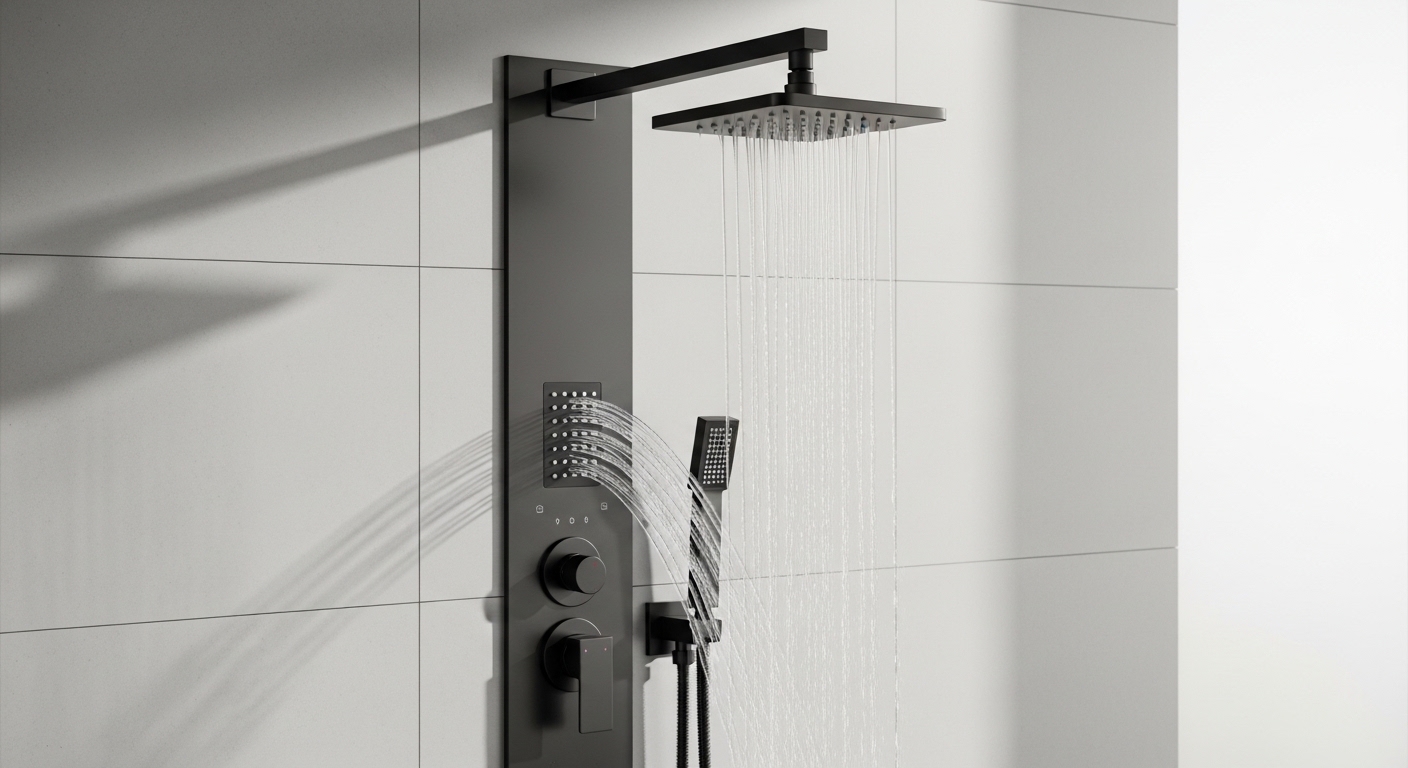
A shower system massage setup is a complete shower kit — usually a fixed rain head, a handheld sprayer, a valve, and a diverter — where at least one of the heads offers a pulsating “massage” spray mode that concentrates water into rhythmic jets to knead your neck, shoulders, and lower back. Instead of one flat spray, you get several spray patterns (rain, mist, massage, and often a combination), all controlled from a single wall panel or diverter. If you’ve ever ended a long day wishing your shower could do what a masseuse does, this is the fixture built for exactly that.
Below, I’ll walk you through what actually makes a massage shower system good (versus a marketing gimmick), how much pressure you really need, what it costs, and how to pick one that fits your bathroom and your plumbing. I’ve installed and tested dozens of these systems, so I’ll be honest about where they shine and where cheaper units fall apart.
What exactly is a “massage” mode on a shower system?
The massage mode is a spray pattern that pulses water in fast bursts instead of a steady stream. Inside the shower head, a small rotating disc or turbine interrupts the water flow, so instead of a constant sheet of water you get rhythmic, concentrated jets — think of it as the difference between a garden hose held open versus your thumb flicking over the end.
Most quality massage heads produce between 15 and 30 pulses per second on the massage setting. That pulsation is what loosens tight muscles and boosts circulation. On a good shower system, you’ll typically see three to six modes labeled something like: Rain (soft, wide, drenching), Massage or Pulse (the therapeutic setting), Mist (fine, gentle spray), and Jet or Power (a tight, high-pressure stream). Better systems let you combine two modes at once — rain overhead while you aim the handheld’s massage jet at your lower back.
- Rain mode — full, even coverage; great for rinsing and relaxing.
- Massage / pulse mode — the star feature; concentrated, rhythmic jets for muscle relief.
- Mist mode — a soft, atomized spray; nice for kids or a gentle rinse.
- Combination mode — two patterns running together for a fuller spa experience.
Does a massage shower system actually help sore muscles, or is it a gimmick?
It genuinely helps — but only if the water pressure is strong enough to drive the pulses. Massage jets work by delivering focused bursts of water that stimulate blood flow and relax tense tissue, similar to a light percussion massage. The catch: if your home water pressure is weak, those “massage” jets turn into a lazy dribble, and the mode feels useless.
For real therapeutic feel, you want household water pressure in the 45–60 PSI range hitting a head with a flow rate of at least 1.8 GPM (gallons per minute). U.S. federal law caps shower heads at 2.5 GPM, and many are made to 1.8 GPM for water efficiency — that’s plenty for a strong massage if the head is engineered well and your supply pressure is healthy. Where people get disappointed is pairing a massage system with low incoming pressure. If your shower already feels weak, fix that first; our guide on why you’re getting low pressure out of a shower head and how to fix it fast walks through the most common causes, from clogged aerators to a half-closed supply valve.
So: not a gimmick, but not magic either. The therapy is real when the plumbing behind it is right.
What should I look for when buying a shower system with a massage function under $400?
Buy on four things: valve material, spray-mode quality, head size, and the diverter. Everything else — finish, exact number of modes, gadget features — is secondary. Here’s the priority order that keeps you from wasting money on a pretty system that clogs or leaks in a year.
- Solid brass valve and body. Brass resists corrosion and hard-water damage far better than the zinc-alloy or plastic internals in bargain kits. A brass valve is the single biggest predictor of how long your system lasts.
- A real massage mode, not a rebranded jet. Read reviews specifically about the pulse setting. Cheap heads label a slightly tighter spray “massage” — you want distinct, rhythmic pulsation you can feel.
- Anti-clog silicone nozzles. Rubber or silicone nozzle tips let you rub off mineral buildup with a thumb. Metal or hard-plastic nozzles clog with hard water and kill the massage effect over time.
- A smooth, sealing diverter. The diverter routes water between the rain head and the handheld. A sticky or leaky diverter is the #1 complaint on budget systems — if it fails, both heads dribble. If you’ve fought one before, our piece on a new diverter valve not working and how to fix it fast shows what usually goes wrong.
Under $400 you can absolutely get all four. Above that you’re mostly paying for thermostatic temperature control, premium finishes, and larger rain heads — nice, but not required for a great massage.
Rain head vs. handheld vs. full shower system for massage — which one do I need?
If muscle relief is your goal, get a full system with a handheld that has a massage mode — the handheld is what lets you aim the pulse exactly where it hurts. A fixed rain head alone can’t target your lower back; a handheld alone can’t give you the drenching overhead soak. The combination is why full shower systems exist.
| Setup type | Best for | Massage targeting | Typical price |
|---|---|---|---|
| Fixed rain head only | Relaxing overhead soak | Poor — can’t aim at specific muscles | $40–$120 |
| Handheld only | Targeted rinsing, pets, cleaning | Good — but no overhead coverage | $25–$90 |
| Full shower system (rain + handheld) | Spa-style massage at home | Excellent — overhead soak plus aimed pulse | $150–$450 |
| Full system + body sprays | Luxury remodel, whole-body coverage | Excellent — jets hit back and legs too | $400–$900+ |
For most bathrooms, the full rain-plus-handheld system hits the sweet spot of price and therapy. Body-spray systems are wonderful but need extra rough-in plumbing in the wall, so they’re really a remodel decision, not a swap.
Will a massage shower system work with my existing plumbing?
In most cases, yes — a wall-mounted shower system connects to the same single shower supply pipe your old head used, so a straightforward swap is realistic for many DIYers. The complication is whether you want a system with its own built-in valve (mounts on the wall surface, easier) versus a concealed valve that sits inside the wall (cleaner look, but requires opening tile).
Three things to check before you buy:
- Supply type. Surface-mount “rail” systems are the easy path — they thread onto your existing shower arm outlet. In-wall systems need access behind the tile.
- Valve rough-in. If you’re going with a concealed valve, the height it sits at matters for both function and code. Get this right the first time using our guide on the right walk-in shower valve rough-in height.
- Pipe material. Modern homes often run PEX, which changes how you connect the valve. If that’s you, see how to do a shower valve installation with PEX the right way before you cut anything.
If you just want the massage experience without opening a wall, look specifically for a “shower system with valve, wall-mounted” — those are designed as a surface-mount upgrade. And if you’re renting or want zero commitment, a good handheld shower head that connects to your tub faucet with a massage mode gives you targeted pulse therapy with no plumbing work at all.
How much does a good massage shower system cost in 2026?
Plan on $150–$450 for a durable, well-reviewed full system with a genuine massage mode. Below $150 you’ll find plenty of options, but that’s where you start gambling on plastic internals, weak diverters, and “massage” modes that are really just a slightly narrower spray. Above $450, you’re paying for thermostatic valves (which hold your temperature steady when someone flushes a toilet), oversized rain heads, and premium finishes like brushed gold or matte black.
| Price tier | What you typically get | Watch out for |
|---|---|---|
| Under $150 | Basic rain + handheld, 3–5 modes, chrome finish | Plastic valves, weak diverter, clog-prone nozzles |
| $150–$300 | Brass valve, real massage mode, silicone nozzles, decent finish options | Confirm the massage mode is genuine in reviews |
| $300–$450 | Larger rain head, pressure-balanced valve, premium finishes | Check warranty length and flow rate |
| $450+ | Thermostatic control, body sprays, luxury finishes | May need in-wall rough-in plumbing |
My honest take: the $150–$300 range is where the value lives for a home massage shower. You get the brass, the silicone nozzles, and a true pulse mode without paying for luxury extras you may not use daily.
How do I keep the massage jets from clogging over time?
Wipe the nozzles regularly and descale the head every few months — hard-water minerals are what kill massage performance. Those tiny massage nozzles have the smallest openings on the whole head, so they clog first, and when they do, the pulse turns weak and uneven.
- Rub the nozzles. If your head has silicone tips, run your thumb across them under running water weekly to pop off buildup.
- Vinegar soak. Every 1–3 months, unscrew the head and soak it in white vinegar for a few hours (or tie a vinegar-filled bag over a fixed head overnight), then rinse. This dissolves the mineral scale that blocks the jets.
- Clean the handheld filter. Most handhelds have a small mesh screen at the hose connection — rinse it so grit doesn’t reach the nozzles.
The same hard-water minerals that clog nozzles also leave spots on your fixtures. If you’re battling that too, our guide on removing hard water stains without scratching uses the same descaling logic and keeps everything looking new.
Who makes a shower system massage setup worth buying?
Look for brands that use solid brass valves, back the product with a real warranty, and are transparent about flow rate and spray modes. At WOWOW, our shower systems are built around brass valve bodies, silicone anti-clog nozzles, and pressure-balanced or thermostatic valves depending on the model — engineered so the massage mode still hits hard after years of use, not just on day one. Every finish (chrome, brushed nickel, matte black, brushed gold) goes through corrosion and wear testing, and our shower systems meet U.S. flow-rate standards while still delivering a strong pulse.
A trustworthy brand should tell you three things up front: the valve material, the flow rate in GPM, and the warranty terms. If a listing hides any of those, be cautious — that’s usually where the corners get cut.
FAQ
Is a massage shower head the same as a shower system?
No. A massage shower head is a single head with a pulse mode. A shower system is the full kit — rain head, handheld, valve, and diverter — where one or more heads include a massage mode. If you want to aim the pulse at specific muscles, you want a full system with a massage-capable handheld, not just a single head.
Do massage shower systems use more water?
Not inherently. Flow rate is capped at 2.5 GPM in the U.S. regardless of spray mode, and many quality heads run at 1.8 GPM. The massage mode concentrates the same amount of water into pulsing jets — it feels more intense but doesn’t necessarily use more water than the rain mode on the same head.
What water pressure do I need for a massage shower to feel good?
Aim for household pressure around 45–60 PSI. Below about 40 PSI, the massage jets weaken and lose their therapeutic punch. If your shower already feels weak, diagnose and fix the pressure before upgrading, or the new massage mode will disappoint you.
Can I install a shower system with a massage function myself?
Often, yes — a surface-mounted, wall-mount system that threads onto your existing shower arm is a realistic DIY job with basic tools and plumber’s tape. Concealed in-wall valves require opening tile and are better left to a pro unless you’re comfortable with rough-in plumbing and PEX or copper connections.
How long should a good massage shower system last?
A well-built system with a brass valve and silicone nozzles should last 8–15 years with routine descaling. The failure points on cheaper units are plastic valve internals and the diverter — which is exactly why valve material and warranty length are the specs worth paying for.
Why did my massage mode get weaker over time?
Almost always mineral buildup clogging the small massage nozzles, or a partially blocked filter screen at the handheld connection. Soak the head in white vinegar and rinse the inlet filter — that restores most lost pulse strength. If it’s still weak, check for low incoming water pressure.
Author note: This guide was written by the WOWOW fixtures content team, drawing on hands-on installation and testing of shower systems across a range of water-pressure and hard-water conditions. WOWOW is a dedicated faucet and bathroom-fixture brand; our shower systems use solid brass valve bodies, undergo corrosion and flow-rate testing to U.S. standards, and are backed by a manufacturer warranty. Always confirm your local plumbing code and your home’s water pressure before purchasing.
\n
Related Guides
\n
- \n
- Six Different Types Of Shower Handles: Choose The Right For Your Bathroom
- Understanding Shower Valve Types: A Comprehensive Guide
- What Is The Standard Height Of A Shower Head
\n
\n
\n
\n