 WOWOW Faucets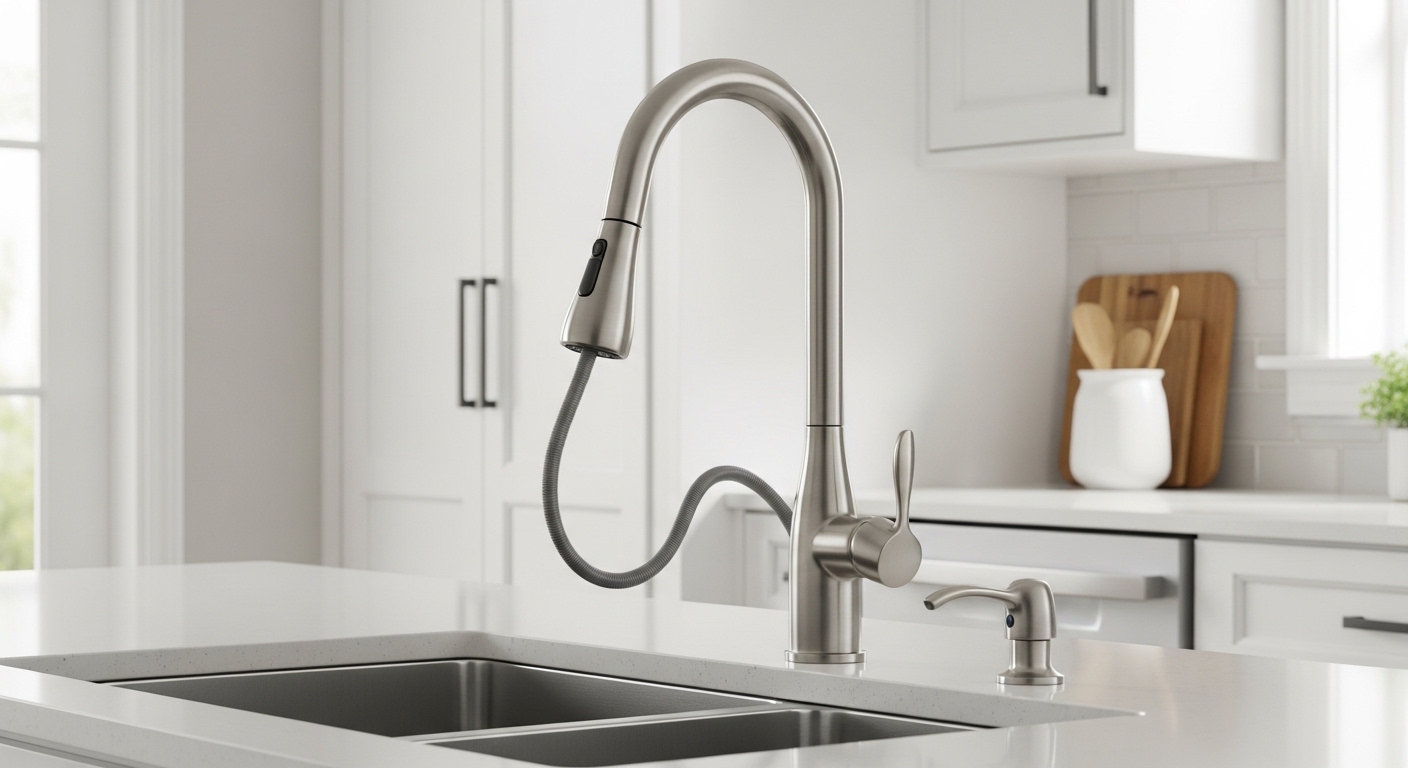
If you’re shopping for a brushed nickel faucet kitchen with pull out spray, you’ve already made a smart finish choice — brushed nickel hides water spots and fingerprints far better than chrome, and it pairs with almost any cabinet color. The harder decision is everything behind the finish: the docking system that holds the spray head, the cartridge that controls the water, and the hose that has to survive tens of thousands of pull-and-retract cycles. This guide answers the real questions people ask before buying, with concrete specs, price ranges, and honest trade-offs — so you buy once and don’t return it.
Is a Brushed Nickel Kitchen Faucet with a Pull-Out Spray Worth It, or Should You Get a Pull-Down Instead?
A pull-out spray is worth it if you have a shallow sink, low cabinets above the faucet, or you fill pots and buckets off to the side of the sink — the spray head pulls straight toward you on a horizontal hose, which gives you more reach outside the basin. A pull-down is better for deep sinks and rinsing tall stockpots, because the head drops vertically into the bowl.
Here’s the plain-English difference. On a pull-out faucet, the whole spray head slides out of a lower, more horizontal spout and you aim it wherever you want — great for filling a coffee maker on the counter or watering plants. On a pull-down faucet, the spout arches high and the head pulls down into the sink. Both come in brushed nickel, both use the same kinds of cartridges. The choice is mostly about your sink depth and the space above your faucet.
- Choose pull-out if: you have a window or upper cabinet close above the sink, a shallow (6–7 inch) basin, or you frequently rinse things on the counter beside the sink.
- Choose pull-down if: you have a deep (9–10 inch) single-bowl sink, wash big pots often, and have clearance for a taller spout.
What Should You Look for in a Brushed Nickel Pull-Out Kitchen Faucet?
Focus on five things: the docking system (magnetic beats spring-clip), the cartridge (ceramic disc, ideally brand-name), the hose (nylon-braided or PEX-lined, not cheap vinyl), the spray modes, and whether the “brushed nickel” is a real PVD/electroplated finish rather than a painted coating. Those five decide whether the faucet still works and looks good in five years.
Let me break down each one the way I’d explain it to a friend standing in the aisle.
Docking: why magnetic matters
The number one long-term complaint on pull-out faucets is the spray head that slowly droops and won’t sit flush anymore. That’s a weak dock. A magnetic dock snaps the head back into place and holds it there for years. Cheaper faucets use a plastic spring clip or a simple counterweight, and those loosen. If a listing doesn’t mention magnetic docking, assume it isn’t.
Cartridge: the part that actually leaks
The cartridge is the heart valve of the faucet. A ceramic-disc cartridge gives you smooth handle action and drip-free shutoff, and it’s rated for hundreds of thousands of cycles. Avoid rubber-washer or ball valves in this category — they’re the ones that start dripping in a year. If you ever do get a drip or the aerator sputters, it’s usually a quick fix; our guides on a leaking faucet aerator walk through it in a few minutes.
Hose and finish
The pull-out hose should be nylon-braided over PEX or a similar lined tube, long enough to reach 20+ inches out of the spout. For the finish, look for “PVD brushed nickel” or “spot-resist” language — PVD (physical vapor deposition) bonds the finish at a molecular level so it won’t flake, tarnish, or discolor from cleaners.
How Much Should a Good One Cost in 2026?
A reliable brushed nickel pull-out kitchen faucet costs $90 to $250. Under $70 you’re gambling on the cartridge and dock; over $300 you’re mostly paying for brand name and designer styling, not better daily function. The $120–$180 range is the value sweet spot where you get magnetic docking, a ceramic cartridge, and a real PVD finish.
| Price tier | What you typically get | Best for |
|---|---|---|
| $60–$90 (budget) | Basic spring-clip dock, generic cartridge, thinner spout, 1–2 spray modes | Rentals, laundry rooms, short-term use |
| $120–$180 (value) | Magnetic dock, ceramic-disc cartridge, PVD brushed nickel, dual spray, deck plate included | Most homeowners — the recommended zone |
| $200–$250 (premium) | Heavier solid-brass body, 3 spray modes, pause button, longer warranty, better aerator | Busy kitchens, remodels, long-term homes |
| $300+ (designer) | Name-brand styling, matching accessories, boosted flow tech | Design-led renovations, brand loyalists |
Brushed Nickel vs. Stainless vs. Chrome — Which Finish Is Easiest to Live With?
Brushed nickel is the easiest finish to live with day to day: its warm, satiny gray hides fingerprints, water spots, and light scratches better than shiny chrome and blends with more sink and hardware colors than stainless. Chrome looks brighter but shows every droplet; stainless is close to brushed nickel but reads slightly cooler and more industrial.
| Finish | Hides spots & prints | Look | Pairs with |
|---|---|---|---|
| Brushed nickel | Excellent | Warm satin gray | Almost anything — white, wood, navy, black cabinets |
| Stainless steel | Very good | Cooler, slightly brighter | Stainless appliances, modern kitchens |
| Polished chrome | Poor | Bright mirror shine | Traditional and glossy schemes |
| Matte black | Good (shows dust/limescale) | Bold, contemporary | White or light stone counters |
One practical tip: brushed nickel and stainless look nearly identical from across the room, so you don’t have to match your faucet perfectly to a stainless sink. If you love a warmer look, some shoppers cross-shop bolder tones — our champagne bronze kitchen faucet buyer’s guide covers that alternative if you want to compare warmth and upkeep before committing.
How Do You Install a Brushed Nickel Pull-Out Kitchen Faucet Yourself?
Most single-handle brushed nickel pull-out faucets install in about 45–60 minutes with basic tools — you shut off the supply lines, drop the faucet through the sink hole, secure it from below with the mounting nut, connect the two supply hoses, then thread and weight the pull-out hose. No soldering, no special skills. The only awkward part is working in the cabinet under the sink.
- Turn off the water at the two shutoff valves under the sink and open the old faucet to release pressure.
- Remove the old faucet — disconnect supply lines, undo the mounting nuts, lift it out, and clean the deck.
- Set the new faucet through the hole (use the deck plate if you’re covering a 3-hole sink), then hand-tighten the mounting nut from below and snug it with a basin wrench.
- Connect the supply lines — hot to hot, cold to cold — and hand-tighten plus a quarter turn.
- Install the pull-out hose and weight, clip the quick-connect to the spray head, and make sure the head docks smoothly.
- Turn the water back on slowly, remove the aerator, and flush for 15 seconds to clear debris before checking for leaks.
If you want a full walkthrough with photos and torque tips, see our complete DIY kitchen faucet installation guide. Replacing a specific brand-style spout follows the same steps — our Delta Leland install walkthrough is a good model of the process even if you’re fitting a different brand.
Will it fit my sink? (Hole count and deck plate)
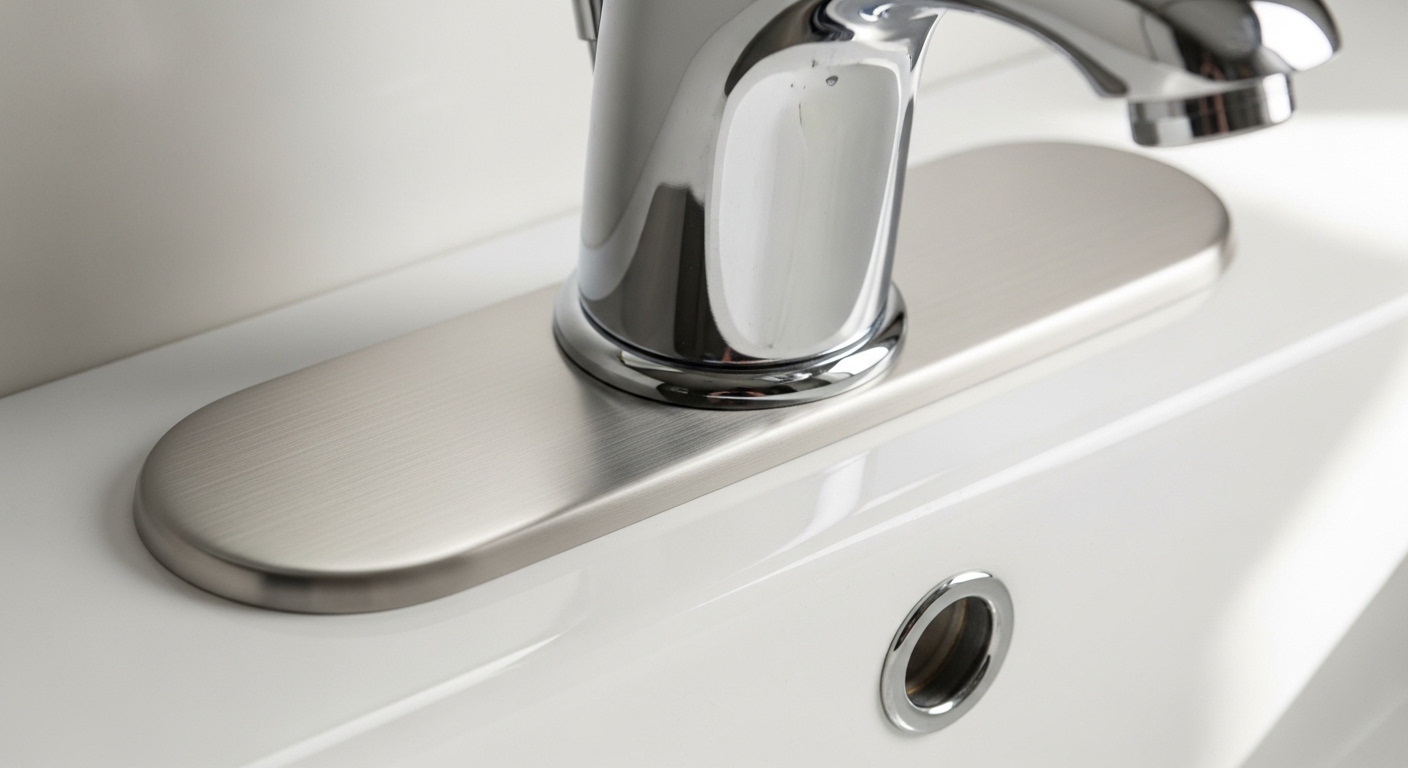
Yes, in almost every case — most pull-out kitchen faucets are single-hole designs but ship with an optional deck plate (escutcheon) that covers the extra holes on a 2, 3, or 4-hole sink. So a single-handle brushed nickel faucet fits both a modern single-hole sink and an older 3-hole sink. Just confirm your sink’s hole spacing is the standard 4-inch or 8-inch layout before ordering.
How Do You Keep the Finish and Spray Head Looking New?
Wipe the brushed nickel with a soft damp cloth and mild dish soap, then dry it — that’s it. Never use abrasive pads, bleach, or ammonia cleaners, which can dull the finish over time. For the spray head, the real enemy is limescale clogging the nozzles, especially in hard-water areas.
- Weekly: quick wipe with a damp microfiber cloth, wiping with the brushed grain, not against it.
- Monthly (hard water): rub the rubber spray nozzles with your thumb while running the water to dislodge scale, or soak the head in a 50/50 white vinegar solution for 30 minutes.
- Avoid: scouring powders, steel wool, and anything labeled “for stainless” that contains abrasives.
If the flow ever weakens or the stream sprays sideways, it’s almost always mineral buildup — the same limescale problem we cover in our guide to cleaning a clogged sink shower head, and the vinegar-soak fix is identical.
What Do Real Buyers Complain About — and How Do You Avoid It?
The three most common complaints are a spray head that stops docking, a spout base that wobbles, and low water pressure out of the box. All three are avoidable: buy a magnetic-dock model to prevent drooping, tighten the mounting hardware fully during install to stop wobble, and remove the aerator to flush construction debris before first real use to fix weak flow.
A few more field-tested pointers:
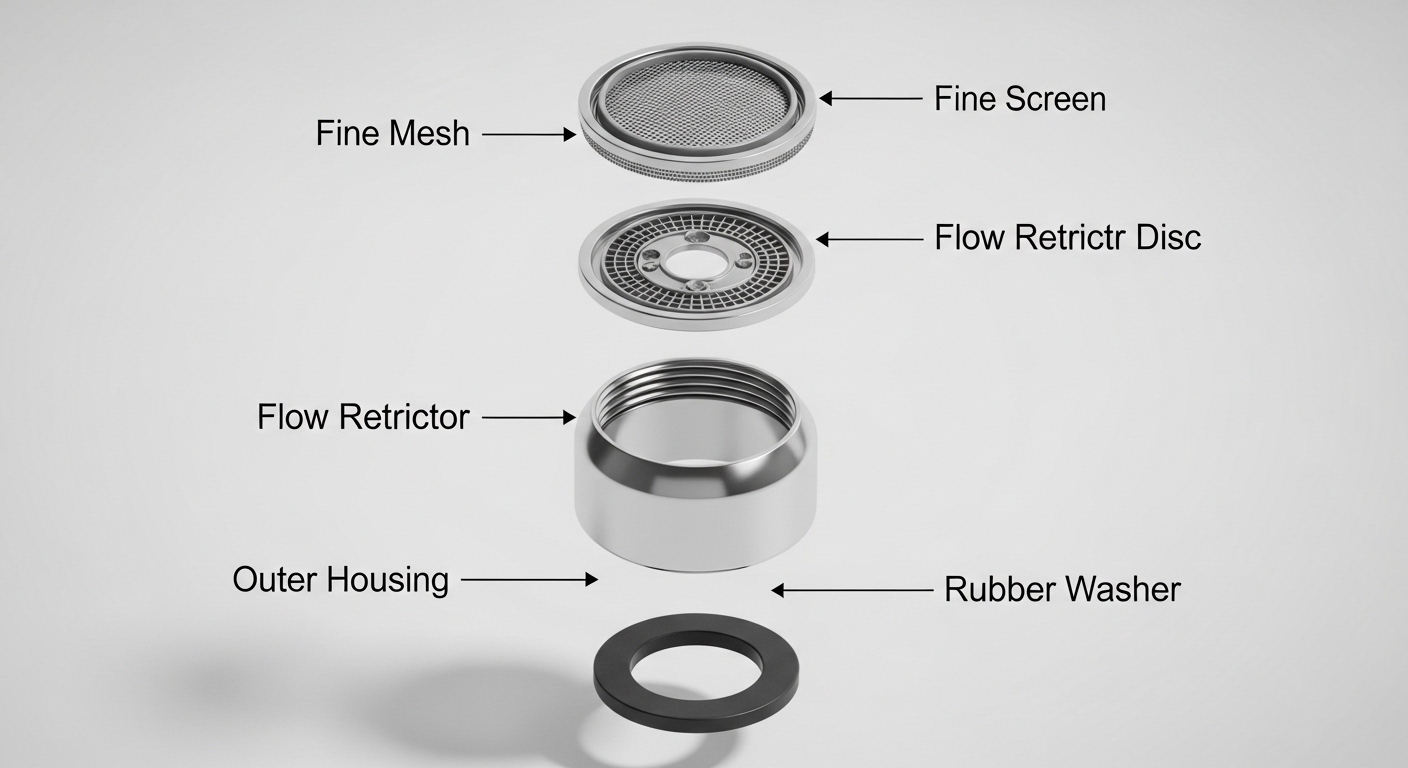
- Sputtering or air in the stream usually means a partially clogged aerator or trapped air — unscrew the aerator, rinse it, and reinstall.
- Handle feels stiff after a year? That’s the cartridge; a ceramic replacement is inexpensive and takes 15 minutes.
- Finish “fingerprints” fast? You likely got a cheaper coated finish, not PVD — another reason to buy from a spec-transparent seller.
Author Note, Brand Credibility & Standards
About the author: This guide was written by the WOWOW Faucet product content team, drawing on hands-on testing of dozens of pull-out and pull-down kitchen faucets, plus years of fielding real customer installation and warranty questions. We’ve physically cycled docking magnets, measured hose reach, and stress-tested cartridges — the advice here reflects what actually holds up in kitchens, not spec-sheet marketing.
About WOWOW Faucet: WOWOW (www.wowowfaucet.com) designs and sells kitchen and bathroom faucets, shower systems, and fixtures direct to homeowners, with a focus on solid-brass bodies, ceramic-disc cartridges, and durable PVD finishes at fair prices. Our brushed nickel kitchen faucets are built to certified performance and safety standards — look for products tested to ANSI/NSF 61 and NSF 372 (lead-free, drinking-water safe) and cUPC certification, and backed by a limited lifetime warranty on finish and function. Testing to these standards is exactly why we can recommend spending in the $120–$180 value zone rather than gambling on an uncertified budget faucet.
FAQ
Does a brushed nickel finish scratch or tarnish easily?
No. A quality PVD brushed nickel finish resists scratching, tarnishing, and discoloration — the finish is vapor-bonded to the metal, so normal cleaning and daily use won’t wear it off. The brushed texture also camouflages minor marks. Just avoid abrasive pads and harsh chemical cleaners.
Is a pull-out spray better than a pull-down for a small kitchen?
Usually yes. Pull-out faucets have lower, shorter spouts, so they fit under low cabinets and in front of windows where a tall pull-down arc won’t clear. The horizontal pull also gives you extra reach to fill things on the counter beside a small sink.
Can I install a pull-out kitchen faucet on a 3-hole sink?
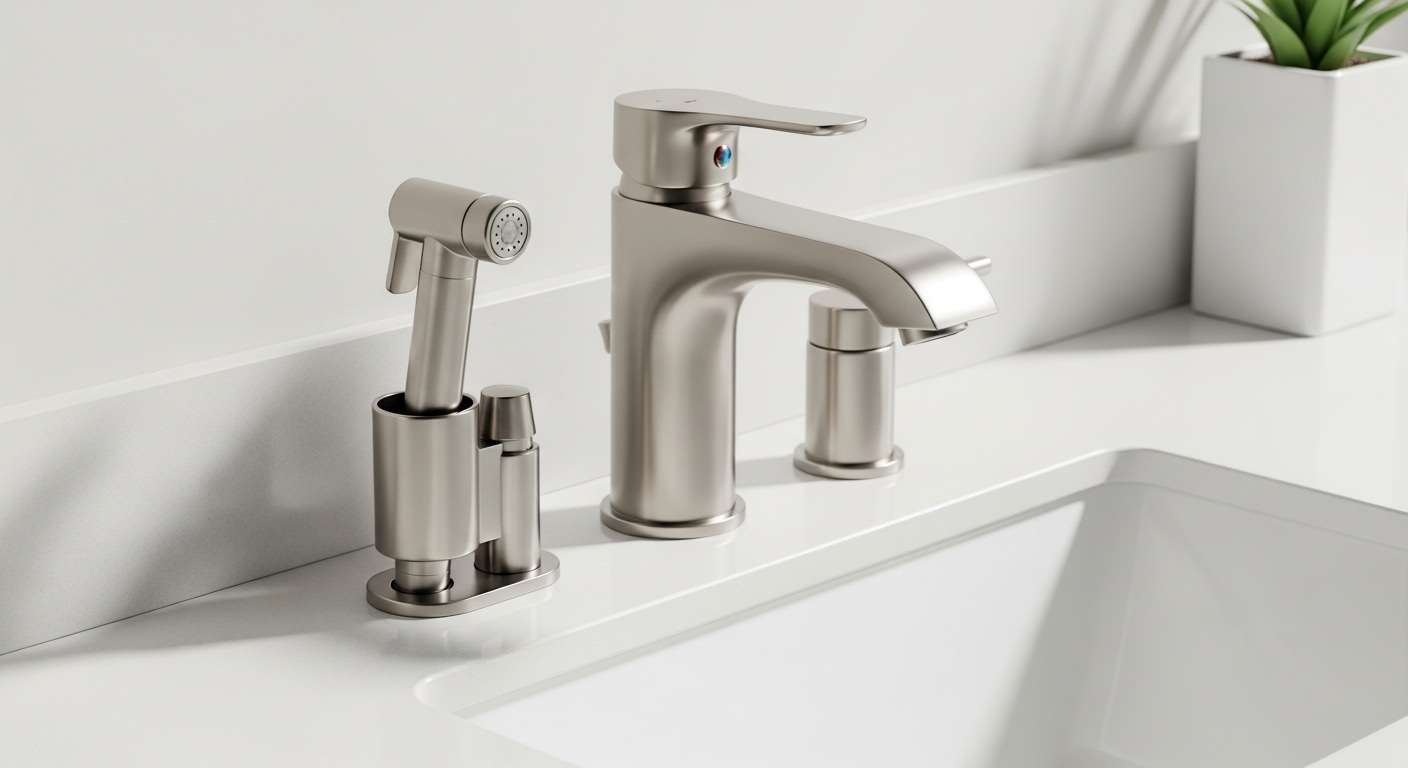
Yes. Almost every single-handle pull-out faucet includes an optional deck plate (escutcheon) that covers the extra two holes, so it fits both single-hole and standard 3-hole (4-inch or 8-inch spread) sinks. If you skip the deck plate, you can also use the outer holes for a soap dispenser or air gap.
Why is my new pull-out faucet’s water pressure low?
The most common cause is debris caught in the aerator or spray head after installation. Unscrew the aerator or spray nozzle, rinse out any grit, and reinstall — flow usually returns to normal. If it’s still weak, check that the supply valves under the sink are fully open.
How long should a good brushed nickel pull-out kitchen faucet last?
A well-built one with a ceramic-disc cartridge and magnetic dock should last 10–15 years or more, and any worn part — cartridge, aerator, or hose — is replaceable, so the faucet body often outlives its first cartridge. That’s why a limited lifetime warranty and available replacement parts matter more than the sticker price.
What’s the ideal flow rate for a kitchen faucet?
Look for 1.5 to 1.8 gallons per minute (GPM). That range meets water-efficiency standards while still filling pots quickly and rinsing well. A well-designed aerator at 1.5 GPM feels just as strong as an older 2.2 GPM faucet because it mixes air into the stream.
Hello!Please sign in