 WOWOW Faucets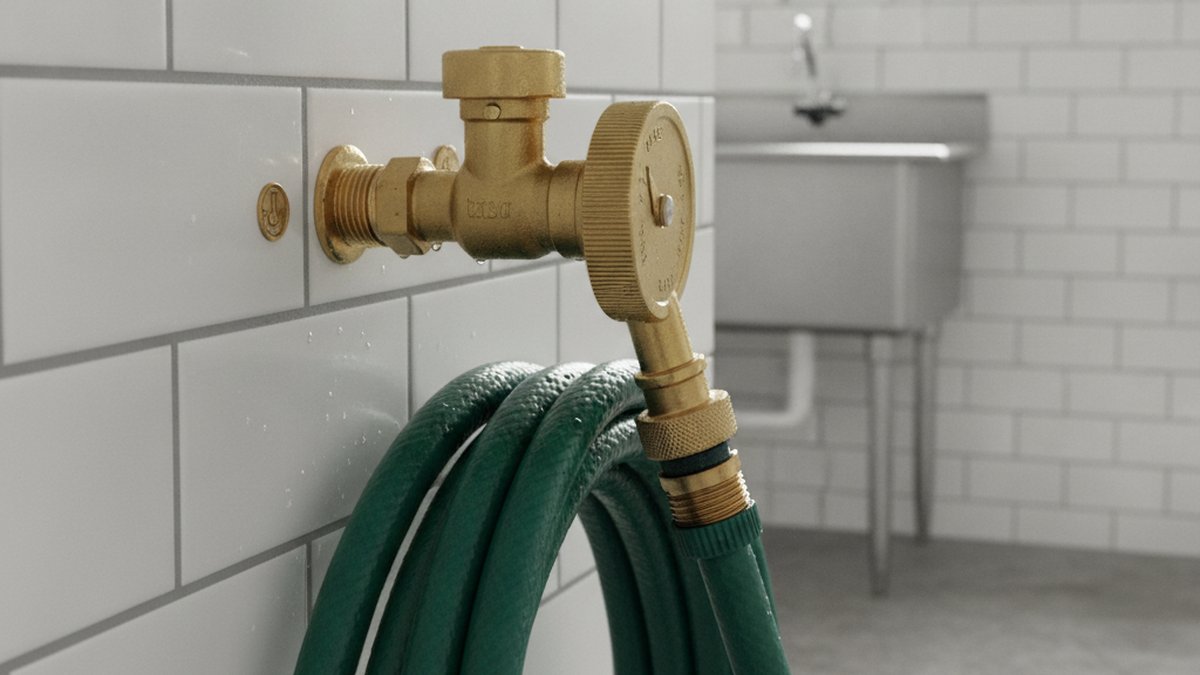
If you’ve ever tried to bathe a dog, rinse muddy boots, or wash a car in January with an icy garden hose, you already understand the problem a garden hose mixing valve solves. It’s a simple device that ties into both your hot and cold supply lines and hands you a single hose connection where you dial in the temperature you actually want. In this guide I’ll explain exactly how these valves work, the different types, how to size and install one, what to spend, and the safety details most product listings skip over.
What exactly is a garden hose mixing valve — and how is it different from a regular hose bibb?
A garden hose mixing valve takes two inputs — hot and cold water — and merges them into one outlet you control with a knob or lever, while a regular hose bibb (the outdoor faucet on the side of your house) is a single cold-only valve. That one difference is the whole point: a bibb can only give you the temperature of the water in that pipe, and outdoor pipes are almost always cold-only.
Mechanically, a mixing valve has two threaded inlets, usually 1/2″ NPT or 3/4″ NPT, and a single outlet threaded for a garden hose (3/4″ GHT). Inside, a mixing element — either a simple manual proportioning valve or a thermostatic cartridge — combines the two streams. The manual type just blends by ratio: turn toward hot, more hot flows; turn toward cold, more cold flows. A thermostatic type is smarter — it holds a set temperature even when pressure or incoming temperature shifts, the same technology used in a modern shower valve.
People confuse these with a “Y” splitter or a laundry-tub faucet, but they’re not the same. A Y splitter just lets you run two hoses; it does no blending. A laundry faucet has two separate handles feeding one spout — closer, but usually not GHT-threaded and not built for outdoor pressure and freeze exposure. A true garden hose mixing valve is purpose-built to feed a hose at a controlled temperature.
Do I actually need a mixing valve, or can I just split hot and cold hoses?
You need a mixing valve if you want one hose at a usable, safe temperature; splitting hot and cold into two hoses and alternating them is clumsy, wastes water, and can deliver dangerous 140°F water with no warning. The blending is the safety feature, not just a convenience.
Here are the situations where a mixing valve genuinely earns its keep:
- Dog washing / pet grooming: Dogs won’t tolerate ice water, and 130°F+ from a water heater can scald them. A mixing valve lets you settle on a comfortable ~95–100°F.
- Utility and mop sinks: Janitorial and garage sinks often only have a cold line stubbed out. A mixing valve plus a nearby hot tap solves it without a full faucet install.
- Car and equipment washing in cold months: Warm water cuts grease and road salt far better than cold, and your hands survive the job.
- Greenhouses and nurseries: Many plants dislike shockingly cold water on their roots; tempered water is gentler.
- Outdoor showers: A poolside or beach-house rinse-off shower is basically a hose fed by a mixing valve.
If none of those apply and you only ever rinse the driveway, save your money — a standard bibb is fine. The moment “warm water outside” is on your wish list, though, a mixing valve is the correct tool, and it’s dramatically cheaper and simpler than plumbing a full outdoor faucet with two supply lines and a spout.
What types of garden hose mixing valves are there, and which one fits my use?
There are three main types — manual dial-blend valves, thermostatic mixing valves (TMVs), and simple lever-style laundry valves — and the right choice depends on how precise and how safe you need the temperature to be. Manual is cheapest and fine for occasional use; thermostatic is the safe choice anywhere kids, pets, or elderly hands are involved.
| Type | How it controls temp | Best for | Typical price | Scald protection? |
|---|---|---|---|---|
| Manual dial / proportioning valve | Blends by ratio; temp drifts if pressure changes | Garages, car wash, occasional use | $20–$60 | No |
| Thermostatic mixing valve (TMV) | Holds a set °F automatically via wax/thermal cartridge | Dog wash, outdoor shower, kids, pets | $70–$180 | Yes |
| Lever laundry-style valve | Two handles, manual mix | Utility sink, workshop | $25–$70 | No |
A quick note on materials: look for lead-free brass or stainless steel bodies. Cheap zinc-alloy (“pot metal”) valves corrode fast in outdoor, hard-water, and freeze-thaw conditions. If the water might ever touch a pet’s mouth or your own skin for extended periods, confirm the valve is certified to a recognized drinking-water safety standard such as NSF/ANSI 372 for lead content.
If you’re weighing thermostatic technology for the house in general, it’s the same principle behind a good shower setup — worth understanding the difference between a shower valve rough-in and trim so you know what “thermostatic” really buys you before you spend up.
How do I install a garden hose mixing valve myself?
You install a garden hose mixing valve by shutting off both water supplies, connecting the hot line to the hot inlet and the cold line to the cold inlet (they’re marked, and getting them backwards on a thermostatic unit will make it behave strangely), then threading your hose onto the GHT outlet. For a basement utility spot, most people can do it in 30–60 minutes with hand tools.
Here’s the realistic step-by-step for a wall- or sink-mounted install near existing hot and cold stubs:
- Shut off water to both the hot and cold lines you’ll tap, and open a nearby faucet to relieve pressure.
- Confirm your thread types. Inlets are usually 1/2″ or 3/4″ NPT (pipe thread); the outlet is 3/4″ GHT (hose thread). NPT and GHT are NOT interchangeable — that’s the #1 mistake DIYers make.
- Wrap male NPT threads with 3–4 turns of PTFE (plumber’s) tape. Do not tape GHT connections — those seal with a rubber washer.
- Connect hot to hot, cold to cold. Use flexible braided supply lines or hard pipe as your situation requires. Snug with a wrench, but don’t crank brass hard enough to crack it.
- Thread the hose on the outlet, making sure the washer is seated.
- Turn cold on first, then hot, and check every joint for leaks before walking away.
- Set your temperature and, on a thermostatic model, verify the max temp with a cheap thermometer — aim for 100–110°F max at points where skin contact happens.
If your inlets don’t line up with your existing valves, this is exactly the kind of job where a faucet valve replacement guide is worth a read first, because you may want to swap or add shutoff valves at the same time. And if you’re brand new to plumbing fittings, our walkthrough on how to replace a faucet cartridge covers the same tape/thread/leak-check fundamentals you’ll use here.
What temperature should I set it to, and is it safe around kids and pets?
Set it so the maximum possible output stays at or below about 110°F for anything involving skin or pets, and ideally use a thermostatic valve that physically caps the temperature so a bump of the dial can’t send scalding water down the hose. Water at 120°F can cause a burn in a few minutes; at 140°F it burns in seconds.
This is the single most important reason to spend up for a thermostatic mixing valve rather than a manual one when children, pets, or older adults are involved. A manual valve will happily pass full 140°F water if the cold side loses pressure — say, when a toilet fills or someone flushes upstairs. A TMV senses that and instantly throttles the hot side to hold your setpoint, then shuts off entirely if the cold supply fails completely (a feature called cold-water-failure shutdown on quality units).
Two more safety habits worth building in:
- Test with a thermometer the first time and after any plumbing change. Don’t trust the dial markings alone.
- Winterize it. If the valve lives outdoors or in an unheated space, drain it and, if possible, remove it before hard freezes. Trapped water cracks even solid brass.
How much does a garden hose mixing valve cost, and where should I buy one?
Expect to pay roughly $20–$60 for a basic manual valve and $70–$180 for a quality thermostatic model, with installation adding nothing if you DIY or $100–$250 if a plumber does it. For most homeowners the sweet spot is a mid-range thermostatic brass valve around $90–$120 — safe, durable, and not overpriced.
When you’re shopping, judge value on these concrete points rather than the sticker price:
- Body material: lead-free brass or 304/316 stainless, not zinc alloy.
- Certification: look for NSF/ANSI listings and a real warranty (5 years or more signals the maker trusts the cartridge).
- Flow rate: check GPM at your home’s pressure; a valve that chokes flow makes rinsing slow and annoying.
- Serviceability: a replaceable cartridge means a $15 part fixes it in year six instead of a whole new valve.
Buying direct from a fixtures specialist like wowowfaucet usually beats a random marketplace listing, because you get verified thread specs, real warranty support, and matching finishes if you care how it looks. While you’re upgrading water fixtures, folks who care about clean, temperature-appropriate water at the sink often also look at a dedicated tap — see our take on whether a chrome drinking faucet is the right call for clean tap water in the kitchen.
FAQ
Can I connect a garden hose mixing valve to any outdoor spigot?
Not directly — a standard outdoor spigot only carries cold water, so there’s nothing hot to blend. You need access to both a hot and a cold supply line. That usually means installing the valve near an interior location like a laundry room, basement, or garage where both lines are present, then running the hose out from there.
Will a mixing valve reduce my water pressure?
A properly sized valve causes only a small pressure drop, typically a few PSI, which you won’t notice for washing tasks. Problems only show up if you buy an undersized valve (1/2″ internals feeding a high-demand job) or if your hot and cold pressures are badly mismatched. Matching inlet sizes to your supply lines keeps flow strong.
Is brass or stainless steel better for a hose mixing valve?
Both are excellent; lead-free brass is the most common and offers great corrosion resistance and value, while 316 stainless edges it out in salty or coastal environments. Avoid zinc-alloy valves entirely — they look identical when new but pit and fail within a couple of freeze-thaw seasons outdoors.
Do I need a plumber, or is this a DIY job?
If hot and cold lines already exist where you want the valve, it’s a confident-DIY job — shut off water, connect hot-to-hot and cold-to-cold, seal the threads, and leak-check. Call a plumber if you need new supply lines run, if you’re soldering copper, or if local code requires a licensed install for any tempered-water device.
What’s the difference between a mixing valve and a thermostatic mixing valve (TMV)?
A plain mixing valve blends by ratio and lets temperature drift when pressure changes; a thermostatic mixing valve actively holds your set temperature and shuts down if the cold supply fails. For occasional car washing a manual valve is fine, but anywhere skin or pets are involved, the TMV’s built-in scald protection is worth the extra money.
Can I use a garden hose mixing valve for an outdoor shower?
Yes — that’s one of the most popular uses. Pair a thermostatic mixing valve with both supply lines run to the shower location, cap the max temperature around 105°F, and winterize the plumbing if you live where it freezes. The valve does exactly what a shower cartridge does indoors, just with a hose-threaded outlet.
Author note: This guide was written by the wowowfaucet product team, drawing on years of designing, testing, and warrantying residential faucets, shower valves, and mixing hardware. wowowfaucet manufactures lead-free brass and stainless fixtures tested against recognized flow and lead-content standards and backed by our warranty, so the specs above reflect what we actually build and support — not marketing rounding.