 WOWOW Faucets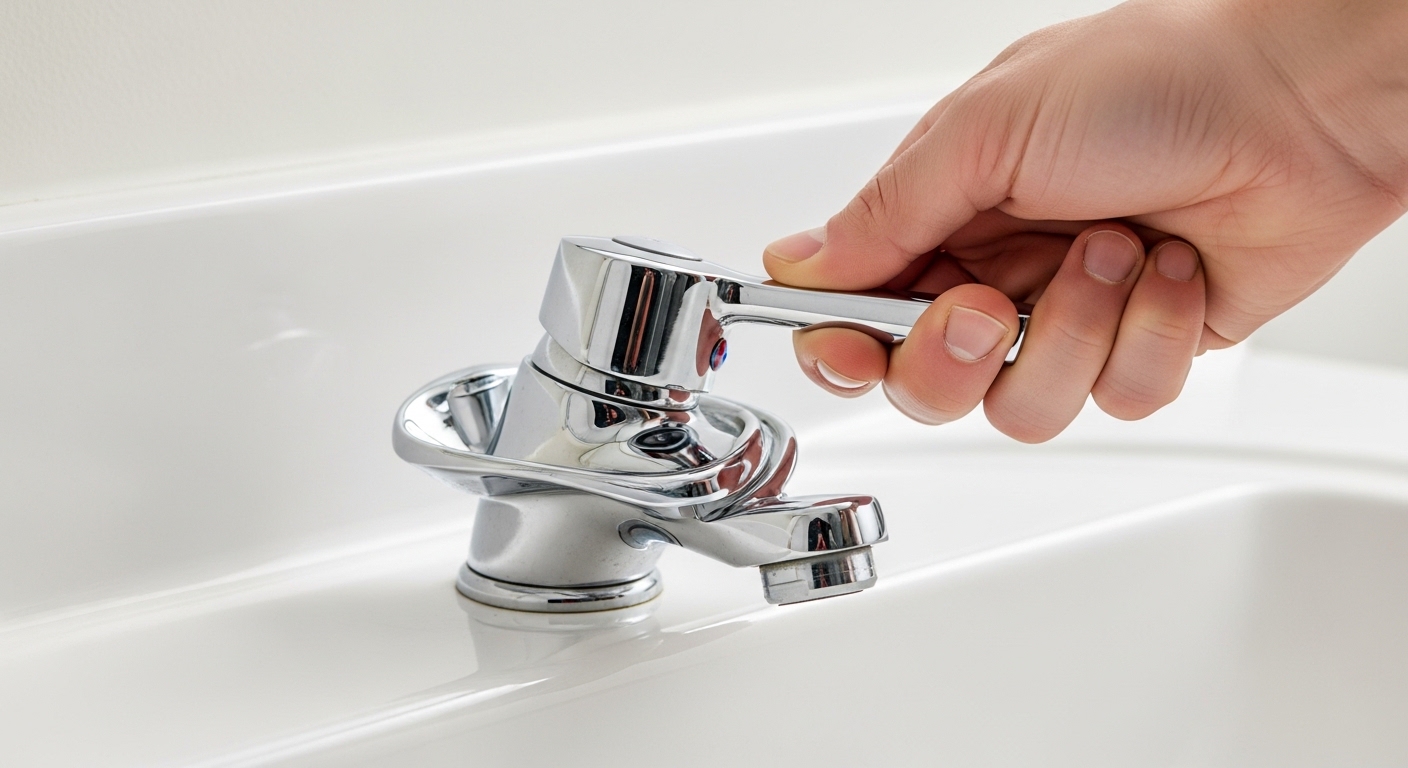
If you have a faucet handle loose bathroom problem — that annoying side-to-side wobble every time you turn the water on — you are not looking at a plumbing emergency, and you almost certainly do not need to call a pro. In the vast majority of cases, a loose bathroom faucet handle comes down to one small fastener that has worked itself free over months of daily use. Below, we will show you exactly how to find the culprit, tighten it correctly, and prevent the wobble from coming back.
This is a repair-focused guide written for homeowners. We cover single-handle and two-handle bathroom faucets, the tools you need, a step-by-step fix, a parts comparison table, and a full FAQ. Let’s get your handle solid again.
Why Is My Faucet Handle Loose in the Bathroom?
When you have a faucet handle loose bathroom situation, the wobble is a symptom — not the disease. The handle is just the lever you touch; underneath it sits a small stack of components that transfer your motion to the valve. When any one of those parts loosens or wears, the handle starts to move independently of the valve, and you feel play, rattle, or spin.
Here are the most common root causes, roughly in order of how often they show up:
- Backed-out set screw. Most single-handle bathroom faucets are held on by one tiny hex (Allen) set screw, usually hidden under a decorative cap or tucked under the lever. Thermal cycling and daily torque slowly back it out.
- Loose handle screw. Two-handle faucets typically use a Phillips or slotted screw under the hot/cold index button (the little blue/red cap). It loosens the same way.
- Worn handle adapter or broed. The plastic or brass adapter that connects the handle to the cartridge stem can strip out, so even a tight screw won’t stop the spin.
- Loose cartridge retaining nut. Below the handle, a brass nut or retaining clip holds the cartridge in the faucet body. If it loosens, the whole cartridge — and the handle on top of it — rocks.
- Worn cartridge or stem. After years of use, the cartridge stem itself can wear, creating play that no amount of tightening will remove.
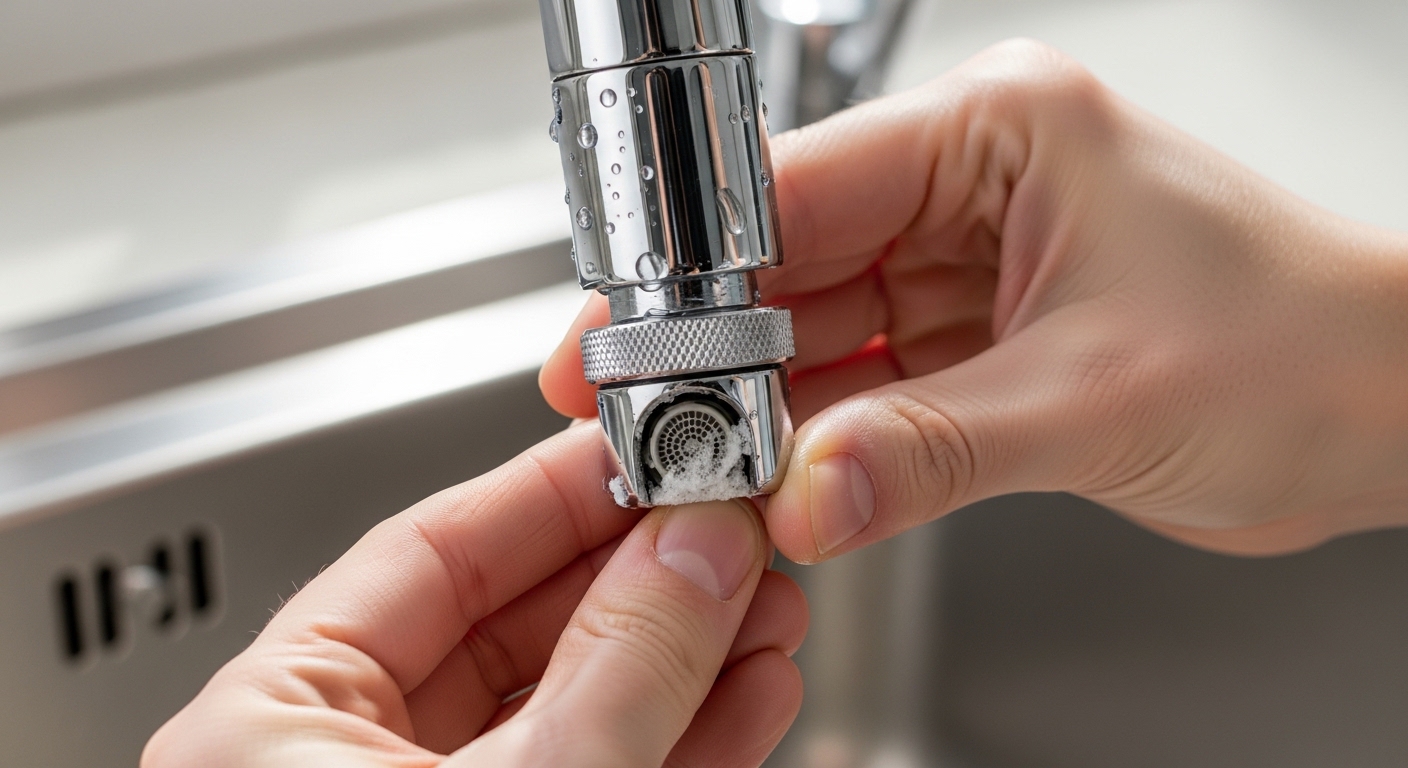
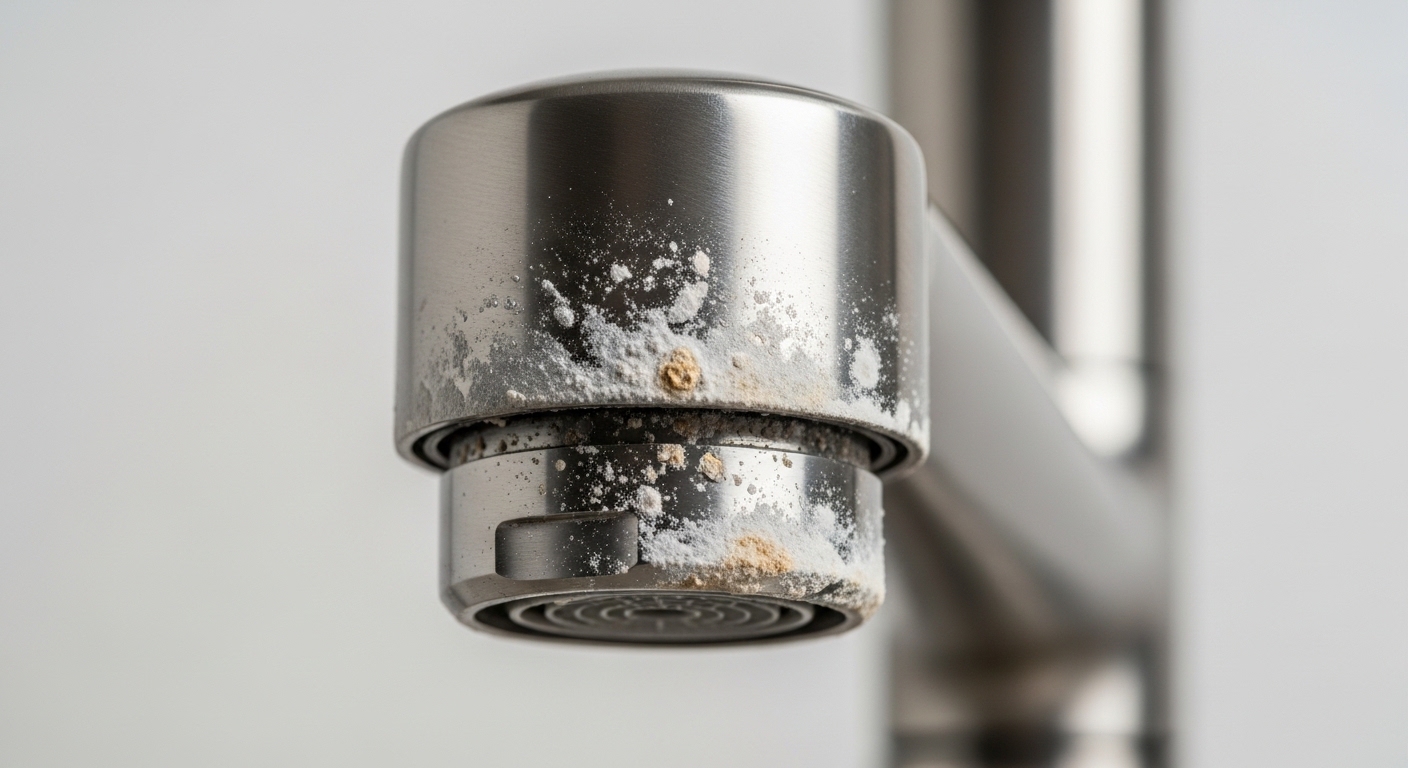
- Corrosion and mineral buildup. Hard water deposits can prevent parts from seating fully, leaving a persistent wobble.
The good news: four of those six causes are a simple tighten-it-back-down job. Only a worn adapter or a worn cartridge requires a replacement part, and both are inexpensive.
Tools and Parts You Need to Fix a Loose Bathroom Faucet Handle
Before you touch the faucet, gather everything. Stopping mid-repair to hunt for a wrench is how small parts go down the drain.
- Hex/Allen wrench set (metric and SAE — bathroom faucets use both)
- Phillips and flathead screwdrivers
- Adjustable wrench or channel-lock pliers
- A soft cloth or painter’s tape to protect the finish
- White vinegar and an old toothbrush for mineral cleanup
- Plumber’s grease (silicone-based) for reassembly
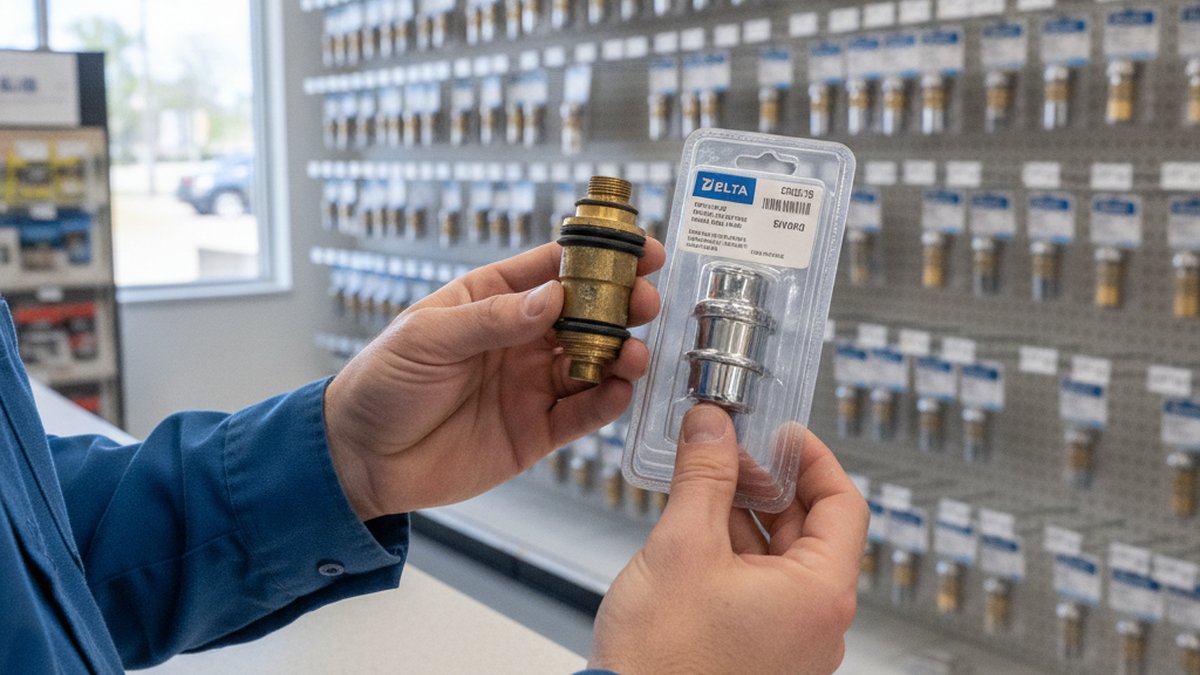
- Replacement set screw, handle adapter, or cartridge — only if inspection shows wear
- A flashlight and a small bowl to hold parts
One tip from our test bench: take a photo with your phone at every step of disassembly. Bathroom faucet handles come apart in a specific order, and a quick reference photo makes reassembly foolproof.
Step-by-Step: How to Tighten a Loose Bathroom Faucet Handle
This procedure covers the most common scenario — a single-handle bathroom faucet — and we note the two-handle differences as we go. Work slowly; the parts are small and the threads are fine.
Step 1: Turn Off the Water Supply
Reach under the vanity and close both shutoff valves (turn clockwise). If your bathroom has no under-sink shutoffs, close the main water supply to the house. Open the faucet to release pressure and confirm the water is truly off. This step is non-negotiable — if you pull the cartridge with the water on, you will get a geyser.
Step 2: Find and Access the Handle Screw
On a single-handle faucet, look for a small hex set screw at the base or underside of the lever. It may be hidden under a snap-on cap with the brand logo or a hot/cold indicator — pop that cap off gently with a flathead. On a two-handle faucet, pry off the red/blue index button on top of each handle to reveal a Phillips or slotted screw.
Step 3: Tighten the Set Screw or Handle Screw
Insert the correct Allen wrench or screwdriver and snug the screw down. Hand-tight plus a firm quarter turn is the target — do not crank it, because over-torquing strips soft brass and plastic threads. Test the handle. If the wobble is gone, replace the cap and you’re done. Roughly half of all loose handle complaints end right here.
Step 4: If It’s Still Loose, Remove the Handle
Back the screw all the way out and lift the handle straight up. If it sticks from mineral buildup, wiggle gently — don’t pry against the finish. Inspect the handle adapter (the broached sleeve the handle slides onto). If you see rounded-off splines, cracks, or a powdery white buildup, that’s your problem. Clean buildup with vinegar and a toothbrush; replace a stripped adapter outright.
Step 5: Check the Cartridge Retaining Nut or Clip
With the handle off, you’ll see the cartridge held by either a brass retaining nut or a horseshoe-shaped retaining clip. If it’s a nut, snug it with an adjustable wrench (gently — it’s brass). If it’s a clip, make sure it’s fully seated in its groove. A loose retainer lets the whole cartridge rock, which feels exactly like a loose handle.
Step 6: Inspect the Cartridge Stem
Grip the cartridge stem and try to wiggle it. Some rotational play is normal; side-to-side slop is not. A worn cartridge stem won’t hold a handle no matter how tight everything else is — that’s your cue to replace the cartridge. If you’re already this deep, it’s worth refreshing the O-rings while you’re in there; our guide on how to repair faucet O-rings walks through that.
Step 7: Reassemble With Plumber’s Grease
Apply a thin film of silicone plumber’s grease to the cartridge stem and adapter. Slide the handle back on, align it to the off position, and tighten the screw to hand-tight plus a quarter turn. Snap the cap back on, turn the water on slowly, and check for smooth operation and zero wobble.
Single-Handle vs Two-Handle: Loose Handle Fixes Compared
The faucet handle loose bathroom fix differs slightly depending on your faucet type. Use this table to know what to expect before you start.
| Faucet Type | Fastener Holding the Handle | Most Common Loose-Handle Cause | Typical Fix Time | Replacement Part If Worn |
|---|---|---|---|---|
| Single-handle (cartridge) | Hex set screw under cap or lever | Backed-out set screw | 10–15 min | Set screw or cartridge |
| Two-handle (compression) | Phillips/slotted screw under index cap | Loose handle screw or worn stem | 15–20 min | Stem or handle adapter |
| Two-handle (ceramic disc) | Screw under index cap | Stripped handle adapter | 15–20 min | Handle adapter |
| Widespread / centerset | Set screw per handle | Loose escutcheon plus set screw | 20–30 min | Set screw or mounting nut |
| Wall-mounted | Set screw under lever | Loose mounting in valve body | 20–30 min | Cartridge or retaining clip |
When the Handle Isn’t the Real Problem
Sometimes what feels like a loose handle is actually movement somewhere else in the faucet. A few things to rule out:
- The whole faucet body rocks. If the entire spout and base move, the mounting nut under the sink is loose — not the handle. That’s a different repair under the vanity.
- The spout neck wobbles. A loose neck is its own issue. If your spout swivels too freely or rocks, see our guide on how to repair a loose faucet neck.
- The handle is loose AND it drips. Play in the handle plus a leak usually means a failed cartridge or O-ring. If your faucet is newer, our article on why your new faucet still leaks covers the overlap between loose parts and leaks.
- The handle clicks or grinds. Noise with movement points to debris or a worn cartridge. We break down faucet noises in our piece on faucets making clicking sounds.
Diagnosing correctly saves you from replacing a perfectly good part. Always isolate what moves before you decide what to tighten.
How to Stop a Bathroom Faucet Handle From Coming Loose Again
Fixing the wobble once is satisfying. Making sure it stays fixed is the real win. Here’s what our product testing team recommends:
- Don’t over-tighten — and don’t under-tighten. Both extremes cause early loosening. Aim for hand-tight plus a quarter turn on set screws.
- Use a drop of removable threadlocker. A small dab of blue (not red) threadlocker on the set screw threads prevents vibration back-out without making future service impossible.
- Keep mineral buildup in check. Hard water deposits stop parts from seating. Periodic cleaning helps — our faucet base cleaning guide shows how to clear limescale safely.
- Replace worn adapters early. A handle adapter showing rounded splines will only get worse. A two-dollar part now beats a stripped handle later.
- Choose quality hardware. Solid brass cartridges and metal — not plastic — handle adapters hold torque far longer. This is one reason faucet construction matters so much.
That last point is worth dwelling on. A loose handle that keeps coming back is often a materials problem. Lightweight zinc or plastic internals strip and wear faster than forged or solid brass components, so the same handle loosens again and again no matter how carefully you tighten it. If you’re weighing a repair against a replacement, it helps to understand what separates durable fixtures from disposable ones — our comparison of durable vs lightweight faucet materials is a useful read before you buy.
When to Repair vs. Replace Your Bathroom Faucet
Most loose-handle situations are worth repairing — the parts are cheap and the job is quick. Consider a full faucet replacement instead when:
- The faucet is 15+ years old and replacement cartridges are discontinued.
- The valve body itself is cracked or heavily corroded.
- You’ve already replaced the cartridge and adapter and the wobble persists.
- The faucet is a low-quality unit where the body threads themselves are stripping.
- You want updated features like better flow control or a cleaner finish anyway.
If you do decide to upgrade, look for a faucet with a solid brass body, a ceramic disc cartridge, and a metal handle adapter — that combination resists the exact loosening problem you just fixed. WOWOW’s bathroom faucet line is built around those specifications for that reason.
Author Note & Brand Credibility
This guide was written and reviewed by the WOWOW product and repair content team, drawing on hands-on bench testing of single-handle, two-handle, and widespread bathroom faucets. WOWOW (www.wowowfaucet.com) has specialized in faucets and bathroom fixtures for years, and our faucets are designed to meet recognized performance and safety standards, including cUPC certification, with components rated for hundreds of thousands of use cycles in durability testing. Every WOWOW bathroom faucet is backed by a manufacturer’s warranty covering finish and function — so if a handle, cartridge, or adapter fails under normal use, the replacement part is on us. The repair steps above reflect the same procedures our support team walks customers through every day.
FAQ
Why does my bathroom faucet handle keep getting loose?
Repeated daily torque and thermal cycling slowly back out the set screw or handle screw. If it loosens again within weeks of tightening, the handle adapter or cartridge stem is likely worn and no longer holding torque — replace that part, and consider a dab of blue threadlocker on the set screw.
What size Allen wrench do I need for a loose faucet handle?
Most bathroom faucet set screws use a small hex key between 1/16″ and 1/8″ (or roughly 1.5 mm to 3 mm). Bring a full metric and SAE set, since manufacturers vary. The correct size slides in snugly with no wobble — never force a near-fit, as that rounds the screw.
Can I fix a loose bathroom faucet handle without turning off the water?
If you’re only tightening an external set screw without removing the handle, you can usually skip shutting off the water. But the moment you remove the handle to inspect the adapter or cartridge, turn off the supply valves first — pulling a cartridge under pressure causes an immediate, messy leak.
My faucet handle is loose and still spins after tightening the screw. What now?
A handle that spins freely even with a tight screw has a stripped handle adapter or a worn cartridge stem. The screw has nothing solid to grip. Remove the handle, inspect the adapter splines, and replace the adapter or cartridge — tightening alone will not fix a stripped connection.
How much does it cost to fix a loose bathroom faucet handle?
If it’s just a set screw, it’s free — you already own the wrench. A replacement set screw or handle adapter typically runs a few dollars, and a new cartridge is usually $10–$30 depending on the brand. Calling a plumber for the same job often costs $100 or more, which is why this is a great DIY repair.
Is a loose faucet handle dangerous or just annoying?
It’s mostly an annoyance, but ignoring it can let the problem spread — a loose handle puts uneven stress on the cartridge, which can lead to leaks, drips, and water waste over time. Fixing the wobble early protects the cartridge and the valve body.
Does a loose handle mean I need a whole new faucet?
Almost never. A loose handle is one of the most repairable faucet issues. Replace the faucet only if the valve body is cracked, parts are discontinued, or you’ve already swapped the cartridge and adapter without success.
\n
Related Guides
\n
- \n
- Fixed: How to Tighten A Loose Kitchen Faucet Base
- When Your Faucet Handle Spins Without Resistance: Causes, Fixes, and Prevention
- Why Is My Faucet Leaking At The Base – How To Fix It
\n
\n
\n
\n
Fix a Loose Bathroom Faucet Handle: Quick Answers
How do you tighten a loose faucet handle?
Locate the set screw, usually under a small cap or behind the handle. Use the correct hex key or screwdriver to tighten it gently, then test the handle. If it is still wobbly, the handle adapter or cartridge may need replacement.
Why does my bathroom faucet handle keep coming loose?
Repeated use can loosen the set screw, and worn handle splines or a failing cartridge can make the problem return. Tighten the set screw first; if the handle still moves, inspect the handle base for stripped teeth.
Related: what is a faucet cartridge and how to fix a leaky faucet cartridge handle.