 WOWOW Faucets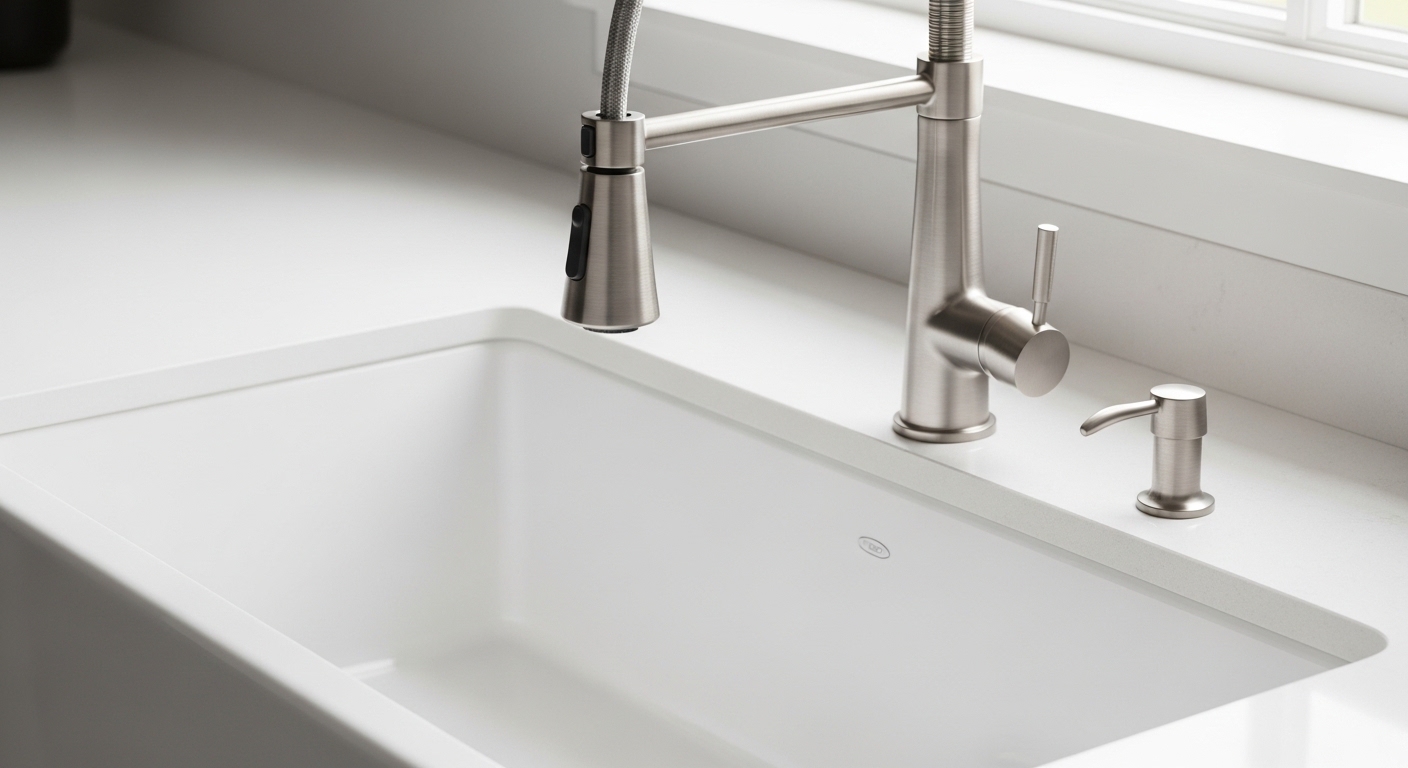
If you’re staring at a sink deck with exactly one hole and wondering what fits, a single hole sink faucet kitchen setup is almost certainly what you need. “Single hole” simply means the faucet body, spout, and handle all rise out of one 1⅜-inch (35 mm) opening instead of the three or four holes an older widespread faucet required. It’s the most popular kitchen faucet layout sold today because it looks sleek, wipes clean fast, and lets you turn water on, adjust temperature, and shut it off with one hand — even when your other hand is covered in raw chicken or bread dough.
Below, I’ll walk you through exactly how to know if a single-hole faucet fits your sink, what specs actually matter, how the finishes and cartridges compare, and the real questions people ask before they buy. No fluff — just the stuff that changes which faucet you should click “add to cart” on.
How do I know if my sink actually needs a single hole faucet?
Count the holes in your sink deck or countertop — if there’s just one, you need a single-hole faucet (or a single-hole faucet plus a deck plate to cover extra holes). Flip your sink over or look under the counter if the holes are hidden by an existing faucet base.
Most kitchen sinks come pre-drilled with either one, three, or four holes. Here’s the quick logic:
- One hole: A single-hole faucet drops right in. Done.
- Three holes (older standard): You can still install a single-hole faucet — just add a deck plate (also called an escutcheon) to hide the two extra holes, or use the side holes for a soap dispenser and a filtered-water tap.
- Four holes: Same as three — cover the extras with a deck plate, or fill them with accessories.
The standard hole diameter for a single-hole kitchen faucet is 1⅜ inches (35 mm), though some heavier commercial-style faucets want 1½ inches (38 mm). Measure before you buy. If your existing hole is slightly small, a rotary tool or a stepped hole saw can enlarge a stainless sink, but that’s a job to plan for, not a surprise on install day.
Single hole vs. widespread vs. wall-mount: which kitchen faucet layout is best?
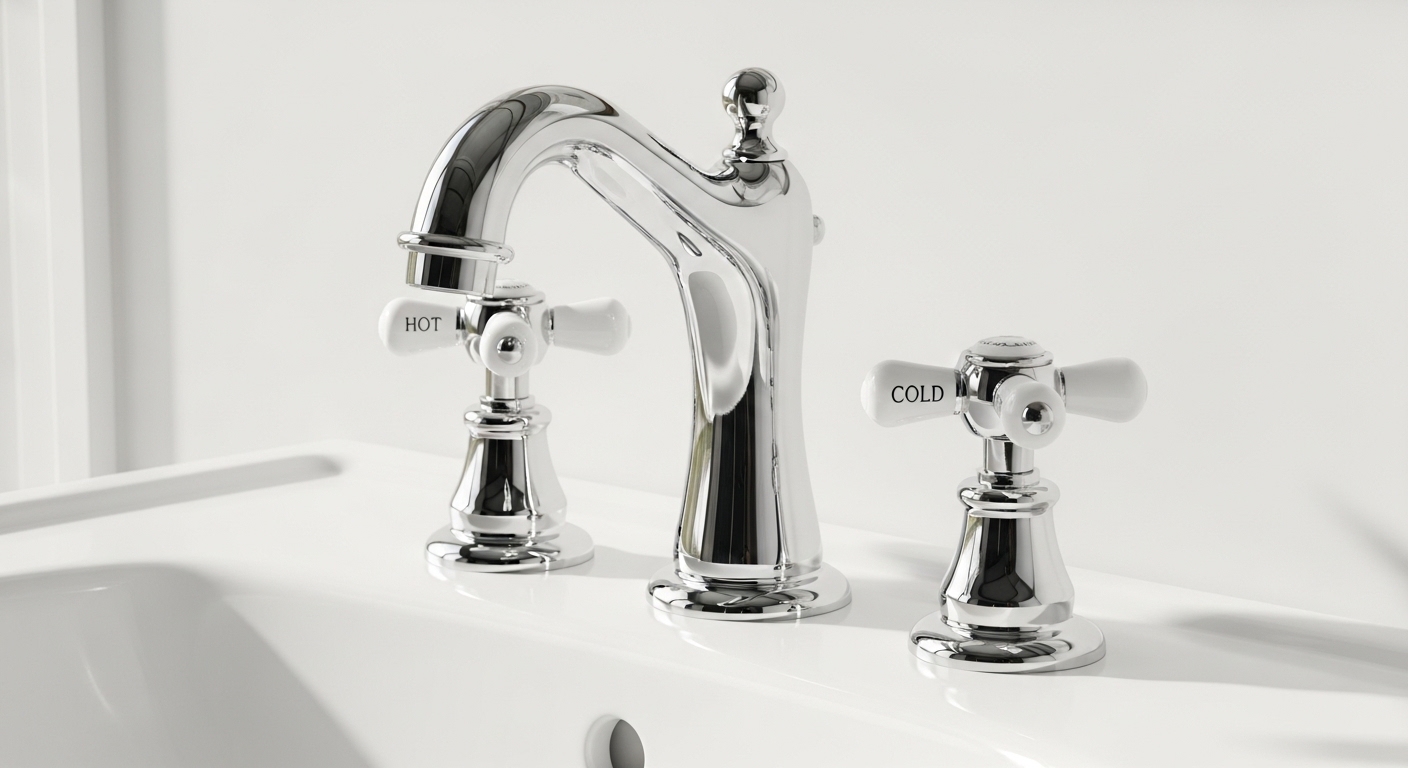
For 90% of kitchens, single-hole wins on ease of cleaning, install speed, and modern looks. Widespread (3-hole) makes sense only if you love a traditional bridge or two-handle look, and wall-mount is for specific pot-filler or design situations. Here’s how they stack up.
| Faucet type | Holes needed | Best for | Cleaning | Typical price |
|---|---|---|---|---|
| Single-hole | 1 | Modern kitchens, one-handed use, small counters | Easiest — no seams to trap grime | $90–$300 |
| Widespread / 3-hole | 3 | Traditional or bridge styles, separate hot/cold handles | More crevices around each piece | $150–$500 |
| Centerset (4″) | 3 (close together) | Smaller bar/prep sinks | Moderate | $70–$200 |
| Wall-mount | 0 (in-wall) | Pot fillers, apron sinks, custom looks | Easy deck, harder plumbing | $120–$450 |
The practical takeaway: a single-hole faucet is the least fussy to keep clean because there’s only one base gasket sitting on the deck — no grout-like gunk collecting between three separate pieces. That single base is also why installation is faster; you’re tightening one mounting nut from below instead of aligning three connections.
What specs actually matter when buying a single hole kitchen faucet?
The specs that change your daily experience are the cartridge type, the spray function, the flow rate, the spout reach and height, and the finish. Ignore marketing buzzwords and check these five things.
1. Cartridge — the part that decides if it’ll leak
Go with a ceramic-disc cartridge. It’s the industry standard for a reason: two polished ceramic plates slide against each other to control flow, and they resist wear from hard-water grit far better than old rubber-washer or ball designs. A quality ceramic cartridge is rated for 500,000+ open/close cycles. If a faucet doesn’t say ceramic disc, be suspicious. When a single-handle faucet does eventually drip, the cartridge is almost always the culprit — and it’s usually a cheap, DIY-friendly fix, as I explain in our guide on why a leaky kitchen faucet single handle drips and how to fix it yourself.
2. Spray function — pull-down, pull-out, or fixed
- Pull-down: The spray head pulls straight down into the sink. Best for deep, single-bowl sinks and filling tall pots. Most popular for single-hole kitchens.
- Pull-out: The head pulls toward you horizontally. Great for shallow sinks and rinsing dishes on the counter.
- Fixed spout: No pull-hose. Cheaper and fewer parts to fail, but less flexible.
Look for a magnetic dock that snaps the spray head firmly back into place. Cheaper faucets use a weighted counterbalance that lets the head droop over time — a small detail that gets annoying fast.
3. Flow rate (GPM)
Kitchen faucets in the U.S. are capped at 2.2 GPM (gallons per minute), and many modern models run 1.8 GPM to save water without feeling weak. California, Colorado, and a few other states require 1.8 GPM or lower. If you’re worried a lower flow rate will feel underpowered, it usually won’t for kitchen tasks — we break down exactly how it feels in our piece on whether a kitchen faucet with a 2.0 flow rate is worth it or feels too weak. The aerator matters as much as the raw number.
4. Spout reach and height
Measure the space between your faucet hole and any window or backsplash behind it. High-arc spouts (8–10 inches tall) look dramatic and clear big stockpots, but they can splash in a shallow bowl and may not fit under a low window. Reach (how far the spout extends over the sink) should land the water near the center of your bowl, not against the back wall.
5. Finish and material
Solid brass construction is the gold standard for the faucet body — it resists corrosion and won’t crack like cheap zinc alloy. For the finish, match your appliances and hardware. More on finishes below.
Which finish is best for a single hole kitchen faucet — stainless, brushed nickel, matte black, or bronze?
Brushed nickel and stainless steel are the most forgiving everyday finishes because they hide water spots and fingerprints better than shiny chrome or matte black. Matte black looks stunning but shows hard-water residue and dried droplets; bronze suits traditional and farmhouse kitchens.
| Finish | Hides spots & prints | Style match | Upkeep |
|---|---|---|---|
| Brushed nickel | Excellent | Warm, works with almost anything | Low — wipe with damp cloth |
| Stainless steel | Very good | Modern, matches steel appliances | Low |
| Chrome | Poor (shows everything) | Bright, classic | Higher — frequent wiping |
| Matte black | Fair (shows white mineral spots) | Bold, modern/industrial | Higher in hard-water homes |
| Oil-rubbed bronze | Good | Traditional, farmhouse | Low–moderate |
If you have hard water, finish choice matters even more, because mineral deposits show up as chalky white spots — most visible on black and chrome. Whatever finish you pick, you’ll eventually need to clean off mineral buildup; our step-by-step on removing hard water stains on a stainless steel faucet without scratching it works on brushed and stainless finishes too. Brushed nickel remains the safe crowd-pleaser: it plays nicely with white, gray, wood, and stainless kitchens alike. If you want the popular look with a pull-down sprayer, our roundup of the best brushed nickel kitchen faucets with pull-out spray is a good next stop.
Can I install a single hole kitchen faucet myself?
Yes — a single-hole kitchen faucet is one of the most DIY-friendly plumbing jobs, and most people finish in 45–90 minutes with basic tools. Because everything mounts through one hole, there’s less alignment and fewer connections than a three-hole faucet.
Here’s the basic sequence:
- Shut off the water at the two supply valves under the sink and open the old faucet to release pressure.
- Disconnect and remove the old faucet — a basin wrench is your best friend for the cramped nuts up top.
- Clean the deck so the new gasket seats flat.
- Feed the new faucet’s lines through the hole and set the base gasket or deck plate.
- Tighten the mounting nut from below — snug, not gorilla-tight.
- Connect supply lines (hot to left, cold to right), hand-tighten plus a quarter turn.
- Attach the pull-down hose and weight per the manual.
- Turn water back on slowly, check for leaks, and run the faucet for a minute to flush debris.
One tip that saves headaches: remove and clean the aerator after the first few days. New plumbing knocks loose bits of sediment that clog the aerator screen and cut your flow. If you want to understand that little screwed-on tip and how it shapes your stream, see what a faucet aerator for a kitchen sink actually does and how to pick the right one.
How much should I spend on a single hole kitchen faucet in 2026?
Plan on $90–$250 for a solid, long-lasting single-hole kitchen faucet from a reputable brand. Under $70 you’re often buying thin zinc bodies and plastic cartridges that leak within a year or two; above $300 you’re mostly paying for premium finishes and designer names, not better function.
Here’s what your money buys at each tier:
- $70–$120: Entry-level. Fine for a rental or backup sink. Look hard for ceramic-disc and brass — many at this price cut corners.
- $120–$250 (the sweet spot): Solid brass body, ceramic cartridge, magnetic dock, real metal finish, and a lifetime or long limited warranty. This is where value peaks.
- $250–$450+: Designer finishes, touchless/touch activation, voice or motion features, premium warranties.
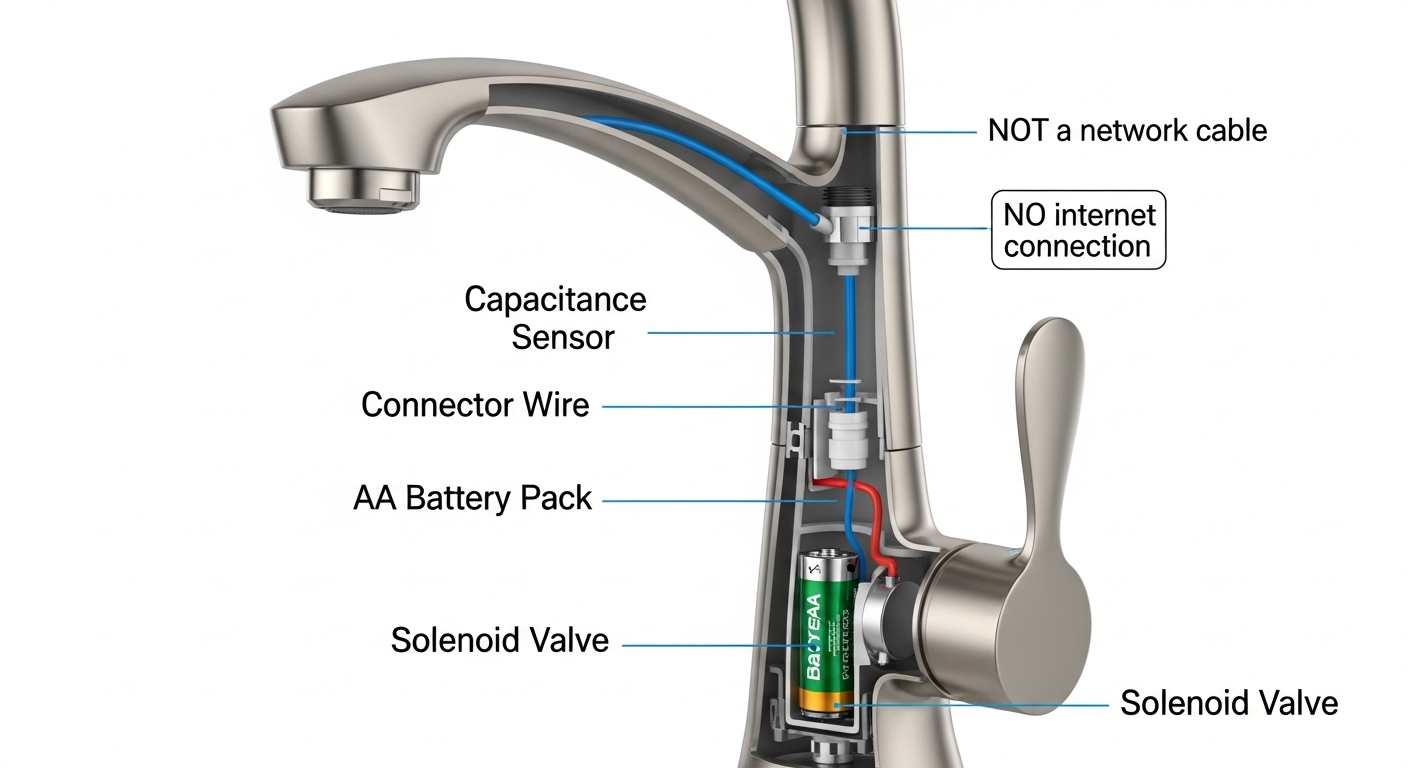
Touchless faucets are worth the premium if you cook a lot with messy hands, but they need batteries or an outlet and add electronics that could eventually fail. For most buyers, a well-made manual single-hole pull-down in the mid tier is the smarter buy. If you’re comparing across brands and price points, our list of the highest-rated kitchen faucets of 2026 lays out which models actually earn their price.
What are the pros and cons of a single hole kitchen faucet?
The single-hole design’s big advantages are easy cleaning, fast installation, one-handed control, and a clean modern look; the trade-offs are fewer built-in accessory ports and less of a traditional aesthetic.
| Pros | Cons |
|---|---|
| One base gasket = fastest, cleanest deck | No dedicated holes for soap dispenser/side spray unless sink has extras |
| One-handed temperature + flow control | Single handle can be less precise for exact temp than two handles |
| Easiest DIY install | Traditional/farmhouse kitchens may prefer a 3-hole bridge look |
| Modern, minimalist appearance | If handle mounts on the side, it needs clearance next to the sink |
For the vast majority of kitchens being built or remodeled today, the pros easily outweigh the cons — which is exactly why single-hole is now the default layout on new sinks.
FAQ
Can I put a single hole faucet in a 3-hole sink?
Yes. Install the single-hole faucet in the center hole and cover the two outer holes with a deck plate (escutcheon), which most single-hole faucets either include or offer as an add-on. Alternatively, use the side holes for a matching soap dispenser or a filtered-water tap.
What size hole does a single hole kitchen faucet need?
The standard is 1⅜ inches (35 mm) in diameter, though some heavier faucets require 1½ inches (38 mm). Always check the spec sheet before buying, and measure your existing hole so you’re not surprised on install day.
Is a single handle the same as a single hole?
Not exactly, but they usually go together. “Single hole” describes the mounting — one opening in the deck. “Single handle” describes the control — one lever for both temperature and flow. Most single-hole kitchen faucets are also single-handle, but you can technically find single-hole faucets with two integrated handles on rare bridge-style designs.
Do single hole faucets leak more than other types?
No. Leaks come from the cartridge and connections, not the number of holes. A single-hole faucet with a quality ceramic-disc cartridge is just as reliable as any other layout — arguably more, since there’s only one base seal on the deck to worry about.
What’s the best single hole kitchen faucet for hard water?
Look for a ceramic-disc cartridge (resists mineral wear), a brushed nickel or stainless finish (hides white spots), and a spray head with easy-clean rubber nozzles you can rub deposits off with your thumb. Avoid glossy chrome and matte black if your water is very hard, since mineral spots show most on those.
How long should a good single hole kitchen faucet last?
A quality one lasts 10–15 years or more, with the cartridge occasionally needing a cheap replacement along the way. Solid brass construction and a lifetime finish-and-function warranty are the signs of a faucet built to go the distance.
The bottom line
For a one-hole countertop, a single hole sink faucet kitchen setup is the easiest, cleanest, and most versatile choice you can make in 2026. Prioritize a ceramic-disc cartridge, a solid brass body, a pull-down spray with a magnetic dock, and a brushed nickel or stainless finish, and spend in the $120–$250 sweet spot. Do that, and you’ll get a faucet that installs in an afternoon, wipes clean in seconds, and works flawlessly for a decade or more.
Author note: This guide was written by the WOWOW Faucet product team, who design, pressure-test, and cycle-test kitchen faucets in-house. Every WOWOW single-hole kitchen faucet uses a ceramic-disc cartridge rated for 500,000+ cycles, is built on a lead-free solid brass body that meets U.S. cUPC and NSF/ANSI 61 standards, and is backed by our limited lifetime warranty on finish and function. We’ve helped hundreds of thousands of homeowners upgrade their sinks, and we stand behind every fixture we ship.