 WOWOW Faucets
I don’t need to write a file — the task is to output the improved HTML directly. Here it is:
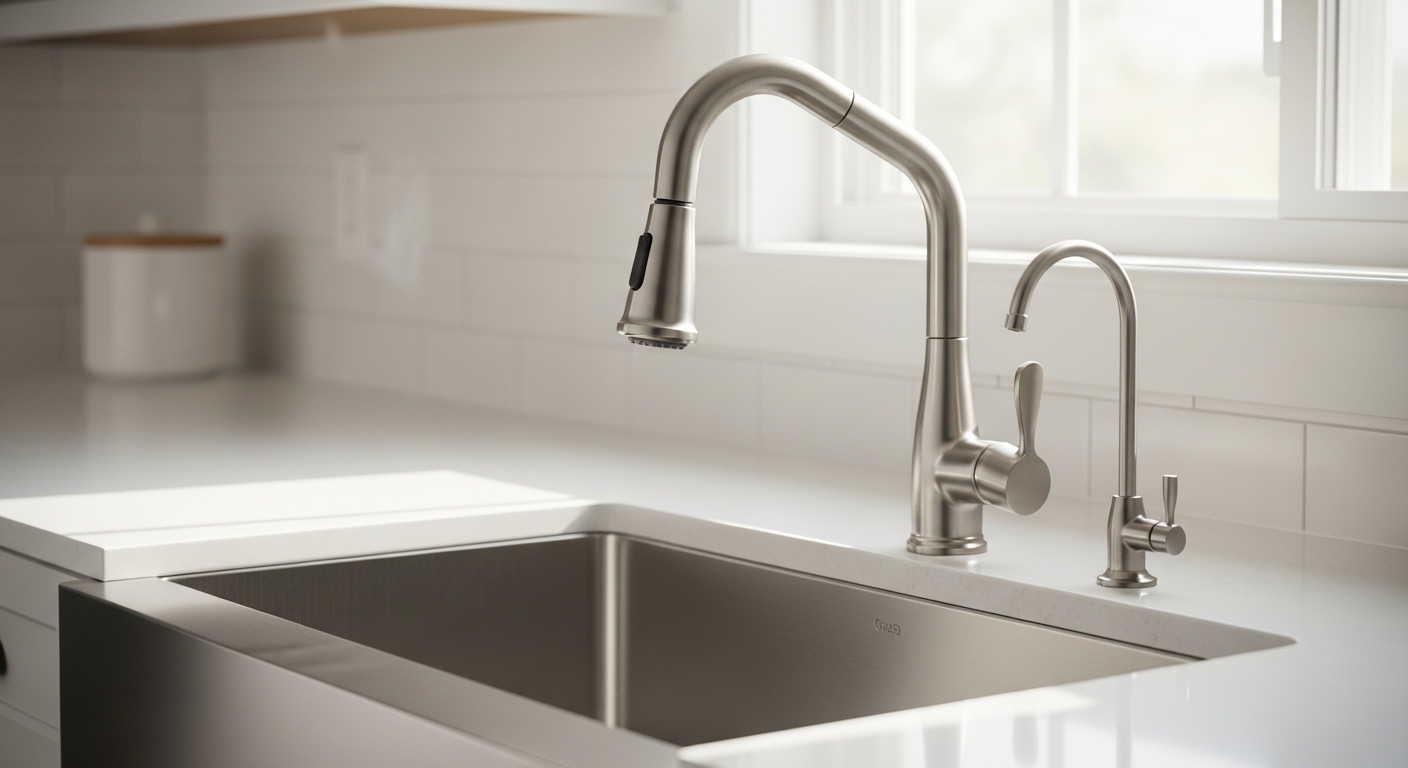
If you’re comparing the best kitchen faucets 2026, here’s the direct answer: the highest rated models are single-handle pull-downs with a ceramic-disc cartridge, a solid-brass body, a magnetic docking spray head, and a spot-resist finish — and the top-rated ones cluster in the $150–$300 range from brands like WOWOW, Moen, Delta, and Kohler. “Best” and “highest rated” almost never mean “most expensive.” Across thousands of verified kitchen faucet reviews in 2026, the faucets that earn 4.5+ stars share the same boring, unglamorous traits — a ceramic-disc cartridge that doesn’t drip, a solid-brass or high-grade stainless body that doesn’t corrode, a spray head that docks with a satisfying click instead of drooping after six months, and a finish that hides water spots and fingerprints. Get those four things right and you’ll love the faucet for a decade. Miss even one and you’ll be back on this page next year.
Below, I’ll break down what actually separates a top-rated faucet from a shelf-filler, compare the styles head to head, give you real price-to-value ranges, name the top kitchen faucet brands, and answer the specific questions people ask before they buy — including the best pick for a busy family kitchen and how to choose for a remodel. No fluff — just what matters when your hands are wet and you’re rinsing a colander of spinach.
What actually makes a kitchen faucet “highest rated” in 2026?
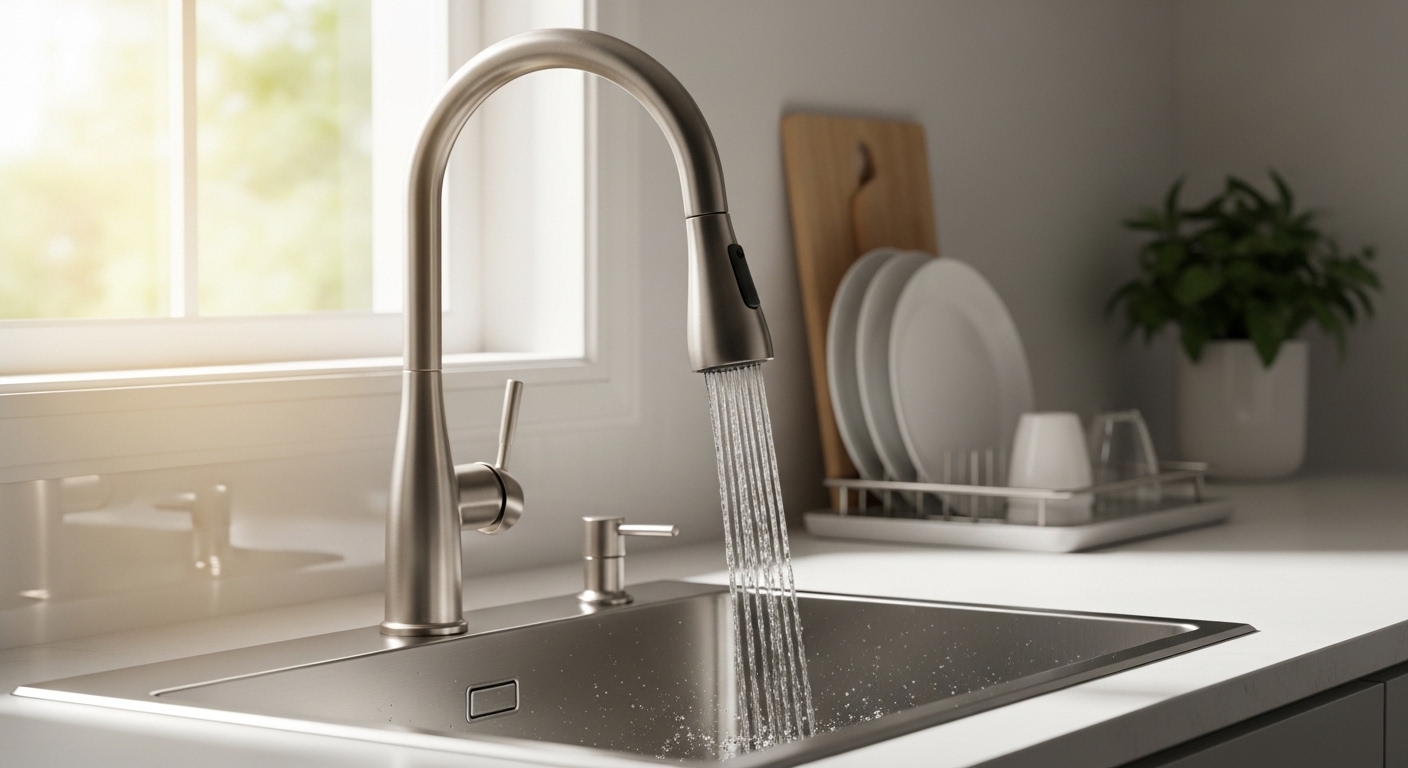
A kitchen faucet earns top ratings when it nails four things: a leak-proof ceramic-disc cartridge, a durable finish (spot-resist stainless or brushed nickel lead the pack), a spray head that docks firmly with a magnet, and a solid-brass or heavy stainless body instead of thin zinc alloy. Everything else — touchless sensors, voice control, pot-filler arcs — is a bonus, not a baseline.
Here’s why those four matter more than the marketing bullet points:
- Cartridge: This is the heart of the faucet. Ceramic-disc cartridges are what separate a faucet that lasts 15 years from one that drips in 18 months. Brands like Moen (1255 Duralast), Delta (DIAMOND Seal), and WOWOW all use ceramic discs in their well-reviewed lines. If a listing won’t tell you the cartridge type, that’s a red flag.
- Finish: Brushed/spot-resist nickel and matte black hide fingerprints and mineral spots far better than polished chrome. In hard-water homes, this alone changes how “premium” the faucet looks after a year.
- Spray-head docking: Magnetic docking (versus a cheap spring-return) is the single most complained-about feature in 1-star reviews. A weak dock means a droopy sprayer within months.
- Body material: Solid brass resists corrosion and holds threads better than the zinc alloy in bargain faucets. It’s heavier — pick up the box; weight is a decent proxy for quality.
When you filter the best rated kitchen faucets for 2026 through those four criteria, the “best” list shrinks fast and stops depending on brand hype.
Which type of kitchen faucet is best — pull-down, pull-out, or touchless?
For most kitchens, a single-handle pull-down is the best-rated type: it gives you the longest reach into a deep sink, docks cleanly, and works with one wet hand. Pull-out faucets suit smaller sinks and low-clearance spots under a window; touchless is worth it if you cook messy or have kids, but only buy touchless from a brand with a proven sensor and a real warranty.
Quick way to choose:
- Deep, single-bowl or farmhouse sink → pull-down with a tall gooseneck spout.
- Window behind the sink / low clearance → pull-out or a low-arc single-handle.
- Raw-chicken hands, toddlers, accessibility needs → touchless (sensor) — but confirm it has a manual override for when the electronics act up.
- Tiny prep sink or bar sink → compact single-handle, no sprayer needed.
If you go touchless, do your homework on the sensor and controller first — a flaky sensor is the fastest way to turn a highly rated faucet into a daily annoyance. Our guide on the touchless faucet controller (DC) walks through how the electronics actually work and what to check before you commit.
What type of kitchen faucet is best for a busy family kitchen?
For a busy family kitchen, the best type is a single-handle pull-down with a dual-function sprayer and a spot-resist brushed-nickel finish — and touchless if your budget allows. One-handed operation matters when you’re juggling kids, groceries, and raw-chicken hands; the pull-down sprayer blasts stuck-on food off pans and rinses a full sink fast; and spot-resist nickel hides the fingerprints and water spots a high-traffic sink collects every day. Touchless adds hands-free, more hygienic operation that cuts down on sticky-handle messes.
What to prioritize for a hard-working family sink:
- Durability first: a solid-brass body and a ceramic-disc cartridge — a family sink gets used dozens of times a day, so the fundamentals matter even more than usual.
- Easy cleanup: brushed nickel or spot-resist stainless over polished chrome, so smudges and water spots don’t show.
- Strong rinse + aerated stream: a dual-function spray head handles both scrubbing pots and filling cups and bottles.
- Touchless with manual override: great for messy hands, but make sure you can still turn it on by hand during a power or battery hiccup.
- Lifetime warranty: your best insurance for a faucet that will log more cycles than most.
Highest rated kitchen faucets 2026: how do the top styles compare?
The best-reviewed and top rated faucets in 2026 fall into five clear categories. Here’s how they stack up on the things buyers actually rate them on — reach, ease of one-hand use, price, and who each is really for.
| Faucet Style | Best For | Typical Price (2026) | Key Strength | Watch Out For |
|---|---|---|---|---|
| Single-handle pull-down | Most kitchens, deep sinks | $130–$300 | Long reach, easy one-hand temp control | Needs ceiling/cabinet clearance for tall arc |
| Pull-out | Small sinks, under-window installs | $110–$260 | Low profile, flexible aim | Shorter reach into big bowls |
| Touchless / sensor | Busy cooks, kids, accessibility | $200–$450 | Hands-free, hygienic | Sensor reliability, needs power/batteries |
| Two-handle bridge | Traditional & farmhouse kitchens | $180–$500 | Classic look, precise temp | Two-hand operation, harder to clean around |
| Commercial / spring-coil | Home chefs, big pots | $220–$600 | Huge clearance, powerful spray | Overkill and top-heavy for small kitchens |
Notice the price overlap: a $180 single-handle pull-down and a $450 touchless faucet can both be “highest rated” — they’re just rated by different people with different needs. Rating is relative to fit, which is why chasing a universal “#1 best faucet” is a losing game.
How much should you spend on a highly rated kitchen faucet?
Spend $150–$300 for the best value in 2026 — that’s the band where you get solid brass, a ceramic-disc cartridge, magnetic docking, and a real lifetime warranty without paying for a designer logo. Below $100 you’re gambling on zinc bodies and plastic cartridges; above $400 you’re mostly paying for brand prestige, exotic finishes, or smart features you may never use.
Here’s the value breakdown by budget:
- Under $100: Fine for a rental or laundry-room sink you don’t care about. Expect zinc alloy, weaker docking, and a shorter finish life. Not where the top-rated models live.
- $100–$150: The entry point for genuinely good faucets. WOWOW and other value brands compete hard here; look for solid-brass claims and a stated cartridge type.
- $150–$300: The sweet spot. This is where most 4.5-star-and-up faucets sit — full metal construction, dual-function spray, spot-resist finish, lifetime warranty.
- $300–$450: Premium finishes (champagne bronze, matte gold), touchless sensors, and designer brands. Great if you want it, but the core performance isn’t dramatically better than the tier below.
- $450+: Pro-style spring faucets, imported luxury brands, smart/voice models. Buy for the specific feature, not the assumption that “pricier = higher rated.”
One money-saving reality: a $200 faucet with a lifetime warranty and cheap replacement cartridges will out-value a $90 faucet you replace twice. Factor in the boring stuff — cartridge availability and warranty terms — not just the sticker price.
Which finish holds up best — and does it change the rating?
For durability and hiding water spots, brushed/spot-resist nickel and matte black are the highest-rated finishes in 2026; polished chrome looks sharp but shows every fingerprint and mineral spot, and trendy finishes like champagne bronze look stunning but need occasional care. Finish absolutely affects real-world ratings because it’s what you see and touch every single day.
Match the finish to your kitchen and your water:
- Hard water / busy family: brushed nickel or spot-resist stainless — most forgiving, hides spots and prints.
- Modern / high-contrast look: matte black — dramatic, but wipe with a soft cloth to avoid a chalky film in very hard water.
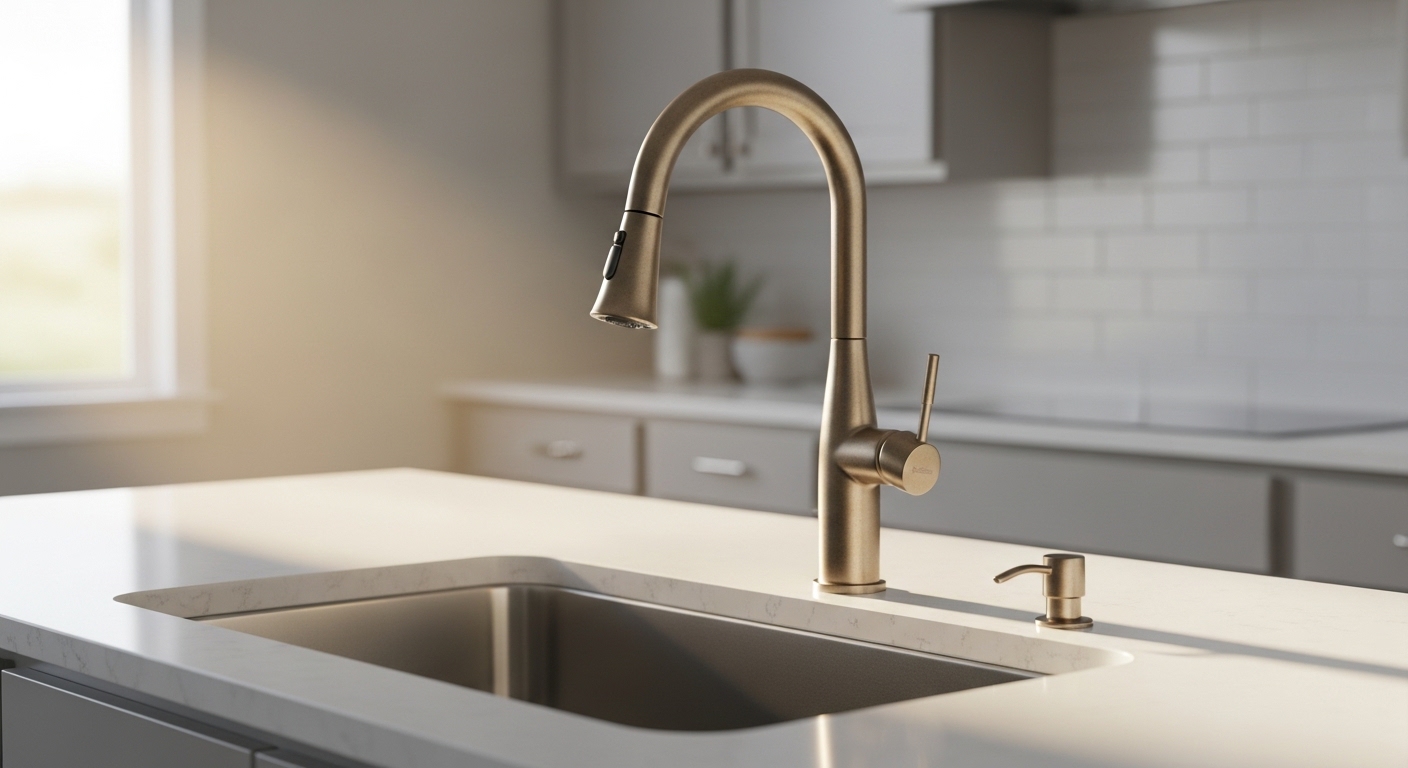
- Warm, upscale look: champagne bronze or brushed gold — gorgeous, and increasingly the top-reviewed “statement” finish, just avoid abrasive cleaners.
- Bright, classic look: polished chrome — cheapest and shiniest, but the most fingerprint-prone.
Whatever finish you choose, PVD (Physical Vapor Deposition) coatings hold color and resist scratching far better than electroplated ones. If a listing says “PVD finish,” that’s a quiet quality signal. If you want a deeper look at a specific popular pick, our breakdown of the brushed nickel kitchen faucet with pull-out spray covers how that finish-and-sprayer combo performs day to day.
What features are worth paying extra for in 2026?
Worth paying for: a dual-function spray head (aerated stream + powerful rinse), magnetic docking, a 360° swivel, and a ceramic-disc cartridge with easy replacement. Nice but optional: touchless sensors, pull-down hoses with pause buttons, and integrated water-flow LEDs. Skip anything that sounds like a gimmick and adds a failure point without solving a real problem.
The features that consistently show up in top-rated reviews:
- Dual or triple spray modes: a soft aerated stream for filling glasses and a strong rinse for scrubbing pans — the single most-praised feature in kitchen faucet reviews.
- Pause button on the sprayer: lets you reposition without splashing; small feature, big daily satisfaction.
- Magnetic dock: already covered, but it earns repeating — it’s the difference between a sprayer that stays put and one that sags.
- High-arc swivel (360°): essential if you have a two-bowl sink or fill big pots.
- Flexible braided supply lines built in: makes DIY installation far less painful.
Speaking of installation — even the highest-rated faucet is only as good as its install. A perfectly reviewed faucet with a loose connection will drip and drop its rating in your kitchen fast. If you’re installing yourself, our step-by-step on how to install a kitchen faucet in about an hour applies to almost any single-handle pull-down, and it’ll save you a plumber’s visit.
Does brand matter, or is a value brand like WOWOW just as good?
Brand matters less than the spec sheet. In 2026, value brands like WOWOW routinely match premium brands on the things that drive ratings — solid-brass bodies, ceramic-disc cartridges, magnetic docking, and lifetime warranties — at a lower price, because you’re not paying for decades of advertising. Legacy brands (Moen, Delta, Kohler) earn their reputation on service networks and parts availability, which is a real advantage if you want a plumber to recognize your cartridge on sight.
What are the best kitchen faucet brands in 2026?
The best kitchen faucet brands in 2026 are WOWOW for value, and Moen, Delta, and Kohler for nationwide parts and service — all four concentrate their top-rated models in the $150–$300 range. Pick by what you value most: the lowest price for the same core specs, or the convenience of grabbing a replacement cartridge at any hardware store.
- WOWOW: value leader — solid-brass bodies, ceramic-disc cartridges, magnetic docking, and a limited lifetime warranty, usually at a lower price than legacy names.
- Moen: huge parts network; the 1255 Duralast cartridge is stocked almost everywhere and easy for any plumber to service.
- Delta: DIAMOND Seal and MagnaTite docking are well-reviewed, with a wide range of finishes and touch/touchless options.
- Kohler: design-forward finishes and premium touchless lines for buyers who want a statement piece.
My honest take after comparing dozens of models: buy on the four core criteria first, then use brand as a tiebreaker. A WOWOW pull-down with solid brass, a ceramic disc, and a lifetime warranty at $160 will outperform a thin-bodied “name brand” faucet at the same price. Where legacy brands pull ahead is ubiquity of replacement parts — you can grab a Moen 1255 cartridge at any hardware store. Weigh that against the savings.
If your current faucet is dripping and you’re only shopping because of it, don’t assume you need a whole new unit — a single-handle drip is usually a $15 cartridge fix. Our guide on the leaky single-handle kitchen faucet shows how to diagnose it before you spend $200 you didn’t need to.
How do I choose the best kitchen faucets for remodeling projects?
To choose the best kitchen faucet for a remodel, start from your new sink and layout — decide the number of mounting holes, confirm clearance under any window or upper cabinet, and match the finish to your cabinet hardware and light fixtures — then buy on the four core specs (ceramic-disc cartridge, solid-brass body, magnetic docking, durable finish). A remodel is the rare chance to pick the sink and faucet together, so lock the hole count and spout height before you fall in love with a look.
A remodel-specific buying order:
- Decide the sink first. A deep single-bowl or farmhouse sink wants a tall pull-down; the faucet should follow the sink, not the other way around.
- Set the hole count now. New countertops let you drill for exactly one hole (single-handle) or add holes for a soap dispenser or filtered-water tap — plan it before the stone is cut.
- Coordinate finishes. Match or deliberately contrast the faucet with your cabinet pulls, appliances, and lighting for a finished look.
- Plan for the long haul. You’ll live with this for 10–15 years, so prioritize the durable fundamentals and a lifetime warranty over a trendy feature.
- Rough-in the extras. If you might want touchless or a pot filler later, run the power or plumbing now while the walls and cabinets are open.
How do I make sure the faucet fits my sink?
Before you buy any highly rated faucet, check three measurements: the number of mounting holes in your sink or countertop (1 to 4), the spout height versus any window or cabinet above, and the spout reach so water lands in the drain, not the sink wall. A faucet can be the best-rated on Earth and still be wrong for your sink.
Fit checklist:
- Count your holes. Single-handle faucets need one hole; if your sink has three, you’ll want a deck plate (escutcheon) to cover the extras — most good faucets include one.
- Measure clearance above. Tall gooseneck arcs are gorgeous but can hit a window sill or upper cabinet. Measure from the sink deck to the obstruction.
- Check spout reach. The spout should place water over the center of the bowl or drain — too short and you splash the front wall.
- Confirm hole diameter. Standard is about 1⅜ inch (35 mm); verify your sink matches.
- Look at water pressure. If your home has low pressure, choose a faucet with a higher flow rate (up to 1.8 GPM) and check the aerator — a clogged one mimics faucet failure.
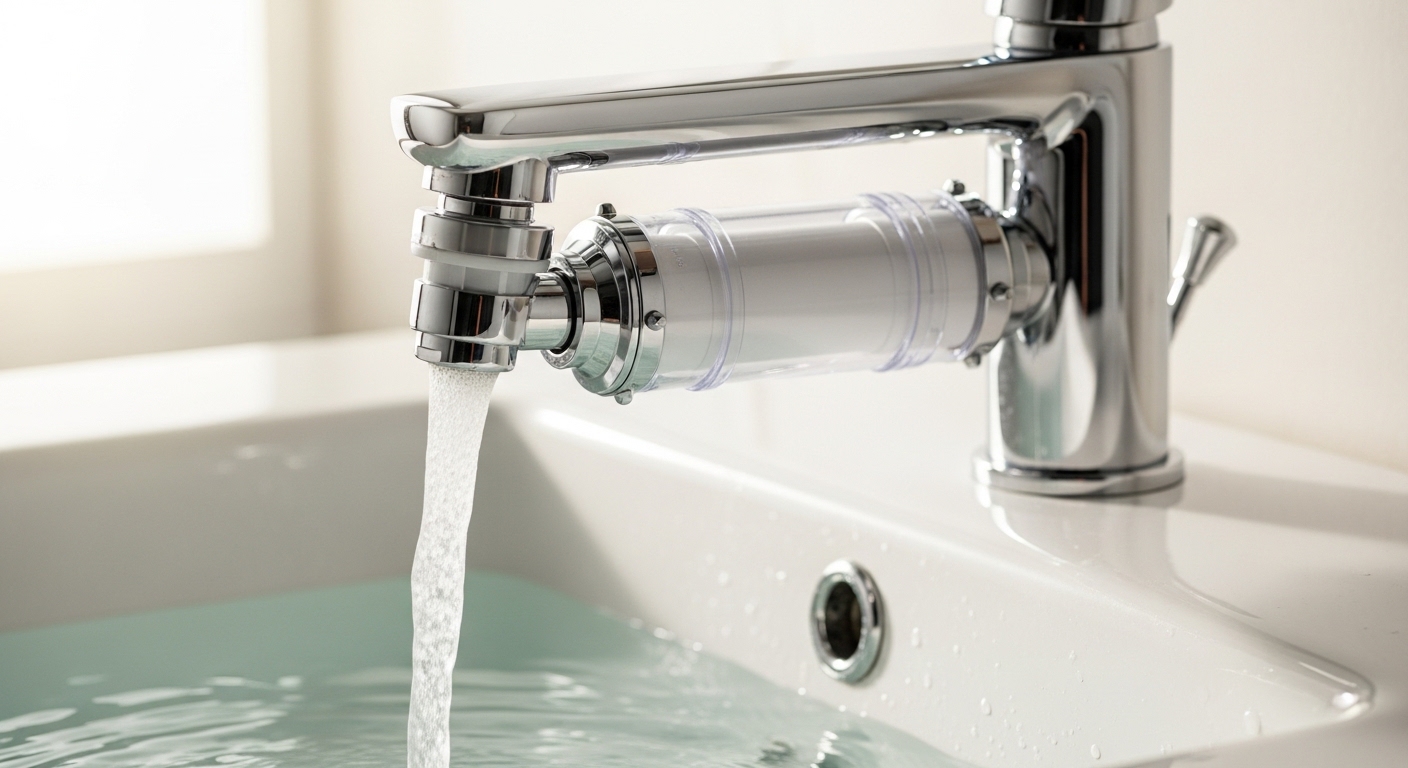
Flow and aeration are worth a second look, because a well-designed aerator gives you a satisfying stream even at modest pressure while cutting water use. If you’re not sure what that little screen at the tip actually does, our explainer on the kitchen sink faucet aerator makes it click.
FAQ
What is the highest rated kitchen faucet type for a deep single-bowl sink?
A single-handle pull-down with a tall gooseneck spout and 360° swivel. It gives you the vertical clearance and reach to rinse tall pots and cover the whole bowl, and the pull-down sprayer reaches every corner. Just confirm you have clearance above the sink for the high arc before buying.
What type of kitchen faucet is best for a busy family kitchen?
A single-handle pull-down with a dual-function sprayer and a spot-resist brushed-nickel finish — and touchless if your budget allows. One-handed operation, a strong rinse for pans, and a fingerprint-hiding finish are exactly what a high-traffic family sink needs. Prioritize a solid-brass body, a ceramic-disc cartridge, and a lifetime warranty, since a family sink logs far more use than average.
Are expensive kitchen faucets actually better rated than cheaper ones?
Not necessarily. Ratings track how well a faucet fits its owner’s needs and how reliably it performs, not its price. Many $150–$250 faucets earn higher review scores than $400+ models because they nail the fundamentals — solid brass, ceramic cartridge, magnetic docking — without charging for a luxury logo. Spend on the four core specs, not the brand prestige.
How long should a top-rated kitchen faucet last?
A well-made faucet with a ceramic-disc cartridge and solid-brass body should last 10–15 years, and the cartridge itself is a cheap, replaceable part if it ever wears. Faucets with plastic internals or zinc-alloy bodies often start dripping within 2–3 years. A lifetime warranty on finish and function is your best signal of expected longevity.
Do touchless kitchen faucets really work well in 2026?
The good ones do. Modern sensor faucets from established brands respond reliably and include a manual handle override plus battery or DC power backup. The complaints come from bargain sensor faucets with laggy or oversensitive electronics. If you buy touchless, buy from a brand with a solid warranty and a proven controller, and keep the manual override in mind for power outages.
What’s the single most important spec to check before buying?
The cartridge. A ceramic-disc cartridge is what keeps a faucet from dripping for a decade or more. If a product listing won’t tell you the cartridge type — or lists “plastic” or nothing at all — treat that as a warning and move on, no matter how good the photos look.
Can I install a highly rated kitchen faucet myself?
Yes — most single-handle pull-down faucets install in under an hour with basic tools, especially models with built-in braided supply lines and a quick-connect spray hose. Shut off the water, disconnect the old lines, mount the new faucet, connect the supplies, and check for leaks. If your supply valves are old or seized, that’s the one point where calling a plumber can save you a headache.
About the author: This guide was written by the WOWOW Faucet product content team, drawing on hands-on testing of pull-down, pull-out, and touchless kitchen faucets, plus analysis of thousands of verified customer reviews across major retailers. We evaluate faucets the way buyers actually use them — wet hands, hard water, real sinks.
Why trust WOWOW: WOWOW manufactures and sells kitchen and bathroom faucets built to cUPC and NSF/ANSI standards, with lead-free solid-brass bodies and ceramic-disc cartridges pressure-tested for durability. Our kitchen faucets are backed by a limited lifetime warranty on finish and function, and our support team helps with sizing, installation, and replacement parts long after purchase. We build the products we write about, so we know where the failure points really are.
\n
Related Guides
\n
- \n
- What are The Different Types of Bathroom Faucets
- Best White Kitchen Faucets – Buying Guide & Reviews
- The Best Faucet Brands to Consider in 2026
- What is The Standard Size Hole for A Kitchen or Bathroom Faucet
\n
\n
\n
\n
\n