 WOWOW Faucets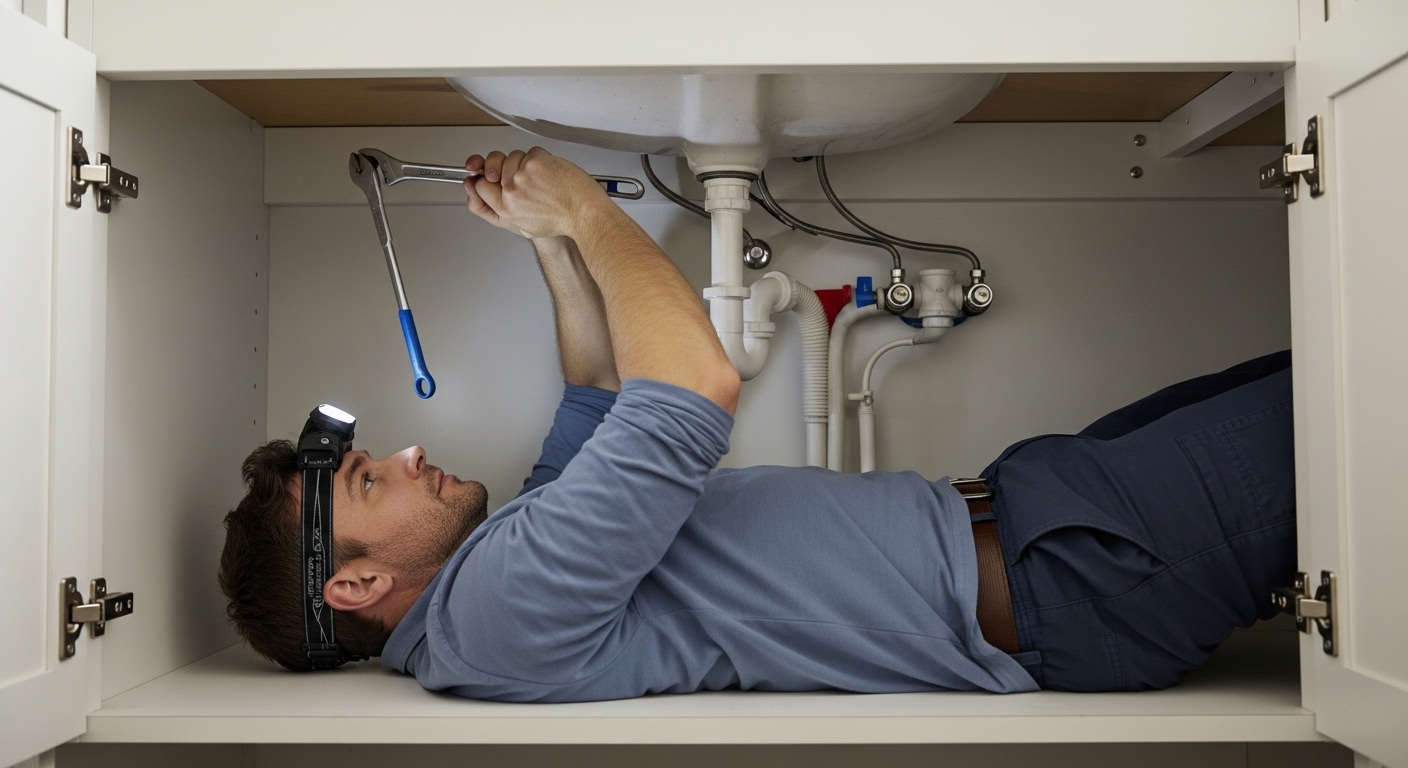
If you’ve been searching “how to replace bathroom faucet youtube,” you’ve probably watched three videos and noticed they all skip the one part that goes wrong for you — usually a corroded nut you can’t reach or a supply line that won’t seal. That’s normal, and it’s fixable. This guide walks you through the exact process those videos show, but fills in the gaps they gloss over: the hidden tools, the “why won’t this seal” moments, and how to know whether your sink is a quick swap or a two-hour fight. By the end you’ll know whether to hit play and grab a wrench, or whether your specific sink needs one extra part first.
Can I really replace a bathroom faucet myself just by following a YouTube video?
Yes, for about 90% of bathroom sinks, following a good YouTube video is completely realistic — the job is more about patience in a tight cabinet than plumbing skill. There’s no soldering, no glue, and no permits for a like-for-like faucet swap. If you can turn a wrench and you own a flashlight, you can do this.
The reason so many people search “how to replace bathroom faucet youtube” and then still feel stuck is that video makers film clean, new sinks in a workshop. Your real sink has ten years of hard-water crust, a garbage-tight cabinet, and a shutoff valve that may or may not still work. The mechanical steps are genuinely easy. The difficulty lives entirely in access and corrosion. Once you accept that, the whole job gets calmer.
Here’s the honest split of who should DIY versus call a pro:
- Definitely DIY: Standard 1-hole or 3-hole sink, working shutoff valves under the counter, faucet less than ~15 years old.
- DIY with caution: No shutoff valves (you’ll have to close the main water line), or heavy corrosion on the mounting nuts.
- Call a plumber: Shutoff valves that leak when you turn them, galvanized or badly corroded supply pipes, or a wall-mount faucet where the plumbing is inside the wall.
What tools and parts do I actually need before I start?
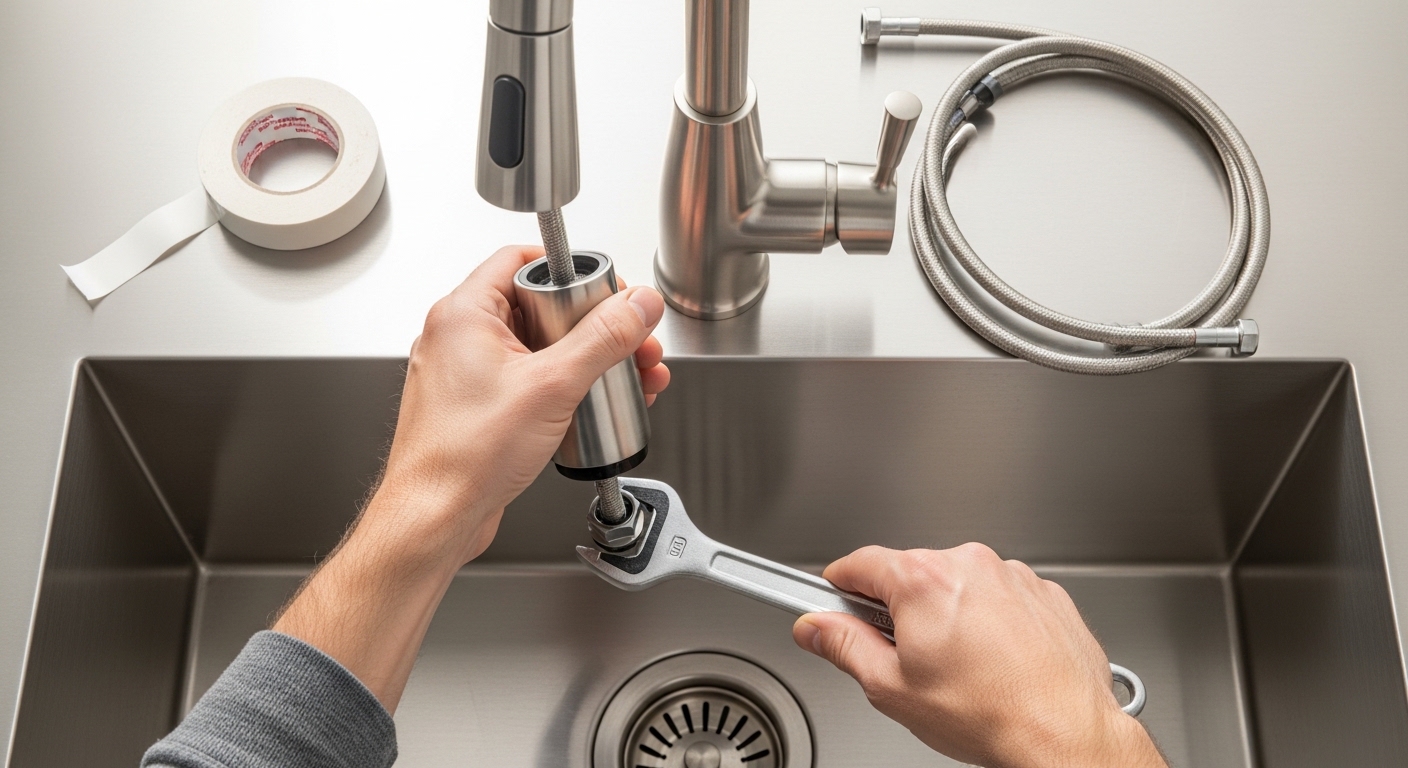
You need an adjustable wrench, a basin wrench, plumber’s tape, a bucket, a flashlight, and a new set of braided supply lines — that’s the core kit, and it costs under $40 if you don’t already own it. The single tool that separates a smooth job from a miserable one is the basin wrench, because faucet mounting nuts sit in a spot your hand and a normal wrench physically cannot reach.
Most YouTube videos wave a wrench around and move on. Here’s the real list, and why each item matters:
| Tool / Part | Why you need it | Skip it? |
|---|---|---|
| Basin wrench | Reaches the mounting nuts up behind the sink basin that nothing else can touch | No — this is the make-or-break tool |
| Adjustable wrench | Loosens supply-line and valve connections | No |
| New braided supply lines | Old lines get brittle; reusing them is the #1 cause of post-install leaks | No — always replace |
| Plumber’s tape (PTFE) | Seals threaded connections on the valve side | No |
| Bucket + towels | Catches the ~1 cup of water trapped in the lines | No |
| Penetrating oil | Frees corroded nuts so they don’t strip | Only if nuts are rusted |
| Silicone or included gasket | Seals the faucet base to the sink deck | Check what’s in the box first |
Before you buy anything, confirm your hole configuration — this is where people order the wrong faucet. Look at your sink from above and count the holes: one hole means a single-hole faucet, three holes spaced 4 inches apart is a “centerset,” and three holes spaced 8+ inches apart is a “widespread.” A single-hole or centerset faucet can often cover a 3-hole sink with a deck plate (an escutcheon), but a widespread faucet can’t shrink to fit a centerset sink. If you’re unsure whether you even need that cover plate, our guide on what a faucet escutcheon plate is and whether you really need one clears it up fast.
How do I turn off the water and get the old faucet out without flooding the cabinet?
Turn the two oval or football-shaped shutoff valves under the sink clockwise until they stop, then open the faucet to release pressure — that’s it, the water is off. If those valves are stuck or missing, shut off your home’s main water supply instead. Always test by turning the faucet on afterward; you want zero flow before you touch anything.
Here’s the exact sequence the videos race through, slowed down so nothing surprises you:
- Clear the cabinet and lay a towel down. You’ll be working on your back.
- Close both shutoff valves (clockwise). Turn the faucet handles on — water should trickle and stop. If a valve won’t fully stop the flow, it’s failing; close the main and plan to replace that valve too.
- Put the bucket under the supply connections. There’s always trapped water.
- Disconnect the supply lines from the faucet tailpieces with your adjustable wrench. Hold the valve steady with a second wrench so you don’t twist and crack it.
- Disconnect the lift rod / drain linkage if your faucet has a pop-up stopper — it’s a thin rod with a spring clip.
- Loosen the mounting nuts under the sink with the basin wrench. This is where corrosion fights back; hit stubborn nuts with penetrating oil and wait 10 minutes.
- Lift the old faucet out from the top and scrape off the old putty or gasket ring.
Clean the sink deck completely before the new faucet goes down. Old grime and dried silicone stop the new base from sealing flat, which causes water to pool around the base later. A plastic putty knife and a little white vinegar handle years of limescale without scratching the porcelain.
How do I install the new faucet so it doesn’t leak?
Set the new faucet into the holes, tighten the mounting nuts snug from below, connect fresh braided supply lines with plumber’s tape on the valve threads, then turn the water back on slowly and watch every joint. Leaks almost always come from three places: over-tightened connections that crack the seal, reused old supply lines, or a missing gasket under the faucet base. Get those three right and you’re leak-free.
The golden rule on tightening: hand-tight plus a quarter to half turn with the wrench. Braided steel supply lines and modern plastic mounting nuts do not need to be gorilla-tightened — cranking them is what strips threads and cracks fittings. Snug, then a nudge, then stop.
When you restore water, open the shutoff valves slowly and let the faucet run for a full minute at hot and cold. Then dry every connection with a paper towel and watch for 60 seconds. A slow weep won’t show up instantly, so this dry-and-watch step catches problems while your tools are still out. If you do spot a drip, our walkthrough on finding the cause of a leaking bathroom faucet and fixing it yourself pinpoints exactly which joint is the culprit.
Why do the YouTube videos make it look so easy when mine is fighting me?
Because YouTube videos are filmed on new, accessible, corrosion-free sinks — and yours has age, tight clearance, and mineral buildup that the camera never has to deal with. The steps in the video are correct; the difference is entirely in the real-world conditions, not the technique. Knowing that up front saves you from thinking you’re doing something wrong.
The three most common “the video didn’t warn me” moments:
- The mounting nut won’t budge. Decades of hard water fuse it. Penetrating oil plus patience — not brute force — is the answer. If it strips, a hacksaw or a rotary tool can cut it, but soak it first.
- The new supply line is a different size than the old one. Most bathroom faucets use a 3/8-inch compression connection at the valve and a 1/2-inch at the faucet, but confirm before you buy. A cheap faucet extension adapter that actually fits your sink solves mismatches for a couple of dollars.
- The handle feels loose after install. Usually a set screw that needs a final snug. If it stays wobbly, the fix is quick — see our guide on tightening a loose bathroom faucet handle.
One more thing the videos rarely mention: buy your faucet from a brand that includes clear instructions and all the gaskets in the box. A surprising number of budget faucets ship without the deck gasket, which forces you to run a bead of silicone instead. At WOWOW, every bathroom faucet ships with the mounting hardware, deck gasket, and matching pop-up drain, so the parts in the box match the parts in the video.
How long does replacing a bathroom faucet take, and what does it cost?
A confident swap takes 30–45 minutes; a first-timer with a corroded sink should budget 1.5–2 hours. Parts-wise, a quality bathroom faucet runs $60–$200, plus about $15–$25 for supply lines and tape if you don’t have them — versus $150–$350 for a plumber to do the same job. DIY typically saves you the entire labor cost.
Here’s a realistic breakdown so you can plan your afternoon:
| Scenario | Time | Difficulty | Typical cost (DIY) |
|---|---|---|---|
| Single-hole swap, good valves | 30–45 min | Easy | $75–$150 (faucet + lines) |
| 3-hole centerset swap | 45–75 min | Easy–moderate | $90–$200 |
| Widespread faucet (3 pieces) | 60–120 min | Moderate | $120–$250 |
| Swap + new shutoff valves | 1.5–2.5 hr | Moderate | $110–$230 |
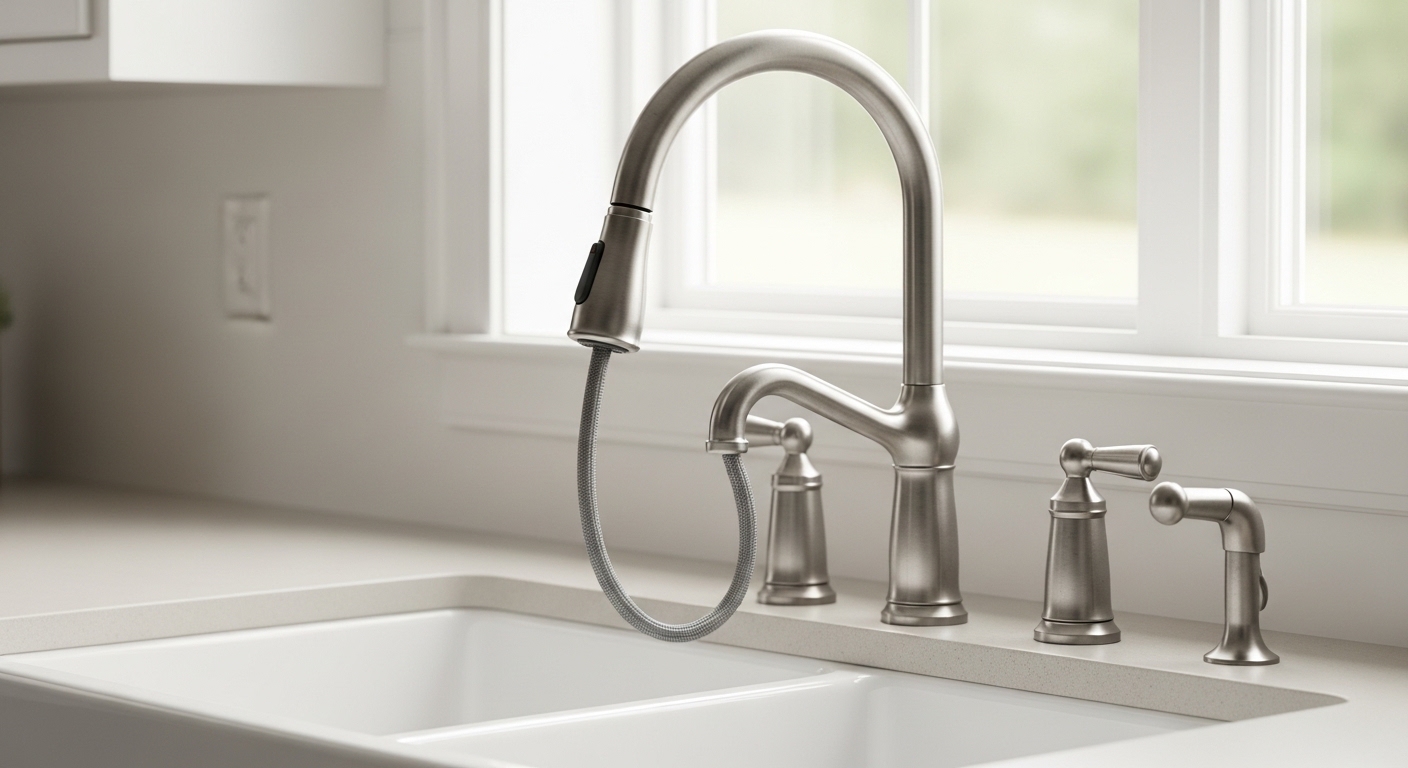
The widespread faucet takes longest because the spout and two handles are three separate pieces connected by a hidden hose underneath — more connections means more to seal. If you’re comfortable with a basic swap and want to level up, the same core skills transfer directly to the kitchen; our complete DIY guide to installing a kitchen faucet covers the pull-down sprayer and deeper-cabinet quirks.
Author note & why you can trust this guide
This guide was written by the WOWOW fixtures product team, drawing on hands-on installation testing of hundreds of bathroom and kitchen faucets. WOWOW designs and manufactures faucets and bathroom fixtures built to ANSI/NSF-61 and cUPC standards for safe drinking-water contact, and every WOWOW bathroom faucet is backed by a limited lifetime warranty on the finish and cartridge. We test each faucet model through 500,000 open-close cycles before it ships, which is why our install instructions match what you actually find in the box — no missing gaskets, no guesswork. When we say a step takes 30 minutes, it’s because we’ve timed it on real sinks, not a studio prop.
FAQ
Do I need to turn off the main water supply to replace a bathroom faucet?
No, not if your sink has working shutoff valves underneath — just close those two valves clockwise. Only shut off the main if the local valves are missing, stuck, or still leak water when fully closed. Always test by opening the faucet before you disconnect anything; you want zero flow.
Can I use the old supply lines with the new faucet?
You can, but you shouldn’t. Old braided or plastic supply lines get brittle and are the number-one cause of leaks after a fresh install. New braided stainless lines cost only a few dollars and take two minutes to swap — it’s the cheapest insurance in the whole job.
What’s the hardest part of replacing a bathroom faucet?
Removing the old mounting nuts. They sit in a cramped spot behind the basin and often corrode in place, which is exactly why a basin wrench and a little penetrating oil matter so much. Once the old faucet is out, the rest of the job is fast and forgiving.
Why is my new faucet leaking at the base after installation?
Almost always a missing or misaligned deck gasket, or a base that wasn’t tightened down flat because old grime was left on the sink. Remove the faucet, clean the deck completely, seat the gasket (or run a thin silicone bead), and re-tighten evenly. Water pooling around the base is a seal issue, not a supply-line issue.
How do I know what size or type of replacement faucet to buy?
Count the mounting holes in your sink and measure the spacing between the outer holes. One hole means single-hole; three holes 4 inches apart is centerset; three holes 8+ inches apart is widespread. A single-hole faucet can cover a 3-hole sink with a deck plate, but a widespread faucet cannot fit a centerset sink — so measure before you order.
Is it worth watching multiple YouTube videos before starting?
Yes — watch two or three, ideally one that shows a faucet with the same hole configuration as yours. Different videos reveal different problem spots, and seeing the basin-wrench step in action makes it far less intimidating. Pair the videos with a written guide like this one so you have the specs and troubleshooting steps the videos skip.