 WOWOW Faucets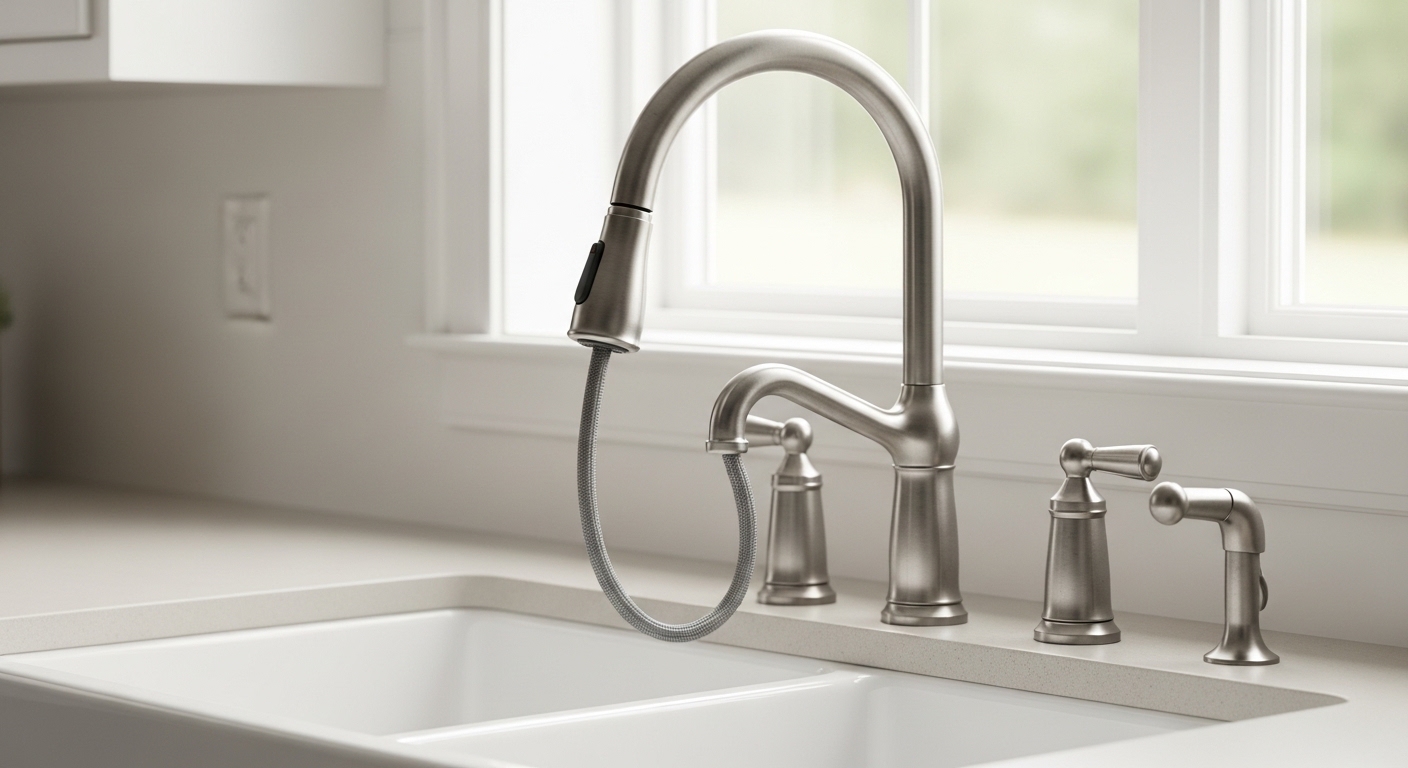
Learning how to install a Delta Leland kitchen faucet is far less intimidating than it looks — Delta engineered this line around a tool-light, single-hole mounting system that a confident DIYer can handle in under an hour. The Leland (models like 9178-DST, 9178-AR-DST in Arctic Stainless, and 9178-CZ-DST in Champagne Bronze) is a pull-down single-handle faucet with Delta’s MagnaTite docking and DIAMOND Seal valve, and the whole point of those features is that the hardest part of your day should be opening the box, not wrestling with the plumbing.
Below, I’ll walk you through the exact sequence, the tools you actually need, the spots where people get stuck, and how to make sure it doesn’t leak when you turn the water back on. I install and test fixtures for a living, so I’ll flag the small things the instruction sheet glosses over.
What tools and parts do I need before I start installing a Delta Leland faucet?
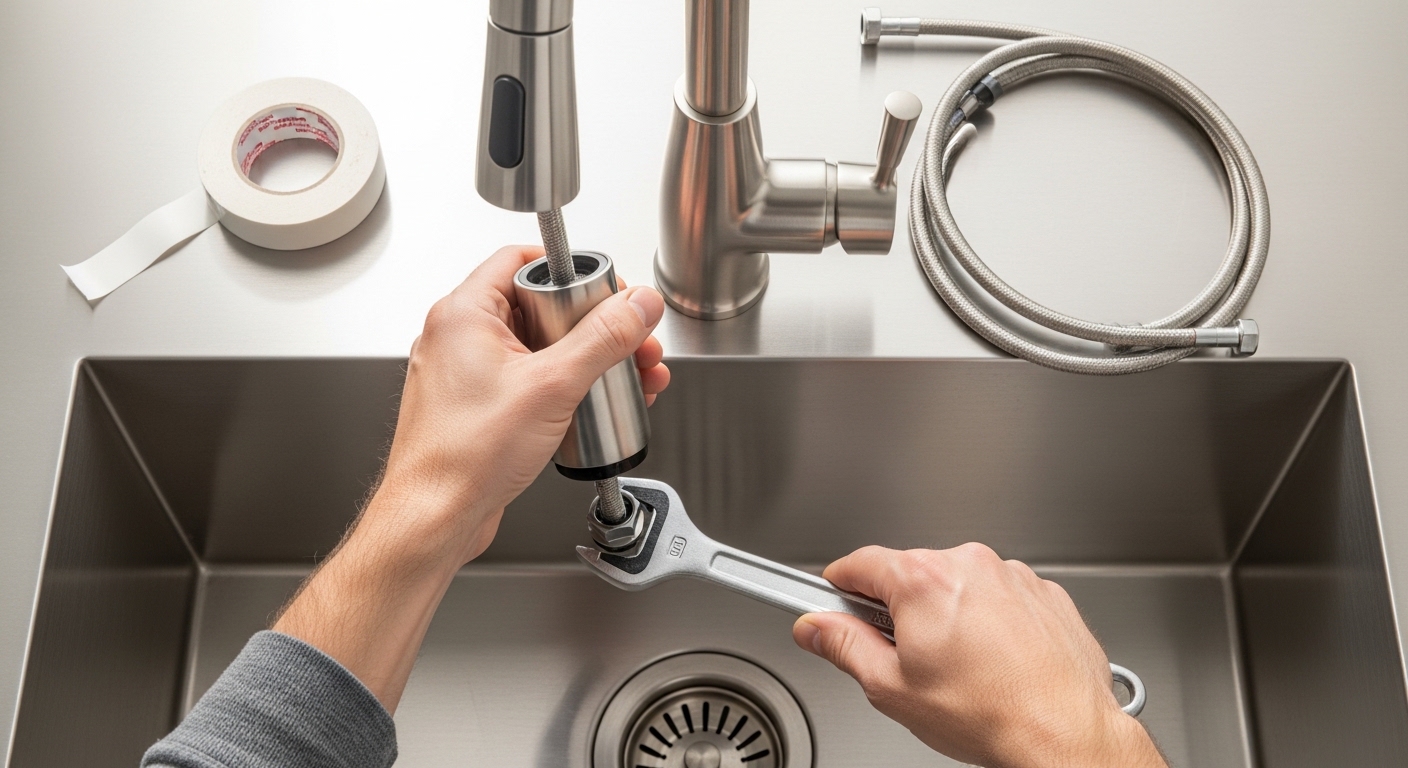
You need an adjustable wrench, a basin wrench, plumber’s tape (PTFE), a flashlight, a towel, and a bucket — plus the parts that ship in the Leland box. That’s genuinely the whole list for a standard replacement. You do not need plumber’s putty, because the Leland uses a rubber gasket and an optional escutcheon (deck plate) base.
Here’s what comes in the box and what you supply yourself:
- In the box: the faucet body with attached water lines, the pull-down spray hose and spray head, the MagnaTite docking magnet, the hose weight, the mounting nut/bracket, an optional 3-hole escutcheon plate with gasket, and a quick-start guide.
- You supply: two braided stainless supply lines (3/8″ compression to your shutoff valves — measure your old ones), plumber’s tape, and basic hand tools. Buy new supply lines; reusing 10-year-old ones is the #1 cause of a “new faucet” leak.
- Nice to have: a headlamp, knee pad for the cabinet floor, and a phone to photograph your existing connections before you disconnect anything.
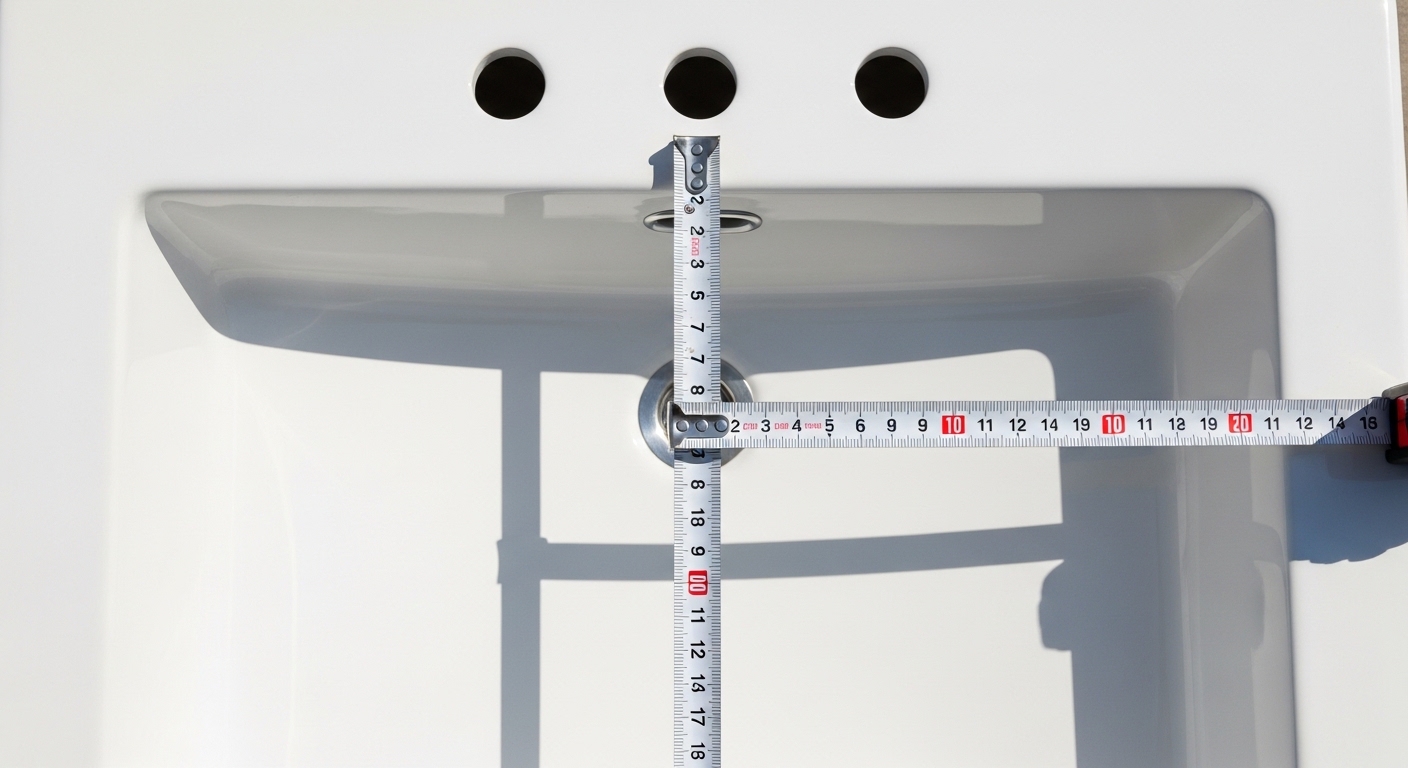
One spec to confirm first: the Leland fits a 1-hole installation (1-3/8″ to 1-1/2″ hole) but ships with the deck plate so it also covers a standard 3-hole, 4-inch or 8-inch sink. Check your sink’s hole count and spacing now so you’re not surprised mid-install.
How do I remove my old kitchen faucet first?
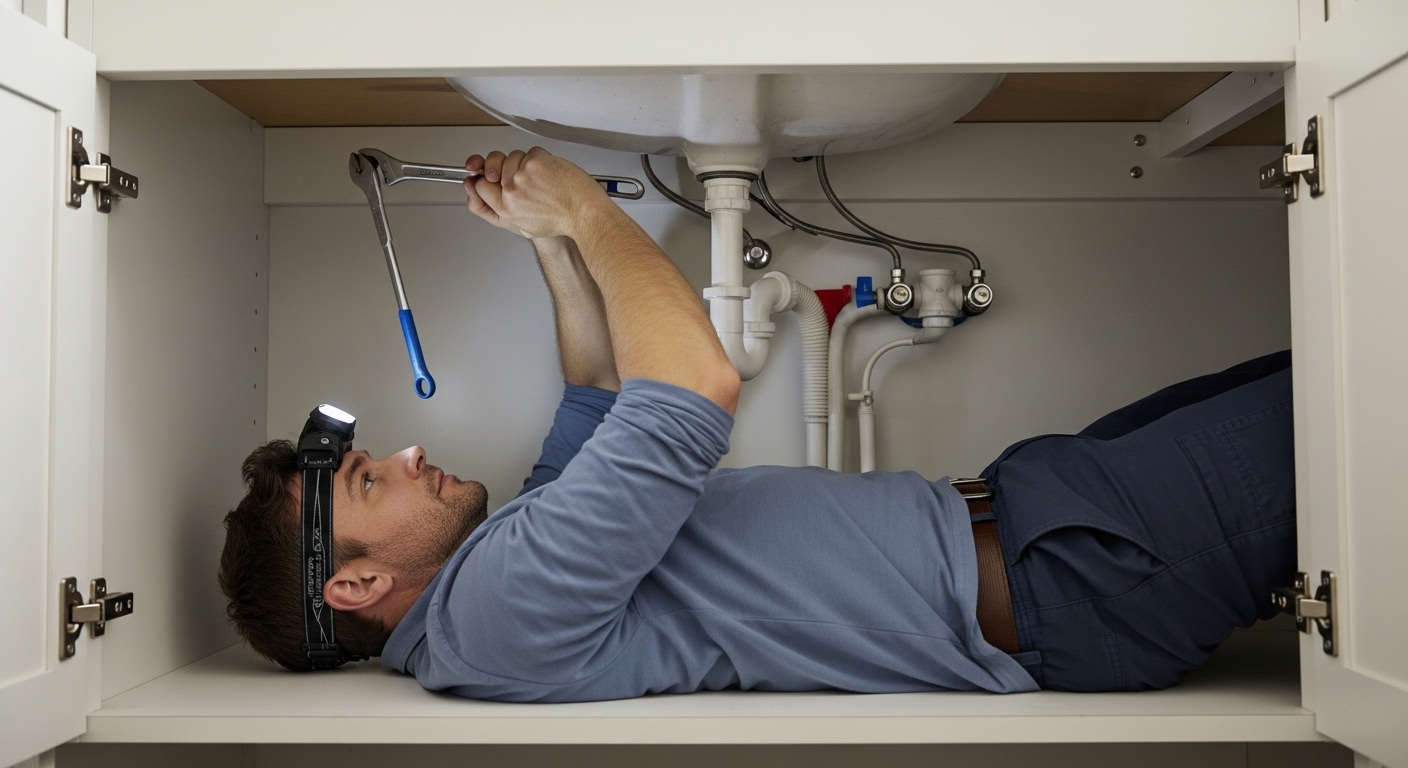
Shut off both hot and cold supply valves under the sink, open the faucet to release pressure, then disconnect the supply lines and unscrew the old mounting nuts so the faucet lifts out from the top. The removal is usually the messier, more annoying half of the job — old nuts are corroded and the cabinet is cramped.
Work in this order:
- Turn both shutoff valves clockwise until they stop. If you don’t have stops under the sink, shut off the main and add quarter-turn stops while you’re down there — it’s the right time.
- Open the old faucet handle to drain residual water and confirm the supply is truly off.
- Put a bucket and towel under the connections, then unthread the supply lines from the shutoff valves with your adjustable wrench. Expect a little water.
- Reach up behind the basin with a basin wrench and loosen the old mounting nuts. This is where corrosion fights back — penetrating oil and patience beat brute force.
- Lift the old faucet out and scrape off any old putty or gasket residue. Clean the deck so your new gasket seats flat.
If your shutoff valves themselves drip once you touch them, fix that before going further — a faucet swap is the worst time to discover a bad stop valve. Our guide on why your new faucet still leaks covers worn valves and bad supply lines in detail.
How do I actually mount the Delta Leland faucet to the sink?
Feed the faucet’s water lines and the pull-down hose guide tube down through the sink hole, seat the rubber gasket (and deck plate if you’re using it) so the faucet sits flush, then go underneath and thread on the mounting nut/bracket and tighten it until the faucet is snug and won’t twist. This is the structural step — get the faucet straight and tight here and everything else is easy.
Step by step:
- Position the base. If your sink has three holes, slip the gasket and escutcheon onto the faucet base first. For a single-hole granite or quartz sink, use the included gasket directly under the faucet body.
- Drop it in. Carefully feed the two supply lines and the central guide tube through the hole. Don’t force or kink the lines.
- Aim the spout. From above, point the spout straight forward over the basin before you tighten anything.
- Secure from below. Slide the mounting bracket up the shank and hand-thread the mounting nut. Delta’s design lets you tighten most of this by hand, then snug it with the basin wrench. Keep checking from above that the spout stays centered.
- Final tighten. Make it firm — the faucet should not rotate or rock — but don’t overtighten and crack a stone sink. Snug is the target, not gorilla-tight.
For a deeper, sink-agnostic walkthrough of mounting and centering any single-handle faucet, our complete DIY kitchen faucet installation guide is a good companion read.
How do I connect the water lines and the pull-down spray hose?
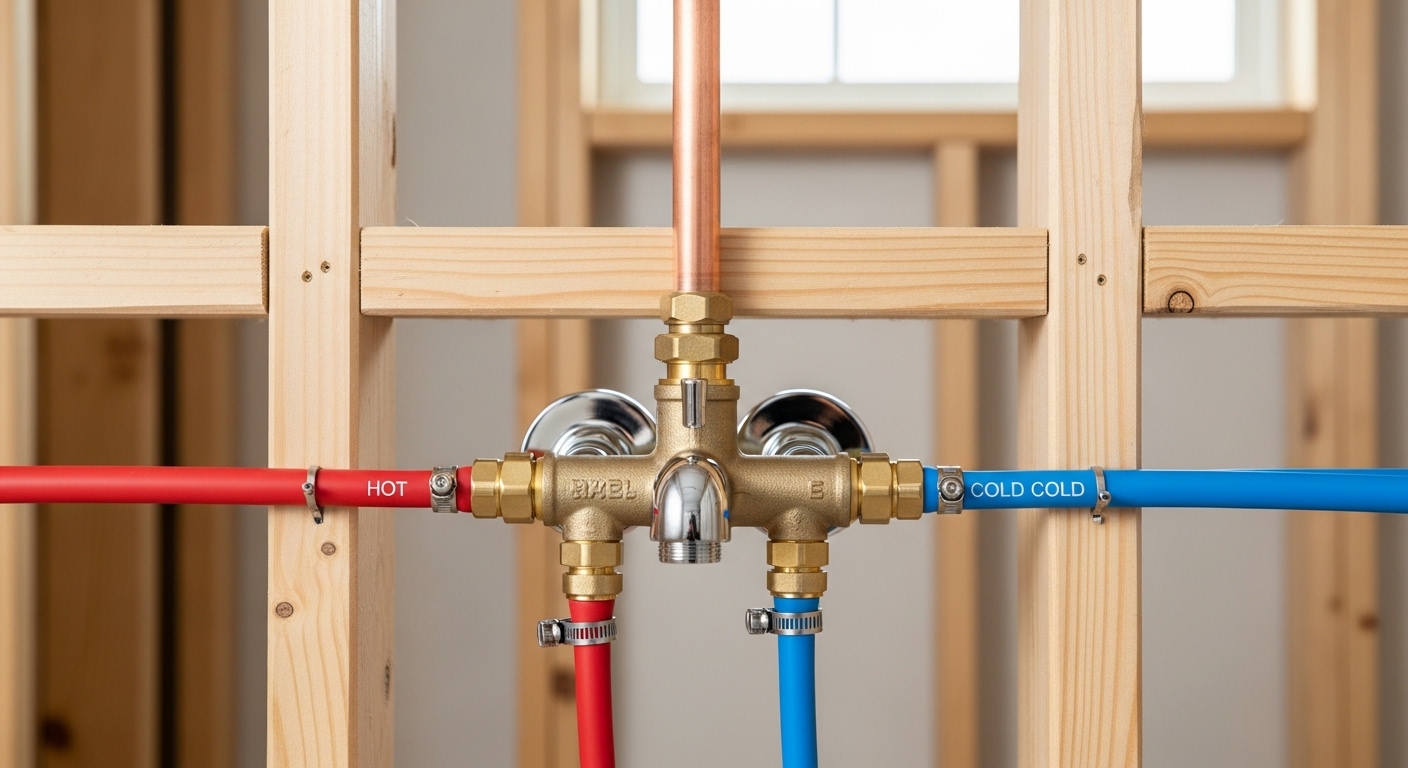
Connect your braided supply lines from the shutoff valves to the faucet’s hot (left) and cold (right) inlet lines, then attach the pull-down spray hose to the faucet outlet and clip the MagnaTite weight onto the hose. The Leland’s connections are largely quick-connect, so most of this is push-and-click rather than wrenching.
Three connections to get right:
| Connection | How it attaches | Watch out for |
|---|---|---|
| Supply lines to shutoff valves | Braided line nut, hand-tight + 1/4 turn with wrench. Use plumber’s tape on tapered threads only. | Don’t over-tighten — you’ll deform the rubber seal and cause a slow weep. |
| Spray hose to faucet outlet | Brass quick-connect — push the hose fitting up until it clicks fully onto the outlet. | If it isn’t fully clicked, it leaks inside the cabinet. Tug to confirm it’s locked. |
| MagnaTite hose weight | Snaps onto the spray hose at the marked position (usually ~10–12 inches below the faucet). | Wrong weight position = spray head won’t dock cleanly or hose droops. Adjust as needed. |
The hose weight matters more than people expect. It’s what retracts the pull-down wand and lets MagnaTite snap it back into the dock. Position it so the wand pulls out smoothly and returns to seat firmly. Run the wand out and let go a few times to test the travel before you button up the cabinet.
How do I turn the water back on without causing a leak?
Before testing, remove the aerator/spray head tip if instructed, then slowly open both shutoff valves, run warm and cold water for 15–30 seconds to flush out debris, check every connection for drips, and only then reinstall the aerator. Flushing the lines first protects the Leland’s valve cartridge from construction grit and prevents weak flow later.
Do it in this order:
- Aim the spray head into the sink and remove the wand’s aerator insert if your quick-start guide says to flush first.
- Open the cold valve about a quarter turn, then the hot — slowly. Sudden full pressure is how you find out a connection wasn’t seated.
- Turn the faucet on and let it run 15–30 seconds across hot and cold to clear debris from the new lines and cartridge.
- With a dry paper towel, wipe under every connection. A paper towel shows a slow weep that your fingers miss.
- Reinstall the aerator, cycle the handle through its full range, and dock/undock the spray head several times.
If you spot a drip, don’t panic and crank the nut — most leaks here are an under-tightened or cross-threaded supply nut, or a spray hose that didn’t fully click. If water shows up days later, our breakdown of why a brand-new faucet still leaks and the step-by-step O-ring repair guide will help you isolate it fast.
Is the Delta Leland easy to install compared with other single-handle faucets?
Yes — the Leland is on the easier end of pull-down faucets to install because of its quick-connect hose, attached water lines, and tool-free MagnaTite docking, so you avoid the fiddly threaded hose couplings that older designs use. The main difficulty isn’t the faucet; it’s your sink’s accessibility and the condition of your old shutoff valves.
Here’s how the install experience compares across common kitchen faucet styles:
| Faucet type | Typical install time | Skill level | Trickiest part |
|---|---|---|---|
| Delta Leland pull-down (single hole) | 45–90 min | Beginner–Intermediate | Setting the hose weight + removing the old faucet |
| Standard 2-handle widespread | 60–120 min | Intermediate | Aligning three separate pieces and valves |
| Wall-mount kitchen faucet | 2–4 hrs | Advanced | In-wall rough-in and capping |
| Touchless/smart faucet | 90 min–2 hrs | Intermediate | Solenoid + battery box wiring |
If you’re still choosing a finish or comparing models before you buy, the Leland comes in Arctic Stainless, Chrome, Venetian Bronze, and a popular Champagne Bronze — our 2026 champagne bronze kitchen faucet buyer’s guide covers how that warm finish wears in a real kitchen.
What are the most common Delta Leland installation mistakes?
The most common mistakes are reusing old corroded supply lines, not fully clicking the quick-connect spray hose, misplacing the hose weight, and overtightening the mounting nut on a stone sink. Every one of these is avoidable in about 30 seconds of attention.
- Reusing old supply lines. They’re cheap; a slow drip behind your cabinet is not. Always replace them.
- Spray hose not fully seated. The brass quick-connect must click and pass a firm tug test, or it leaks inside the cabinet where you won’t see it for days.
- Hose weight in the wrong spot. Too high and the wand won’t retract; too low and it drags. Test the docking before closing up.
- Overtightening. On quartz, granite, or fireclay sinks, excessive torque on the mounting nut can crack the deck. Snug, not savage.
- Skipping the flush. Debris in the lines lodges in the cartridge and aerator, giving you weak or sputtering flow that feels like a defective faucet.
Author’s note & brand credibility
This guide was written by the WOWOW Faucet product and installation team. We design, test, and sell kitchen and bathroom fixtures, and our technicians install and bench-test faucets to standards like ASME A112.18.1/CSA B125.1 and lead-free compliance under NSF/ANSI 372. Delta’s Leland line carries Delta’s limited lifetime warranty on finish and function for residential use — keep your proof of purchase, since warranty service typically requires it. We reference manufacturer instructions and our own hands-on installs, not guesswork, and we don’t recommend a step we haven’t done ourselves.
FAQ
Do I need plumber’s putty to install a Delta Leland kitchen faucet?
No. The Leland seals to the sink with the included rubber gasket and (if needed) the escutcheon plate, so plumber’s putty isn’t required. Use plumber’s tape only on tapered threaded connections like the shutoff valves — never on the quick-connect hose fittings.
Can I install a Delta Leland in a single-hole sink and also a 3-hole sink?
Yes. The Leland is a single-hole faucet that ships with an optional 3-hole deck plate (escutcheon). Use just the gasket for a single-hole granite or quartz sink, or add the deck plate to cover a standard 4-inch or 8-inch three-hole configuration.
Why is my new Delta Leland faucet leaking underneath after install?
Almost always it’s a supply-line nut that’s under-tightened or cross-threaded, or a spray hose quick-connect that didn’t fully click into place. Dry everything, then check each joint with a paper towel. If the connections are solid and it still drips, inspect the O-rings and reseat the cartridge.
How long does it take to install a Delta Leland kitchen faucet?
Most DIYers finish in 45–90 minutes. Removing a corroded old faucet and dealing with bad shutoff valves is what adds time — the actual Leland mounting and quick-connect hookups are fast thanks to the attached water lines and click-on hose.
My Delta Leland spray head won’t retract or dock — how do I fix it?
Reposition the hose weight on the spray hose. If the wand won’t pull out smoothly, the weight is too high; if it won’t snap back into the MagnaTite dock, the weight is too low or the hose is catching on something in the cabinet. Clear any obstructions and let the wand travel freely.
Do I need to flush the lines before using my new faucet?
Yes. Remove the aerator or spray tip and run warm and cold water for 15–30 seconds after turning the valves on. This clears debris from the new supply lines so grit doesn’t clog the cartridge or aerator and weaken your flow.