 WOWOW Faucets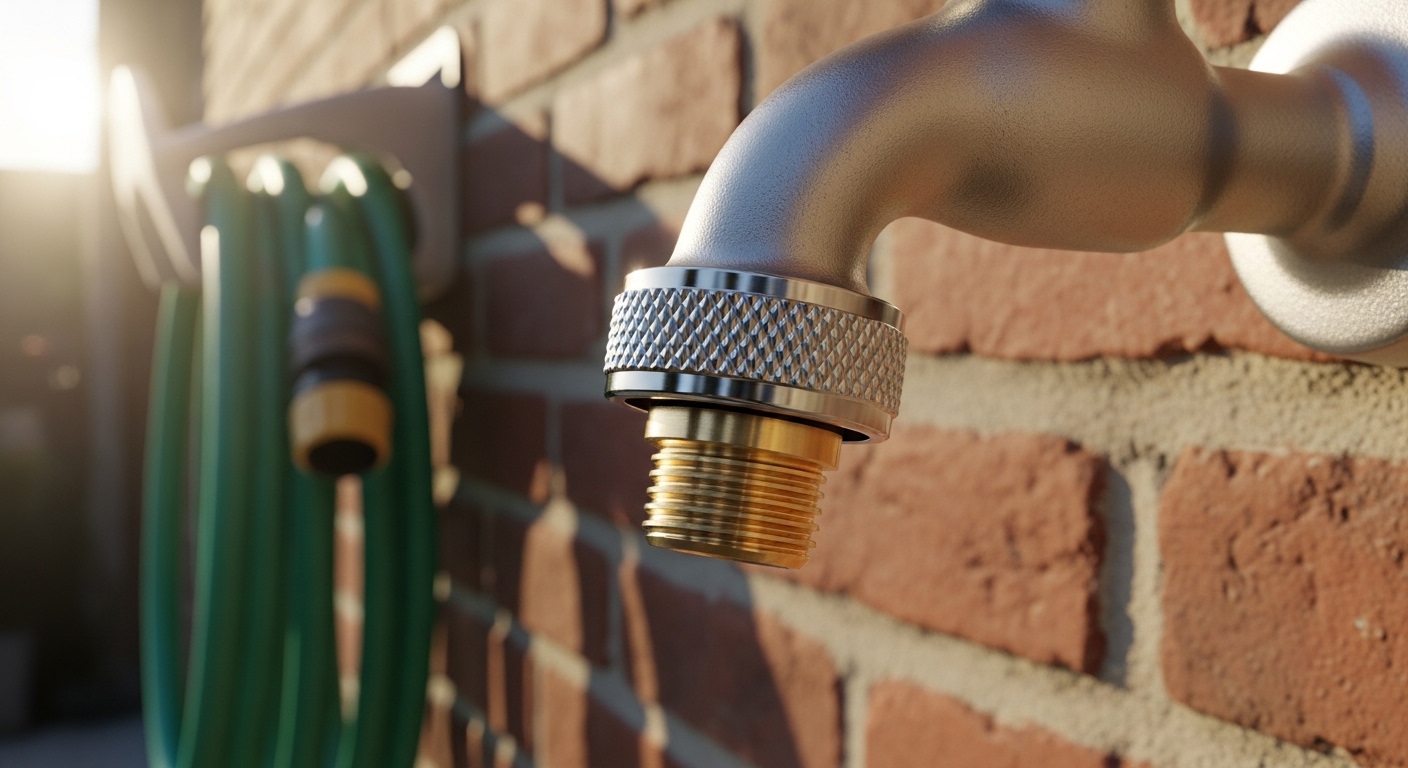
Finding the right faucet adapter outside setup can be the difference between a leak-free weekend project and a flooded basement. Whether you’re trying to fill an outdoor kiddie pool from your laundry room sink, hook a portable dishwasher to your kitchen faucet, or run a garden hose off a utility tap on the side of the house, the small brass or stainless fitting you screw onto the spout determines everything: flow rate, drip-tightness, freeze tolerance, and how long the connection lasts before stripping out. At WOWOW Faucet, we’ve spent the last decade engineering aerators and accessories that thread reliably onto both our own fixtures and competing brands, so we’ve put this guide together to help you pick the correct adapter the first time.
This guide walks you through every adapter type, every thread size you’re likely to encounter, the materials that actually survive a Midwest winter, and the installation steps homeowners get wrong most often. You’ll also find a head-to-head comparison table, an FAQ covering the questions our customer service team hears every spring, and links to deeper resources on related faucet topics.
What Is a Faucet Adapter Outside, and Why You Might Need One
A faucet adapter outside is a small machined fitting — usually between 1 and 2 inches long — that screws onto the end of a faucet spout (where the aerator normally lives) and converts that spout into a different thread standard, most commonly 3/4-inch Garden Hose Thread (GHT). It exists because indoor faucet spouts use fine aerator threads (typically 15/16″-27 male or 55/64″-27 female), while garden hoses, washing machine fill hoses, dishwasher hookups, and most outdoor accessories use a coarser, larger 3/4″ GHT thread. Without an adapter, those two worlds simply cannot mate.
Common real-world reasons homeowners reach for one of these adapters include:
- Connecting a garden hose to an outdoor utility sink, laundry room faucet, or basement slop sink
- Running a portable washing machine, dishwasher, or ice maker off a kitchen faucet
- Filling a fish tank, hydroponic reservoir, or kiddie pool from a bathtub or laundry tap
- Adding a sprayer attachment, pre-rinse wand, or bidet hose to a standard bathroom faucet
- Hooking up an RV fresh-water line at a campsite spigot when the spigot threads are damaged or non-standard
The “outside” part of the name simply refers to the fact that the adapter goes on the outside of the spout, taking the place of the aerator. It does not necessarily mean the faucet itself is outdoors — though many shoppers searching this term are specifically looking to outfit an exterior sillcock, hose bibb, or wall-mounted utility faucet.
The Five Main Types of Outside Faucet Adapters
Not every adapter looks the same, and choosing the wrong style is the single most common reason a connection leaks or won’t thread on at all. Below are the five categories you’ll encounter on store shelves and online.
1. Aerator-to-Garden-Hose Adapters
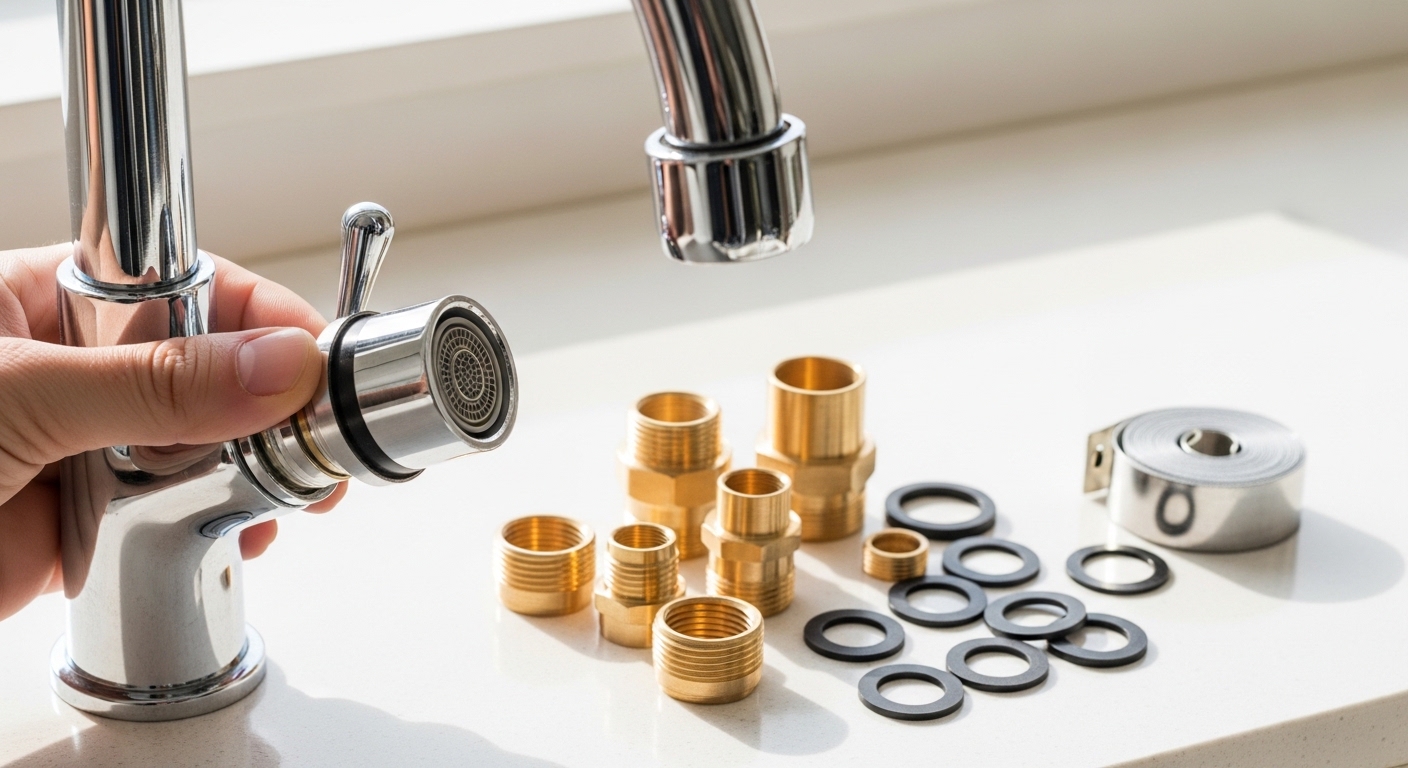
This is the workhorse: a short brass fitting with aerator threads on the inside (to grip your faucet spout) and 3/4″ GHT male threads on the outside (to accept a garden hose). They come in dual-thread versions that fit both 15/16″-27 male and 55/64″-27 female aerator sizes in a single piece, which removes most of the guesswork.
2. Quick-Connect Adapters
Quick-connect adapters use a push-and-click coupling so you can attach or remove a hose in under a second. The faucet side still threads on like a normal adapter, but the hose side has a spring-loaded collar. These are excellent for laundry-room faucets you swap between everyday use and pool-filling, but the rubber O-rings inside the collar should be inspected yearly.
3. Diverter Adapters
A diverter adapter has a small lever or pull-tab that lets you switch flow between the original spout (so you can still wash your hands) and a side-mounted hose connection. Bidet sprayers, handheld bathtub showers, and pre-rinse kitchen attachments use this style. They’re the right pick when you don’t want to physically disconnect the adapter every time you need the faucet for normal use.
4. Frost-Free Hose Bibb Adapters
Designed specifically for outdoor sillcocks, these are longer and include a vacuum breaker — a backflow-prevention device required by most municipal codes when a garden hose is connected to a potable water supply. If your outdoor faucet doesn’t already have a vacuum breaker built in, the adapter must include one.
5. Specialty Thread Adapters
European, older American, and commercial faucets sometimes use M22, M24, or 13/16″ threads that don’t match the U.S. standards. Specialty adapters bridge those threads to GHT. WOWOW stocks adapters for the most common conversions, and our customer support team can identify your thread with a clear photo of the spout end.
Faucet Adapter Outside Comparison: Materials, Thread Sizes, and Best Uses
The table below compares the five most common adapter setups side by side. Use it as a quick reference while shopping; pay especially close attention to the “Freeze Tolerance” column if you live anywhere that sees a hard frost.
| Adapter Type | Typical Material | Thread Compatibility | Freeze Tolerance | Best Use Case | Typical Price (USD) |
|---|---|---|---|---|---|
| Aerator-to-GHT (Dual Thread) | Solid brass, chrome-plated | 15/16″-27 M + 55/64″-27 F to 3/4″ GHT | Excellent (remove before freeze) | Connecting garden hose to indoor or utility faucet | $6 – $14 |
| Quick-Connect | Brass body with stainless collar | Aerator threads to GHT quick-coupler | Good | Frequent hose attach/detach in laundry room | $10 – $22 |
| Diverter Adapter | Brass with ABS lever | Aerator threads to GHT + retained spout flow | Moderate | Bidet sprayers, portable dishwashers, pre-rinse | $12 – $25 |
| Frost-Free Hose Bibb Adapter | Forged brass with built-in vacuum breaker | 3/4″ MHT or 3/4″ MNPT to GHT | Excellent | Outdoor sillcocks, code-compliant garden taps | $9 – $20 |
| Specialty (M22/M24) | Solid brass | European metric threads to 3/4″ GHT | Good | Imported faucets, older fixtures, RV setups | $8 – $18 |
If you’re unsure whether your existing faucet uses metric or imperial threads, you’re not alone. We discuss the differences between domestic and imported fixtures in our companion article on imported vs. local faucets, which covers thread standards in more detail.
How to Identify the Correct Faucet Adapter for Your Spout
The most reliable way to get the right adapter on the first try is to measure before you buy. Here’s the process our technical team recommends.
Step 1: Unscrew the Existing Aerator
Wrap a strip of masking tape around the aerator (to protect the finish) and turn it counterclockwise by hand. If it’s been on for years, a pair of channel-lock pliers over the tape will break it loose. Stubborn aerators that won’t budge are usually seized with mineral buildup — soak the spout end in white vinegar for 20 minutes first. For more on dissolving buildup, see our guide on removing limescale and buildup.
Step 2: Measure the Thread Diameter
Use a caliper or even a ruler. The vast majority of U.S. residential faucets fall into one of three sizes:
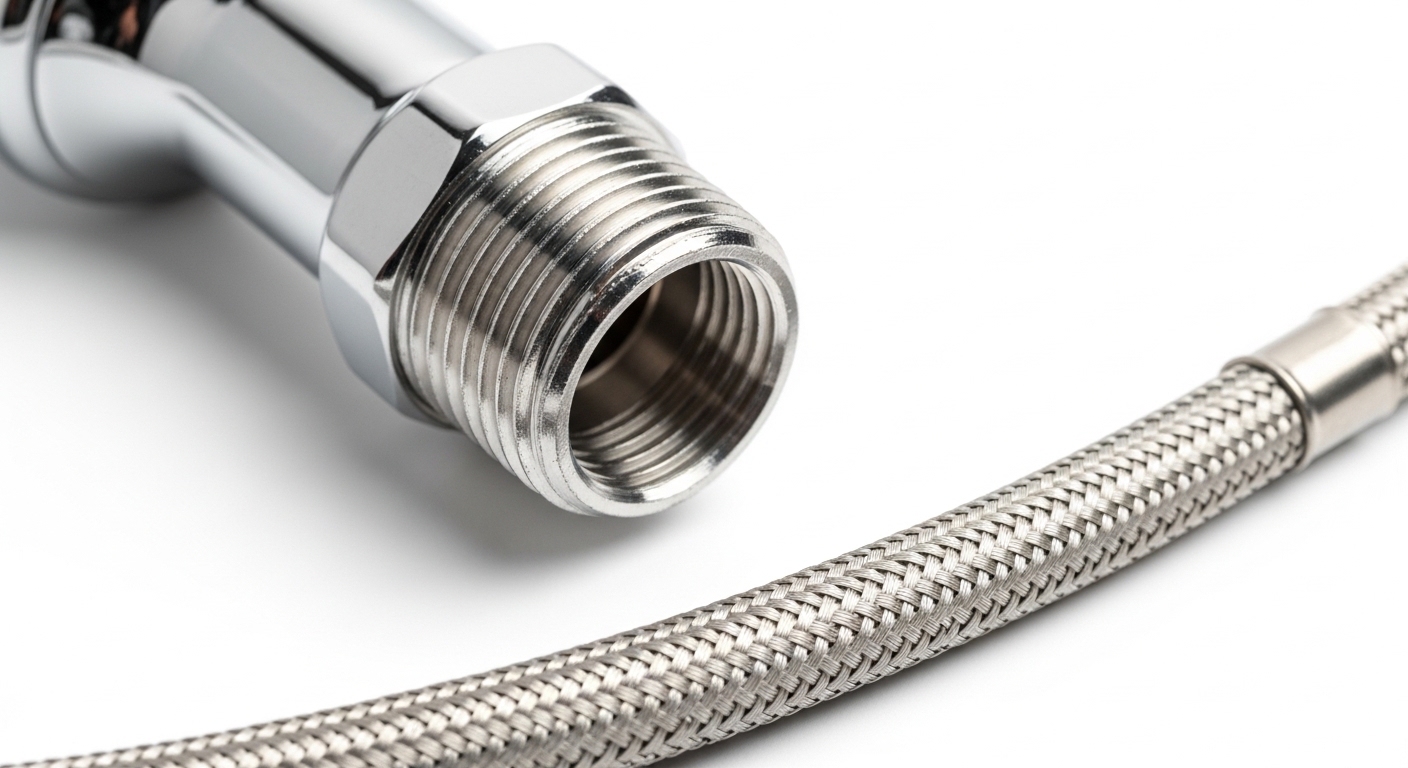
- 15/16″-27 male — the most common male aerator thread; measures ~24 mm across the threads
- 55/64″-27 female — the most common female aerator thread; the spout has internal threads ~22 mm in diameter
- 13/16″-27 — found on smaller bathroom faucets, sometimes called “junior” size
Step 3: Identify Male vs. Female
If the threads are on the outside of the spout, you need a “female-to-GHT” adapter. If the threads are inside the spout (you can see no threads from outside), you need a “male-to-GHT” adapter. Dual-thread adapters handle both, which is why we recommend them for first-time buyers.
Step 4: Confirm Material and Certification
Look for “lead-free brass” stamped or printed on the package, along with an NSF/ANSI 372 certification mark. If the adapter will carry drinking water — even briefly, as in an ice maker line — this certification is non-negotiable.
Materials: Why Brass Beats Plastic Every Time
Walk down the plumbing aisle and you’ll see adapters priced anywhere from $2 to $25. The difference is almost always material. Cheap plastic adapters strip out after two or three seasons, especially when sun-baked on an outdoor spigot. Zinc-alloy adapters corrode from the inside and stain the faucet finish around them within a year. Solid brass — particularly forged brass — is the only material we recommend for any installation that will see freeze/thaw cycles, UV exposure, or daily use.
If you want a deeper dive into faucet metallurgy, we’ve written extensively on the topic. Our article on brass vs. zinc faucets explains why zinc fails in wet environments, and our breakdown of solid brass vs. forged brass covers why forged components handle pressure cycling better than cast ones.
Finish Considerations
Most adapters come in chrome, brushed nickel, or unfinished raw brass. For outdoor use, chrome and PVD finishes resist UV best. For indoor adapters that need to match a designer faucet, look for the same finish family — a brushed nickel adapter on a chrome faucet looks like a Band-Aid. If finish matching matters, our overview of faucet coating types explains which finishes hold up where.
Step-by-Step: Installing a Faucet Adapter Outside
Installation takes under five minutes and requires no specialty tools. Here is the procedure our technicians follow on service calls.
- Shut off the faucet — make sure both hot and cold handles are fully closed.
- Remove the existing aerator by turning counterclockwise. Set it aside in a labeled bag so you can reinstall it later.
- Inspect the spout threads. Wipe them clean with a microfiber cloth. If you see green or white crust, scrub gently with an old toothbrush dipped in vinegar.
- Check the adapter’s rubber washer. Most adapters ship with a black or red washer pre-installed inside. Make sure it’s seated flat — a tilted washer is the #1 cause of leaks.
- Hand-thread the adapter onto the spout, clockwise. It should turn smoothly for at least four full rotations. If it binds after one turn, stop — the threads don’t match.
- Snug, don’t crank. Tighten by hand until firm, then add no more than a quarter turn with pliers (over a cloth). Over-tightening cracks the washer and causes the leaks you’re trying to prevent.
- Test under pressure. Turn the faucet on full and watch the threaded joint for 30 seconds. A bead of water means back off a quarter turn, reseat the washer, and re-tighten.
- Attach your hose using a fresh rubber hose washer on the hose side. Replace these washers every spring.
If you discover the faucet itself is loose or wobbly during installation, fix that before adding any accessories — our walkthrough on tightening a loose faucet handle covers the most common fixes.
Common Problems and How to Fix Them
Even with the right adapter, things can go sideways. Here are the issues we troubleshoot most often.
The Adapter Leaks Where It Meets the Spout
Nine times out of ten, this is a washer problem. Either it’s missing, doubled up, pinched, or hardened with age. Remove the adapter, inspect the washer, replace if needed (most hardware stores sell a 10-pack for under $3), and reinstall hand-tight plus a quarter turn. If leaks persist after a fresh washer, the spout threads may be damaged — see our guide on why a new faucet still leaks.
The Adapter Won’t Thread On at All
You either have the wrong thread size or the wrong gender. Re-measure with a caliper. Remember: dual-thread adapters can be flipped — one end fits male spouts, the other fits female. Read the package carefully.
Reduced Water Pressure After Installation
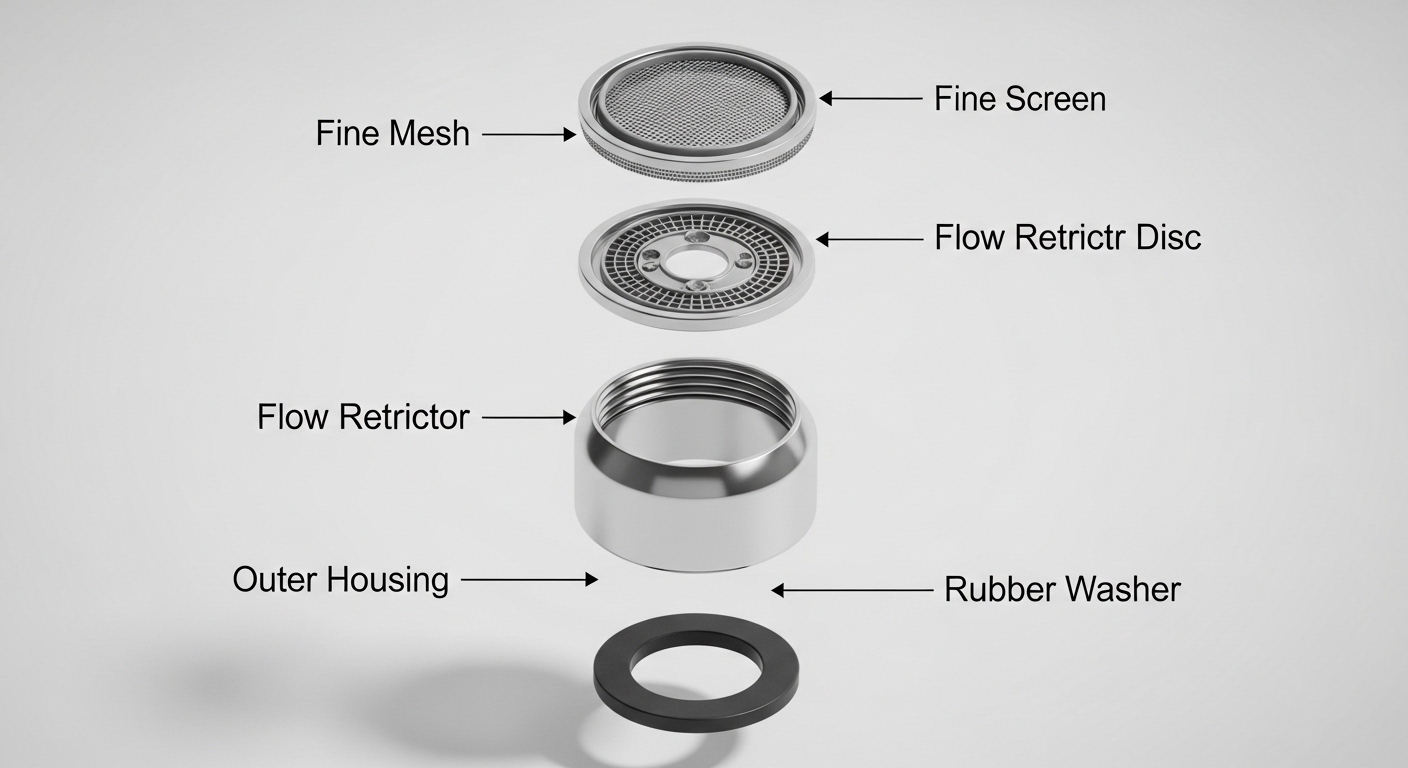
Adapters with built-in vacuum breakers, flow restrictors, or aerators can drop your flow rate by 20-40%. If pressure feels weak, check whether your adapter has a removable restrictor disc. For broader pressure troubleshooting, our piece on shower head low water pressure fixes covers the same diagnostic principles that apply to spouts.
Adapter Spins Freely Without Tightening
The spout threads are stripped, or the adapter’s threads are. Either way, replace the failed part. Don’t try to “fix” stripped threads with plumber’s tape — you’ll get a temporary seal that fails at the worst possible time.
The Faucet Makes Noise After Installing the Adapter
Some adapters create turbulence that resonates back through the supply lines. If you hear ticking, knocking, or whistling, our diagnostic guide on faucet clicking sounds walks you through the causes.
Outdoor-Specific Considerations: Freeze Protection and Code Compliance
If your adapter lives outside year-round, two issues dominate everything else: freezing and backflow prevention.
Winterizing
Water expands roughly 9% when it freezes. A garden hose adapter left attached to an outdoor faucet in a freeze traps water against the spout, expands inside the adapter, and can crack both the adapter and the section of pipe behind the wall. Every fall, do this:
- Disconnect all hoses from outdoor faucets
- Remove screw-on adapters and store them indoors
- Drain the sillcock by opening it briefly with the indoor shutoff closed
- Install an insulated faucet sock over the spigot
Backflow Prevention
Most U.S. plumbing codes (IPC and UPC) require a vacuum breaker on any garden hose connection to potable water. If your outdoor faucet is older than about 2000, it likely doesn’t have one built in. A vacuum breaker adapter — sometimes called an atmospheric vacuum breaker, or AVB — solves this. They’re inexpensive and often required for code compliance during home inspections.
Brand and Quality Considerations
Adapters are one of those products where brand reputation actually matters more than the price tag. A $4 no-name brass adapter from a discount store is often made from leaded brass with poor thread tolerances. A $12 adapter from an established faucet brand is machined to tighter specs, uses NSF-certified lead-free brass, and includes higher-quality EPDM washers that don’t harden in two seasons.
WOWOW Faucet has manufactured plumbing fixtures and accessories since 2015, with all wetted brass components meeting NSF/ANSI 61 and 372 lead-free standards. Our adapters carry a 5-year limited warranty against thread stripping and finish failure, and every batch is pressure-tested to 150 psi — roughly double normal residential supply pressure. We mention this not as a sales pitch but because it’s the kind of detail you should look for from any brand, ours included. Cheap adapters fail loudly and at inconvenient times; certified ones don’t.
When to Skip the Adapter and Upgrade the Faucet Itself
Sometimes the right answer isn’t another adapter — it’s a better faucet. If you’re stacking three adapters together to get water from your kitchen sink to a portable dishwasher, the cumulative leak risk is high. A modern pull-down kitchen faucet with a built-in hose connection, or a dedicated utility faucet with native GHT threads, eliminates the chain. Our guide on installing a kitchen faucet walks through what’s involved, and our comparison of pull-down vs. commercial style faucets can help you decide on a replacement.
FAQ
What size is a standard outside faucet adapter?
The hose-side thread is almost always 3/4-inch Garden Hose Thread (GHT), which is the U.S. standard for residential garden hoses, washing machine hoses, and outdoor spigots. The faucet-side thread varies — usually 15/16″-27 male or 55/64″-27 female for kitchen and bathroom faucets, and 3/4″ MHT for outdoor sillcocks. Dual-thread adapters cover both common indoor sizes in a single piece.
Can I connect a garden hose to any indoor faucet?
Most kitchen, laundry, and utility faucets accept an aerator-to-GHT adapter without issue. Bathroom faucets often have smaller spouts (13/16″-27) that need a specialty adapter, and pull-down or pull-out kitchen faucets generally cannot accept screw-on adapters because the spray head detaches instead of unscrewing. Always verify your spout has threads at the tip before buying an adapter.
Will a faucet adapter outside reduce my water pressure?
A plain pass-through adapter has virtually no effect on pressure — losses are under 2 psi. However, adapters with built-in vacuum breakers, flow restrictors, or fine-mesh aerators can drop flow by 20 to 40 percent. If maximum flow is your priority, choose a straight-through adapter without integrated flow controls.
How do I stop my faucet adapter from leaking?
Most leaks come from the rubber washer inside the adapter. Unscrew the adapter, confirm the washer is present, flat, and undamaged, and replace it if it’s hardened or pinched. Reinstall hand-tight plus a quarter turn with pliers — over-tightening crushes the washer and creates the leak you’re trying to fix. PTFE tape is generally unnecessary on adapter-to-spout connections because the seal relies on the washer, not the threads.
Is brass better than plastic for outdoor faucet adapters?
Yes, by a wide margin. Plastic adapters become brittle from UV exposure within one or two seasons and strip easily under hose tension. Brass — especially forged, lead-free brass — handles freeze/thaw cycles, UV exposure, and over-tightening far better. The price difference is usually only $5 to $10, and a quality brass adapter typically outlasts a plastic one by five to ten years.
Do I need a vacuum breaker on my outdoor faucet adapter?
In most U.S. jurisdictions, yes. Plumbing codes require a backflow preventer on any garden hose connection to potable water to prevent contaminated water from being siphoned back into the supply if pressure drops. Many modern outdoor sillcocks have one built in, but older faucets do not — adding a vacuum-breaker adapter is the simplest way to comply.
Can I leave a faucet adapter on an outdoor spigot all winter?
No. Even if the adapter itself is freeze-rated, leaving it attached traps water against the spout and prevents the sillcock from draining. That trapped water can freeze, expand, and crack the pipe inside your wall. Always remove hoses and adapters before the first hard freeze and store them indoors until spring.
About the Author
This article was written by the WOWOW Faucet product team, drawing on a decade of in-house design, testing, and warranty data across kitchen, bath, and utility fixtures. Our technical reviewers include ASME-certified plumbing engineers and field installers who handle thousands of warranty cases each year. WOWOW Faucet is a North American brand specializing in modern, code-compliant faucets and accessories, all backed by a limited lifetime warranty on solid brass components and certified to NSF/ANSI 61 and 372 lead-free standards.