 WOWOW Faucets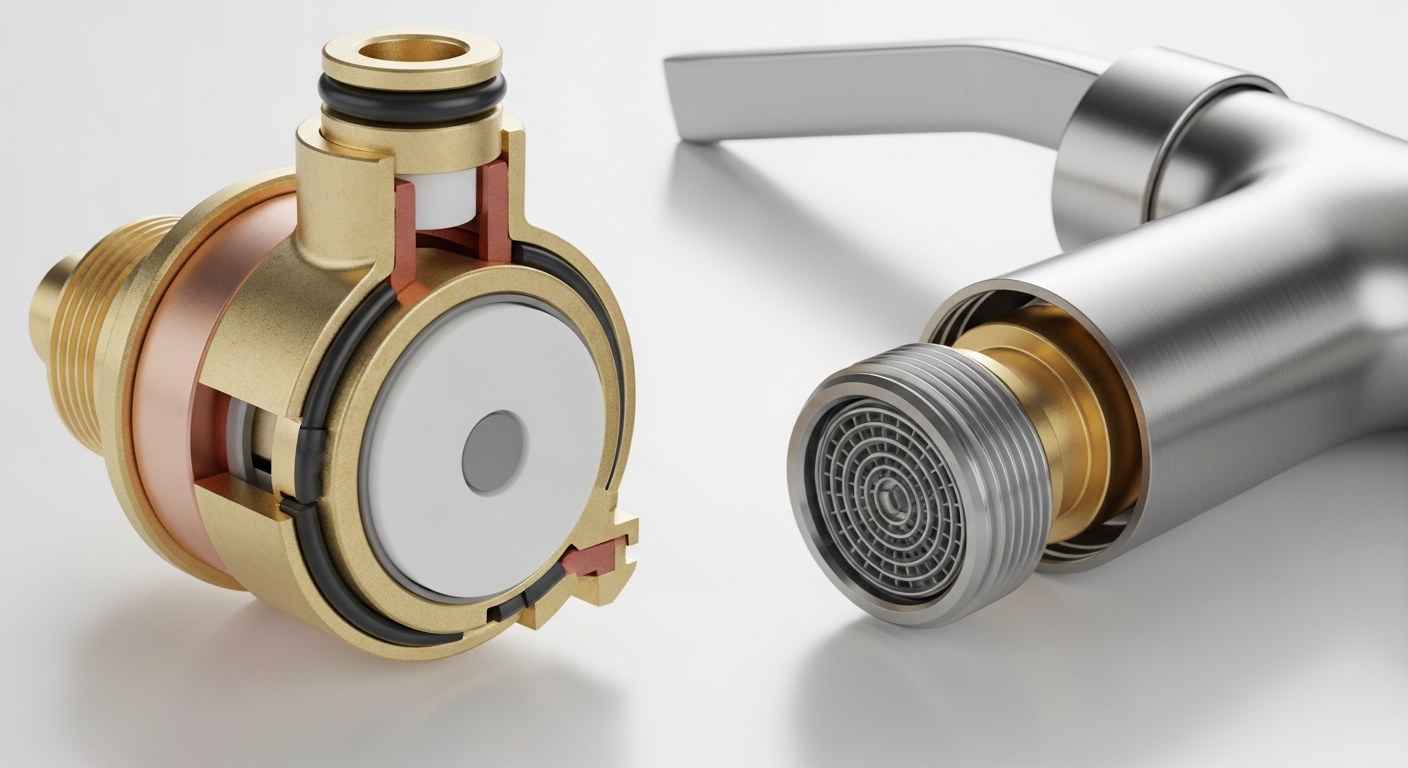
If you’ve been searching for a copper faucet cartridge, you’re probably standing in front of a dripping or stiff faucet, wondering whether the little cylinder inside the handle is the culprit — and whether “copper” is even the right thing to buy. Here’s the honest answer: most cartridges marketed as “copper” or “brass” are made from a copper-zinc alloy (brass), and that copper content is exactly why they resist corrosion and last for years. This guide walks you through what the part actually is, how to tell if yours is bad, how to replace it, and how to pick the right one without overpaying.
What is a copper faucet cartridge, really?
A copper faucet cartridge is the removable valve unit inside your faucet — usually made from brass (a copper-zinc alloy) with ceramic discs or rubber seals — that starts and stops water and blends hot and cold. When people say “copper cartridge,” they’re describing the metal body’s color and material, not a cartridge made of pure copper. Pure copper is too soft for a moving valve; brass gives you the corrosion resistance of copper with the strength you need.
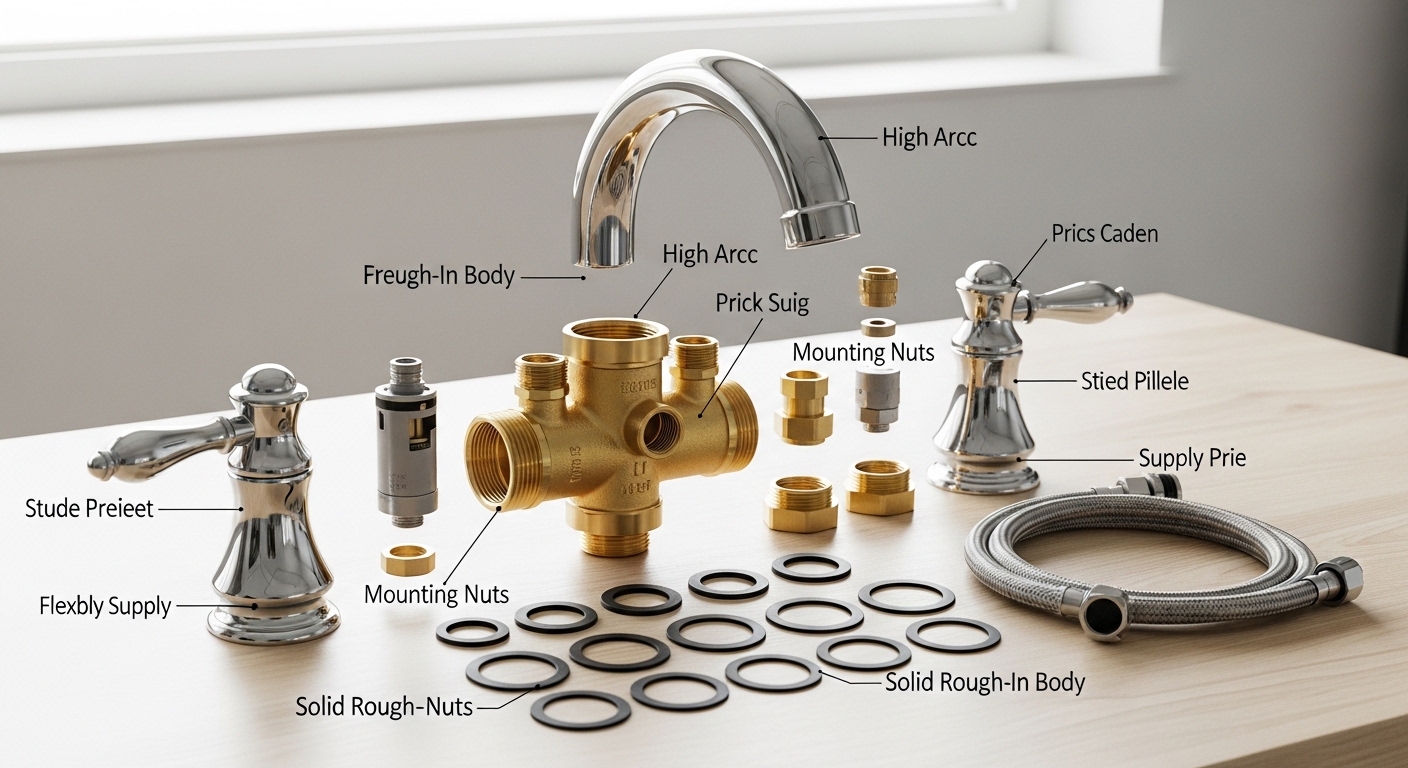
Inside a typical cartridge you’ll find a few working parts:
- The body — the brass or engineered-plastic shell that seats into the faucet.
- Ceramic discs — two polished discs that slide across each other to open, close, and mix water. These are what make modern faucets so smooth and drip-resistant.
- O-rings and seals — rubber rings that keep water from leaking around the cartridge.
- The stem — the top post your handle attaches to.
Brass (copper-alloy) cartridges are the premium option because copper naturally fights scale and corrosion. Cheaper faucets often use plastic cartridges, which work fine but wear faster in hard water. If your faucet came with a solid brass cartridge, that’s a good sign the whole fixture was built to last.
How do I know if my faucet cartridge is the problem?
Your cartridge is likely the problem if your faucet drips after you shut it off, feels gritty or hard to turn, or suddenly won’t get as hot or cold as it used to. These three symptoms — dripping, stiffness, and bad temperature mixing — are the classic signs of a worn cartridge, and they show up long before anything else in the faucet fails.
Run through this quick checklist before you buy a replacement:
- Constant drip from the spout even when the handle is fully off — worn ceramic discs or O-rings.
- Handle is stiff, grinding, or notchy — mineral buildup or a scored disc inside the cartridge.
- Water won’t reach full hot or full cold, or hot and cold feel swapped — the cartridge isn’t sealing or is installed the wrong way.
- Leak at the base of the handle, not the spout — usually a failed O-ring on the cartridge body.
- Pressure drops only at this one faucet — a clogged cartridge can restrict flow.
One caveat: not every faucet problem is the cartridge. If you’re seeing weak flow, it’s worth ruling out a clogged aerator or a supply issue first — our guide on why there’s low water pressure from your sink faucet and how to fix it walks through those checks in a couple of minutes. And if your faucet is dripping specifically from a single-handle kitchen unit, the step-by-step in why your leaky single-handle kitchen faucet is dripping pairs perfectly with this article.
How do I replace a copper faucet cartridge myself?
You can replace a copper (brass) faucet cartridge in about 15–30 minutes with a few basic tools — shut off the water, pull the handle, remove the retaining clip or nut, extract the old cartridge, and drop in the matching new one. No plumber required for most single- and two-handle faucets.
Here’s the process most homeowners follow:
- Shut off the water. Turn the hot and cold valves under the sink clockwise until they stop. Open the faucet to release pressure.
- Plug the drain. A stopper or rag keeps small screws and clips from disappearing.
- Remove the handle. Pop off the decorative cap, then loosen the set screw (usually an Allen/hex screw). Lift the handle off.
- Free the cartridge. Pull the retaining clip with needle-nose pliers, or unscrew the retaining nut with a wrench. Note how the cartridge is oriented — many have a flat side or notch that must face a certain way.
- Pull the old cartridge straight up. If it’s stuck from mineral buildup, a cartridge-puller tool or gentle rocking with pliers gets it loose.
- Insert the new cartridge in the exact same orientation, replace the clip/nut, reattach the handle.
- Turn the water back on slowly and test hot, cold, and full-off for drips.
The single most important step is matching the new cartridge to your faucet’s brand and model — a cartridge that’s a few millimeters off won’t seat correctly. If your handle or trim fights you along the way, the removal tricks in our how to replace a bathroom faucet, YouTube-style walkthrough apply to cartridge swaps too. And if you’re also dealing with old copper supply lines behind the wall, understanding a copper tap elbow and whether you need one for your install can save you a second trip to the store.
Copper (brass) vs. plastic vs. ceramic-disc cartridges — which lasts longer?
Brass/copper-alloy cartridges with ceramic discs last the longest — typically 15–20+ years — because copper resists corrosion and ceramic discs barely wear. Plastic-body cartridges are cheaper and fine for light use, but they degrade faster in hard water and heat. Here’s how the common types stack up:
| Cartridge type | Typical lifespan | Hard-water resistance | Cost | Best for |
|---|---|---|---|---|
| Brass / copper-alloy body + ceramic disc | 15–20+ years | Excellent | $$ ($15–$40) | Main kitchen & bath faucets, hard water |
| Plastic body + ceramic disc | 8–12 years | Good | $ ($8–$20) | Budget builds, low-use faucets |
| Compression / rubber-washer stem | 3–7 years | Fair | $ ($5–$15) | Older two-handle faucets |
| Ball valve (with springs & seats) | 5–10 years | Fair | $ ($10–$25) | Legacy single-handle faucets |
The takeaway: if you live somewhere with hard water — and most of the U.S. does — spend the extra few dollars on a brass/copper-alloy cartridge with ceramic discs. It’s the difference between fixing your faucet once a decade versus every few years. Hard water is also what causes those chalky white marks on your fixtures; if you’re battling those, our tips on removing hard water stains from a stainless steel faucet without scratching it keep the outside looking as good as the cartridge performs.
How much should a copper faucet cartridge cost, and where do I buy the right one?
A genuine brass/copper faucet cartridge costs roughly $10–$40, depending on brand and whether it’s an OEM (original manufacturer) part or a universal aftermarket one. OEM cartridges cost more but guarantee a perfect fit; universal cartridges are cheaper but you must confirm dimensions and disc count before buying.
To buy the right one, you need three pieces of information:
- Faucet brand and model number — often stamped under the spout, on the handle base, or in your original paperwork.
- Handle type — single-handle mixing cartridges differ from two-handle hot/cold stems.
- Physical dimensions — length, stem shape (splined vs. flat), and how it retains (clip vs. nut). Measure the old one if you can pull it first.
A pro tip: take the old cartridge to the store or photograph it next to a ruler before ordering online. Brands like Moen, Delta, Kohler, and WOWOW each use their own cartridge designs, and even within a brand there are several variants. Buying by model number is far more reliable than buying by appearance. If you’re weighing a full faucet upgrade instead of a repair — sometimes the smarter move on a 20-year-old fixture — our roundup of the highest rated kitchen faucets of 2026 shows which models come with easy-to-service brass cartridges from the factory.
Is it worth replacing the cartridge, or should I just buy a new faucet?
Replace the cartridge if the faucet body, finish, and spout are still in good shape — it’s a $10–$40 fix versus $100–$400 for a new faucet plus install. Replace the whole faucet if the body is corroded, the finish is peeling, you can’t find the right cartridge, or you’ve already swapped the cartridge once and it failed again.
Think of it this way: the cartridge is a wear part, like brake pads on a car. A quality faucet is built to have its cartridge replaced two or three times over its life. So if you like your faucet and it looks good, a new brass cartridge is almost always the better value. But if the fixture is old, discontinued, or the metal itself is pitting, you’re throwing good money after bad — that’s the moment to upgrade to a modern faucet with a solid brass cartridge and a strong warranty.
Author note & why you can trust this guide
This guide was written by the WOWOW Faucet product team, who design, pressure-test, and service kitchen and bathroom faucets full-time. Every WOWOW faucet ships with a corrosion-resistant brass cartridge that’s cycle-tested to industry durability standards (hundreds of thousands of open-close cycles) and backed by our limited lifetime warranty on the cartridge and finish. We’ve handled thousands of customer repair questions, and the guidance above reflects what actually fixes faucets in real homes — not just theory. WOWOW products are built to meet widely recognized North American plumbing and lead-safety standards, so the copper-alloy parts touching your water are safe as well as durable.
FAQ
Is a copper faucet cartridge the same as a brass cartridge?
In practice, yes. Most cartridges sold as “copper” are actually brass, which is a copper-zinc alloy. Pure copper is too soft for a moving valve, so manufacturers use brass to get copper’s corrosion resistance with added strength. When you see “copper faucet cartridge,” think brass-bodied cartridge.
How long does a copper (brass) faucet cartridge last?
A quality brass cartridge with ceramic discs typically lasts 15–20 years or more, even in hard water. Plastic-body cartridges last closer to 8–12 years. Lifespan depends heavily on water hardness — the more minerals in your water, the sooner discs and O-rings wear.
Can I replace a faucet cartridge without turning off the main water?
You don’t need the main shutoff, but you must turn off the local supply valves under the sink first. If your faucet doesn’t have those, you’ll need to shut off the main. Never pull a cartridge under pressure — you’ll get soaked and possibly flood the cabinet.
Why does my faucet still drip after I replaced the cartridge?
Usually it’s one of three things: the new cartridge is the wrong model, it was installed in the wrong orientation, or debris got caught under the seals during install. Pull it back out, confirm the model number matches your faucet, check the alignment notch, and flush the valve body of any grit before reseating it.
Are all faucet cartridges universal?
No. Cartridges are brand- and often model-specific. “Universal” aftermarket cartridges exist, but you must match the length, stem shape, and retaining style exactly. The safest approach is to buy by your faucet’s brand and model number, or bring the old cartridge with you when shopping.
Do brass cartridges add lead to my water?
Reputable brass cartridges sold in North America are made from low-lead brass that meets modern lead-safety standards for drinking-water contact. Older or uncertified parts can contain more lead, so buy cartridges from established brands that state compliance with current plumbing and lead-content standards.