 WOWOW Faucets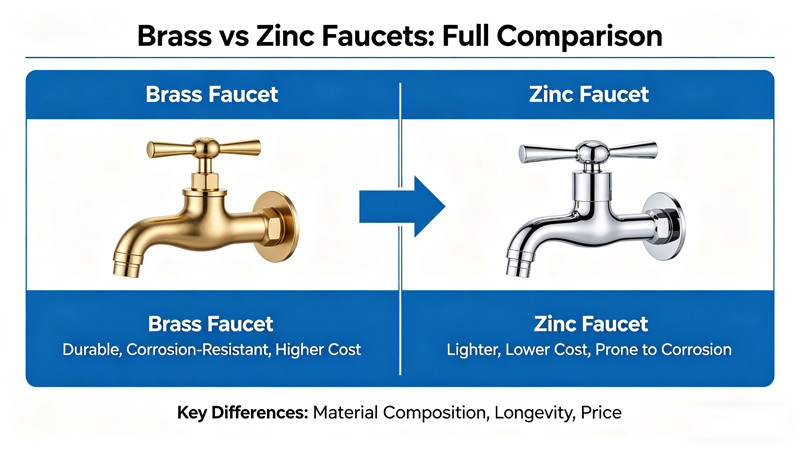
When shopping for a new faucet, one of the most important—yet often overlooked—factors is the material. While finishes like chrome or matte black get most of the attention, what’s underneath matters far more for durability, performance, and long-term value.
Two of the most common faucet materials are brass and zinc alloy. At first glance, they can look identical once coated, but their performance over time is very different. This guide breaks down everything you need to know so you can choose the right option for your home.
What Is a Brass Faucet?
Brass is an alloy made primarily from copper and zinc. It has been used in plumbing for decades due to its strength and resistance to corrosion.
Key characteristics:
- Dense and heavy
- Highly durable
- Naturally resistant to corrosion
- Long lifespan
Brass is widely considered the premium standard for faucet construction, especially in mid-range and high-end products.
What Is a Zinc Faucet?
Zinc faucets are typically made from zinc alloy (often called zamak), which combines zinc with small amounts of aluminum, magnesium, or copper.
Key characteristics:
- Lightweight
- Easy to mold into complex shapes
- Lower production cost
- Less durable than brass
Zinc is commonly used in budget-friendly faucets and decorative components.
Durability Comparison
Durability is where the biggest difference appears.
Brass:
- Strong and resistant to cracking
- Handles high water pressure well
- Performs reliably over long periods
- Typical lifespan: 10–20+ years
Zinc:
- Softer and more brittle
- More prone to cracking under stress
- Wears out faster with frequent use
- Typical lifespan: 5–10 years
👉 Verdict: Brass clearly lasts longer and performs better under heavy use.
Corrosion Resistance
Faucets are constantly exposed to water, so corrosion resistance is critical.
Brass:
- Naturally corrosion-resistant
- Does not rust
- Performs well in humid and wet environments
Zinc:
- Relies heavily on protective coatings
- Can corrode if the finish is damaged
- More vulnerable in hard water areas
👉 Verdict: Brass offers superior long-term resistance.
Strength and Structural Integrity
The internal strength of a faucet affects how well it holds up over time.
Brass:
- Strong and slightly flexible
- Resists stress and repeated movement
- Ideal for moving parts like spouts and handles
Zinc:
- More brittle
- Can crack or break under pressure
- Less reliable for long-term use
👉 Verdict: Brass is stronger and more reliable.
Weight and Build Quality
You can often feel the difference immediately.
- Brass faucets are heavier and feel more solid
- Zinc faucets are lighter and sometimes feel hollow
While weight alone doesn’t guarantee quality, it’s often a good indicator of durability.
Cost Comparison
Price is one reason zinc faucets remain popular.
Brass:
- Higher upfront cost
- Better long-term investment
- Fewer replacements needed
Zinc:
- Lower initial price
- Budget-friendly option
- May require earlier replacement
👉 Verdict: Zinc is cheaper initially, but brass offers better value over time.
Maintenance and Longevity
Maintenance needs differ between the two materials.
Brass:
- Handles cleaning products well
- Less prone to internal corrosion
- Longer intervals between repairs
Zinc:
- More sensitive to scratches and damage
- Coating wear exposes base material
- Requires more careful maintenance
👉 Verdict: Brass is easier to maintain and lasts longer.
Performance in Daily Use
Let’s look at real-world performance.
Kitchen use:
- Brass handles frequent use, high pressure, and temperature changes
- Zinc may wear out faster, especially with pull-down faucets
Bathroom use:
- Brass provides long-term reliability
- Zinc works for lighter, occasional use
Commercial settings:
- Brass is strongly preferred
- Zinc is rarely recommended
Environmental and Health Considerations
Brass:
- Contains copper, which has natural antimicrobial properties
- Often considered safer and more hygienic
Zinc:
- Generally safe, but quality varies
- Lower-grade alloys may raise concerns in very cheap products
Pros and Cons Summary
Brass Faucets
Pros:
- Long lifespan
- Strong and durable
- Corrosion-resistant
- Premium feel
Cons:
- Higher cost
- Heavier
Zinc Faucets
Pros:
- Affordable
- Lightweight
- Easy to manufacture into complex designs
Cons:
- Shorter lifespan
- More prone to damage
- Less durable under heavy use
Which One Should You Choose?
Your choice depends on your needs and budget.
Choose brass if:
- You want long-term durability
- Your faucet will see frequent use
- You prefer higher quality and reliability
- You want fewer repairs over time
Choose zinc if:
- You’re on a tight budget
- The faucet is for light or temporary use
- You’re furnishing a rental property
- Appearance matters more than longevity
How to Tell the Difference
If you’re unsure what a faucet is made of, try these quick checks:
- Weight test: Brass is noticeably heavier
- Price point: Very cheap faucets are often zinc
- Product specs: Look for “solid brass construction”
- Sound test: Brass sounds deeper when tapped
Final Verdict
When comparing brass vs zinc faucets, the conclusion is clear:
👉 Brass faucets outperform zinc faucets in durability, strength, and longevity
While zinc faucets can be a good short-term or budget option, they don’t match the long-term reliability of brass. For kitchens, frequently used bathrooms, or anyone looking for a lasting investment, brass is the better choice.
Final Thoughts
Choosing the right faucet material is about more than just cost—it’s about how well your faucet performs over time. Brass offers durability, stability, and peace of mind, while zinc provides affordability and accessibility.
If you’re planning a long-term upgrade, spending a little more on a brass faucet can save you from future repairs and replacements. On the other hand, if you need a quick, budget-friendly solution, zinc can still get the job done.
In the end, understanding the difference helps you make a smarter, more informed decision—ensuring your faucet looks good and works reliably for years to come.