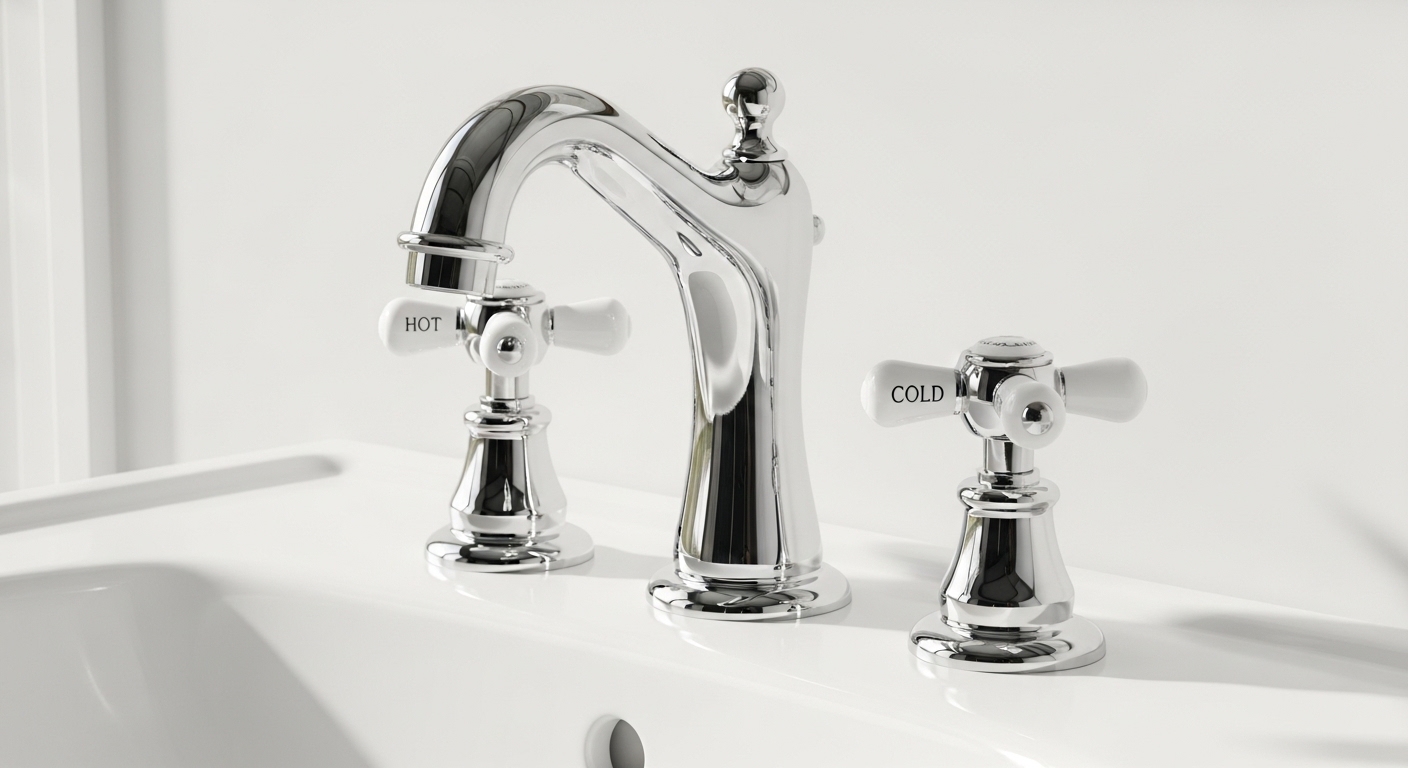
 WOWOW Faucets
Here’s the complete, publish-ready HTML article:
If you’ve ever stood in front of an older tub wall with three visible controls and wondered whether to replace them like-for-like, a bathtub faucet set 3 handle is almost certainly what you already have. This configuration — one handle for hot, one for cold, and a middle handle that diverts water up to the shower head or down to the tub spout — was the standard in American homes for decades, and it’s still widely sold as a direct replacement. Below, we’ll answer the real questions people ask before buying one: how it works, whether it fits your wall, what finishes and specs matter, and when you should switch to a single-handle valve instead.
What exactly is a 3-handle bathtub faucet, and how does it work?
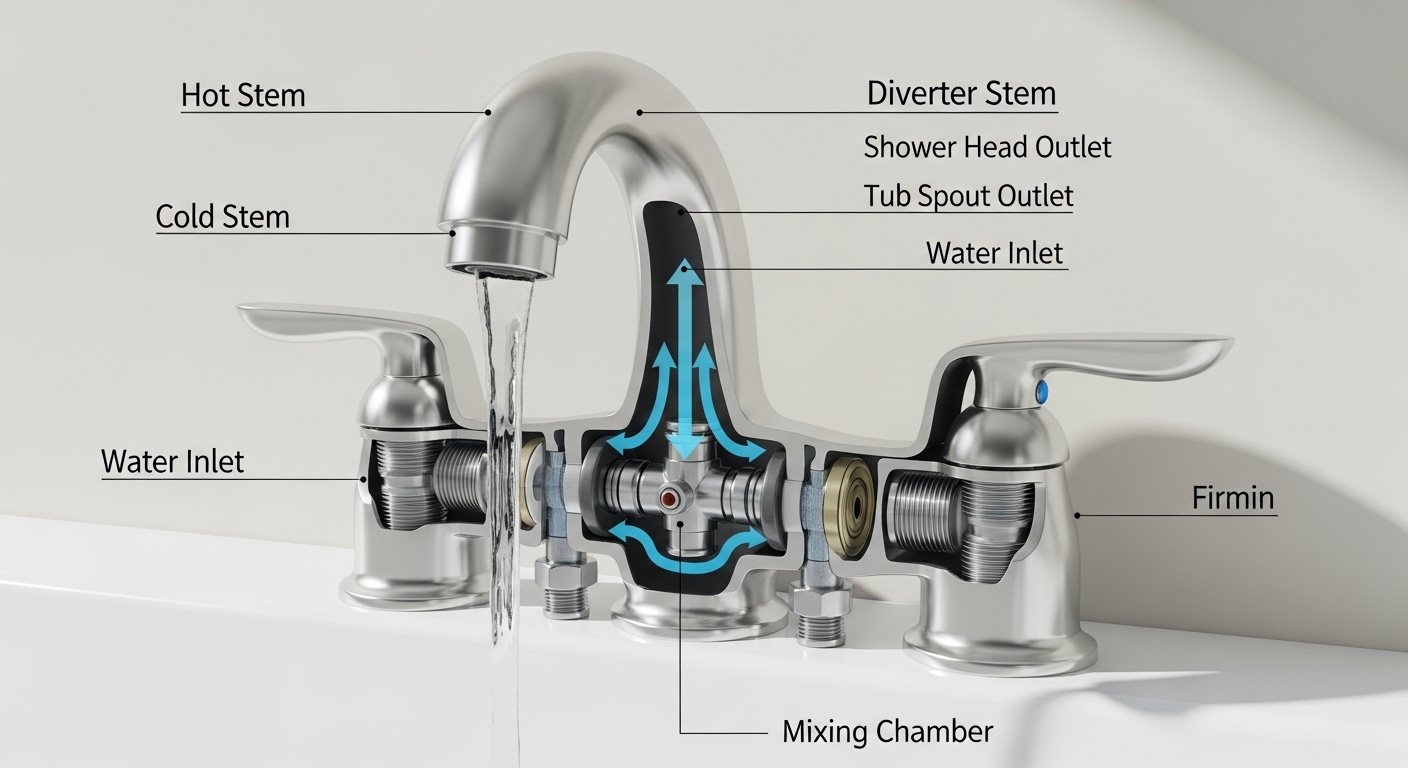
A 3-handle bathtub faucet is a tub-and-shower control that splits the job across three separate valves: the left handle feeds hot water, the right handle feeds cold, and the center handle is a diverter that sends the mixed water either down to the tub spout or up to the shower head. You set your temperature by balancing the two outer handles, then twist the middle one to choose tub or shower.
The key thing to understand is that this is a “manual mixing” system. There’s no cartridge automatically blending hot and cold for you — you do it by hand every time. That’s why older tubs can feel finicky: nudge the hot a little, nudge the cold, wait, adjust again. Modern single-handle valves hide all of that behind one lever, but the 3-handle layout gives you very fine, independent control over volume and temperature, which some people genuinely prefer.
Under the wall, a 3-handle set typically connects to three individual stems or compression valves (or two mixing valves plus a diverter, depending on the design). Each handle threads onto its own stem. When one handle drips, you usually only need to rebuild or replace that single stem — not the whole assembly — which is one of the quiet advantages of this older design.
How do I know if a bathtub faucet set 3 handle will fit my wall?
Measure the horizontal distance between the centers of your outer handle holes — if it’s 8 inches, a standard 3-handle set will drop right in; that’s the near-universal spacing for these fixtures. The center diverter hole sits exactly in the middle, 4 inches from each side. So before you buy anything, grab a tape measure and check that center-to-center number.
Here’s why this matters so much: a 3-handle set is defined by its hole pattern. Unlike a single-handle valve that hides behind one large escutcheon, your three holes are already drilled into the tub wall or surround. If the spacing doesn’t match, you’re either patching tile or re-drilling — a real project. Most homes built between the 1950s and early 2000s use that 8-inch spread, but always confirm.
- Measure the outer handle spread: center-to-center of the two side holes (usually 8″).
- Check the diverter position: the middle hole should be centered between them.
- Confirm the valve type: compression stems vs. cartridge — this determines which repair or replacement kit you need.
- Note the pipe threads: most tub/shower risers use 1/2″ connections, but verify before ordering.
If you’re unsure whether your existing valves are compression or cartridge, pull one handle and look at the stem — this is the same diagnostic you’d do for a leaky single-handle faucet, just applied to a tub. And if you plan to add a hand shower later, check our guide to a handheld shower head that connects to your tub faucet so you buy compatible parts the first time.
3-handle vs. single-handle tub faucet: which should you actually buy?
Buy the 3-handle set if you’re replacing an existing 3-hole setup and don’t want to open the wall or re-tile; buy a single-handle valve if you’re renovating down to the studs, want built-in scald protection, or prefer one-touch simplicity. The decision is mostly about your wall, your budget, and whether you value tradition or convenience.
Single-handle and 2-handle pressure-balance or thermostatic valves have become the default in new construction because they meet modern anti-scald standards (ASSE 1016) — they automatically hold your temperature steady even when someone flushes a toilet. Classic 3-handle sets generally don’t do that unless paired with a modern balancing valve behind the wall. That’s the single biggest safety trade-off to understand.
| Feature | 3-Handle Set | Single-Handle Valve | 2-Handle Set |
|---|---|---|---|
| Holes in wall | 3 (8″ spread) | 1 (large) | 2 + diverter or spout |
| Temperature control | Manual, very precise | One lever, easy | Manual, two-hand |
| Anti-scald protection | Usually none | Built-in (pressure-balance) | Varies |
| Best for | Direct replacement, retro look | New builds, remodels | Traditional 2-hole walls |
| Repair difficulty | Easy per-stem | Cartridge swap | Easy per-stem |
| Typical price range | $50–$180 | $80–$300+ | $60–$200 |
Bottom line: if your wall already has three holes and the tile is in good shape, replacing like-for-like with a fresh 3-handle set is the fastest, cheapest, least destructive path. Switching to single-handle almost always means demolition and patching — worth it during a full remodel, rarely worth it as a standalone swap.
What finish should I choose for a 3-handle tub faucet set?
Choose your finish to match the other metal already in your bathroom — the towel bars, the drain, and any nearby fixtures — because a mismatched finish is the thing people notice most. The most popular choices for 3-handle sets are polished chrome, brushed nickel, and oil-rubbed bronze, and each ages differently in a wet, humid environment.
Chrome is the classic, budget-friendly, mirror-bright option; it wipes clean easily but shows water spots. Brushed nickel has a warmer, satin look that hides spots and fingerprints far better — a smart pick for hard-water homes. Oil-rubbed bronze delivers that vintage, dark, traditional vibe that suits period bathrooms beautifully. If you’re leaning bronze, our comparison of an oil-rubbed bronze bathroom faucet by Moen versus WOWOW walks through how these finishes hold up over years of daily use.
- Polished chrome: brightest, cheapest, shows spots — pair with a squeegee-friendly routine.
- Brushed nickel: hides fingerprints and hard-water spotting; the safest all-rounder.
- Oil-rubbed bronze: warm, vintage, forgiving of stains, but can wear at high-touch points over decades.
- Matte black: bold and modern, increasingly available on 3-handle retro-styled sets.
Whatever finish you pick, look for a genuinely durable coating. Cheaper sets use a thin electroplate that can flake; quality sets — including WOWOW’s — use multi-layer PVD or heavy chrome plating rated to resist corrosion and tarnish through thousands of use cycles.
Can I install a 3-handle bathtub faucet set myself?
Yes — if you’re doing a like-for-like replacement onto existing valves, a 3-handle trim swap is one of the most DIY-friendly plumbing jobs, often finished in under an hour with basic hand tools. Replacing the actual valve bodies behind the wall, however, requires soldering or PEX connections and is a bigger job you may want a plumber for.
For a trim-only replacement (new handles, new escutcheons, new diverter cap on existing stems), the process is straightforward. If you’re replacing the rough-in valve too, that’s plumbing work — and if you’re going the PEX route, our walkthrough on shower valve installation with PEX covers it step by step.
- Shut off the water — at the tub’s dedicated stops if present, or the main.
- Remove the old handles and escutcheons — pop the index caps, unscrew, and pull.
- Inspect the stems — replace worn washers, seats, or the whole stem cartridge if needed.
- Fit the new trim — thread on handles, seat the escutcheons with fresh plumber’s putty or gaskets.
- Reconnect the diverter and spout — hand-tight then a gentle wrench turn; don’t overtighten.
- Turn water back on and test — run hot, cold, and switch the diverter to confirm no drips.
One tip: if the old diverter never sent enough water up to the shower head, don’t assume the new faucet is faulty — worn diverters and mineral buildup are common culprits. If you hit that, our guide on why a new diverter valve is not working will save you a frustrating afternoon.
How much should a good 3-handle tub faucet set cost in 2026?
Expect to pay $50 to $120 for a solid, name-brand 3-handle bathtub faucet set with quality plating and a real warranty, and $120 to $180 for premium finishes like brushed nickel or oil-rubbed bronze with heavier trim. Anything under $40 usually means thin plating and plastic internals that won’t last.
Price mostly tracks three things: the finish quality (PVD and thick chrome cost more than flash plating), the valve internals (solid brass stems beat plastic), and the warranty. A limited lifetime warranty on finish and function is a strong signal the manufacturer trusts the parts. Don’t overspend on a rough-in you’ll never see, but do invest in stems and a diverter you’ll operate thousands of times.
Author’s note & why trust WOWOW
This guide was written by the WOWOW fixtures content team, drawing on hands-on installation testing and years of customer feedback on tub-and-shower replacements. WOWOW is a dedicated faucet and bathroom-fixture manufacturer; our tub and shower valves are built with solid brass bodies and ceramic-disc or heavy-duty stem internals, tested to industry cycle standards, and backed by a limited lifetime warranty on finish and function. We manufacture to the same durability benchmarks (including cUPC-compliant and lead-free brass) that professional plumbers look for, so a WOWOW set is meant to be installed once and forgotten — in the best way.
FAQ
Are 3-handle bathtub faucets outdated?
They’re older technology, but not obsolete. Millions of homes still use the 3-handle layout, and manufacturers still make quality replacement sets specifically so you can restore or upgrade without opening the wall. They’re “outdated” only in the sense that new construction favors single-handle pressure-balance valves for scald protection and simplicity.
Can I replace a 3-handle tub faucet with a single-handle one?
Yes, but it’s a significant job. You’ll need to remove the three old valves, install a new single-handle rough-in valve, and — because you’re going from three holes to one — patch and re-tile the wall. It’s a great upgrade during a full bathroom remodel but rarely worth the demolition as a standalone swap. If your wall is fine, replace like-for-like with a new 3-handle set instead.
What’s the standard hole spacing for a 3-handle tub faucet?
The near-universal spacing is 8 inches center-to-center between the two outer handles, with the diverter centered exactly in the middle at 4 inches from each side. Always measure your own wall before buying, but the overwhelming majority of American homes use this 8-inch spread, so most standard replacement sets will fit.
Why won’t water go up to my shower head on a 3-handle faucet?
The most common cause is a worn or clogged center diverter. Over time, the diverter washer wears out or mineral scale builds up, so water leaks back down to the spout instead of rising to the shower head. Rebuilding or replacing that center stem usually fixes it. Low overall pressure can also be the shower head itself — check our guide on low pressure out of a shower head if the diverter looks fine.
Do 3-handle tub faucets have anti-scald protection?
Most classic 3-handle sets do not, because they rely on you manually balancing hot and cold rather than an automatic pressure-balance or thermostatic valve. If someone flushes a toilet or runs the sink, your shower temperature can spike. If scald protection is a priority — say, in a home with kids or older adults — you’d want a single-handle pressure-balance valve or a thermostatic mixing valve instead.
How long does a quality 3-handle bathtub faucet set last?
A well-made set with solid brass stems and a quality finish can easily last 15 to 20 years, with the only routine maintenance being an occasional washer or seat replacement when a handle starts to drip. Cheap sets with plastic internals and thin plating may need replacing in just a few years, which is why the internals and warranty matter more than the sticker price.