 WOWOW Faucets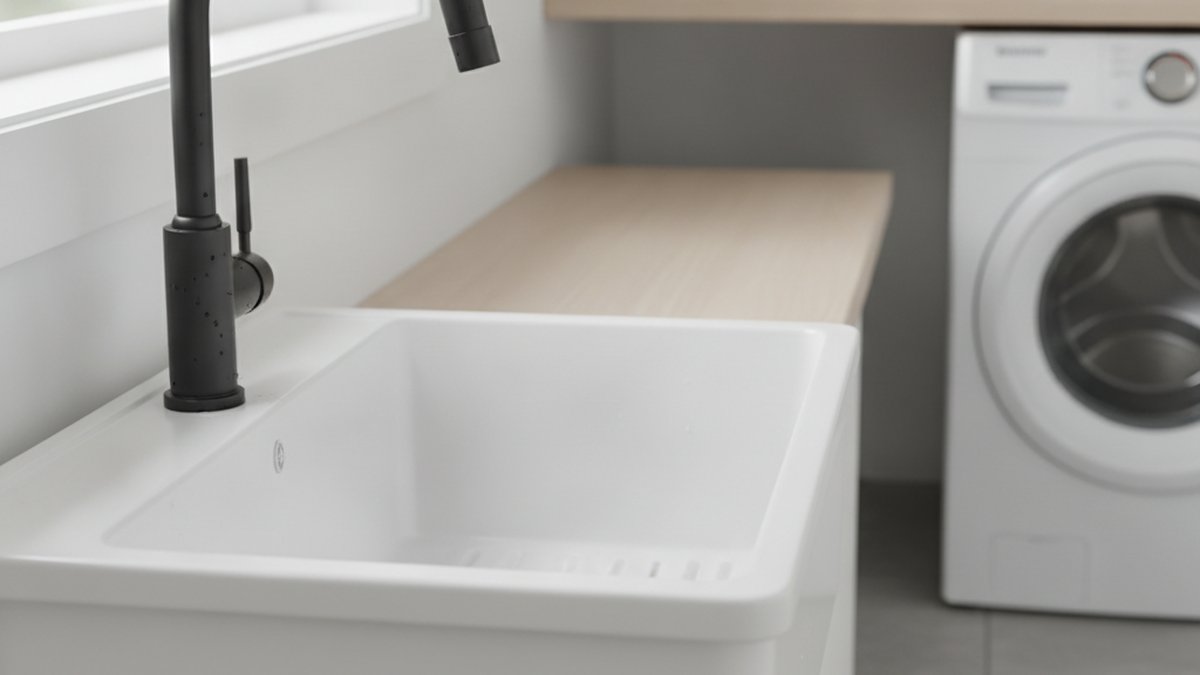
A laundry faucet matte black setup is one of the easiest, highest-impact upgrades you can make in a utility room, and it’s genuinely more practical than it looks. Laundry rooms are hard on fixtures — you’re filling buckets, rinsing mop heads, hand-washing gunky clothes, and splashing detergent everywhere. A matte black powder-coated or PVD finish shrugs off the water spotting and mineral streaking that make a shiny chrome utility faucet look grimy within weeks. Below, I’ll walk you through exactly what to buy, how the mounting types differ, what a good one should cost, and how to keep the finish looking new for years.
What exactly is a laundry faucet, and how is it different from a kitchen faucet?
A laundry faucet (also called a utility or laundry-tub faucet) is a rugged, no-frills tap built for a utility sink — usually a deep single-basin sink used for cleaning, soaking, and filling. The core difference from a kitchen faucet is priority: laundry faucets favor durability, high flow, and easy cleaning over fancy features like pull-down sprayers or touchless sensors.
That said, the line has blurred. Plenty of people now install a stylish matte black single-handle faucet — the same kind you’d see on a bathroom vanity or bar sink — over their laundry tub because it looks better and works just fine. The things that actually matter for laundry use are a tall enough spout to fit a bucket under, a swivel spout so you can reach the whole basin, and a body tough enough to take abuse. Here’s how the two compare in the ways that count:
| Feature | Dedicated laundry / utility faucet | Kitchen-style faucet used in laundry |
|---|---|---|
| Spout height / clearance | High-arc, designed for buckets | Varies — check clearance before buying |
| Flow rate | Often higher (fills faster) | Usually 1.5–1.8 GPM (aerated) |
| Look | Utilitarian | Sleeker, matches home décor |
| Sprayer / pull-down | Rare | Common, handy for rinsing |
| Typical price (matte black) | $40–$90 | $70–$180 |
If your laundry room is visible from a hallway or open to the kitchen, a kitchen-style matte black faucet is the move. If it’s a hidden basement utility area, save money with a purpose-built laundry faucet.
Why choose matte black over chrome or brushed nickel for a laundry sink?
Matte black is the best choice for a laundry faucet specifically because it hides the two things laundry rooms produce most: water spots and lint. A glossy chrome faucet shows every mineral streak and fingerprint; matte black’s flat, non-reflective surface makes those blemishes nearly invisible between cleanings — a real advantage in a high-splash, low-attention room.
There’s a durability angle too. Quality matte black finishes are applied as PVD (physical vapor deposition) or baked powder coating, both of which are harder and more corrosion-resistant than standard electroplated chrome. That matters when detergent, bleach splashes, and constant moisture are in play. A few honest trade-offs to weigh:
- Pros: Hides water spots and lint, resists corrosion, on-trend look, pairs with black or stainless appliances, easy to keep looking clean.
- Cons: Cheap matte black coatings can fade or chip if abrasive cleaners are used; dried hard-water minerals leave faint white marks that need occasional wiping; fewer budget options than chrome.
- Best for: Hard-water homes, high-use laundry sinks, and anyone who wants a low-maintenance finish that still looks intentional.
The key takeaway: the finish quality matters more than the color. A $25 no-name matte black faucet may look great on day one and blotchy by month six. Spend a little more for PVD or a reputable powder coat and it’ll outlast the sink.
Wall-mount or deck-mount: which matte black laundry faucet fits my sink?
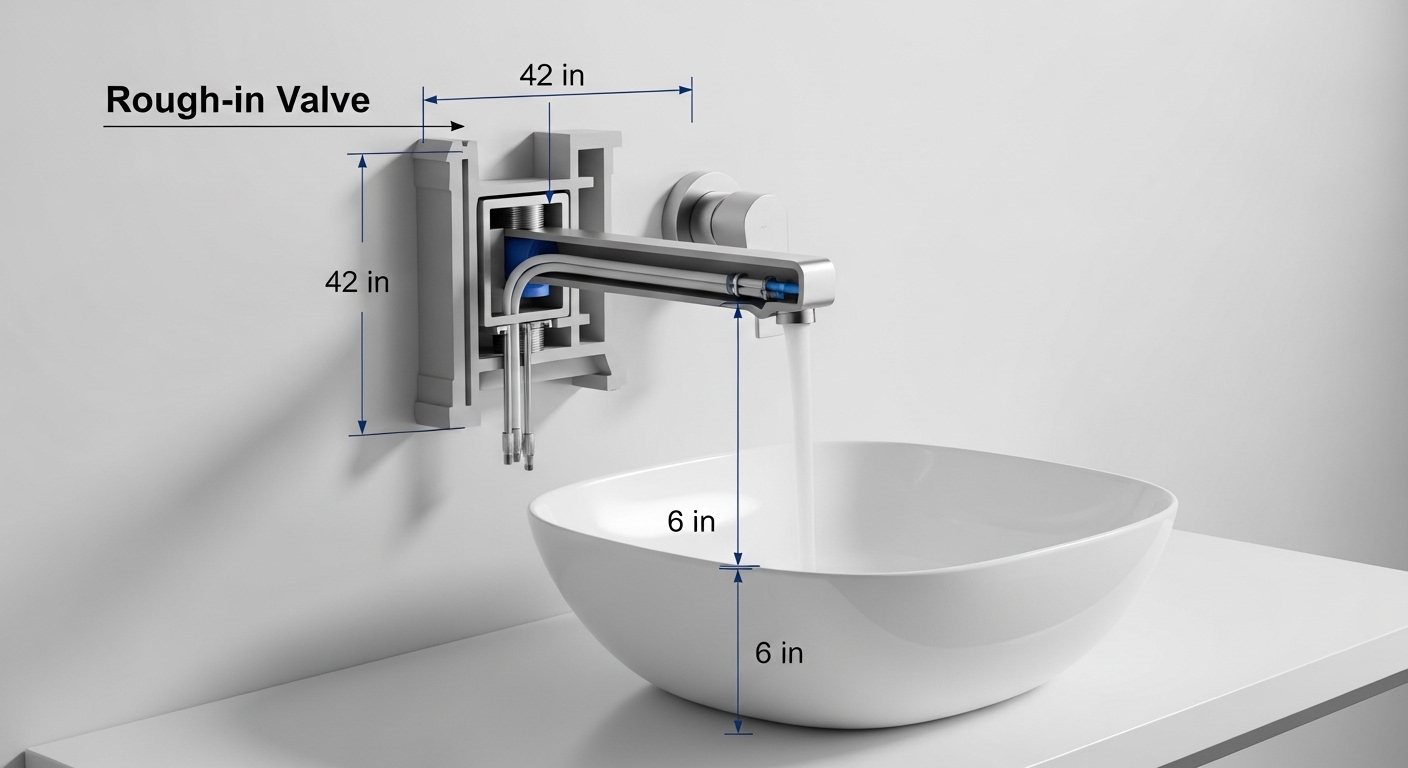
It depends on where your water supply lines come out. If your hot/cold pipes come out of the wall above the sink, you need a wall-mount laundry faucet; if they come up through the sink deck or countertop, you need a deck-mount (single-hole or two-hole) faucet. Buying the wrong style is the single most common laundry-faucet mistake — so confirm this first.
Here’s how to decide quickly:
- Look at your supply lines. Pipes emerging from the wall = wall-mount. Pipes coming up from below the sink = deck-mount.
- Measure the hole spacing. Classic laundry tubs use 4-inch centerset spacing. Many utility sinks and DIY setups use a single 1.375-inch hole for a modern single-handle faucet.
- Check spout reach and height. Measure from the faucet base to where you need water to land, and make sure a 5-gallon bucket fits under the spout.
- Confirm the connection type. Wall-mount faucets often use 1/2-inch threaded inlets; deck-mount ones typically use standard 3/8-inch flexible supply hoses.
For most modern remodels, a single-hole deck-mount matte black faucet is the cleanest look and the easiest to install. If you’re replacing an old two-handle wall-mount unit and don’t want to touch the plumbing behind the wall, buy a matching wall-mount model with the same center spacing. The process of swapping one out is nearly identical to swapping a vanity tap — our step-by-step guide to replacing a bathroom faucet walks through the same shut-off, disconnect, and reseal steps you’ll use here.
How much should I spend on a good matte black laundry faucet?
Plan on $50–$150 for a matte black laundry faucet that will actually last. Under about $40 you’re usually getting a plastic or zinc-alloy body with a painted-on finish that chips; above $150 you’re paying for kitchen-grade features (pull-down sprayers, higher-end PVD) that are nice but not essential for a utility sink.
Here’s what your money buys at each tier:
| Budget | Typical build | What to expect |
|---|---|---|
| Under $40 | Plastic/zinc body, painted finish | OK short-term; finish and cartridge often fail within 1–2 years |
| $50–$90 | Brass or stainless body, ceramic cartridge, PVD or powder coat | The sweet spot — durable, good looks, solid warranty |
| $90–$150 | Solid brass, PVD, optional pull-down sprayer | Premium feel and features; overkill for basic laundry use |
The two components that decide whether a faucet lasts are the body material (solid brass or stainless steel beats zinc and plastic) and the cartridge (a ceramic-disc cartridge is drip-proof and lasts far longer than a rubber-washer valve). If you’re curious why the cartridge is such a big deal, it’s the heart of the faucet — this explainer on what the cartridge actually does covers why a quality one prevents drips and stiff handles for years.
What features actually matter for a laundry faucet (and which are hype)?
The features worth paying for are a solid-brass body, a ceramic-disc cartridge, a swivel spout, and a high-arc design with bucket clearance. Everything else — LED temperature lights, touchless sensors, matching soap dispensers — is optional flair, not function, in a utility room.
Let me break down what genuinely earns its place:
- Swivel spout (360°): Essential. Lets you clear the whole basin and swing the spout out of the way when scrubbing large items.
- High-arc / tall spout: Essential for filling buckets, watering cans, and mop pails. Measure your clearance.
- Ceramic-disc cartridge: Essential. Smooth handle action, no drips, easy to replace if it ever wears out.
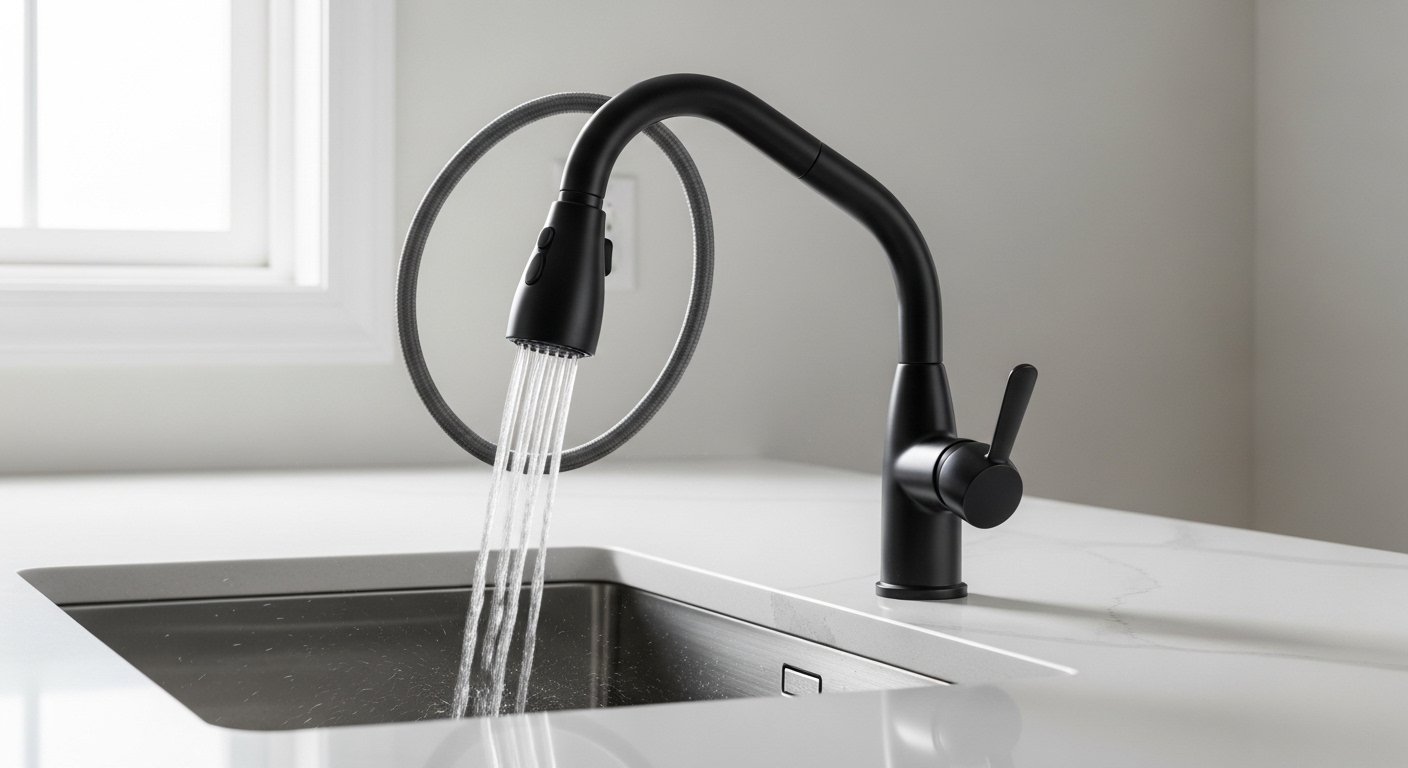
- Pull-down or pull-out sprayer: Nice-to-have. Great for rinsing muddy boots or hand-washing delicates, but adds cost and another hose to eventually service.
- Integrated aerator: Useful — reduces splashing, though some prefer a higher flow rate for fast bucket-filling. Many aerators unscrew if you want more volume.
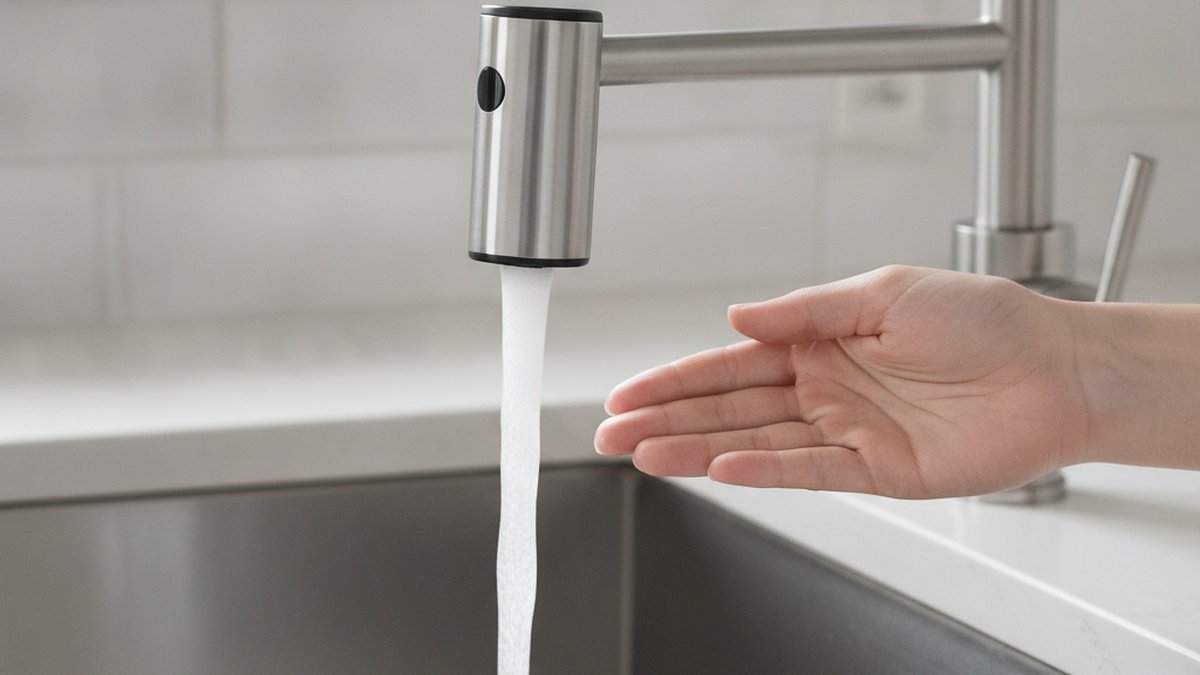
- Touchless / motion sensor: Mostly hype for laundry. Handy if your hands are always full, but it’s another failure point and needs power.
One underrated tip: pick a faucet whose cartridge and aerator are standard, replaceable parts. When something eventually wears out — and any faucet’s cartridge eventually will — you want a quick swap, not a whole new faucet. Our guide to replacing a faucet cartridge shows how simple that repair is when the part is accessible.
How do I keep a matte black finish from fading or spotting?
Clean a matte black faucet with only mild soap, warm water, and a soft cloth — never abrasive pads, scouring powders, or acidic/ammonia-based cleaners, which strip the finish. That single habit is what separates a matte black faucet that looks new after five years from one that goes blotchy in one.
A simple, finish-safe routine:
- Wipe the faucet dry with a microfiber cloth after heavy use to prevent hard-water mineral buildup.
- Once a week, clean with a drop of dish soap in warm water, then rinse and dry.
- For stubborn white mineral marks, use a 50/50 white vinegar solution only on a cloth (not sprayed on), wipe quickly, then rinse thoroughly — don’t let vinegar sit on the finish.
- Never use Barkeeper’s Friend, steel wool, magic-eraser pads, or bleach-based sprays directly on matte black.
Matte black hides day-to-day spotting so well that most people find upkeep easier than chrome, not harder — you just have to respect the “no abrasives” rule. If you’re building out a coordinated laundry or bath space, matching your faucet finish to your hardware and accessories pulls the whole room together; our roundup of the best bathroom accessories of 2026 is a good place to find matte black towel bars, hooks, and holders that line up with your new faucet.
How do I install a matte black laundry faucet myself?
Installing a deck-mount matte black laundry faucet is a 30–60 minute DIY job that needs only an adjustable wrench, a basin wrench, plumber’s tape, and a towel. Shut off the water, disconnect the old faucet, set the new one, connect the supply lines, and test for leaks. If your setup is wall-mount, the concept is the same but you’ll thread the faucet onto the wall stub-outs instead.
The general sequence:
- Turn off the water at the shut-off valves under or behind the sink, then open the old faucet to release pressure.
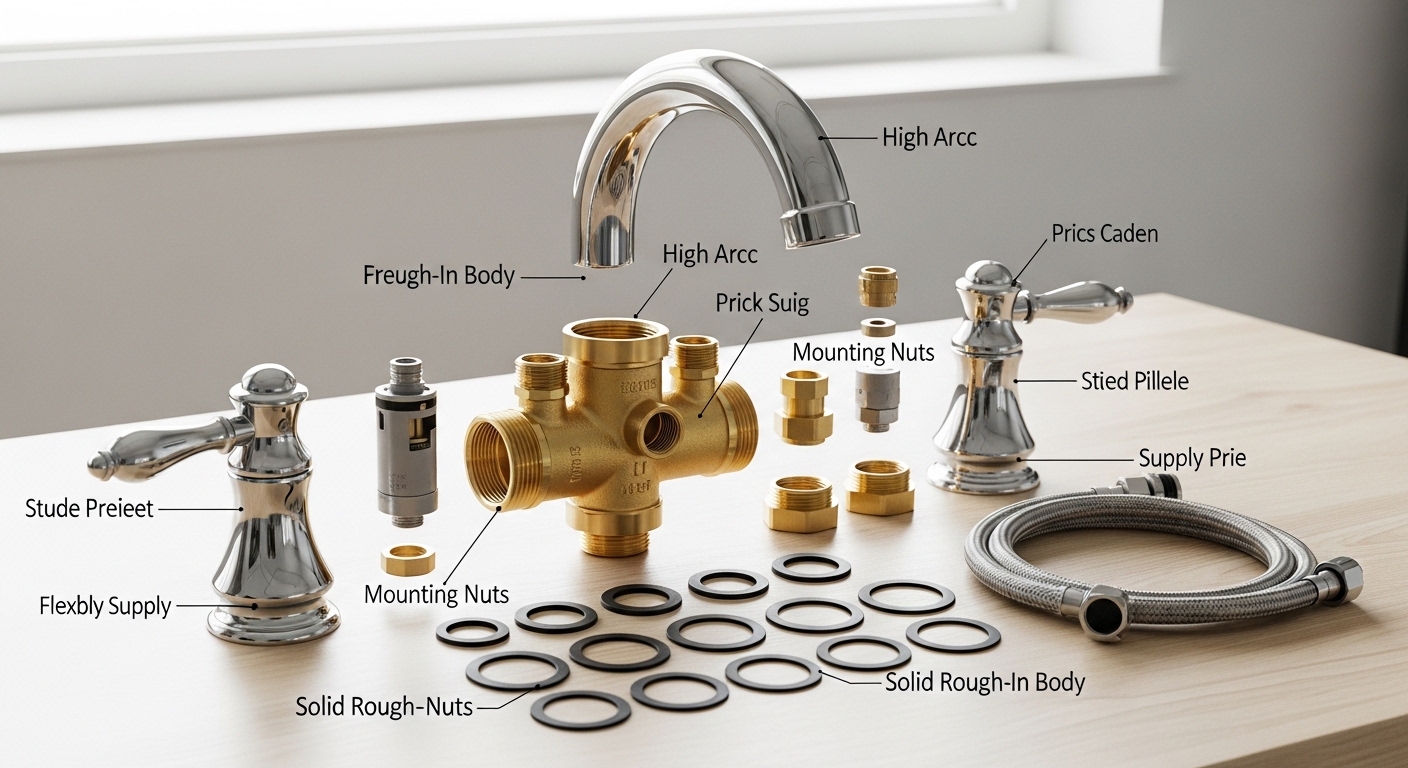
- Disconnect and remove the old supply hoses and mounting nuts (a basin wrench makes this far easier in tight spots).
- Set the new faucet through the sink hole(s) with its gasket, and tighten the mounting nut from below.
- Wrap threads with plumber’s tape and connect the hot and cold supply lines — hand-tight plus a quarter turn with a wrench.
- Turn the water back on slowly, remove the aerator, and run water for 15 seconds to flush debris, then reinstall the aerator.
- Check every connection for leaks, tightening gently if you see any drips.
If you hit corroded shut-off valves or the pipes look questionable, that’s the point to call a plumber — a $60 faucet isn’t worth a flooded laundry room. Otherwise, it’s one of the most beginner-friendly plumbing jobs there is.
Author’s note & brand credibility
This guide was written by the WOWOW Faucet product team, drawing on years of designing, stress-testing, and warrantying kitchen, bath, and utility faucets. We build our matte black fixtures with solid-brass bodies and PVD or baked powder-coat finishes, and our cartridges are tested to 500,000+ open/close cycles — the same durability standard used for premium kitchen faucets. Our finishes are designed to meet the corrosion and abrasion expectations set by industry standards like ASME A112.18.1 / CSA B125.1, and every faucet is backed by a limited lifetime warranty on the finish and cartridge. In plain terms: we make these, we stand behind them, and the advice above is what we’d tell a friend shopping for one.
FAQ
Can I use a regular bathroom or kitchen faucet as a laundry faucet?
Yes, as long as the mounting type and hole spacing match your sink and the spout is tall enough to fit a bucket. Many people install a matte black single-handle bathroom or bar faucet over a utility sink for a cleaner look. Just confirm it’s deck-mount vs. wall-mount to match your plumbing, and that the spout swivels to reach the whole basin.
Does a matte black laundry faucet show water spots?
Far less than chrome. The flat, non-reflective surface hides everyday water droplets and lint, which is exactly why it’s a smart pick for a laundry room. You may see faint white mineral marks in hard-water areas, but a quick wipe with a damp cloth removes them — no polishing required.
Is matte black a durable finish, or does it chip and fade?
Quality matte black finishes — PVD or baked powder coat over brass or stainless — are very durable and resist corrosion better than standard chrome. Cheap painted-on finishes over zinc or plastic are the ones that chip and fade. Buy from a reputable brand with a finish warranty, and avoid abrasive cleaners, and it’ll stay looking sharp for years.
What’s the difference between a wall-mount and deck-mount laundry faucet?
Wall-mount faucets connect to water pipes coming out of the wall above the sink; deck-mount faucets connect to pipes coming up through the sink or countertop. Check where your supply lines emerge before buying — that determines which style you need. Deck-mount single-hole models are the most popular for modern laundry remodels.
How much does a good matte black laundry faucet cost?
Expect $50–$150 for a durable one with a brass or stainless body and a ceramic-disc cartridge. Under $40 usually means a painted zinc or plastic build that won’t last, while over $150 buys kitchen-grade extras like pull-down sprayers that aren’t necessary for basic laundry use. The $50–$90 range is the sweet spot for most homes.
How do I clean a matte black faucet without ruining the finish?
Use only mild dish soap, warm water, and a soft microfiber cloth, then dry it. Avoid abrasive scrubbers, scouring powders, bleach, and ammonia-based cleaners, all of which strip matte finishes. For stubborn mineral marks, wipe (don’t spray) with a diluted white-vinegar solution and rinse right away.