 WOWOW Faucets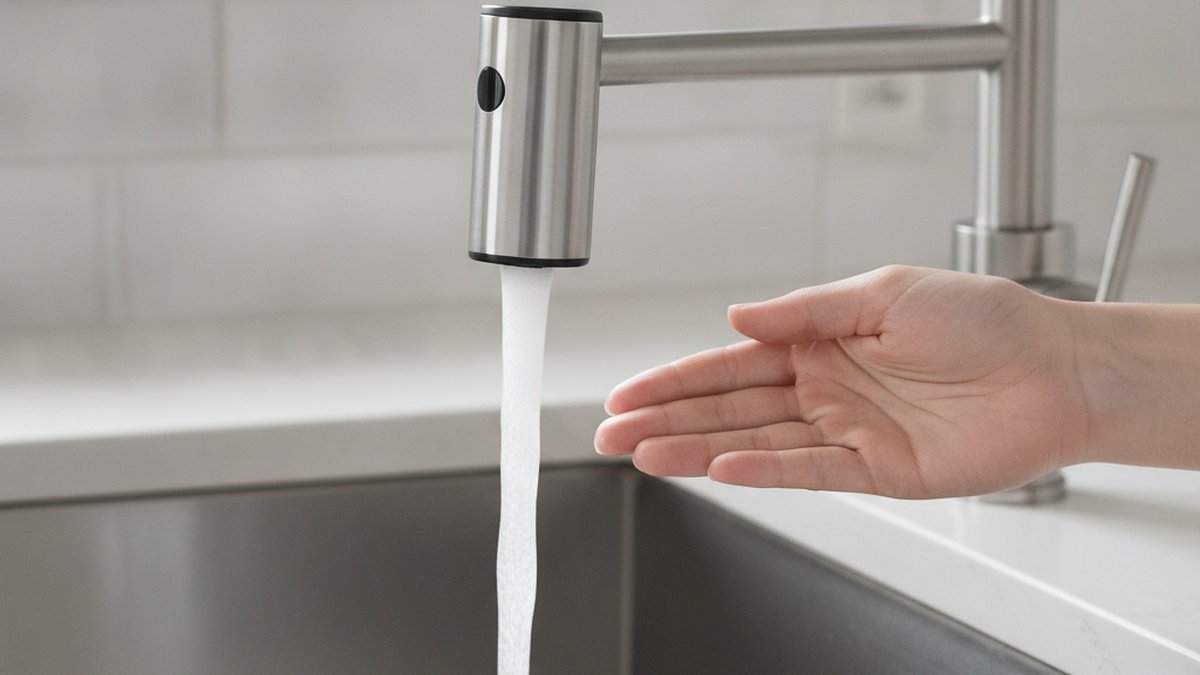
A touchless tap adapter is the cheapest, fastest way to make a regular faucet hands-free. Instead of buying a whole new $200–$500 touchless faucet, you unscrew the aerator at the tip of your current spout, thread on the adapter, and let its infrared sensor do the work. It’s the same core technology used in commercial restroom faucets, shrunk down and priced for a kitchen or bathroom sink at home. If you’ve ever tried to shut off the water with raw-chicken hands or a mouthful of toothpaste, you already understand the appeal.
But not every adapter is worth your money, and not every faucet can accept one. Below I’ll walk you through exactly how these work, who should buy one, how to check compatibility before you order, and what separates a good unit from a frustrating one — in plain language, with real numbers.
What exactly is a touchless tap adapter, and how does it work?
It’s a battery-powered nozzle attachment with a built-in infrared (IR) motion sensor that replaces your faucet’s aerator. When your hand or an object breaks the invisible IR beam, the sensor signals a small internal solenoid valve to open; move away and it closes after a set delay. You still use your existing faucet handle to set the temperature and the maximum flow — the adapter just controls the on/off.
Here’s the part that trips people up: the adapter doesn’t heat or mix water. It sits at the very end of the spout, so whatever temperature and pressure you leave the handle at is what comes out when the sensor fires. Most people leave the handle set to a comfortable warm and slightly open, then let the sensor handle the rest. Inside, you’ll typically find:
- An IR sensor — the little dark window that detects motion, usually with a 2–6 inch (5–15 cm) detection range.
- A solenoid valve — the electric on/off gate that actually stops and starts the flow.
- A battery compartment — most run on 4× AA or a rechargeable Li-ion pack good for 3–6 months per charge.
- An aerator screen — keeps the stream soft and splash-free while cutting flow, often to 1.2–1.8 GPM.
Because it threads onto the same spot as a standard aerator, a touchless tap adapter is genuinely a swap-and-go upgrade for most sinks. No wiring, no shutting off the supply lines, no cutting into the cabinet.
Is a touchless tap adapter actually worth it, or is it a gimmick?
For most kitchens and busy bathrooms, it’s worth it — the payoff is real in three specific situations: hygiene, water savings, and accessibility. It becomes a gimmick only if you buy a cheap unit with a laggy sensor or force it onto an incompatible spout.
Let’s be concrete about the benefits:
- Hygiene: You stop touching the faucet with contaminated hands — raw meat juices in the kitchen, or dirty hands before you’ve washed in the bathroom. That means fewer germs living on the one surface everyone grabs.
- Water savings: A decent sensor shuts off the instant you pull away. Families report cutting sink water use noticeably because the tap isn’t running while you scrub a pot or lather your hands. Combined with a low-flow aerator, that’s a measurable dent in the water bill.
- Accessibility: For people with arthritis, limited grip strength, or wet/soapy hands, waving is far easier than twisting a handle. It’s also great for kids who can’t quite reach or work a stiff lever.
The honest downsides: you’ll change or charge batteries a few times a year, very reflective or very dark objects can occasionally confuse cheap sensors, and the best “true touchless” experience still comes from a dedicated integrated faucet. If you want to understand where adapters fit in the wider ecosystem of add-ons, our overview of faucet accessories puts them next to aerators, sprayers, and filters so you can see the full menu of upgrades.
How do I know if a touchless tap adapter will fit my faucet?
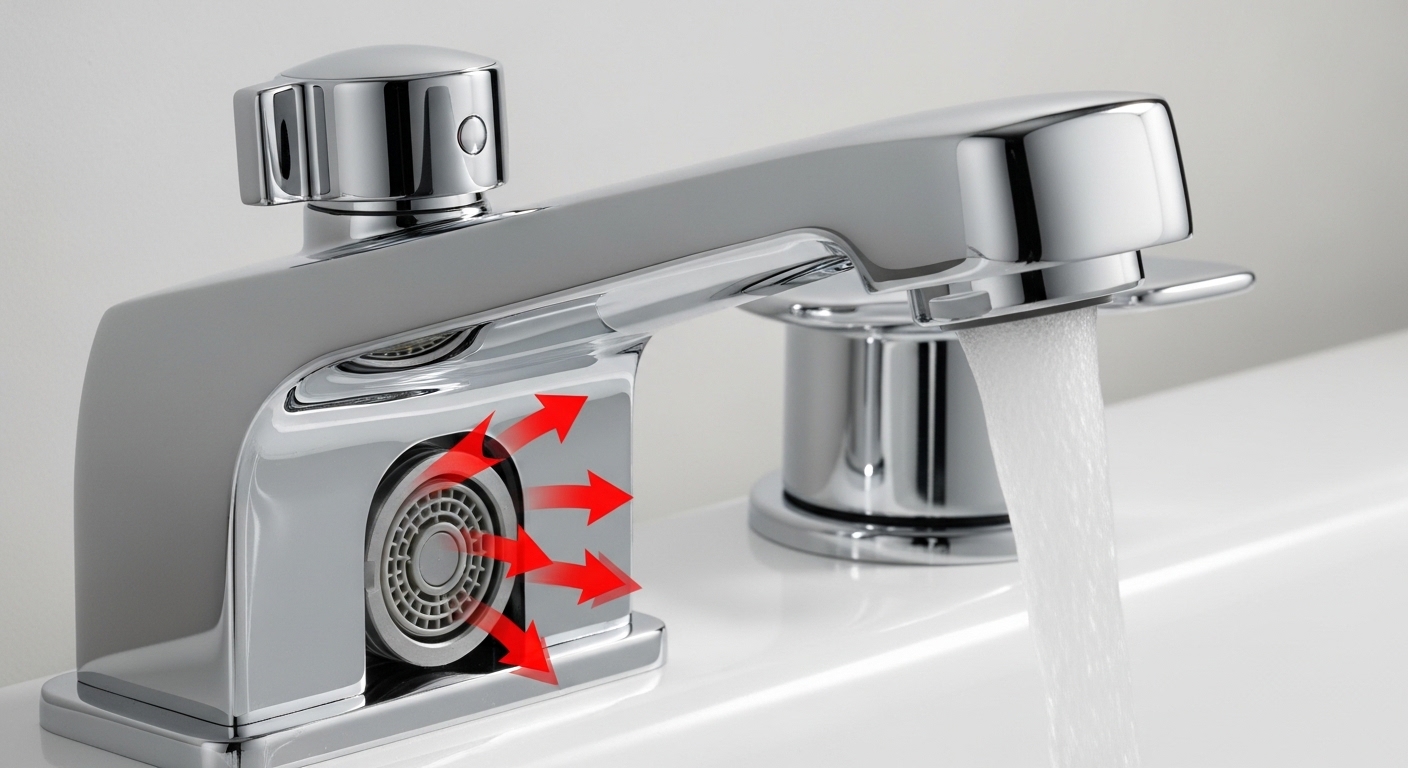
Check the threads at the tip of your spout — that’s the single most important compatibility factor. Unscrew your current aerator; if it comes off cleanly and the spout has standard threads, an adapter will almost certainly fit with the included washers and reducers.
There are two thread standards you’ll run into, and most adapters ship with adapters for both:
| Thread type | Where the threads are | Common size | Adapter fit |
|---|---|---|---|
| Male (external) | On the outside of the spout tip | 15/16″–27 (regular) or 13/16″–27 | Adapter screws directly on |
| Female (internal) | Inside the spout tip | 55/64″–27 | Use the included male insert |
| Cache / hidden aerator | Recessed, needs a key tool | Varies by brand | Often incompatible — check first |
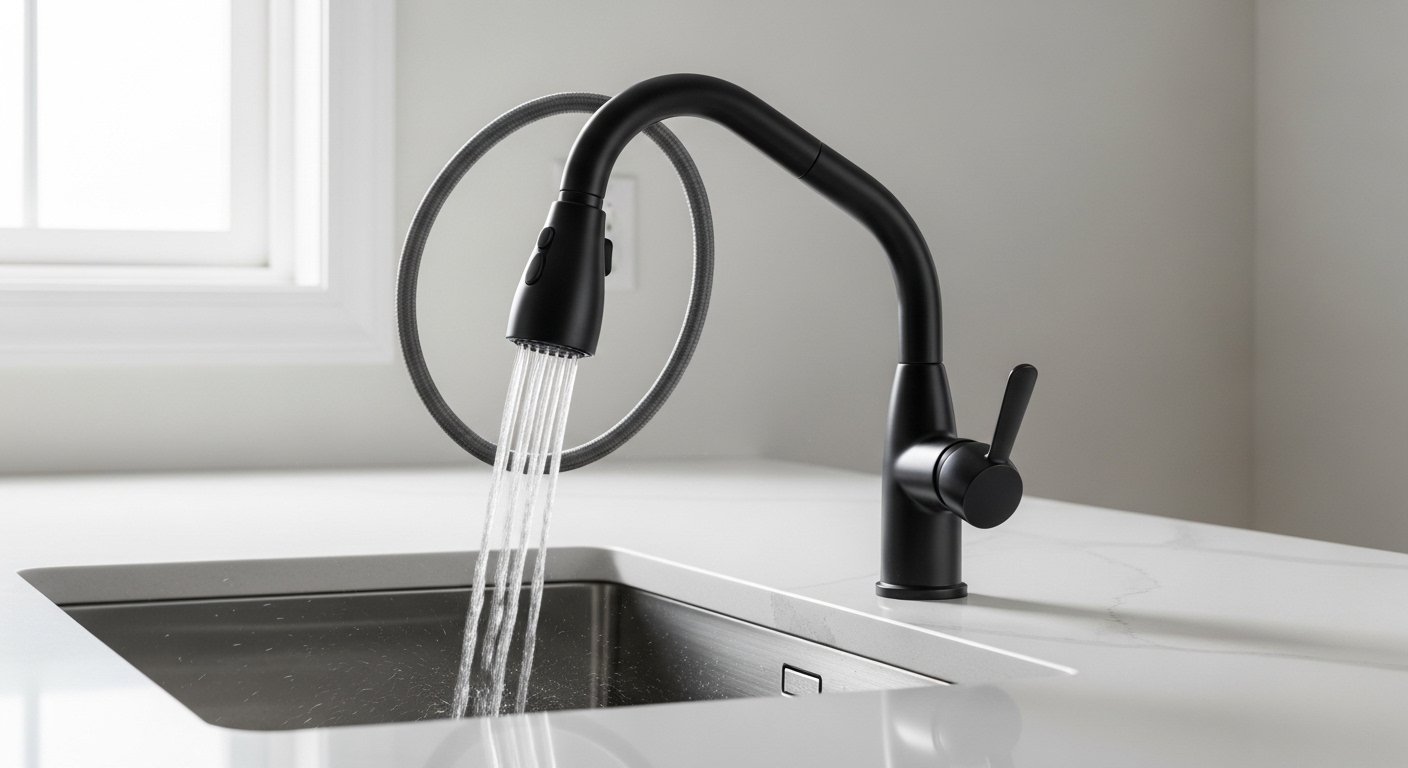
Where adapters usually don’t work: pull-down and pull-out spray heads (the aerator is molded into the spray head), some designer faucets with hidden “cache” aerators that need a proprietary key, and any spout without threads. If your faucet has a removable aerator like a standard bathroom or fixed kitchen tap, you’re in good shape. Not sure how the tip of your faucet is built? Our guide on the best faucet accessories of 2026 explains aerator types and thread sizing in more detail so you can measure before you buy.
Touchless tap adapter vs. a full touchless faucet — which should I buy?
Buy the adapter if you like your current faucet and want hands-free for under $70; buy a full touchless faucet if your faucet is old, you’re already renovating, or you want the cleanest look and most reliable sensor. It comes down to budget, effort, and how integrated you want the result to be.
| Factor | Touchless tap adapter | Full touchless faucet |
|---|---|---|
| Price | $25–$70 | $150–$500+ |
| Install time | 5–15 min, no tools beyond hands | 1–2 hrs, shut off supply lines |
| Plumber needed? | No | Sometimes |
| Look | Visible add-on at spout tip | Seamless, integrated |
| Sensor reliability | Good on quality units | Best-in-class |
| Power | AA or rechargeable pack | Batteries or AC adapter |
| Reversible? | Yes — unscrew to remove | No, it’s your faucet now |
My rule of thumb: if your faucet is less than about 8 years old and in good shape, an adapter is the smart, low-risk move. If you’re already replacing the faucet anyway — say you’re following our walkthrough on how to replace a bathroom faucet — it makes more sense to go straight to an integrated touchless model and skip the add-on entirely.
How do you install a touchless tap adapter yourself?
You can do it in about 10 minutes with no tools — just unscrew the old aerator and thread on the adapter. Because it attaches at the spout tip, there’s no need to turn off your water supply or open the cabinet.
- Remove the old aerator. Twist it counterclockwise by hand. If it’s stuck, wrap it in a cloth and use pliers gently, or soak the tip in white vinegar to loosen mineral buildup.
- Identify your thread type. Look at whether the threads are on the inside (female) or outside (male) of the spout, then pick the matching washer/insert from the kit.
- Fit the washer. Seat the rubber washer to prevent drips — this step is where most leaks come from if skipped.
- Thread on the adapter. Screw it clockwise, hand-tight. Snug, not gorilla-tight — overtightening cracks plastic threads.
- Insert batteries. Load the AAs or connect the charged pack, and note the battery orientation.
- Set your handle and test. Open the faucet handle to your preferred temperature and flow, then wave your hand under the sensor. Check for drips at the connection and run it a few cycles.
If water sputters or the stream is uneven afterward, it’s almost always a seating or debris issue — the same troubleshooting logic applies to any aerator or cartridge work. Folks who like understanding the inner workings often find our explainer on how to replace a faucet cartridge helpful for grasping how flow and valves behave inside a faucet.
What features actually matter when choosing one?
Prioritize sensor response speed, battery type, adjustable flow, and build material — those four decide whether you love or hate the thing day to day. Everything else is a nice-to-have.
- Sensor response and range: Look for a reaction time under 0.5 seconds and a detection range you can tune. A laggy sensor is the #1 complaint about cheap units.
- Battery type and life: Rechargeable USB packs save money over time; AA units are easier to swap in a pinch. Either way, aim for 3+ months of runtime.
- Dual mode: The best adapters offer both a “sensor on/off” mode and a “sensor always-on / stay-on” mode so you can fill a pot without waving the whole time.
- Flow rate: A 1.2–1.8 GPM aerator built in gives you water savings without a weak, annoying trickle.
- Material and finish: Metal or ABS with a chrome/brushed finish holds up better than thin plastic and matches common faucet finishes.
- Splash guard / aeration: A well-aerated stream keeps splashing down in a shallow bathroom sink.
A quick reality check on water quality: if you have hard water, mineral scale will eventually clog any aerator, touchless or not. Periodic soaking in vinegar keeps the sensor nozzle flowing cleanly and extends its life.
Are touchless tap adapters safe and reliable long-term?
Yes, when you buy a quality unit and keep the batteries fresh — reputable adapters use low-voltage battery power (no mains electricity near water) and solenoid valves rated for hundreds of thousands of cycles. The main long-term maintenance is battery changes and occasional descaling.
A few practical notes on reliability. First, always keep a backup: quality adapters default to a manual/always-on mode or let you remove the unit and use the faucet normally if the battery dies at a bad moment. Second, seasonal swings don’t affect IR sensors the way they do capacitive touch models, so cold hands and gloves still trigger them. Third, look for units that carry recognized safety and water-efficiency certifications — reputable manufacturers test to standards like NSF/ANSI for drinking-water contact and often align flow with WaterSense guidelines. Don’t buy an unbranded adapter with no documented testing behind it.
FAQ
Does a touchless tap adapter work with hot and cold water?
Yes, but it doesn’t mix temperature itself. You set the temperature and pressure with your existing faucet handle, then the sensor turns that pre-set water on and off. Most people leave the handle at a comfortable warm setting and let the adapter handle the rest. If you want instant cold vs. hot on demand, that requires a full mixing faucet, not an adapter.
How long do the batteries last in a touchless tap adapter?
Typically 3–6 months on a set of AA batteries or a full charge, depending on how often the sink is used. Kitchen units cycle more than guest-bathroom units, so they drain faster. Rechargeable USB packs are more economical over a year or two, while AA models are quicker to swap when you’re in a hurry. Most adapters flash a low-battery indicator before they quit.
Will a touchless tap adapter fit a pull-down kitchen faucet?
Usually no. Pull-down and pull-out sprayers have the aerator built into the spray head, so there’s no standard threaded tip to attach an adapter to. Touchless adapters are best suited to fixed-spout kitchen faucets and standard bathroom faucets with a removable aerator. Always unscrew your current aerator first to confirm there are usable threads.
Do touchless tap adapters leak or drip?
A quality one shouldn’t, as long as the rubber washer is seated correctly during installation. Most drips at the connection point come from a missing or misaligned washer, or from cross-threading during install. If you notice a slow drip from the spout tip itself after the sensor shuts off, that usually means debris is caught in the solenoid — flush it or descale the nozzle in vinegar.
Can I remove a touchless tap adapter later without damaging my faucet?
Absolutely — that’s one of its biggest advantages. Because it simply threads onto the aerator port, you can unscrew it and reinstall your original aerator anytime, leaving no marks or modifications. That reversibility makes it a low-risk upgrade for renters and anyone who isn’t ready to commit to a new faucet.
The bottom line
A touchless tap adapter is one of the highest-value small upgrades you can make to a sink: cheap, reversible, installable in minutes, and genuinely useful for hygiene, water savings, and accessibility. Confirm your faucet has a removable aerator with standard threads, pick a unit with a fast sensor and adjustable flow, and keep a fresh set of batteries on hand. Do that, and you get 80% of the touchless-faucet experience for a fraction of the price.
Author note: This guide was written by the WOWOW Faucet product team, drawing on hands-on testing of aerator-mount sensor adapters across standard kitchen and bathroom faucets. WOWOW is a dedicated faucet and bathroom-fixture brand; our fixtures are built to cUPC/NSF-aligned standards and backed by a limited lifetime warranty on many models. As with any water-contact accessory, check your specific faucet’s specs and your local plumbing code before installing.