 WOWOW Faucets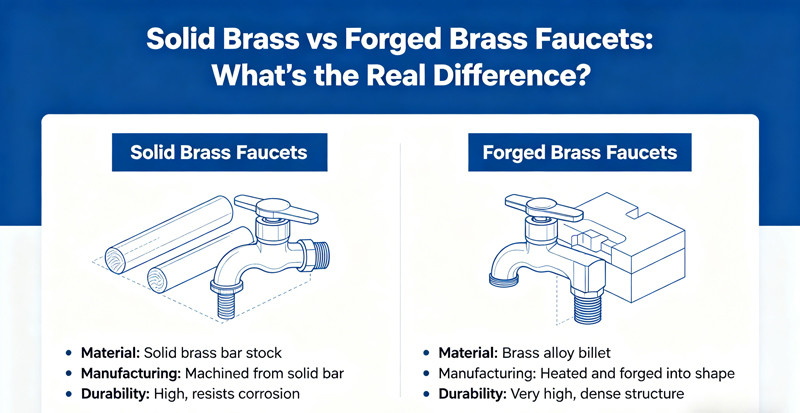
When shopping for a new faucet, you’ll often see terms like solid brass and forged brass used as selling points. At first glance, they may sound similar—or even identical—but they refer to different manufacturing methods and can influence durability, performance, and price. Understanding the difference helps you choose a faucet that fits your long-term needs instead of just its appearance or marketing label.
What Is Solid Brass?
Solid brass faucets are made primarily from a copper-zinc alloy known as brass. The key idea behind “solid brass” is that the body of the faucet is made mostly of brass material throughout, rather than being coated or mixed heavily with lower-grade metals.
However, “solid” doesn’t always mean the entire faucet is 100% pure brass. In many cases, it means:
- The main structural body is brass
- Internal components may still include stainless steel or ceramic parts
- Some internal hollow spaces still exist for water flow
Key characteristics of solid brass:
- Naturally resistant to corrosion
- Strong and durable over time
- Good heat tolerance
- Heavier feel compared to cheaper materials
Solid brass has been widely used in plumbing for decades because it performs reliably in both residential and commercial environments.
What Is Forged Brass?
Forged brass faucets are also made from brass, but the difference lies in how the material is formed.
Forging is a manufacturing process where brass is:
- Heated to a high temperature
- Shaped under extreme pressure using mechanical force
This process compresses the metal structure, making it denser and stronger compared to casting or simpler molding methods.
Key characteristics of forged brass:
- Higher density and strength
- Fewer internal air pockets or imperfections
- Improved resistance to cracking under pressure
- More uniform internal structure
Forged brass is often considered a “premium manufacturing method” rather than a completely different material.
Solid Brass vs Forged Brass: The Core Difference
The simplest way to understand the difference is this:
- Solid brass = material composition
- Forged brass = manufacturing process
A faucet can actually be both solid brass and forged brass at the same time. For example, a faucet may use solid brass as the base material and then be forged into shape for extra strength.
So the comparison is not always “either/or”—it’s often about how the brass is processed.
Durability Comparison

Both materials are durable, but forged brass typically has an edge in structural strength.
Solid brass is already resistant to corrosion and suitable for long-term use, but its strength depends on how it was formed. If it’s cast, it may contain small internal voids.
Forged brass, because it is compressed under extreme pressure, tends to:
- Resist cracking better
- Handle higher water pressure systems
- Last longer in heavy-use environments
For most homes, solid brass is already more than enough. But in commercial kitchens or high-demand settings, forged brass offers an extra layer of reliability.
Corrosion Resistance
One of the biggest reasons people choose brass faucets is corrosion resistance.
Both solid brass and forged brass perform very well in this area because brass naturally resists rust. However:
- Solid brass: Excellent corrosion resistance in normal conditions
- Forged brass: Slightly improved consistency due to denser structure
In everyday residential use—kitchens, bathrooms, laundry rooms—you likely won’t notice a major difference in corrosion performance between the two.
Water Quality and Safety
Brass faucets can sometimes raise concerns about lead content. Modern faucets, whether solid or forged brass, are typically manufactured to meet strict safety standards.
High-quality options are:
- Lead-free certified
- Compliant with NSF/ANSI drinking water standards
Forged brass does not automatically mean safer water—it depends more on the alloy formulation and certification rather than the forging process itself.
If water safety is a concern, always check for certifications rather than relying only on material labels.
Weight and Feel
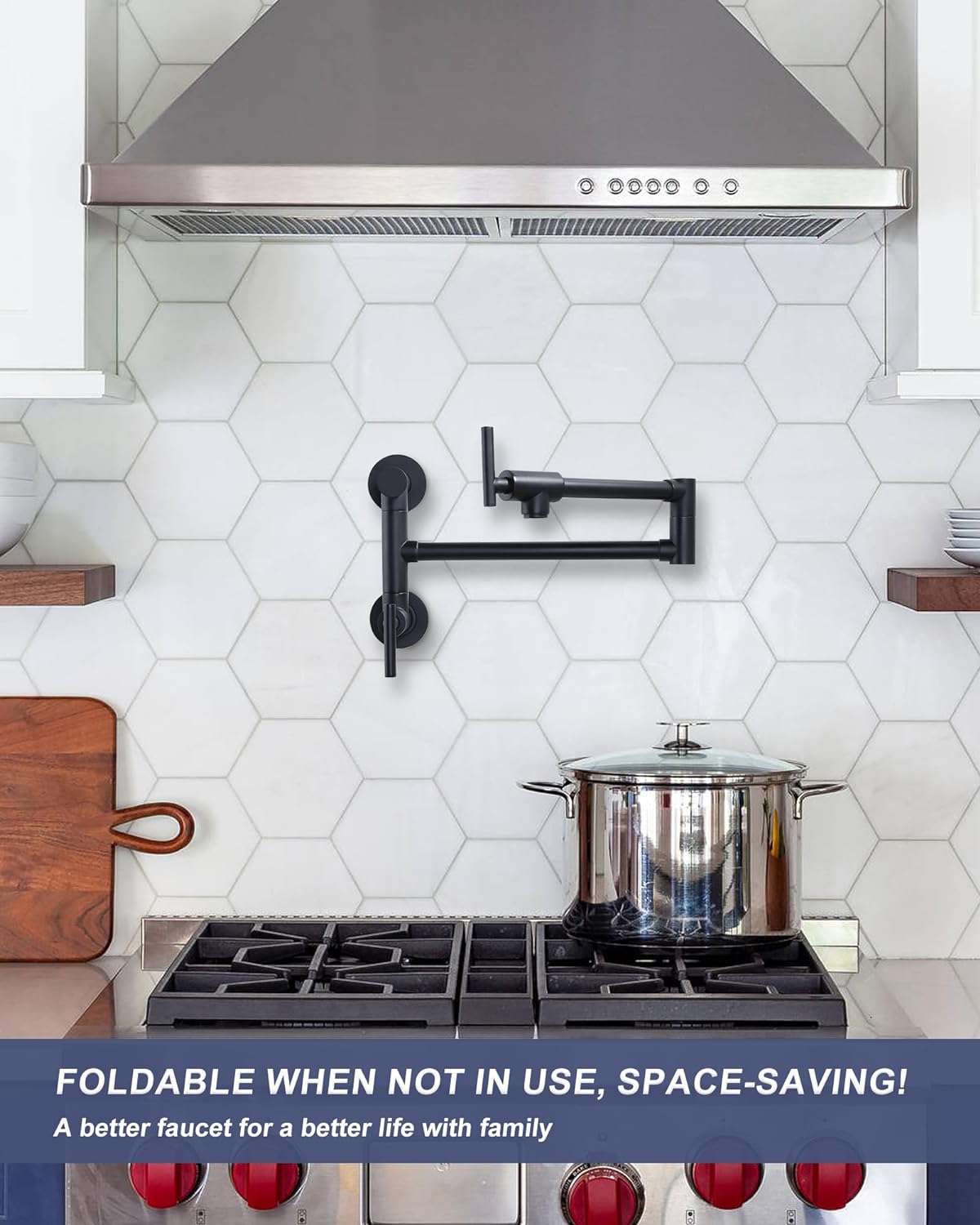
Both solid and forged brass faucets are generally heavier than zinc alloy or plastic alternatives, but forged brass often feels more dense and “solid” in hand.
- Solid brass: Heavy and sturdy
- Forged brass: Even more compact and dense due to compression
That extra density in forged brass is one reason it is often associated with premium faucet lines.
Price Difference
Price is where you’ll usually notice the biggest gap.
- Solid brass faucets: Mid-range to premium pricing
- Forged brass faucets: Often higher-end pricing
Forging requires more energy, specialized machinery, and precision manufacturing, which increases production cost.
However, price alone doesn’t guarantee better performance in every home. A well-made solid brass faucet can easily outperform a poorly made forged one.
Which One Should You Choose?
The right choice depends on your usage and expectations.
Choose solid brass if:
- You want long-lasting durability for home use
- You are remodeling a kitchen or bathroom on a budget
- You need reliable corrosion resistance without premium pricing
- Your water pressure is normal residential level
Choose forged brass if:
- You want maximum structural strength
- You run a commercial kitchen or high-use environment
- You prefer premium, dense-feeling fixtures
- You are investing in long-term heavy-duty performance
Final Thoughts
The debate between solid brass and forged brass faucets is less about which is “good or bad” and more about performance level and manufacturing quality.
Solid brass offers excellent durability, corrosion resistance, and value for most homes. Forged brass takes those strengths further by improving structural density and long-term resilience, especially under demanding conditions.
If you’re choosing a faucet for everyday residential use, solid brass is usually more than sufficient. If you’re investing in a high-traffic kitchen or simply want a more premium engineering feel, forged brass can be worth the upgrade.
In the end, the best faucet isn’t just about the material—it’s about how well it fits your lifestyle, water conditions, and long-term expectations.