 WOWOW Faucets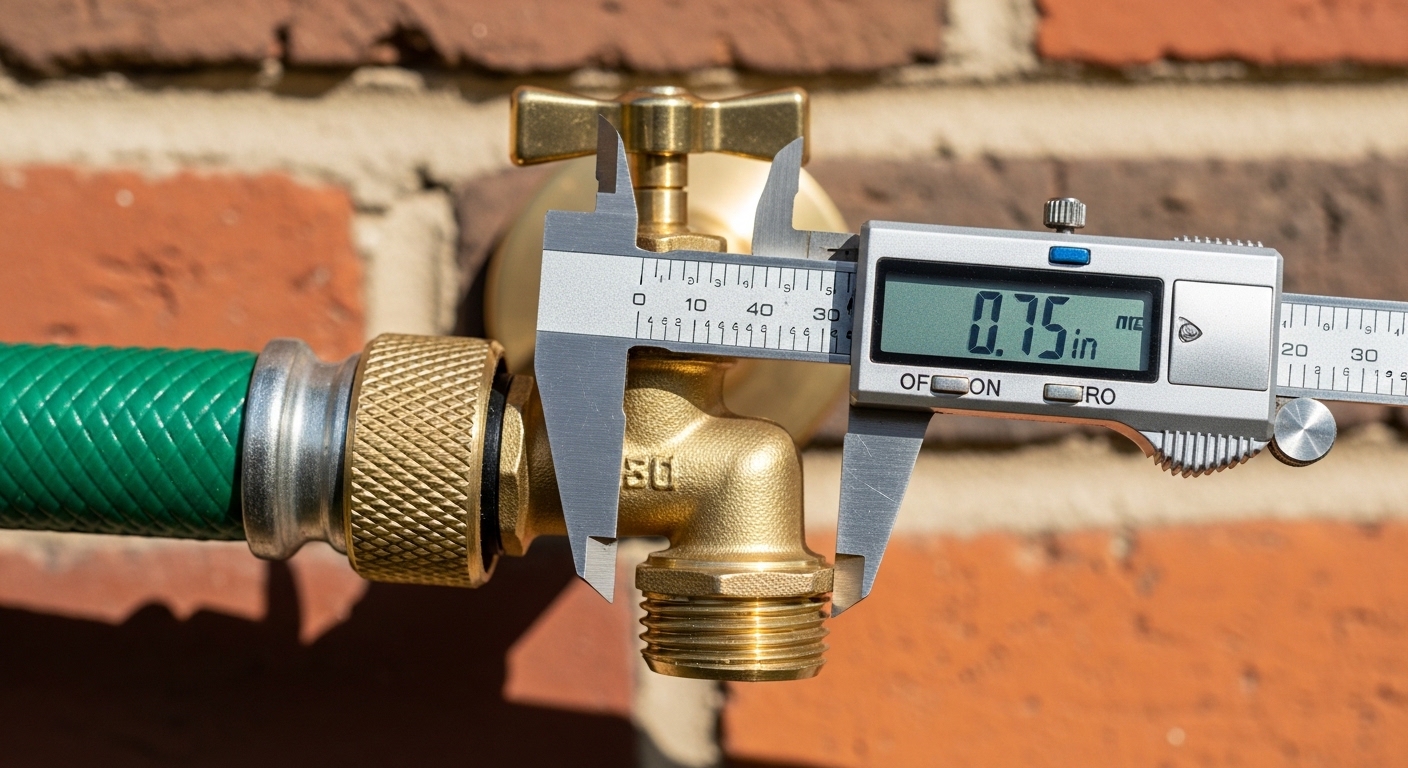
Getting the outdoor faucet size right is really two measurements pretending to be one: the thread size where your hose screws on, the pipe/inlet size where the faucet ties into your home’s water line, and — if you live anywhere that freezes — the stem length of a frost-free sillcock. Mix any of these up and you’ll end up standing at the hardware store returns counter, or worse, with a slow drip behind your siding. This guide walks through each number, how to measure it in about five minutes, and how to choose a replacement that fits the first time.
What is the standard outdoor faucet size for a garden hose?
The standard hose connection on an American outdoor faucet is ¾-inch garden hose thread (GHT), sometimes written as ¾” GHT or GHT ¾-11.5. That’s the fitting where your garden hose, splitter, or quick-connect screws on — and virtually every consumer hose, sprinkler, and nozzle sold in the U.S. is built to match it. So if you only care about hooking up a hose, the answer is almost always ¾” GHT.
Here’s the part that trips people up: garden hose thread is not the same as pipe thread, even when the numbers look similar. GHT is a coarser, straight thread designed to seal against a rubber washer, while pipe thread (NPT) is tapered and seals by wedging metal against metal (with tape). A ¾” GHT spout and a ¾” NPT pipe will not thread into each other, no matter how hard you push. That single distinction causes most “why won’t this fit?” headaches.
- ¾” GHT (garden hose thread): the outlet where your hose attaches. Coarse thread, ~1 1/16″ outer diameter, seals with a washer.
- ½” or ¾” NPT (national pipe thread): the inlet that connects to your home’s water supply. Tapered, seals with PTFE tape or pipe dope.
- SWT (solder / sweat): a copper-tube connection with no threads at all — soldered directly to a ½” or ¾” copper stub-out.
How do I know if I have a ½-inch or ¾-inch outdoor faucet inlet?
Look at (or measure) the pipe feeding the faucet, not the hose spout: if the supply pipe’s inside diameter is about ½ inch, you have a ½-inch faucet; if it’s roughly ¾ inch, you have a ¾-inch one. On most single-family homes the outdoor bibb branches off a ½-inch line, so ½-inch inlet is the default you should expect unless you know otherwise.
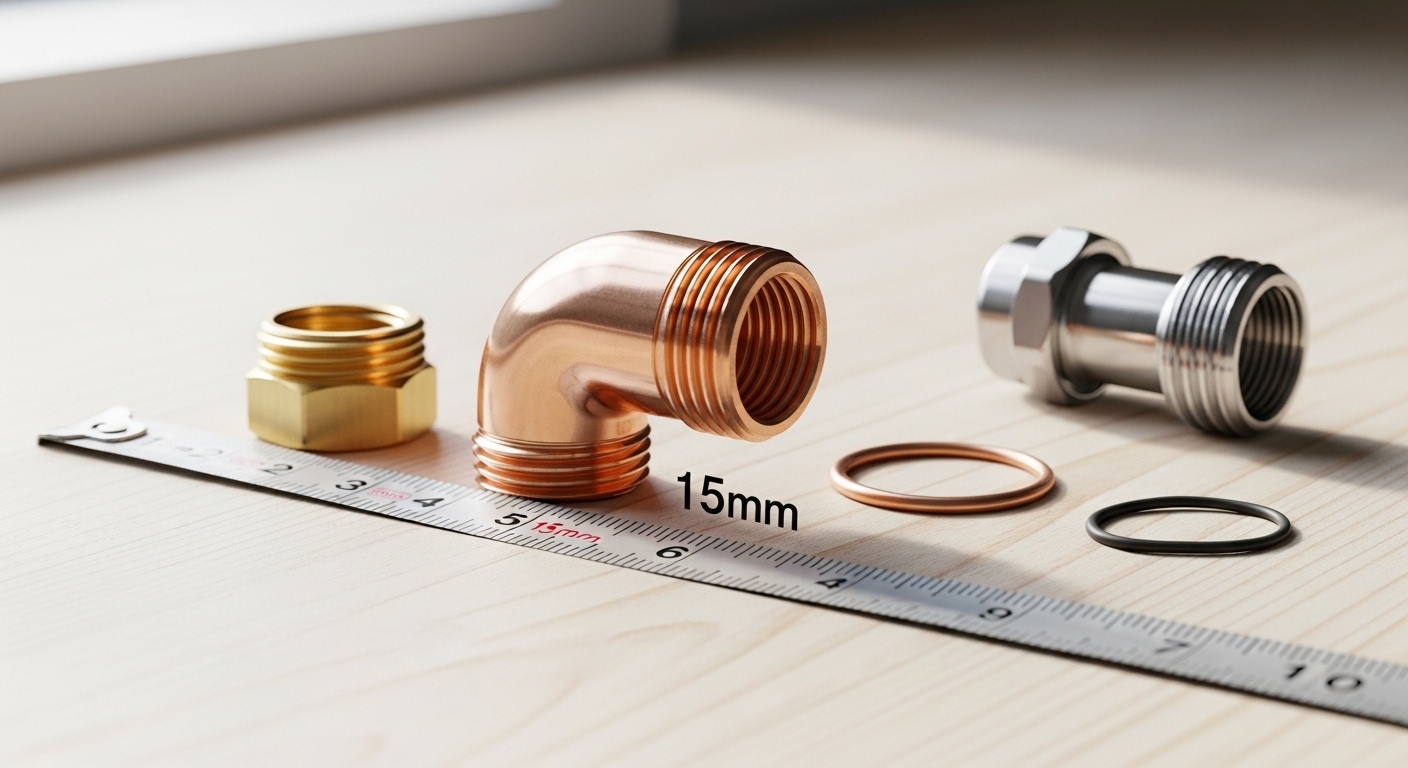
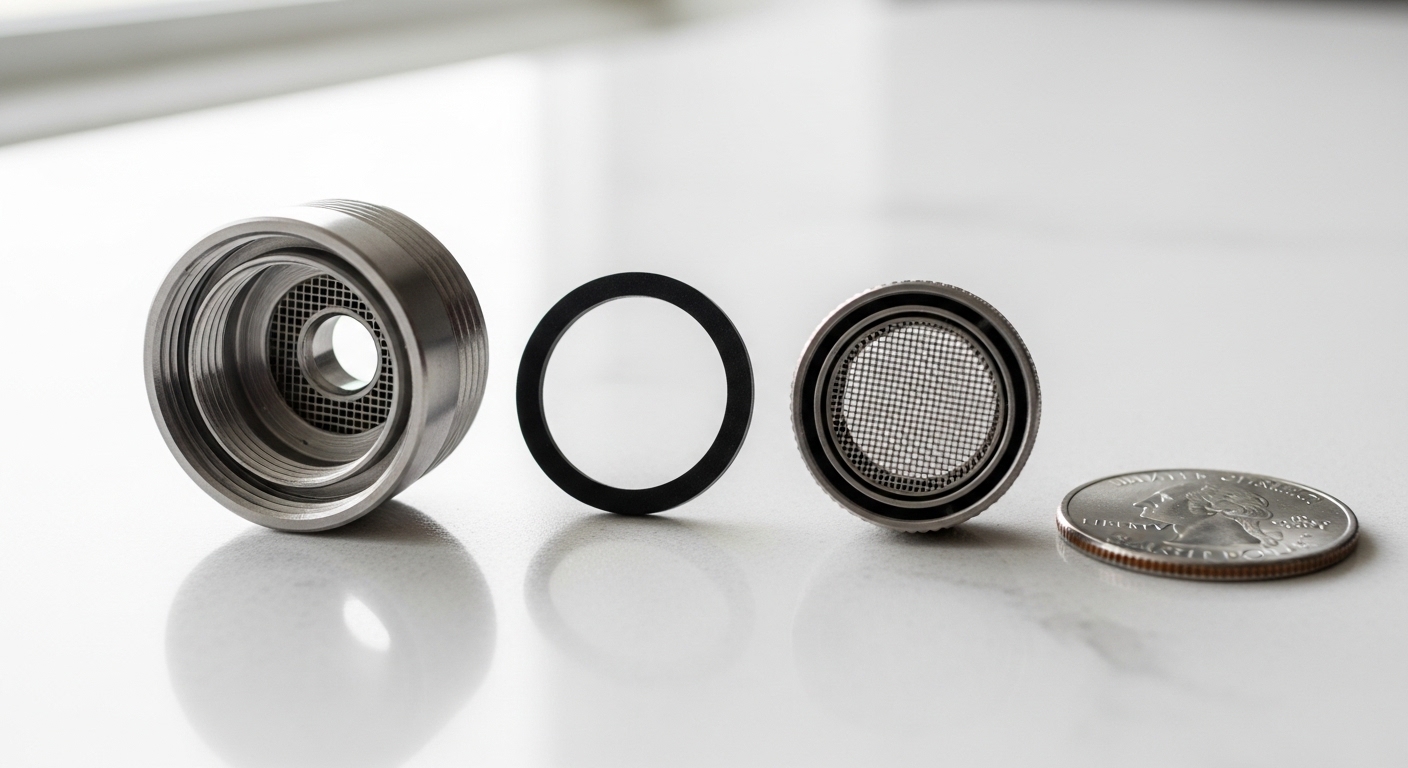
The cleanest way to check without special tools is the “penny and quarter” trick on the pipe opening, but calipers or even a tape measure across the pipe’s inner opening are more reliable. Measure inside diameter (ID) for pipe sizing — plumbing pipe is named by its nominal ID, so a “½-inch” copper pipe actually measures about ⅝” on the outside. If you’re replacing an existing faucet, the fastest route is simply to unscrew or note the old one and match its stamped size; manufacturers usually cast “½ NPT” or “¾ NPT” right into the body.
If your outdoor line is soldered copper rather than threaded, you’re dealing with a sweat connection, and the size still follows the same ½” vs ¾” nominal logic. Swapping a sweat-on bibb is more involved than a threaded one, and if you’re already opening up the wall it’s worth reading up on clean pipe joinery — the same care that goes into a shower valve installation with PEX applies to running a new outdoor supply line: proper transitions, deburred pipe, and no over-tightened fittings.
What length frost-free outdoor faucet do I need for my wall?
Buy a frost-free sillcock whose stem length is longer than the thickness of your exterior wall, so the actual valve seat sits inside the heated part of your house. Common stem lengths are 4″, 6″, 8″, 10″, 12″, and 14″, and the right one depends entirely on how thick your wall assembly is from the outdoor mounting surface to the interior where the pipe connects.
A frost-free faucet works by moving the shut-off point deep inside the wall. When you close the handle outside, the water actually stops way back at the warm end of a long stem, and the remaining water in the tube drains out the spout (as long as no hose is left attached). If the stem is too short, the shut-off happens inside the cold wall cavity — and that’s exactly where a hard freeze cracks the pipe. So err longer, not shorter.
| Wall / scenario | Typical wall thickness | Recommended stem length |
|---|---|---|
| Thin siding over sheathing | 4″–6″ | 6″ or 8″ |
| Standard 2×4 framed + siding | 6″–8″ | 8″ or 10″ |
| 2×6 framed / thicker insulation | 8″–10″ | 10″ or 12″ |
| Brick veneer or masonry | 10″–12″+ | 12″ or 14″ |
| Non-freezing climate (standard hose bibb) | n/a | Any — length not critical |
One practical caveat: frost-free protection only works if you disconnect the hose every fall. Leave a hose (or a splitter, or a quick-connect) attached, and water can’t drain, so it sits in the stem and freezes anyway. This is the single most common reason a “frost-free” faucet still bursts.
How do I measure my outdoor faucet size before buying a replacement?
Measure three things in this order: the hose-thread outlet (almost always ¾” GHT), the pipe inlet diameter (½” or ¾”, measured by inside diameter), and — for a sillcock — the stem length from the mounting flange to the valve body. Nail those three and any replacement you buy will fit.
- Confirm the hose outlet. If a standard garden hose already screws on, it’s ¾” GHT. No need to measure further here.
- Identify the inlet type. Is it threaded (NPT), or a soldered copper stub (sweat)? Threaded is DIY-swappable; sweat usually means desoldering or a compression/SharkBite adapter.
- Measure the inlet size. Inside diameter ~½” = ½-inch faucet; ~¾” = ¾-inch faucet. When unsure, match the stamp on the old faucet body.
- Measure the stem length (frost-free only). From the outside wall flange to where the pipe connects inside. Round up to the next available length.
- Check the mounting. Wall-mount flange with two screw holes vs. straight pipe-thread mount changes what you can install.
If you discover the outlet threads are worn or a slightly odd size — say an older ½” hose thread instead of the modern ¾” GHT — you don’t always have to replace the whole faucet. A threaded adapter can bridge the gap for hose hookups, and it’s worth checking whether a faucet extension adapter nearby solves the problem for a few dollars before you buy a whole new bibb.
Which outdoor faucet type and size is best for my situation and budget?
For most homeowners, a ¾” GHT outlet with a ½” NPT inlet frost-free sillcock in the correct length is the best all-around choice — it fits standard hoses, ties into typical home plumbing, and survives winter. But the right pick shifts with climate, water pressure needs, and how you use the tap.
| Faucet type | Typical size | Best for | Rough price |
|---|---|---|---|
| Standard hose bibb | ¾” GHT out / ½” NPT in | Warm climates, simple hose use | $10–$25 |
| Frost-free sillcock | ¾” GHT out / ½”–¾” in, 8″–12″ stem | Freezing climates | $20–$60 |
| Anti-siphon / vacuum breaker bibb | ¾” GHT out / ½” NPT in | Code-required backflow protection | $15–$35 |
| Yard hydrant | ¾” GHT out / ¾” NPT in | Rural, buried-line, high flow | $60–$150 |
| Quarter-turn ball-valve bibb | ¾” GHT out / ½”–¾” in | Higher flow, easy on/off, no washer wear | $25–$50 |
A note on flow: if you want strong pressure for washing a car or running a sprinkler, the inlet size matters more than the spout. A ¾-inch supply line moves noticeably more water than a ½-inch one. But you can’t create flow the pipe doesn’t deliver — upsizing the faucet alone won’t help if the branch line feeding it is ½-inch. Match the faucet to the pipe you actually have.
Also consider the valve mechanism. Traditional compression bibbs use a rubber washer that wears out and eventually drips or gets noisy; ball-valve (quarter-turn) designs last longer and open fully with a quick flick. If your current tap has started chattering or moaning when you open it, that’s usually a worn washer or loose stem, not a sizing issue — our guide on a loud outdoor faucet walks through quieting it before you decide to replace.
Does outdoor faucet size affect water pressure and flow rate?
Yes, but indirectly — the inlet pipe size and the internal valve opening set your real-world flow, not the ¾” hose threads on the spout. A ½-inch line typically delivers plenty for a single hose and nozzle; step up to ¾-inch inlet and pipe when you’re feeding long soaker hoses, multiple sprinkler zones, or a high-demand yard hydrant.
Think of it like a straw: the narrowest point in the whole path controls the flow. If your home’s outdoor branch is ½-inch copper, installing a ¾-inch faucet at the end won’t boost pressure — the ½-inch pipe upstream is still the bottleneck. The upgrade only pays off when you enlarge the supply line too. For typical hose, sprinkler, and pressure-washer use, a properly sized ½-inch frost-free sillcock with ¾” GHT output is more than enough, and it keeps you compatible with every standard accessory on the market.
FAQ
Are all outdoor faucet hose threads the same size?
In the U.S. and Canada, yes — the standard is ¾-inch garden hose thread (GHT), and essentially all consumer hoses, nozzles, and splitters match it. The exceptions are older homes with worn ½” hose-thread taps and imported fixtures that may use BSP (British Standard Pipe) threads, which look close but won’t seal properly. A cheap brass thread adapter bridges most mismatches.
What’s the difference between garden hose thread and pipe thread on an outdoor faucet?
Garden hose thread (GHT) is a coarse, straight thread that seals against a rubber washer and lives on the hose outlet. Pipe thread (NPT) is a finer, tapered thread that seals metal-to-metal with PTFE tape and lives on the inlet that connects to your home’s plumbing. They are not interchangeable even at the same nominal size — a ¾” GHT spout won’t thread onto a ¾” NPT pipe.
Can I replace a ½-inch outdoor faucet with a ¾-inch one?
Only if you also change the supply pipe to ¾-inch — otherwise you’re threading a ¾-inch faucet onto a ½-inch line, which requires an adapter and gains you nothing in flow because the ½-inch pipe remains the bottleneck. If you simply want more water, upsizing the whole branch line is the real fix. For a straight replacement, match the existing inlet size stamped on the old faucet body.
How long should a frost-free faucet be for a brick house?
Brick veneer walls are thick, so plan on a 12-inch or 14-inch stem to make sure the shut-off valve seats inside the heated interior rather than within the cold masonry. Measure from the outside mounting surface to your interior connection point and round up to the next available length. When in doubt, longer is safer than shorter.
Why does my new outdoor faucet still freeze even though it’s frost-free?
Almost always because a hose, splitter, or quick-connect was left attached over winter, which traps water in the stem and defeats the drain-back design. Disconnect everything each fall so the stem can empty. If it still freezes with nothing attached, the faucet may be pitched wrong (it should tilt slightly downward toward the spout to drain) or the stem is too short for your wall.
Do I need an anti-siphon (vacuum breaker) on my outdoor faucet?
In most U.S. jurisdictions, yes — plumbing code requires backflow protection on outdoor hose bibbs to keep contaminated water (from a hose sitting in a pool, bucket, or fertilizer sprayer) from being siphoned back into your drinking water if pressure drops. Many modern sillcocks have the vacuum breaker built in; otherwise a screw-on backflow preventer at the spout does the job for a few dollars.
A quick word on quality and standards
Outdoor faucets take real abuse — sun, freeze-thaw cycles, and constant hose tugging — so material and certification matter as much as size. Look for a lead-free brass body that meets the U.S. Safe Drinking Water Act low-lead standard (NSF/ANSI 372) and, ideally, a manufacturer warranty that covers the valve mechanism. A faucet that fits perfectly but corrodes in two seasons isn’t a bargain.
Author note: This guide was written by the WOWOW Faucet product team, drawing on hands-on installation and returns data across thousands of residential faucet and fixture orders. WOWOW designs and tests kitchen, bath, and utility fixtures to U.S. plumbing standards, backs its faucets with a limited lifetime warranty on the finish and function, and builds its bodies from lead-free, corrosion-resistant brass. We measure and pressure-test our fixtures before they ship, because the fastest way to lose a customer is a faucet that leaks on day one. When you’re sizing any replacement — indoor or out — matching threads, inlet diameter, and (for sillcocks) stem length the first time saves you the return trip.