 WOWOW Faucets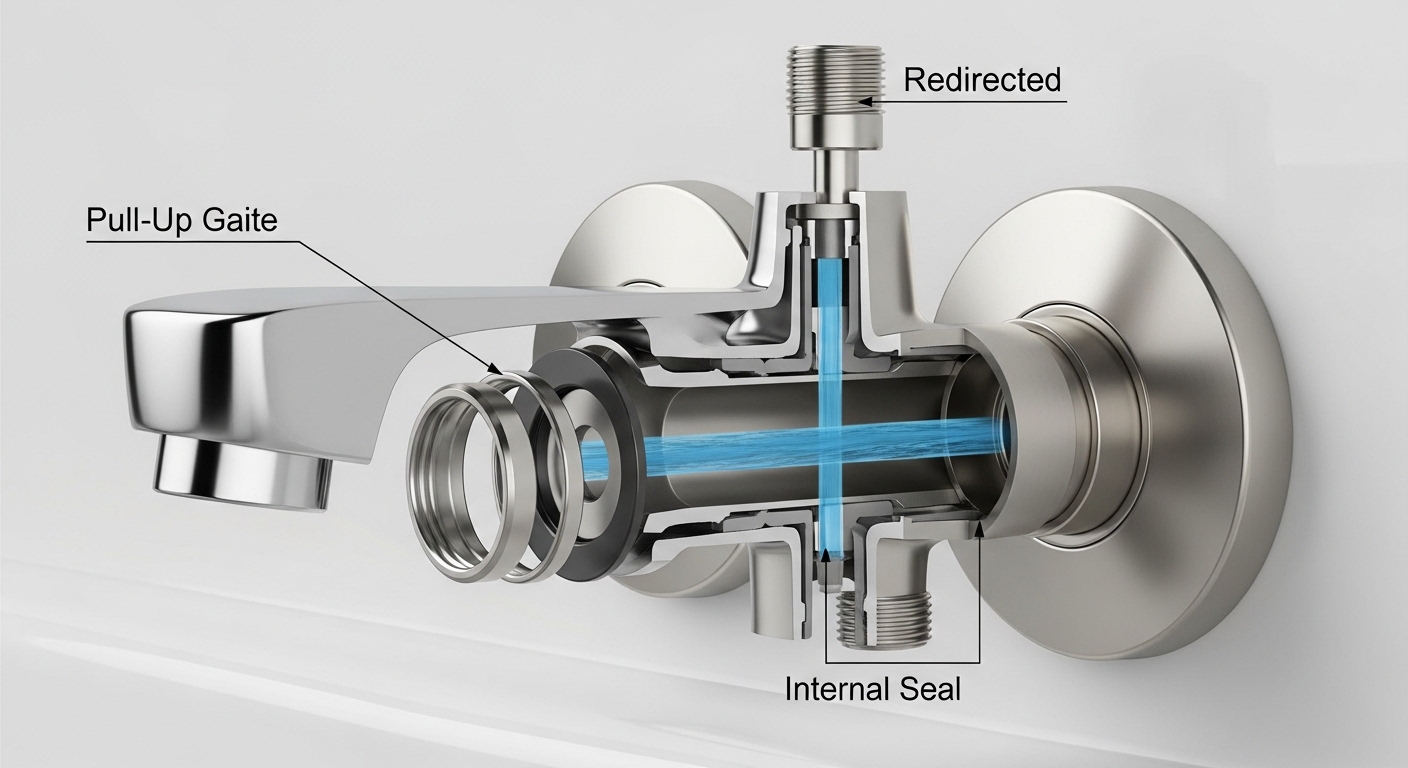
If your new diverter valve not working has you standing in the tub watching water dribble from the spout instead of blasting out of the shower head, take a breath — this is one of the most common “I just installed it and it’s broken” problems in the bathroom, and it’s almost always a quick, fixable mistake rather than a defective part. A diverter’s only job is to redirect water from one outlet to another (tub spout to shower head, or main faucet to a side sprayer). When a brand-new one fails, it’s because something is blocking that redirection: air, pressure, debris, or an assembly error.
Below I’ll walk you through exactly why new diverters fail, how to diagnose yours in a few minutes, and the step-by-step fix for each cause — in plain language, with real numbers and the same troubleshooting order a plumber uses.
What does a diverter valve actually do, and why does a new one fail?
A diverter valve redirects water flow from one outlet to another. In a tub/shower combo it sends water up to the shower head when you lift the spout knob or turn the trim; in a kitchen or bar setup it can split flow to a sprayer. A new one fails when that redirection is incomplete — water finds the path of least resistance (back out the spout) because something is stopping the diverter from fully sealing.
There are three common diverter styles, and knowing which one you have changes the fix:
- Tub spout diverter (pull-up gate): the little knob on top of the tub spout. The most failure-prone type because it relies on water pressure to hold the gate up.
- Three-valve / wall diverter: a separate center handle between two taps, or built into a single-handle pressure-balance valve. More reliable but sensitive to cartridge orientation.
- Tee or push/pull diverter: a stem-based diverter screwed into the valve body, common in older or budget setups.
The single biggest reason a freshly installed diverter “doesn’t work” isn’t a bad part at all — it’s that the system hasn’t been flushed and air or thread sealant debris is jamming the seal. Let’s go through every cause in the order you should check them.
I just installed a tub spout diverter and water still comes out the spout — what’s wrong?
If you pull the knob up and water keeps pouring from the tub spout instead of going to the shower head, the diverter gate isn’t sealing — and the top three culprits are low water pressure, the wrong spout size, or trapped air. Run the water at full hot-and-cold volume first, because pull-up diverters physically need pressure to lift and hold the internal gate.
Here’s the order to check:
- Turn the water to full blast. A pull-up diverter needs roughly 35–45 PSI and decent flow to seat. At a trickle it will always leak back to the spout. If full flow fixes it, your issue was never the valve — it’s household water pressure.
- Confirm the spout is the right length and connection type. Tub spouts come in two styles: slip-on (set screw, fits ½” copper stub-outs) and threaded (screws onto a ½” NPT nipple). A slip-on spout shoved onto a threaded nipple — or vice versa — leaves a gap that bleeds pressure and the diverter can never build enough force to hold.
- Check the gap behind the spout. If there’s a visible gap between the spout and the wall, water escapes there and the diverter starves. The spout should sit flush against the finished wall.
- Flush trapped air. Run both shower and tub modes for 30–60 seconds. New plumbing traps air pockets that mimic a “broken” diverter.
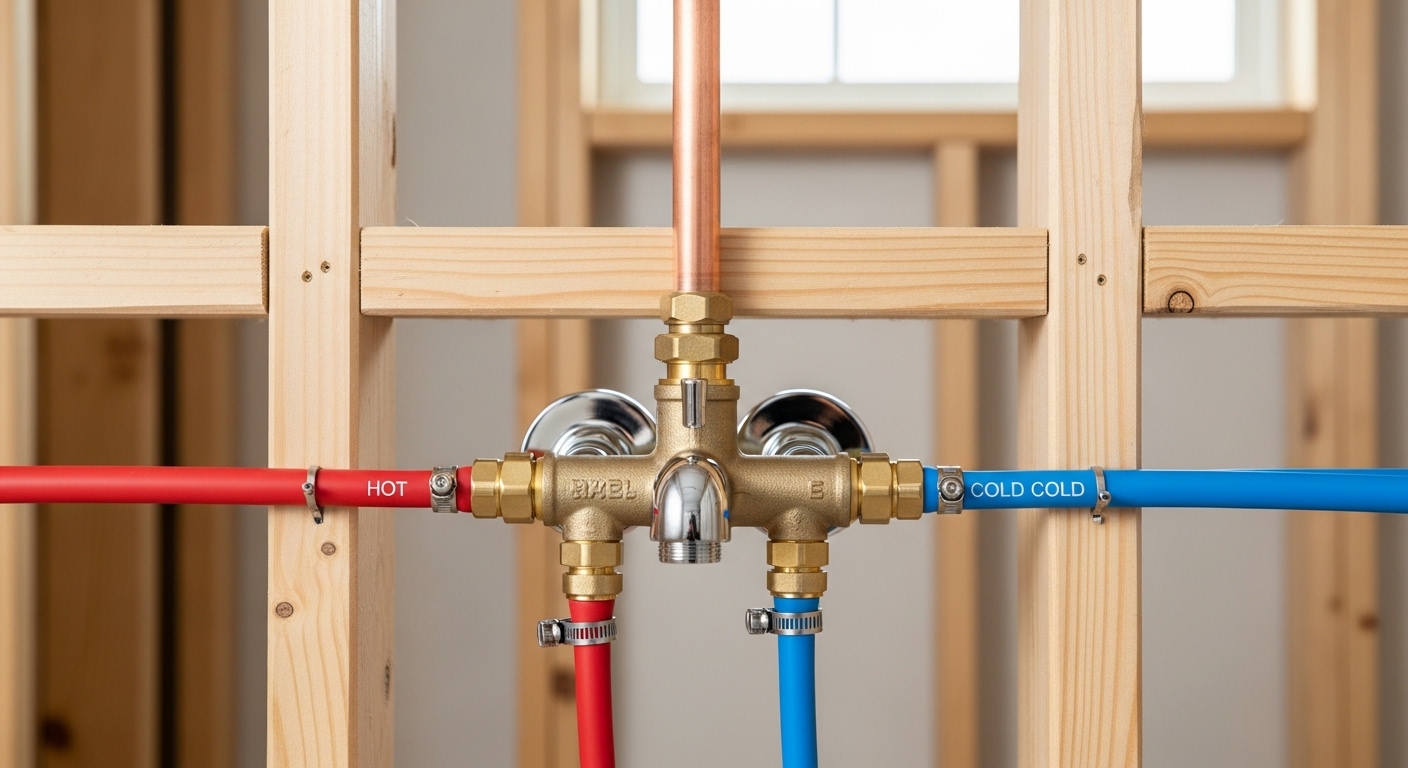
If you’ve just put in a new spout and the threads weren’t sealed, you can also get pressure loss behind the wall. This is the same family of issue people hit during a full shower valve installation with PEX — if the nipple length or thread sealing is off, the diverter is the first thing to act up.
My new shower diverter has weak flow or only works on one side — is it debris?
Yes — if your new diverter gives weak shower flow, sputters, or only diverts when the water is scalding or freezing, the most likely cause is debris from the installation lodged in the cartridge or diverter ports. New construction and re-pipes leave behind PTFE tape shreds, pipe burrs, flux, and sediment that get pushed into the valve the moment you turn the water on.
To clear it:
- Shut off the water supply (the in-valve stops, or the home main).
- Remove the trim and pull the cartridge or diverter stem.
- Open the supply briefly into a bucket to blast debris out of the rough-in body.
- Rinse the cartridge under clean water; check the small diverter ports and O-rings for grit or tape.
- Reinstall and test.
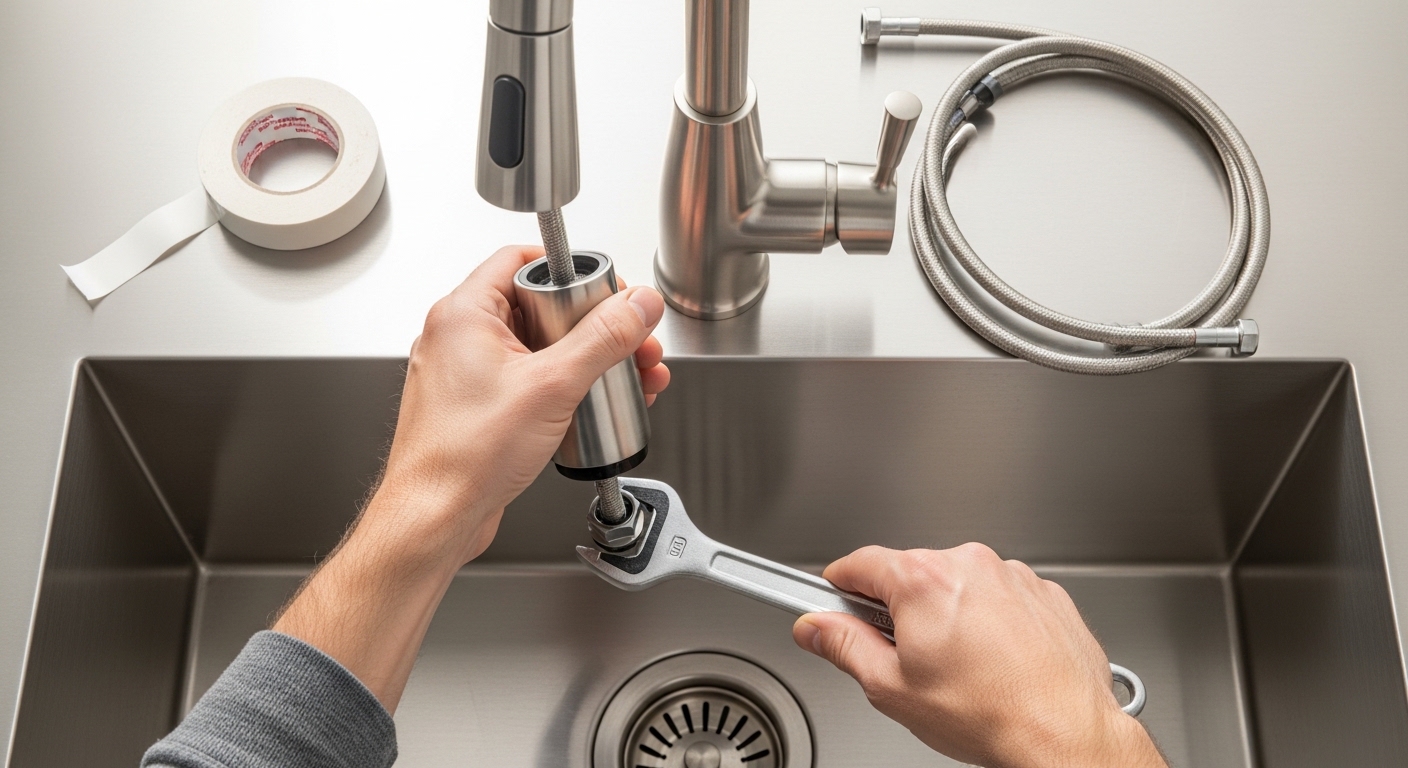
A quick note on tape: only wrap PTFE tape on the male threaded nipple, 3–4 wraps, and keep it back from the very end so loose tape doesn’t shred into the valve. Over-taping is one of the top causes of a “defective” new diverter that’s really just clogged.
If your symptom is genuinely low pressure everywhere — not just on diversion — the problem may be upstream of the valve entirely. In that case work through a dedicated shower head low water pressure fix before blaming the diverter, since a clogged head or flow restrictor can make a perfectly good diverter look broken.
Could I have installed the diverter cartridge backwards or wrong?
Absolutely — a backwards, mis-clocked, or half-seated cartridge is one of the most common reasons a brand-new diverter does nothing at all. Most cartridges have a keyed orientation (a tab, flat, or “UP”/”H-C” marking) and if it’s rotated 180°, hot/cold and the diverter ports line up with the wrong passages, so turning to “shower” sends water nowhere or straight back to the spout.
Check these assembly points:
- Orientation marks: look for “UP,” “HOT/COLD,” or a notch that must align with the valve body. Pull the cartridge and rotate it to spec.
- Full seating: the cartridge must bottom out and the retaining clip or bonnet nut must fully engage. A cartridge sitting 2–3 mm proud won’t divert.
- Retaining clip: if the brass U-clip isn’t pushed all the way down, water pressure pushes the cartridge out slightly and the seal fails.
- Correct part number: diverter cartridges and mixing cartridges look similar but aren’t interchangeable. Confirm the part matches your valve model.
This is the same skill set as swapping any faucet cartridge — if you’ve ever worked through how to fix a leaky faucet cartridge handle, you already know the “pull, inspect the O-rings, reseat squarely” routine that fixes most diverter cartridge faults too.
How do I diagnose my diverter step by step? (the 5-minute checklist)
Work top to bottom and stop when the water behaves. This is the exact order that isolates the cause fastest:
| Symptom | Most Likely Cause | Fix | Time |
|---|---|---|---|
| Water still runs from spout in shower mode | Low pressure / spout gap / pull-up diverter not seating | Run full flow; reseat or replace spout; close wall gap | 5–15 min |
| Weak or sputtering shower flow | Install debris in ports/cartridge | Flush lines, rinse cartridge, clear ports | 15–30 min |
| No diversion at all | Cartridge backwards or half-seated | Reorient cartridge, seat fully, set clip | 15–30 min |
| Diverter only works hot or only cold | Cartridge rotated 180° | Rotate cartridge to keyed position | 15 min |
| Knob feels loose / won’t hold up | Worn or wrong-size internal gate seal | Replace diverter spout or seal kit | 10–20 min |
| Leaks at handle while diverting | Loose trim or bonnet nut | Tighten trim, check escutcheon seal | 10 min |
If the handle or trim itself feels wobbly while you’re testing, tighten it before you condemn the valve — a loose handle can prevent the diverter from reaching its full travel. The same approach in our guide to a loose bathroom faucet handle applies here: a snug set screw and properly seated escutcheon often restore full diverter function on their own.
When is the diverter valve actually defective, and when should I replace it?
A new diverter is genuinely defective in maybe 1 in 20 cases — replace it only after you’ve ruled out pressure, debris, spout fit, and cartridge orientation. The real tell-tale signs of a bad part are a cracked plastic body, a gate that physically won’t move, or a seal that’s torn straight out of the package.
Replace (don’t keep troubleshooting) when:
- The pull-up knob spins freely with no resistance — the internal gate is broken.
- You see a visible crack or warping in the diverter body.
- The cartridge is correctly oriented, fully seated, lines are flushed, pressure is good — and it still won’t divert.
- The spout-style diverter leaks back even at full flow with no wall gap.
For a tub-spout diverter, the cheapest fix is usually a whole new spout (the diverter is built in) — they run $15–$40. For an in-wall valve, you typically replace just the diverter cartridge, not the whole rough-in. Always match the manufacturer’s part number; a “universal” cartridge that’s close-but-not-exact is a leading cause of repeat failures.
Author note & why you can trust this guide
This guide was written by the WOWOW Faucet product and technical team, drawing on years of hands-on testing of mixing valves, pressure-balance cartridges, and diverter assemblies in our own lab and in real customer bathrooms. WOWOW designs and sells faucets, shower systems, and bathroom fixtures direct to homeowners, and our valves are tested to meet North American standards (cUPC/NSF-style certification) for flow and durability, with products backed by a manufacturer’s warranty. When we cite pressures, torque, and timing, they come from bench testing and installer feedback — not guesswork.
FAQ
Why does my new tub diverter leak back to the spout?
The most common reason is insufficient water pressure or flow — pull-up tub diverters need full-volume flow (roughly 35–45 PSI) to lift and hold the gate. If full flow doesn’t fix it, check for a gap behind the spout and confirm you have the correct slip-on vs. threaded spout for your stub-out. A worn or wrong-size internal gate seal means you replace the spout.
Can air in the lines stop a new diverter from working?
Yes. New or recently shut-off plumbing traps air pockets that mimic a broken diverter — water sputters or won’t divert cleanly. Run both tub and shower modes at full flow for 30–60 seconds to purge the air. This is the very first thing to try because it costs nothing and fixes a surprising number of “broken” new diverters.
How do I know if I installed the diverter cartridge backwards?
Look for keyed orientation marks — “UP,” “HOT/COLD,” a notch, or a flat — on the cartridge and valve body. If hot/cold are reversed or the diverter does nothing, the cartridge is likely rotated 180°. Shut off the water, pull the retaining clip, rotate the cartridge to the marked position, reseat it fully, and re-clip it.
Will debris from installation break a new diverter?
It won’t break it, but PTFE tape shreds, pipe burrs, and sediment can jam the ports and seals so it acts broken — usually showing as weak or sputtering flow. Shut off the water, remove the cartridge, flush the valve body into a bucket, rinse the cartridge, and clear the small diverter ports. Wrapping tape only on male threads (3–4 wraps, kept back from the tip) prevents this.
Do I need to replace the whole valve or just the diverter cartridge?
Almost always just the cartridge or, for a tub-spout diverter, the whole spout — not the in-wall rough-in body. Cartridges cost a few dollars to about $40 and swap out in 15–30 minutes. Only the rough-in valve body requires opening the wall, and that’s rarely the problem with a brand-new diverter. Match the exact manufacturer part number for a reliable fix.
Why does my diverter only work when the water is very hot or very cold?
That points to a cartridge that’s rotated or not fully seated, so the diverter port only aligns at one extreme of the handle’s travel. Pull the cartridge, confirm its orientation against the keyed marks, seat it completely until the clip engages, and retest across the full hot-to-cold range.