 WOWOW Faucets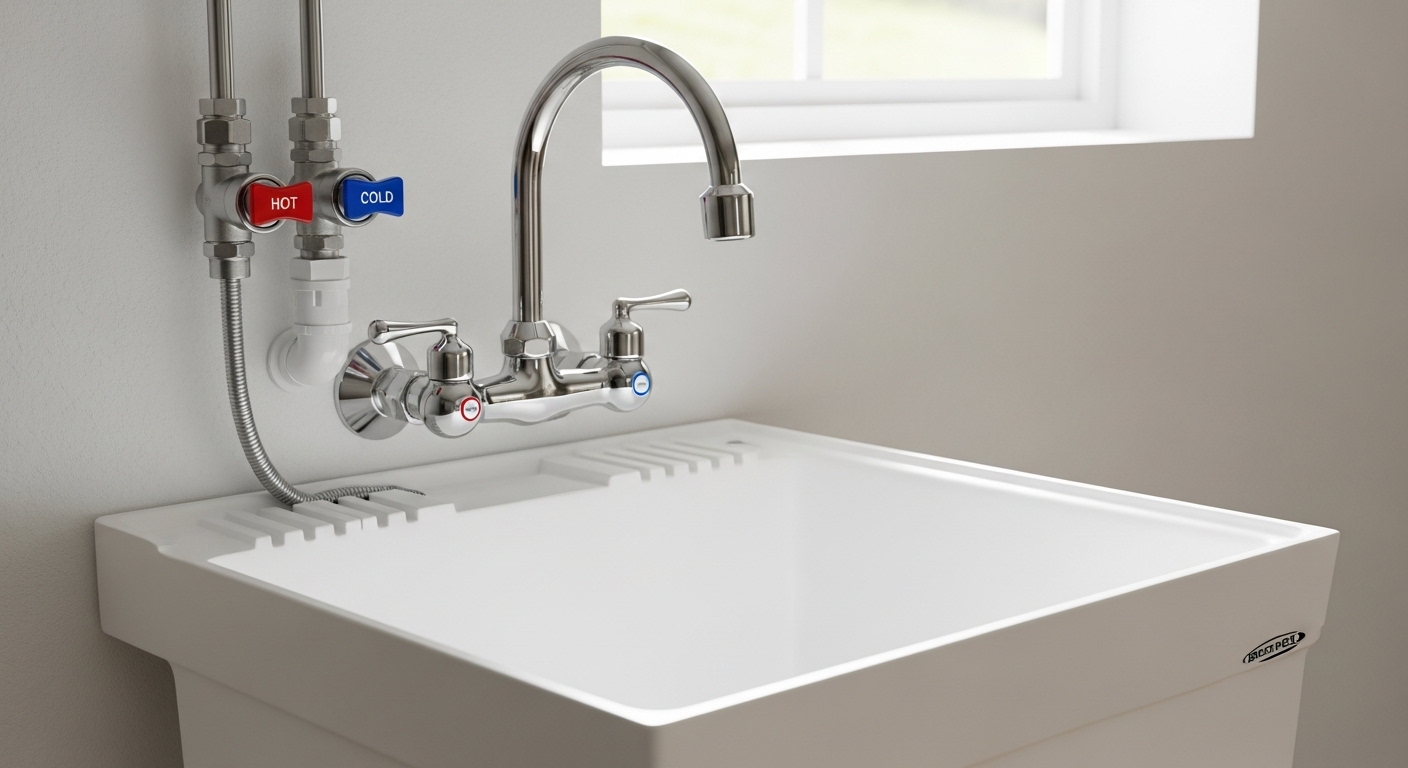
If you’ve been searching “laundry faucet ferguson,” you’re almost certainly standing in front of a utility sink, a washing machine hookup, or a rough-in in a garage or basement, trying to figure out whether Ferguson Plumbing Supply is the right place to buy the faucet — and whether the price is fair. This guide answers that directly: what Ferguson actually stocks for laundry rooms, what it costs, when it’s the smart move, and when you’re better off buying elsewhere. No fluff, just the real trade-offs so you can order the right faucet once and be done.
Laundry faucets look simple, but the wrong one leaks at the threads, won’t clear a mop bucket, or doesn’t match your washing machine’s supply lines. Getting it right is 80% knowing the mount type and connection size — so we’ll cover that too.
What kind of laundry faucet does Ferguson actually sell?
Ferguson primarily stocks two categories for laundry: utility/service-sink faucets (deck-mounted on a laundry tub) and wall-mount laundry faucets that thread onto exposed supply stubs. Most are two-handle, rough-brass or chrome, with a hose-thread or straight-spout outlet meant for filling buckets and connecting hoses.
Because Ferguson is a pro-focused plumbing distributor, the laundry selection leans toward durable, commercial-grade names rather than decorative pieces:
- Chicago Faucets — the go-to for heavy-duty service-sink and laundry-tray faucets; nearly indestructible, but plain-looking and pricier.
- Moen and Delta — mainstream two-handle laundry and utility faucets, easy to get parts for.
- Gerber and Central Brass — budget-to-mid rough-brass wall-mount laundry faucets with a hose-thread spout.
- Proflo (Ferguson’s house brand) — value-priced laundry and utility faucets that undercut the name brands.
What Ferguson generally does not emphasize is stylish, finish-matched laundry faucets — brushed nickel or matte black pull-down units that look good in a modern laundry room. That’s where online direct brands tend to win, and it’s worth knowing before you assume Ferguson is your only option.
How much does a laundry faucet cost at Ferguson vs. buying online?
Expect roughly $45–$120 for a basic two-handle laundry or utility faucet at Ferguson, and $150–$350+ for a Chicago Faucets commercial unit. The same or comparable faucet online — from Amazon, Home Depot, or a direct brand like WOWOW — often runs 15–30% less, because Ferguson’s pricing is built around contractor accounts and counter service, not rock-bottom retail.
Here’s a realistic side-by-side so you can see the trade-off, not just the sticker:
| Buying channel | Typical laundry faucet price | Best for | Watch out for |
|---|---|---|---|
| Ferguson (counter/will-call) | $45–$120 basic; $150–$350 commercial | Same-day pickup, pro advice, contractor-grade brands | Higher retail price; limited decorative finishes |
| Ferguson.com (ship to home) | Similar to counter, plus shipping | Access to full catalog, model lookup | Not always cheaper than other online stores |
| Home Depot / Lowe’s | $30–$90 basic | Convenience, in-stock utility faucets | Thin selection of true laundry-tray faucets |
| Direct-to-consumer (e.g., WOWOW) | $40–$130, better finishes | Modern finishes, longer warranties, lower markup | Ship-only; no in-person counter help |
The honest takeaway: Ferguson isn’t a rip-off — you’re paying for expertise and instant availability. If you know exactly what you need and don’t need it in the next hour, comparing an online option first almost always pays off. If you’re a contractor with an account, or you’re mid-job and need a part today, Ferguson’s counter is genuinely worth the premium.
Wall-mount or deck-mount — which laundry faucet do I actually need?
Match the faucet to your plumbing, not the other way around. If your water supply comes out of the wall as two exposed pipe stubs, you need a wall-mount laundry faucet. If you have a laundry tub or utility sink with holes in the deck, you need a deck-mount faucet sized to your hole spread.
The single most common mistake is buying a deck-mount faucet when the supply is in the wall (or vice versa). Before you order anything from Ferguson or anywhere else, check three things:
- Mount type — wall stubs vs. sink deck holes.
- Center-to-center spread — most laundry faucets are 4-inch centerset or 8-inch widespread; measure the distance between your two supply lines or faucet holes.
- Connection size — laundry faucets commonly use 1/2-inch IPS (threaded pipe) or accept standard supply-line couplings. If you’re adding a hose or adapter, thread size matters a lot.
Thread sizing trips up more people than any other spec, especially when you’re connecting a hose, sprayer, or bar/prep-style outlet. If you’re unsure what threads you’re dealing with, our complete bar tap thread size guide walks through how to measure and identify threads so your fittings actually seal instead of dripping.
Can I use a laundry faucet for my washing machine hookup?
Yes — but only if the faucet has the right outlet. A true washing-machine laundry setup uses a laundry outlet box with hot and cold valves and hose-thread bibs, or a faucet with a 3/4-inch hose-thread spout your washer hoses can screw onto. A plain utility faucet with a smooth spout won’t connect a washing machine hose directly.
If your goal is specifically to feed a washing machine, you have two clean paths:
- Recessed washing-machine outlet box — the standard for a dedicated washer, with dual shutoff valves and a drain. Ferguson stocks these; so do most supply houses.
- Dual-purpose laundry faucet with hose-thread spout — lets you fill a sink and connect a hose, which is handy when the tub doubles as a utility station.
If you’re weighing a purpose-built washing-machine faucet rather than a generic laundry faucet, it’s worth reading how those dedicated units are designed. Our breakdown of the Jaquar washing machine faucet explains what separates a real appliance-feed faucet from a standard laundry tap — the valve type, the outlet thread, and the failure points to avoid.
What features matter most in a laundry room faucet?
For a laundry faucet, durability and reach beat looks and gadgets. The features that actually change your daily experience are spout height, spout reach, valve type, and finish resistance — in that order.
Here’s what to prioritize and why:
- High-arc or gooseneck spout — you need clearance to slide a mop bucket or large pot under it. Low spouts are the #1 regret in laundry setups.
- Ceramic-disc cartridges — far more drip-resistant than old rubber-washer stems. This is the difference between a faucet that lasts 10+ years and one that drips in two.
- Metal (not plastic) body — laundry faucets take abuse; a brass or stainless body survives bucket knocks and hose torque.
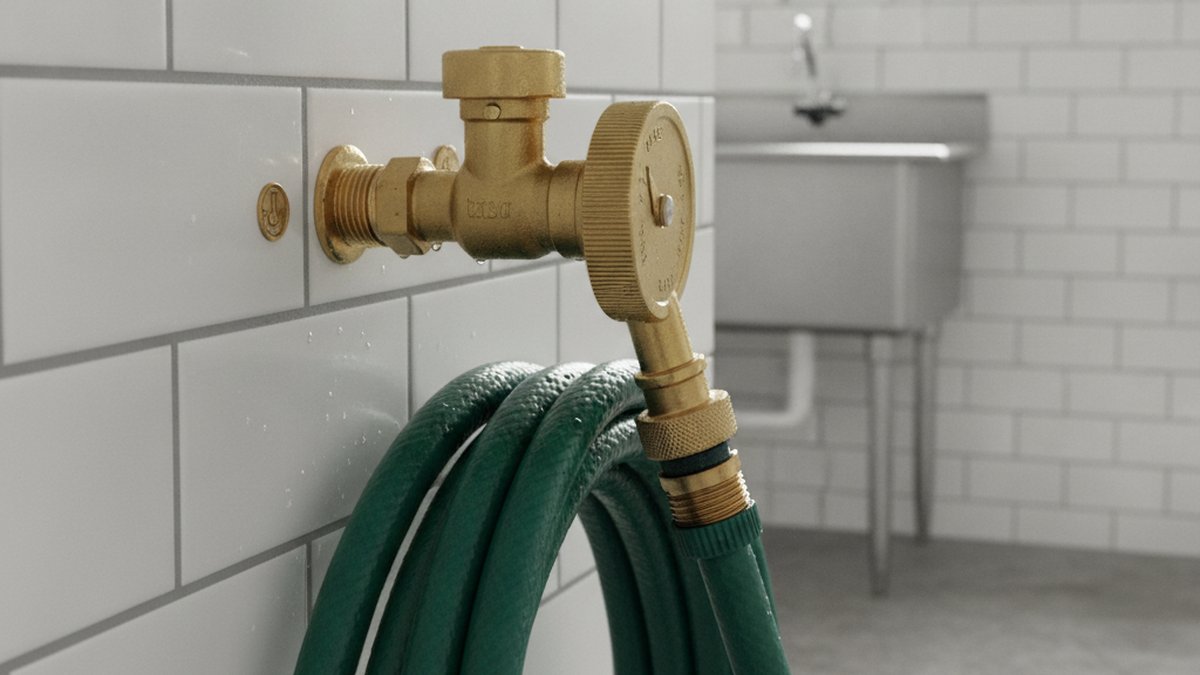
- Hose-thread or removable aerator outlet — lets you attach a hose or fill a bucket fast. If you plan to run a hose outside, check adapter fit.
- Corrosion-resistant finish — damp laundry rooms are hard on cheap chrome; a quality finish resists spotting and pitting.
One overlooked point: a laundry faucet often becomes the household’s “connect a hose to indoor water” faucet — for filling a car-wash bucket, a fish tank, or a garden sprayer. If that’s you, make sure the spout accepts a threaded adapter. Our guide to connecting indoor faucets to outdoor hoses covers exactly which adapters fit which spouts, so you don’t end up with a faucet you can’t hook a hose to.
Is Ferguson or an online brand like WOWOW better for a laundry faucet?
Choose Ferguson when you value in-person plumbing help, need contractor-grade commercial faucets, or want same-day will-call pickup mid-project. Choose an online direct brand like WOWOW when you want modern finishes, a lower price, and a strong warranty, and you can wait a few days for shipping.
Neither is universally “better” — they serve different buyers. A plumber replacing a Chicago Faucets service-sink unit on a Tuesday job wants Ferguson’s counter. A homeowner refreshing a laundry room who wants a brushed-nickel high-arc faucet that doesn’t look industrial is usually happier — and $30–$60 richer — ordering online.
A few decision shortcuts:
- Need it today + need advice → Ferguson counter.
- Commercial/heavy-use utility faucet → Ferguson (Chicago Faucets).
- Want a nice finish at a fair price → online direct brand.
- Replacing a specific existing model → look up the exact part first (Ferguson.com or the manufacturer), then price-compare.
Whatever you pick, buy from a channel that gives you real parts support. Cartridges, aerators, and handles wear out, and being able to order an exact replacement matters more than the initial price. If you tend to keep faucets a long time, favor brands with published parts catalogs so a worn cartridge doesn’t force a full replacement.
How do I make sure the laundry faucet doesn’t leak after install?
Most laundry faucet leaks come from three places: the supply connections, the spout base, and a worn cartridge — and all three are avoidable. Thread the connections cleanly, don’t over-tighten, and seat the cartridge fully, and you’ll get a drip-free install.
Quick install-and-seal checklist:
- Shut off water at the laundry valves or the main before you touch anything.
- Use thread sealant correctly — Teflon tape on tapered pipe threads (wrap clockwise, 3–4 turns); do not tape compression fittings.
- Hand-tighten, then a quarter-turn with a wrench. Over-tightening cracks fittings and distorts washers — a top cause of slow drips.
- Check the aerator — a leak or spray at the tip is often just a loose or clogged aerator, not a bad faucet.
- Run hot and cold, then inspect every joint dry — wipe each connection with a paper towel and watch for reappearing moisture.
If you do get a drip after installation, don’t assume the faucet is defective. A leaking aerator or a slightly unseated cartridge is far more common. Our walkthrough on why a faucet aerator leaks and how to stop it fast covers the five-minute fixes before you go pulling the whole faucet back off.
Author note & brand credibility
Written by the WOWOW Faucet product team. We design, test, and sell faucets directly to homeowners across North America, which means we field real installation questions every day — including a steady stream from people deciding between a plumbing-supply house like Ferguson and buying direct. This guide reflects that hands-on feedback, not marketing theory.
On standards and durability: reputable laundry and utility faucets should meet ANSI/NSF 61 and NSF/ANSI 372 (lead-free) requirements for drinking-water-safe components, and quality valves are cycle-tested to 500,000+ open/close cycles. WOWOW faucets are built with corrosion-resistant brass bodies and ceramic-disc cartridges, and are backed by a limited lifetime warranty on the finish and function — the kind of coverage worth confirming no matter where you buy, Ferguson included.
FAQ
Does Ferguson sell laundry faucets to the public, or only to contractors?
Ferguson sells to the public at most branches, though the experience is geared toward trade pros. You can walk into a counter, order online at Ferguson.com, and buy a laundry faucet without a contractor account — but you won’t always get the lowest price, since account holders often see trade pricing you don’t.
What’s the difference between a laundry faucet and a utility/service-sink faucet?
They overlap heavily. “Laundry faucet” usually means a wall-mount or deck faucet for a laundry tub, often with a hose-thread spout; a “service-sink” or “utility” faucet is the same idea but built commercial-grade for mop sinks and heavy use. For a home laundry room, either works — just match the mount type and spout height to your space.
Can I connect a garden hose to a Ferguson laundry faucet?
Only if the spout has hose threads (typically 3/4-inch) or you add a threaded adapter. Many laundry faucets are hose-ready by design, which is a big reason people choose them. If your spout has a standard aerator instead, you’ll need an aerator-to-hose adapter sized to your faucet’s thread.
Why is a laundry faucet at Ferguson more expensive than the same one online?
Ferguson’s pricing reflects its distributor model — in-person expertise, will-call pickup, and stocked inventory for pros — rather than discount retail. The identical faucet is frequently cheaper at Home Depot, Amazon, or a direct brand, so it’s worth a quick price check before you commit, especially for standard models.
What size supply lines do I need for a laundry faucet?
Most laundry faucets use 1/2-inch supply connections, either 1/2-inch IPS threaded pipe (common on wall-mount units) or standard 3/8-inch compression supply lines with a 1/2-inch faucet inlet. Measure your existing stubs or valves before ordering, and confirm the center-to-center spread (usually 4-inch or 8-inch) so the faucet lines up.
Is a two-handle or single-handle laundry faucet better?
Two-handle is the traditional and more durable choice for laundry rooms — simpler valves, easy parts, and independent hot/cold control for mixing. Single-handle is more convenient for quick one-hand use but offers less benefit in a utility setting. For most laundry tubs, a two-handle faucet with ceramic-disc cartridges is the reliable pick.
\n
Related Guides
\n
- \n
- What are The Different Types of Bathroom Faucets
- Best White Kitchen Faucets – Buying Guide & Reviews
- The Best Faucet Brands to Consider in 2026
- What is The Standard Size Hole for A Kitchen or Bathroom Faucet
\n
\n
\n
\n
\n