 WOWOW Faucets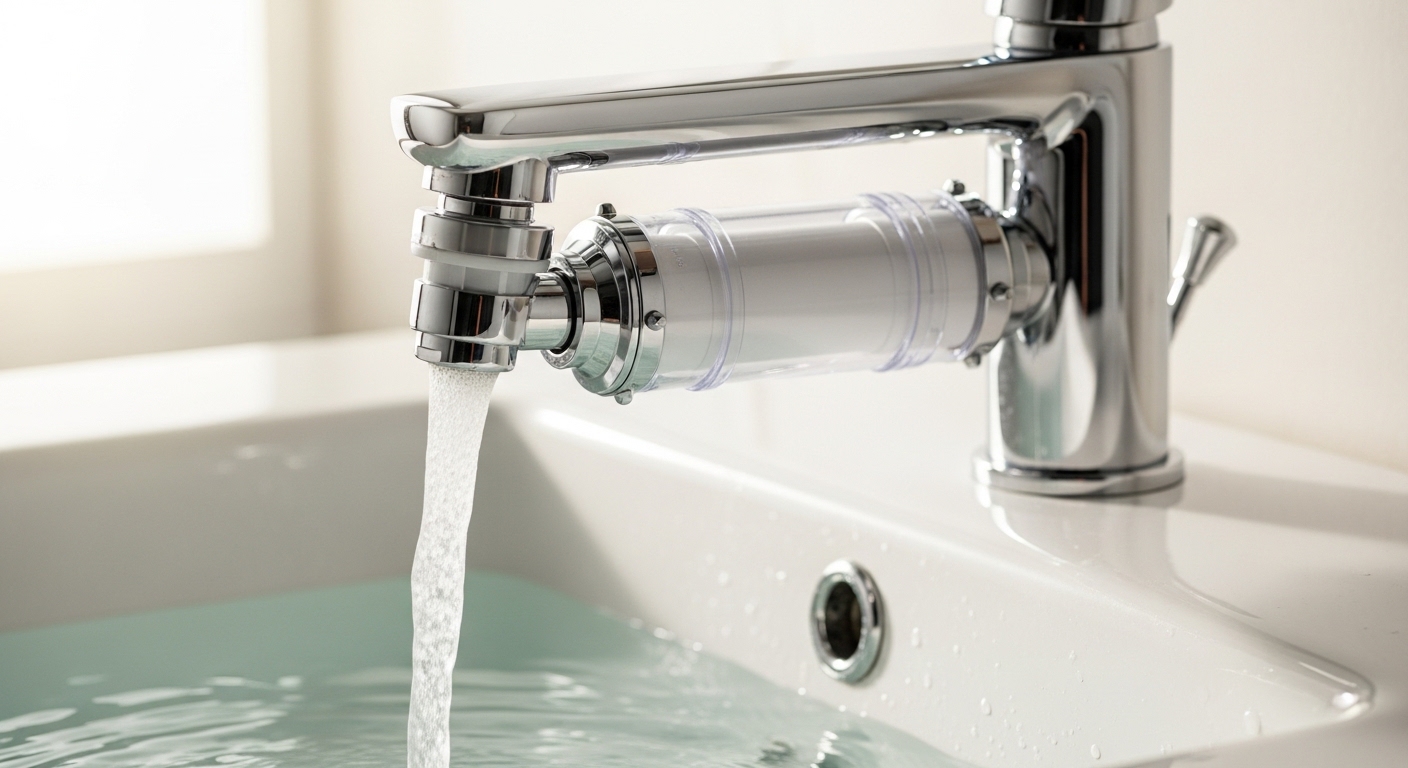
If you’ve been searching for the best bathroom faucet water filter for skin, you’ve probably noticed the same thing a lot of people do: your face feels tight, itchy, or weirdly “squeaky” right after you wash it — and no moisturizer seems to fully fix it. Nine times out of ten, the culprit isn’t your skincare. It’s your tap water. Municipal water is treated with chlorine or chloramine to keep it safe to drink, and while that’s great for public health, those same disinfectants pull the natural lipids out of your skin barrier every time you splash your face. A good bathroom faucet filter targets exactly that problem, and this guide breaks down which type actually works, what to look for, and what to skip.
Let’s cut through the marketing. Not every “spa” or “beauty” filter does anything measurable, and some of the priciest ones are worse than a $30 carbon cartridge. Here’s how to choose the right one for your skin, your water, and your budget.
Why does tap water make my skin feel dry and tight after washing my face?
Because chlorine and chloramine in your tap water strip the natural oils (sebum and ceramides) that keep your skin barrier hydrated. That “tight, squeaky” feeling after washing is literally your skin’s protective layer being partially dissolved. It’s the same reason your skin feels rougher after a swim in a chlorinated pool — just a milder, daily version of it.
Two things in your water do the damage:
- Chlorine / chloramine (disinfectant byproducts): These oxidize skin lipids and can worsen eczema, rosacea, and general dryness. Chloramine is harder to remove than plain chlorine because it’s more chemically stable — this matters a lot when you pick a filter.
- Hardness minerals (calcium & magnesium): “Hard water” leaves a mineral film that reacts with soap to form scum, which clings to skin and clogs pores. It also makes cleansers rinse off poorly, leaving residue.
A skin-focused faucet filter tackles the first problem directly (chlorine/chloramine) and, with the right media, softens the impact of the second. If your bathroom faucet is also acting up — dripping or spitting — sort that out first; a filter won’t perform on a faucet with a bad aerator or a slow leak. Our guide on why your faucet aerator is leaking and how to stop it fast is a good five-minute pre-check before you add any filter.
What is the best bathroom faucet water filter for skin — faucet-mount, inline, or under-sink?
For skin specifically, an inline or faucet-mount carbon-block filter with KDF-55 media is the best all-rounder: it removes 95–99% of chlorine, tackles chloramine better than plain carbon, and installs in minutes. Under-sink systems filter more water and last longer, but they’re overkill if your only goal is softer skin at one bathroom sink. Vitamin C filters are the gentlest on already-sensitive or eczema-prone skin because they neutralize chlorine chemically rather than just adsorbing it.
Here’s how the main types stack up for skin, not drinking:
| Filter Type | Chlorine Removal | Chloramine? | Best For | Typical Price | Cartridge Life |
|---|---|---|---|---|---|
| Faucet-mount carbon | 90–97% | Weak | Budget, quick install | $25–$45 | 2–3 months |
| KDF-55 + activated carbon (inline) | 95–99% | Good | Best all-round for skin | $35–$70 | 4–6 months |
| Vitamin C (ascorbic acid) inline | 99%+ | Excellent | Sensitive / eczema skin | $40–$80 | 2–4 months |
| Under-sink carbon block | 97–99% | Good–Excellent | Whole-sink, long life | $90–$180 | 6–12 months |
Notice the pattern: if your city uses chloramine (call your water utility or check your annual water quality report — it’s free), plain carbon alone won’t cut it. You want KDF-55 or Vitamin C in the mix. This is the single most common mistake people make when buying a “skin” filter — they grab a basic carbon puck that’s rated for chlorine and wonder why their skin still feels dry.
Do bathroom faucet water filters actually help with eczema, acne, or dry skin?
Yes — for many people, and the effect is often noticeable within one to two weeks. Removing chlorine reduces the daily oxidative stress on your skin barrier, which is why dermatologists frequently suggest dechlorinated water for eczema and rosacea flare-ups. It won’t “cure” a skin condition, but it removes a daily irritant that keeps re-triggering one.
What the research and real-world use generally show:
- Eczema & sensitive skin: Lower chlorine exposure means less barrier disruption and fewer flare-ups. Vitamin C filters are the most gentle here.
- Acne-prone skin: Softer water rinses cleansers off cleanly, so you get less pore-clogging soap-scum residue. Results are indirect but real.
- General dryness / aging concerns: Less chlorine oxidation means your skin retains more of its natural moisture, so the “tight after washing” feeling largely disappears.
Set expectations honestly: a faucet filter helps your face and hands, because that’s the water you use at the sink. For your whole body, you’d want a filtered showerhead too — the shower is where most people get the biggest chlorine exposure. If that’s your bigger concern, pair your sink filter with a filtered shower; our rainfall shower head filter guide walks through the best filtered rain showers for cleaner, softer water head-to-toe.
How do I know if I even need a skin water filter — what should I look for?
Do a 10-second gut check: if your skin feels tight and squeaky after washing, your soap barely lathers, or you see white chalky spots dry on the faucet and mirror, you have hard and/or chlorinated water — and a filter will help. If your water is soft and lathers easily, the benefit will be smaller.
When you’re comparing products, these are the specs that actually matter for skin (ignore the rest of the marketing):
- Media type: Look for KDF-55, activated carbon block, or Vitamin C — not just “activated carbon” alone if you have chloramine.
- Chlorine removal rating: Aim for 95%+ stated on the spec sheet, ideally tested to NSF/ANSI Standard 42 (aesthetic effects — chlorine, taste, odor).
- Flow rate: 0.5–1.5 GPM is normal for a bathroom sink. Too aggressive a filter can throttle your faucet to a trickle.
- Cartridge cost & life: The sticker price is a trap — do the math on replacement cartridges over a year. A $30 filter with $20 cartridges every 6 weeks costs more than a $60 filter with $25 cartridges every 6 months.
- Fitment: Standard bathroom faucets have a 15/16″-27 male or 55/64″-27 female aerator thread. Check yours before buying, or grab an adapter kit.
That last point trips people up constantly — a filter that doesn’t thread onto your spout is a returned filter. Bathroom faucet aerators use different threading than kitchen ones, and some designer faucets hide the threads entirely. If you’re unsure, our breakdown of whether a Culligan faucet water filter is worth it versus other faucet-mount filters covers real-world fitment and how to check your thread size before you order.
Faucet-mount vs. inline vs. under-sink: which one should I actually buy for a bathroom?
Buy a faucet-mount filter if you rent or want zero tools; buy an inline filter if you have exposed supply lines and want longer cartridge life; buy an under-sink system only if you use a lot of water at that sink or want it hidden completely. For 80% of bathrooms, the faucet-mount or inline option is the right call.
Quick decision guide:
- You rent / can’t drill: Faucet-mount. It screws onto the spout in 60 seconds and comes off just as fast when you move.
- You want it invisible and low-maintenance: Under-sink. More money and a bit of plumbing, but you forget it exists for 6–12 months at a time.
- You want the best chloramine + skin performance for the money: Inline KDF-55/Vitamin C on the cold line. This is our top pick for most people focused on skin.
One practical note: most skin damage happens with warm water, but many inline filter media (especially Vitamin C and carbon) degrade faster or don’t perform well with hot water. The best-practice setup is to filter the cold supply line and wash your face with cool-to-lukewarm water anyway — which dermatologists recommend regardless, since hot water itself strips oils. Cool water + filtered water is the combo that actually protects your skin barrier.
How long do these filters last, and what does upkeep really cost?
Most bathroom skin filters last 2–6 months per cartridge, and realistic annual upkeep runs $40–$120 depending on the media and your water usage. Vitamin C cartridges are the shortest-lived (ascorbic acid gets used up as it neutralizes chlorine), while KDF-55/carbon blocks last longest. If you skip changes, the filter stops working silently — there’s no alarm, just your skin feeling tight again.
Keep it simple and it’ll keep working:
- Change on schedule, not on looks. A spent carbon filter looks identical to a fresh one. Mark the swap date on your phone calendar.
- Watch your flow. A sudden drop in water pressure usually means the cartridge is clogged with sediment and needs replacing.
- Descale the housing. If you have hard water, mineral buildup collects in the filter housing and aerator. A quick vinegar soak keeps flow strong.
- Keep a spare cartridge on hand so a busy week doesn’t turn into a month of unfiltered water.
A leaking connection is the most common install hiccup, and it’s almost always a missing washer or over-tightening that cracks the threads. If yours weeps at the joint, the fix is usually a 2-minute reseat — the same troubleshooting logic in our guide on finding the cause of a leaking bathroom faucet and fixing it yourself applies directly to filter housings and adapters.
Author’s note & why trust this guide
This guide was written and reviewed by the WOWOW Faucet product team, who design, spec, and lab-test bathroom and kitchen fixtures — including aerators, filters, and flow components — against NSF/ANSI aesthetic and material-safety standards. WOWOW is a dedicated faucet and bathroom-fixtures brand (not a general marketplace reseller), and our fixtures ship with a limited lifetime warranty on finish and function. Our recommendations here are based on media performance data, third-party chlorine-removal test methods (NSF/ANSI 42), and thousands of real customer fitment questions — not affiliate payouts. When we say “check your thread size,” it’s because that single step prevents the most returns we see.
FAQ
Will a bathroom faucet water filter remove hard water minerals for softer skin?
Partially. Standard carbon and KDF filters reduce chlorine and some heavy metals but do not remove calcium and magnesium (the minerals that make water “hard”). For true softening you’d need an ion-exchange softener, which is a whole-home system. That said, KDF media and Vitamin C filters noticeably reduce the harsh, drying feel of hard chlorinated water on skin, which is what most people are actually after.
Is a Vitamin C filter really better for skin than a carbon filter?
For sensitive, eczema-prone, or reactive skin — yes, usually. Vitamin C (ascorbic acid) neutralizes both chlorine and chloramine through a chemical reaction, achieving 99%+ removal even in warm water, where carbon can struggle. The trade-off is shorter cartridge life and slightly higher running cost. For normal skin, a good KDF-55 + carbon filter performs almost as well for less money.
Can I install a bathroom faucet water filter myself without a plumber?
Yes. Faucet-mount and inline filters are genuinely DIY — you unscrew the existing aerator, thread on the filter or adapter, hand-tighten, and check for drips. It takes about five minutes and needs no tools beyond maybe pliers and plumber’s tape. Only under-sink systems involving cutting into supply lines might warrant a plumber if you’re not comfortable working under the sink.
How often should I actually replace the filter cartridge?
Follow the media type: Vitamin C every 2–4 months, faucet-mount carbon every 2–3 months, KDF-55/carbon block every 4–6 months, and under-sink blocks every 6–12 months. Heavy usage or very chlorinated water shortens these. Don’t wait for a visible sign — spent filters look normal, so set a calendar reminder.
Does filtered water at the sink help with acne breakouts?
It can help indirectly. Removing chlorine reduces skin-barrier irritation, and softer, cleaner water rinses cleansers off completely instead of leaving pore-clogging soap residue. It’s not an acne treatment on its own, but many people find their skin is calmer and less reactive once they stop washing with harsh chlorinated tap water. Pair it with a consistent skincare routine for the best results.
\n
Related Guides
\n
- \n
- What are The Different Types of Bathroom Faucets
- Best White Kitchen Faucets – Buying Guide & Reviews
- The Best Faucet Brands to Consider in 2026
- What is The Standard Size Hole for A Kitchen or Bathroom Faucet
\n
\n
\n
\n
\n