 WOWOW Faucets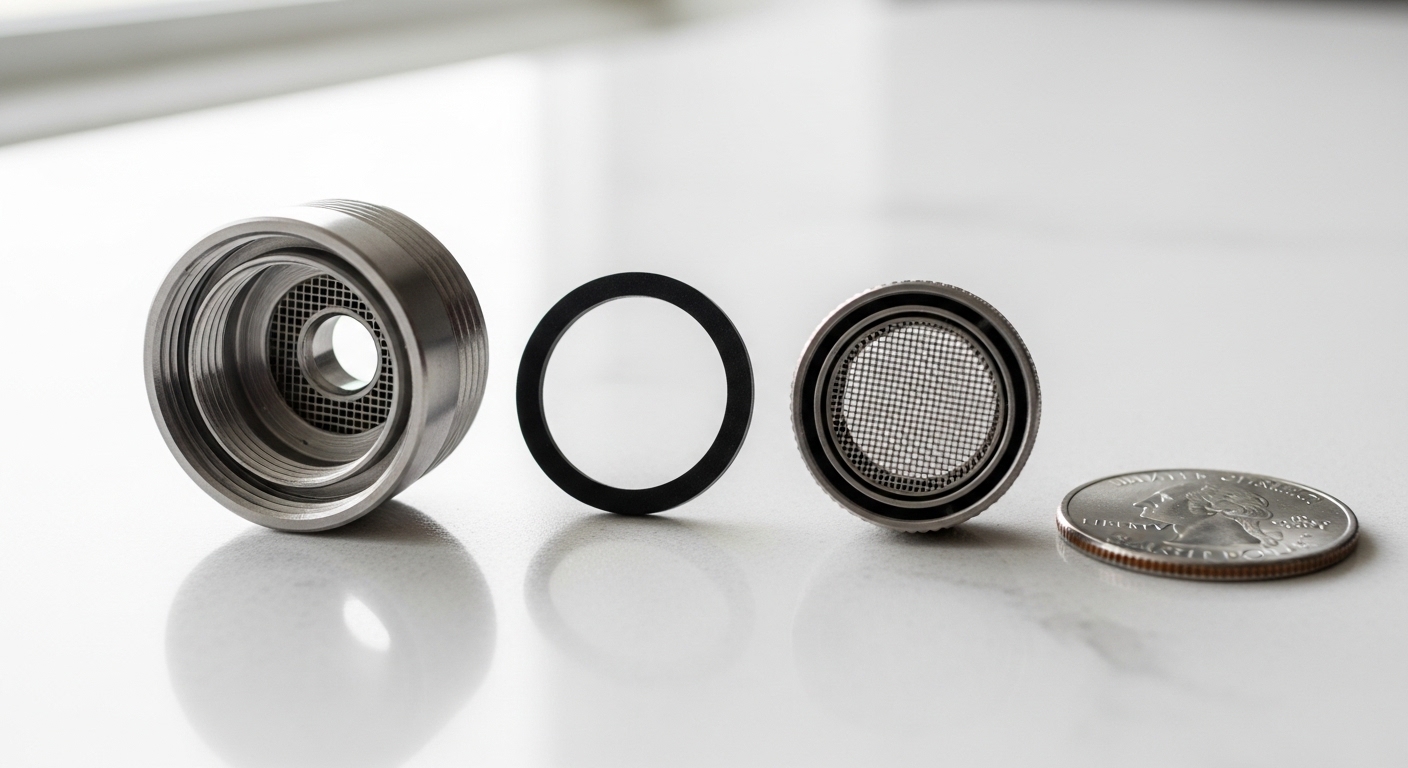
If you’ve ever wondered why your kitchen water suddenly sprays everywhere, runs weak, or spits sideways, the answer is almost always the little part at the very end of your spout. A faucet aerator for kitchen sink use is the unsung hero of your faucet: it controls how the water actually feels, how much you waste, and how much it splashes back at your shirt while you rinse a pot. It costs a few dollars, takes two minutes to swap, and fixes a surprising number of “my faucet is broken” complaints that aren’t actually about the faucet at all.
Below, we’ll answer the real questions people ask before buying one — thread sizes, GPM ratings, aerated vs. laminar vs. spray, whether pull-down faucets even use them, and how to stop the leaks and clogs that make people replace a perfectly good faucet. Let’s get you the right part the first time.
What exactly does a faucet aerator do on a kitchen sink?
An aerator does three jobs at once: it blends air into the water stream, it evens out the flow into a soft column instead of a chaotic gush, and it acts as a flow restrictor to save water. That’s it — no electronics, no moving parts, just physics and a mesh screen.
Here’s what’s happening inside. Water enters the aerator under pressure and passes through a fine screen or a series of discs. That screen splits the single stream into dozens of tiny streams and pulls in surrounding air through small side vents. The result is a stream that’s roughly 40–50% air by volume. Because you’ve replaced water with air, you use less water while the stream still feels full and forceful. It also stops the “fire hose” splash that soaks your counter when you turn the handle all the way up.
Three practical benefits you’ll actually notice at your kitchen sink:
- Less splashing. A soft, aerated column hits the bottom of a stainless sink far more gently than a hard, un-aerated jet.
- Lower water bills. Dropping from an old 2.75 GPM aerator to a 1.5 GPM model can cut faucet water use by roughly 45% — real money over a year for a family that cooks and cleans daily.
- A cleaner-looking, quieter stream. Aerated water traps light and looks bright white; it’s also noticeably quieter than a bare stream slamming into steel.
One myth worth killing: a lower-GPM aerator does not reduce your water pressure. Pressure is set by your home’s plumbing. The aerator only changes flow rate — how many gallons pass per minute. A good 1.5 GPM aerator feels just as strong as a 2.2 because the air keeps the stream full.
How do I know which thread size faucet aerator to buy for my kitchen sink?
Match two things: the thread gender (male vs. female) and the thread size. Get those right and almost any aerator will thread on perfectly; get them wrong and nothing else matters.
The threads can be on the outside of your spout tip (that’s a male spout, which takes a female aerator) or on the inside (a female spout, which takes a male aerator). Kitchen faucets in North America overwhelmingly use one of two standard sizes:
| Aerator size name | Thread diameter | Fits | Common on |
|---|---|---|---|
| Regular (male) | 15/16″ – 27 | Female spout (inside threads) | Most standard US kitchen faucets |
| Regular (female) | 55/64″ – 27 | Male spout (outside threads) | Most standard US kitchen faucets |
| Junior (male) | 13/16″ – 27 | Small female spout | Bar/prep faucets, some bathroom |
| Tom Thumb / Junior (female) | 3/4″ – 27 | Small male spout | Compact & bar faucets |
| Cache / hidden | Recessed inside spout | Special key required | Modern pull-down kitchen spouts |
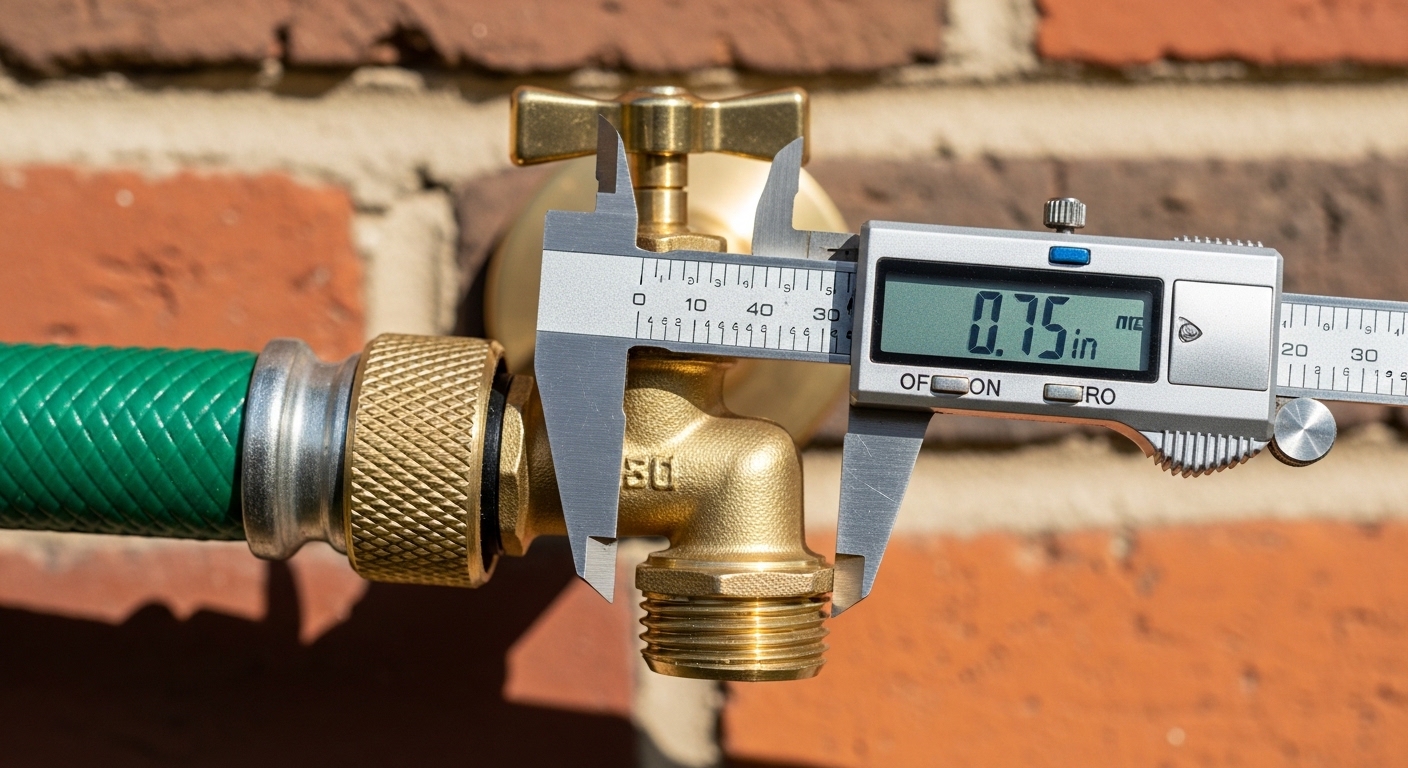
The fastest way to measure at home: press a coin against the spout tip. A US quarter (about 15/16″) that roughly matches the opening means you need a “regular” size — the most common by far. If it’s closer to a nickel (13/16″), you’re looking at “junior.” If you want the precise, no-guess method — including the tricky metric M18, M22, and M24 threads on many imported and European-style faucets — our full bar tap thread size guide walks through calipers, thread pitch, and how to read the markings, and it applies just as well to kitchen aerators.
Still stuck because your spout thread is worn, oddly sized, or metric? A faucet extension or thread adapter can bridge a mismatch so a standard aerator will seat correctly instead of forcing you to replace the whole faucet.
Aerated vs. laminar vs. spray: which type is best for a kitchen sink?
For a general-purpose kitchen sink, an aerated insert is the best all-rounder — but a spray/needle aerator is better if your priority is fast rinsing and filling, and a laminar flow is best if you care about hygiene or hate hard-water mineral spray on your counter.
Here’s the plain-language breakdown of the three stream types you’ll see for sale:
| Stream type | How it feels | Best for | Downside |
|---|---|---|---|
| Aerated | Soft, full, bright-white, foamy | Everyday washing, low splash, comfort | Slightly slower to fill pots; can harbor more bacteria if never cleaned |
| Laminar | Crystal-clear, solid glass-like column | Hard water, hygiene-focused kitchens, filling containers | Splashes a bit more; no air-mixing “softness” |
| Spray / needle | Many separate fine streams, wide coverage | Fast rinsing of dishes and produce | More splash-back, less gentle on delicate items |
A few honest recommendations. If you have small kids and a shallow sink, aerated wins because it’s the least splashy. If you’re on well water or notoriously hard municipal water, laminar clogs less dramatically and is easier to keep clean. And if you fill big stockpots constantly, look at the GPM number more than the stream type — a 2.2 GPM aerator fills faster than a 1.0 GPM one no matter which pattern it uses.
What GPM should a kitchen faucet aerator be?
For a kitchen sink, 1.5 to 1.8 GPM is the sweet spot. It saves meaningful water while still filling pots and pasta pans without you drumming your fingers. Go to 2.2 GPM only if you fill large containers many times a day; drop to 1.0–1.2 GPM only if strict water conservation matters more to you than fill speed. (Federal maximum for kitchen faucets is 2.2 GPM; California and a few other states cap it lower at 1.8 GPM.)
Do pull-down and pull-out kitchen faucets use aerators too?
Yes — but they usually hide the aerator inside the spray head, and it’s often a proprietary “cache” cartridge you can’t buy at a generic hardware store. That’s the single biggest source of confusion for people with modern faucets.
On a standard fixed-spout faucet, the aerator screws onto the visible tip and you can replace it with any matching-size universal aerator. On a pull-down or pull-out sprayer, the aerator is tucked up inside the removable spray head, frequently secured with a small plastic key or a recessed housing specific to that brand. If the flow on your sprayer has gotten weak or splits into two directions, don’t assume the faucet failed — nine times out of ten it’s a clogged aerator screen inside the spray head.
What to do:
- Unscrew or unclip the spray head from the hose (check your manual — most twist off).
- Look for the mesh screen at the tip. Pop it out with the included key, or gently with needle-nose pliers.
- Soak it in white vinegar for 20–30 minutes to dissolve limescale, then scrub with an old toothbrush and reinstall.
If yours is a brand-specific cache aerator, order the exact replacement from the manufacturer rather than forcing a universal one — the threads and housing diameter are rarely standard. This is the same limescale problem that plagues shower and sink screens, and the cleaning method is identical to how you’d clean a clogged sink shower head — vinegar does the heavy lifting.
Why is my kitchen faucet aerator leaking or dripping around the tip?
A leak right at the aerator is almost always one of three cheap fixes: a worn rubber washer, an over- or under-tightened housing, or mineral buildup keeping the seal from seating. Rarely is it the faucet itself.
Run through this in order before you replace anything expensive:
- Check the washer. Inside the aerator there’s a small rubber or silicone O-ring/washer. If it’s cracked, flattened, or missing, water sneaks past the threads. Replacement washers cost pennies.
- Re-tighten by hand, then a quarter turn. Cross-threaded or loose aerators drip. So do over-tightened ones that crack the housing. Hand-tight plus a gentle nudge with pliers (wrapped in tape to avoid scratches) is right.
- Descale it. Limescale between the washer and the spout stops the seal from closing. Soak in vinegar and reseat.
- Add thread tape only if needed. A single wrap of PTFE (plumber’s) tape on the spout threads can cure a stubborn weep — but don’t overdo it.
If the drip persists after all that, or you’re seeing water below the sink rather than at the tip, the problem has moved deeper into the valve or cartridge. We break the full diagnosis down in our guide to a leaking faucet aerator, and if the drip is coming from the base or handle instead, see how to fix a leaky single-handle kitchen faucet — that’s a cartridge job, not an aerator one.
How do I remove and replace a stuck kitchen faucet aerator?
Turn it counterclockwise (as you look up at it from below) to remove, clockwise to install — and if it’s stuck, vinegar plus a taped wrench beats brute force every time. The whole job takes under five minutes on a standard spout.
Step by step:
- Try by hand first. Grip the aerator and twist counterclockwise. Warm the joint with a cloth soaked in hot water to expand the metal slightly.
- Protect the finish. Wrap the housing in a rubber band, cloth, or masking tape, then use adjustable pliers or a strap wrench so you don’t scratch the chrome or nickel.
- Break up corrosion. If it won’t budge, soak a paper towel in white vinegar, wrap it around the tip, bag it with a rubber band, and wait 30 minutes. Mineral lock is the usual culprit.
- Clean the spout threads once it’s off, then hand-thread the new aerator straight (never at an angle) to avoid cross-threading.
- Snug it up hand-tight plus a light quarter-turn, run the water, and check for leaks.
Reinstalling a new one is the same process in reverse. If your old aerator disintegrated and you can’t read the size, take it — or the whole spray head — to the store, or measure per the thread guide linked above.
How often should I clean or replace a kitchen faucet aerator?
Clean it every 3–6 months (monthly if you have hard water), and replace it every 1–3 years or whenever cleaning no longer restores full flow. Aerators are consumables, not permanent parts.
Signs it’s time for a new one rather than another cleaning: the plastic threads are stripped, the screen is torn, the flow stays weak and uneven after descaling, or the housing is cracked and weeping. At $4–$15, replacement is cheaper than the water you waste fighting a clogged one — and a fresh aerator can make a decade-old faucet feel brand new.
The bottom line on choosing a kitchen sink aerator
Match your thread size, pick 1.5–1.8 GPM, choose aerated for comfort or laminar for hard water, and keep it clean. That’s genuinely the whole decision. A faucet aerator for kitchen sink duty is one of the highest-return few-dollar upgrades in your entire home — it touches every glass of water, every rinsed plate, and every pot you fill. Get the right one and you’ll stop splashing, save water, and quiet the sink, all before your coffee gets cold.
About the author & brand: This guide was written by the WOWOW Faucet product team, drawing on hands-on bench testing of kitchen faucets and aerators across a range of flow rates and water conditions. WOWOW designs and manufactures kitchen and bathroom faucets, shower systems, and fixtures, and our kitchen faucets ship with lead-free, cUPC-certified components that meet U.S. flow standards and are backed by a limited lifetime warranty on finish and function. When we cite GPM figures and thread sizes, they reflect current U.S. federal and California standards and the specs we test our own products against.
FAQ
Are all kitchen faucet aerators the same size?
No. While most standard US kitchen faucets use the “regular” size (15/16″ male or 55/64″ female), plenty use junior sizes, and many modern pull-down faucets use hidden “cache” aerators or metric (M18/M22/M24) threads. Always confirm the thread gender and diameter before buying — a universal aerator only fits standard threads.
Can I remove the aerator to increase water flow?
You can, and flow will increase — but you’ll also get heavy splashing, a noisier stream, and wasted water, and you lose the screen that catches debris and protects any downstream filter. If your flow is weak, clean or replace the aerator instead of removing it; a clogged screen, not the aerator itself, is usually the reason flow dropped.
Will a low-GPM aerator hurt my water pressure?
No. Aerators change flow rate (gallons per minute), not pressure (which your home’s plumbing sets). A quality 1.5 GPM aerator mixes in air so the stream still feels full and strong while using far less water than an old 2.2 or 2.75 GPM model.
Why does my kitchen faucet spray sideways or split into two streams?
That’s a partially clogged aerator screen — mineral deposits or debris are blocking part of the mesh and deflecting the water. Unscrew the aerator, soak it in white vinegar for 20–30 minutes, scrub with a toothbrush, and reinstall. If the screen is torn, just replace the aerator.
Do I need a plumber to change a faucet aerator?
No — it’s one of the easiest plumbing jobs there is. On a standard spout it unscrews by hand (counterclockwise) and a new one threads right on, no tools or shut-off required. Only reach for pliers and vinegar if it’s stuck from corrosion, and protect the finish with a cloth or tape.