 WOWOW Faucets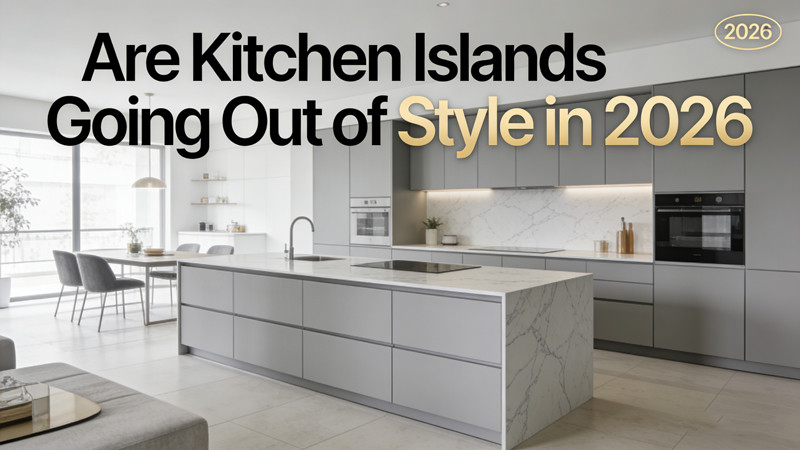
For more than a decade, kitchen islands have been a cornerstone of modern kitchen design. They re places to prep food, eat meals, house appliances, store essentials, and connect with family and guests. But like every design element, kitchens evolve — and 2026 is shaping up to be a pivot year for how islands are planned, used, and perceived.
So are kitchen islands going out of style in 2026? The short answer: No — but their form, function, and design priorities are changing. Instead of disappearing, islands are being reinvented to match new lifestyle preferences focused on flexibility, usability, and thoughtful design.
Let’s explore what’s happening with kitchen islands in 2026 and what homeowners need to know before redesigning their space.
Why Kitchen Islands Became a Must-Have
To understand where kitchen islands are headed, it helps to look back at why they became so popular in the first place.
In the 2000s and 2010s:
- Open-plan living took off, and islands helped bridge kitchens with dining and living rooms.
- Multifunctional spaces became essential, and islands offered storage, prep space, and casual seating.
- Appliances and fixtures became more compact, allowing islands to host sinks, cooktops, and appliances.
- Homeowners wanted social kitchens, where guests could gather around an island while meals were prepared.
For many years, real estate listings even touted “spacious kitchen island” as a must-have feature, often supporting higher resale value. But as design priorities shift, so does the role of the kitchen island.
The 2026 Kitchen: Function Over Formality
In 2026, kitchen design is less about aesthetic trends and more about functional longevity:
- Homeowners want spaces that adapt to changing needs — cook better, entertain comfortably, and stay relevant for years.
- Many are prioritizing workflow efficiency over large showpiece elements.
- Designers are emphasizing flexible, modular features instead of rigid, oversized fixtures.
Under these priorities, kitchen islands are morphing — not dying.
Why People Think Islands Are “Out of Style”
Some trends and conversations suggest kitchen islands are on the decline. Here’s what’s fueling that perception — and why it’s more trend conversation than reality.
1. Smaller or Flexible Spaces
Not every home has room for a large island.
With rising real estate prices and more people choosing compact, efficient living, open floorplans with expansive islands are less common in new builds.
But absence of large islands doesn’t equal abandonment of the concept. Smaller or mobile islands are emerging instead.
2. Alternative Workspace Solutions
Some designers are replacing traditional islands with:
- Peninsula counters
- Extendable tables
- Mobile prep carts
- Integrated banquette + table designs
These alternatives offer the function of an island without committing to a fixed, bulky structure — appealing in smaller or multifunctional spaces.
3. Preference for Clean, Minimal Layouts
A minimalist aesthetic sometimes portrays islands as visually heavy elements.
But in 2026, this trend favors simplified island designs rather than removing them altogether. Sleek islands with integrated storage, hidden appliances, and flush seating are replacing oversized, decorative islands.
Why Kitchen Islands Still Matter in 2026
Despite some shifts in perception, there are strong reasons kitchen islands remain relevant and valuable:
1. They Improve Functionality
Islands create useful work zones that enhance kitchen workflow:
- Additional countertop space for prep
- Dedicated storage
- Natural gathering and seating area
- Room for appliances, sinks, or cooktops
Even in compact layouts, scaled-down islands are still preferred over no island at all.
2. Flexible Design Options
Designers are rethinking islands as modular and adaptable elements:
- Moveable or wheeled islands
- Drop-leaf or expandable tops
- Convertible seating zones
- Multi-height work surfaces
- Integrated charging stations and tech hubs
These options make islands more versatile, especially in homes where adaptability is key.
3. Social and Multi-Generational Appeal
For families, kitchen islands remain central gathering spots. They provide:
- A place for kids to do homework while meals are made
- A breakfast nook for quick meals
- A social hub during gatherings and parties
Even if their size or look changes, the purpose persists.
What Kitchen Islands Look Like in 2026

In 2026, islands aren’t disappearing. They are simply evolving into smarter, more intentional elements. Here’s how they’re trending:
1. Smaller but More Purposeful
Instead of giant islands that dominate a space, many kitchens now use:
- Slimmer islands with targeted storage
- Table-height islands for social interaction
- Partially open-shelved islands to lighten visual weight
This trend leans into function without overwhelming the room.
2. Integrated Technology
Kitchen islands are becoming smart surfaces:
- Built-in wireless charging
- USB and outlet access
- Touch-activated lighting
- Integrated speakers or voice-activated controls
These features help islands serve dual roles: kitchen work + modern tech hub.
3. Mixed Material Designs
Rather than a single material, islands now often combine:
- Wood and stone
- Matte and metal finishes
- Contrasting colors to define zones
This approach maintains visual interest without relying on size alone.
When an Island Might Be the Wrong Choice
Despite their many advantages, kitchen islands aren’t always the best fit:
1. Very Narrow Kitchens
If a traditional island disrupts traffic flow or creates tight clearance, alternatives like a peninsula or movable cart may work better.
2. Limited Budget for Structural Changes
Adding electrical, plumbing, or ventilation to an island can increase costs quickly. In these cases, minimalist islands or mobile solutions may be more cost-effective.
3. Prioritizing Open Sightlines
In homes where living, dining, and kitchen areas blur together, overly large islands can block sightlines. Sleeker designs ensure continuity without visual disruption.
Final Verdict: Islands Are Evolving — Not Disappearing
So, are kitchen islands going out of style in 2026?
No. What’s changing is how they are designed and used.
In 2026:
- Islands are more functional, smaller, and flexible
- Minimalist and modular design trumps oversized showpieces
- Alternative work zones gain popularity, especially in compact homes
- Smart features and multifunctional surfaces redefine utility
Ultimately, kitchen islands remain a cornerstone of thoughtful design — they’re simply better adapted to modern lifestyles.
If you’re planning a renovation or new kitchen, the best question isn’t “Should I have an island?” but rather:
“How can the island I choose add the most value, usability, and joy to my everyday life?”
With that mindset, your kitchen island — no matter the size — will be far from outdated.