 WOWOW Faucets
Here is the complete, publish-ready HTML article:
“`
“`
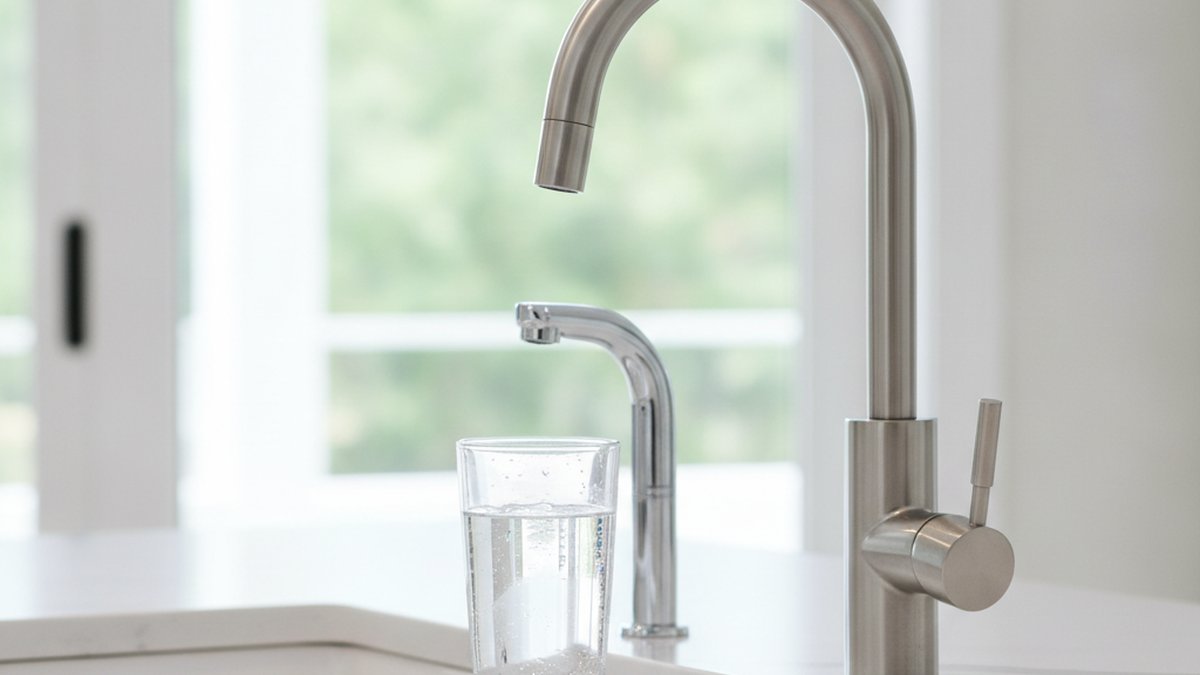
If you’re weighing a chrome drinking faucet for filtered water at the sink, the short version is this: it’s the sweet spot between price, durability, and looks. A dedicated drinking-water faucet keeps your filtered or reverse-osmosis (RO) water on its own tap — separate from the hot/cold water you use for dishes — and chrome is the finish that plays nicely with virtually every kitchen already built. Below, we’ll walk through when it’s the right call, what specs actually matter, how it compares to other finishes, and how to install and maintain one so it lasts a decade or more.
What exactly is a chrome drinking faucet, and how is it different from a regular kitchen faucet?
A chrome drinking faucet is a small, dedicated tap — usually mounted in a spare sink hole or drilled into the countertop — that delivers only filtered cold water from an under-sink filter or RO system. Unlike your main kitchen faucet, it doesn’t mix hot and cold and it isn’t connected to your regular pressurized supply lines in the same way.
The practical differences matter more than they sound:
- Single water source. It carries only treated water, so the internal parts never touch the higher mineral load of raw tap water the way a standard faucet does.
- Lower flow, lower pressure. Drinking faucets typically run around 0.5–1.5 gallons per minute (GPM), because RO tanks and filters deliver water gently. A main kitchen faucet is capped at 1.8 GPM by federal standards but usually feels stronger.
- Air-gap vs. non-air-gap. RO-specific drinking faucets come in “air-gap” versions (with a third tube that prevents drain water from siphoning back) and simpler “non-air-gap” versions. Chrome is available in both.
- Compact footprint. Most are 10–13 inches tall with a slim spout, designed to sit beside — not replace — your main faucet.
So if your goal is a clean glass of water without buying bottled, a dedicated drinking faucet is the correct tool, and chrome is the most universally compatible finish to buy it in.
Why choose chrome over brushed nickel, matte black, or stainless for a drinking faucet?
Choose chrome when you want the lowest price, the easiest cleaning, and a finish that matches almost anything — it’s the safest all-rounder. Brushed nickel hides water spots better, matte black looks modern but shows limescale, and stainless splits the difference at a higher cost.
Here’s the honest trade-off. Polished chrome is a bright, mirror-like finish applied over a nickel base layer, and it’s been the plumbing industry’s default for a century for good reason: it’s hard, corrosion-resistant, and cheap to produce well. The downside is that its shine shows water spots and fingerprints more than a brushed finish. For a drinking faucet — which you touch dozens of times a day — that’s the one thing to be aware of.
| Finish | Typical price | Hides water spots? | Matches most kitchens? | Best for |
|---|---|---|---|---|
| Polished chrome | $ (lowest) | No — shows spots | Yes — nearly universal | Budget builds, classic/traditional kitchens |
| Brushed nickel | $$ | Yes | Yes | Warm-toned, transitional kitchens |
| Matte black | $$ | Partially — shows limescale | Modern only | Contemporary, high-contrast looks |
| Stainless / spot-resist | $$$ | Yes | Yes | Matching stainless appliances |
If your main faucet is already chrome or polished, a chrome drinking faucet is the obvious match. If you have brushed or black hardware, you can still mix — a small drinking tap is a minor visual element — but many buyers prefer to match. The good news: chrome is the least likely finish to look dated or clash, which is exactly why it remains the best default for a fixture you plan to keep for years.
What specs actually matter when buying a chrome drinking faucet under $80?
Under $80, the three specs that decide whether your faucet lasts are: a lead-free solid brass body, a ceramic-disc valve, and a certified finish. Skip anything with a zinc-alloy body or an unnamed valve — those are the parts that fail first.
Let’s break down what to look for and why:
- Lead-free brass body. Because this faucet delivers your drinking water, the wetted parts should meet the U.S. “lead-free” standard (NSF/ANSI 372, weighted-average lead ≤ 0.25%). Solid brass resists corrosion far better than the cheaper zinc alloy used in bargain units.
- Ceramic-disc cartridge. This is the valve that opens and closes the water. Ceramic discs are rated for 500,000+ cycles and are the reason a good faucet doesn’t drip after two years. Rubber-washer valves are cheaper and fail sooner.
- Certified finish. A quality chrome finish is electroplated over nickel and should carry a warranty against flaking or tarnish. Look for triple-plating language.
- Correct connection size. Most RO systems use 1/4-inch tubing; most standalone filters use 3/8-inch. Confirm your faucet’s inlet matches, or buy the right adapter.
- Air-gap vs. non-air-gap. If your RO system requires an air-gap faucet (check the manual), you must buy one — it has three tubes, not one.
- Spout height and reach. Make sure a tall glass or water bottle fits under the spout — 8–10 inches of clearance is comfortable.
One more thing people overlook: the mounting hole. A drinking faucet needs a 1/2-inch to 1-1/4-inch hole in the sink or countertop. If you’re using an existing sprayer or soap-dispenser hole, measure first. If you’re drilling stone, that’s a job worth hiring out. Understanding the internal cartridge that controls a kitchen faucet helps here too — the same ceramic-disc logic that makes a main faucet reliable applies to your little drinking tap.
How do you install a chrome drinking faucet with an under-sink filter or RO system?
You can install most chrome drinking faucets yourself in about 30–45 minutes if you already have a spare sink hole — the job is mounting the faucet, connecting one tube, and checking for leaks. Drilling a new hole in stone is the only step that may need a pro.
Here’s the general process. Always follow the instructions that came with your specific filter or RO system, since air-gap models differ:
- Shut off the water and clear the cabinet. Turn off the cold-water supply feeding your filter, and open the drinking faucet to release pressure.
- Set the faucet in the hole. Drop the faucet’s shank through the sink or counter hole, add the rubber and metal washers underneath, and hand-tighten the mounting nut. Position the spout, then snug the nut with a wrench.
- Connect the tubing. Push the 1/4-inch (or 3/8-inch) supply tube from your filter onto the faucet’s inlet. Most modern faucets use a quick-connect fitting — push until it clicks and tug to confirm it’s seated.
- For air-gap models, connect the drain tubes to the correct ports and route them to the sink drain per the RO manual.
- Turn the water back on and test. Let the faucet run for a few minutes to flush the filter and clear air. Check every connection for drips with a dry paper towel.
If you’ve never worked under a sink, the mechanics are the same as swapping any tap — our step-by-step guide to replacing a bathroom faucet covers the mounting-nut and supply-line basics that transfer directly to a drinking faucet. And if a drip shows up later, the culprit is almost always the cartridge — the same fix covered in our faucet cartridge replacement guide.
Do you need a plumber, or is this a DIY job?
For a standard hole, it’s DIY. The connections are hand-tight or quick-connect, and no soldering or gluing is involved. Hire a plumber only if you need a new hole drilled in granite/quartz, or if your RO system requires cutting into the drain line and you’re not comfortable doing it.
Is a chrome drinking faucet safe for daily drinking water?
Yes — as long as it’s certified lead-free. A chrome finish sits on the outside of the faucet and never touches your water; what matters for safety is the metal of the wetted internal parts, which should meet NSF/ANSI 372 for lead content and ideally NSF/ANSI 61 for drinking-water system components.
This is worth being clear about because “chrome” sometimes worries people. Chrome plating is inert and purely cosmetic and structural on the outside surface. The water inside your drinking faucet only ever contacts the brass waterway and the cartridge, so those are the parts that must be lead-free. Any reputable brand states this on the box or spec sheet. If a listing doesn’t mention lead-free certification, treat that as a red flag and move on.
How long does a chrome drinking faucet last?
A quality one lasts 10–15 years or more. The finish is the most durable part; the cartridge is the wear item and may need replacing once in that span. Because the faucet only handles filtered water — with less scale and sediment than raw tap — it typically outlives a hard-working main kitchen faucet.
Chrome drinking faucet vs. a filter pitcher or the main tap — which is actually cheaper?
Over three years, a dedicated chrome drinking faucet paired with an under-sink filter is usually cheaper per gallon than bottled water or pitcher filters, and far more convenient. The upfront cost is higher, but the running cost is much lower.
| Option | Upfront cost | Ongoing cost | Convenience |
|---|---|---|---|
| Chrome drinking faucet + under-sink filter | $120–$300 | Low — filter cartridges 1–2×/year | High — instant, unlimited |
| Filter pitcher | $25–$45 | Medium — frequent cartridge swaps | Low — refill and wait |
| Bottled water | $0 | High — ongoing forever | Low — hauling, storage, waste |
| Main tap only (no filter) | $0 | $0 | High but unfiltered |
The math favors the dedicated faucet for any household that drinks filtered water daily. You pay once for the hardware, then just swap inexpensive filter cartridges on schedule. And unlike a pitcher, there’s no waiting and no fridge space lost.
Author’s note & why trust wowowfaucet
This guide was written by the wowowfaucet product team, drawing on hands-on testing of dedicated drinking-water and RO faucets across finishes and valve types. wowowfaucet designs and manufactures kitchen and bathroom fixtures built to modern U.S. standards — our drinking-water faucets use lead-free brass waterways and ceramic-disc cartridges, and are backed by a limited lifetime warranty on the finish and function. We test every fixture line for flow consistency and leak resistance before it ships. Our aim isn’t to sell you the most expensive faucet — it’s to help you buy the right one once.
FAQ
Can I connect a chrome drinking faucet to any reverse-osmosis system?
Almost always, yes — as long as you match the connection type and air-gap requirement. Most RO systems use 1/4-inch tubing and a non-air-gap faucet, but some require an air-gap model with three tubes. Check your RO manual before buying, and confirm the inlet size.
Will a chrome drinking faucet match my brushed nickel main faucet?
It can, but it won’t perfectly match. Chrome is cooler and shinier than brushed nickel. Because a drinking faucet is small, many people accept the slight difference; if you want a seamless look, buy the drinking faucet in the same finish as your main tap.
Why is water coming out slowly from my drinking faucet?
Slow flow is normal for RO faucets — the storage tank refills gradually. If it’s suddenly slower than usual, the tank may be low on air pressure or the post-filter is clogged and due for replacement. A dedicated drinking faucet runs at a gentle 0.5–1.5 GPM by design.
Do I need a special faucet for drinking water, or can I use my regular tap?
You need a dedicated faucet if you’re running an RO or under-sink filter system, because it keeps filtered water separate and unpressurized correctly. If you only use an inline or faucet-mount filter, your main tap works — but a dedicated faucet is cleaner and doesn’t waste filtered water on dishes.
How do I clean a chrome drinking faucet without leaving spots?
Wipe it with a soft microfiber cloth and mild dish soap, then dry immediately — drying is the key step that prevents water spots. For limescale, use a 50/50 white vinegar and water solution, then rinse and dry. Never use abrasive pads or harsh chemical cleaners, which can dull the chrome.
Is a cheap chrome drinking faucet worth it?
Only if it has a lead-free brass body and a ceramic-disc valve. The finish on cheap and mid-range faucets can look similar, but the internal parts are where corners get cut. Spending a little more on a certified brass body pays off in years of drip-free use — you can explore certified options in our best faucet accessories guide for 2026.
“`