 WOWOW Faucets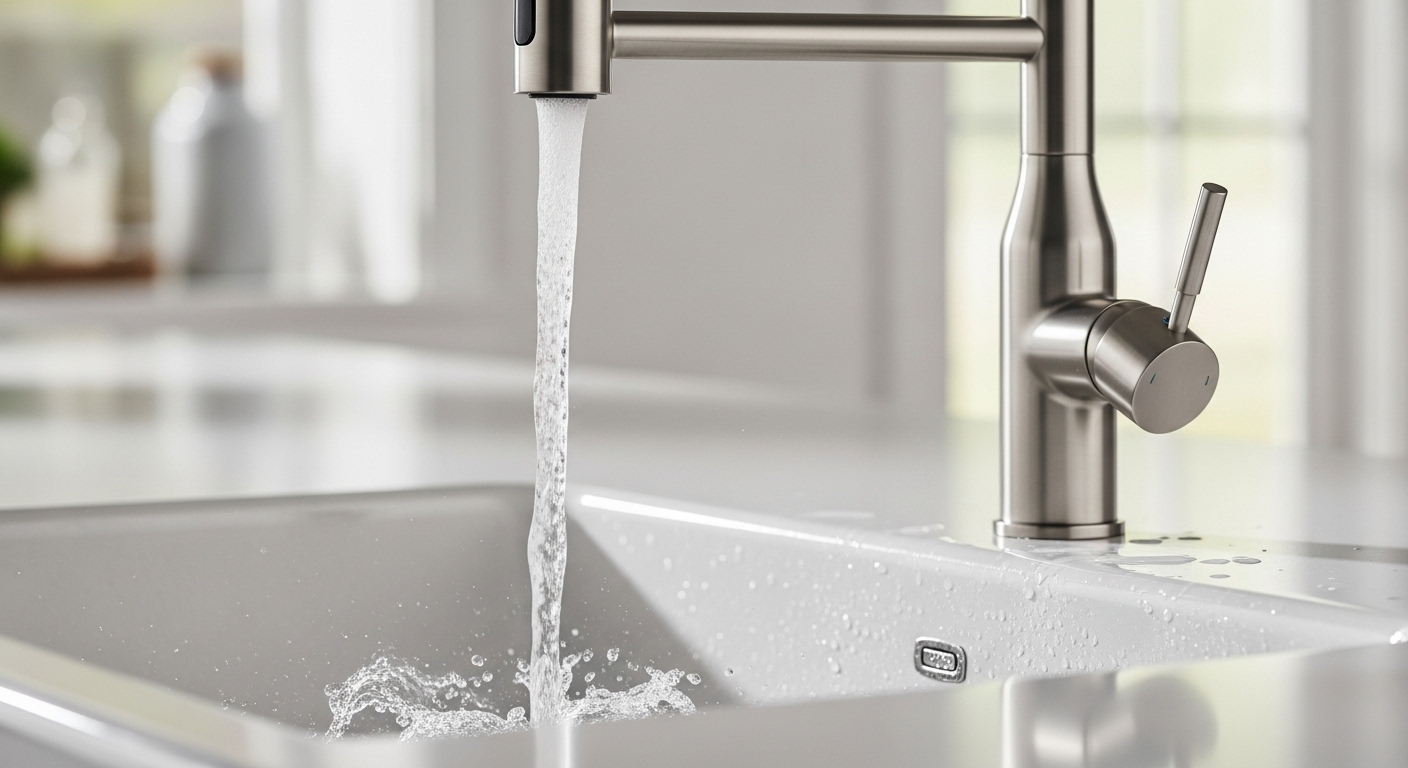
If you’ve been shopping for a new tap, you’ve probably noticed a spec that keeps coming up: a kitchen faucet with 2.0 flow rate. It sounds technical, but it’s actually one of the most practical numbers on the box. Flow rate — measured in gallons per minute, or GPM — tells you how much water actually comes out of the spout in real use. A 2.0 GPM faucet sits right in the “everyday workhorse” zone: fast enough to fill a stockpot without you tapping your foot, gentle enough that you’re not blasting water (and money) down the drain. Below, I’ll walk you through exactly what 2.0 GPM feels like at the sink, who it’s right for, how it compares to 1.5 and 2.5 GPM, and how to make sure yours performs the way it should.
What does “2.0 flow rate” actually mean on a kitchen faucet?
It means the faucet is engineered to release 2.0 gallons of water per minute when your home water pressure is at the industry-standard 60 psi. That’s the reference point every manufacturer uses for testing, so two faucets both rated 2.0 GPM should behave the same on paper.
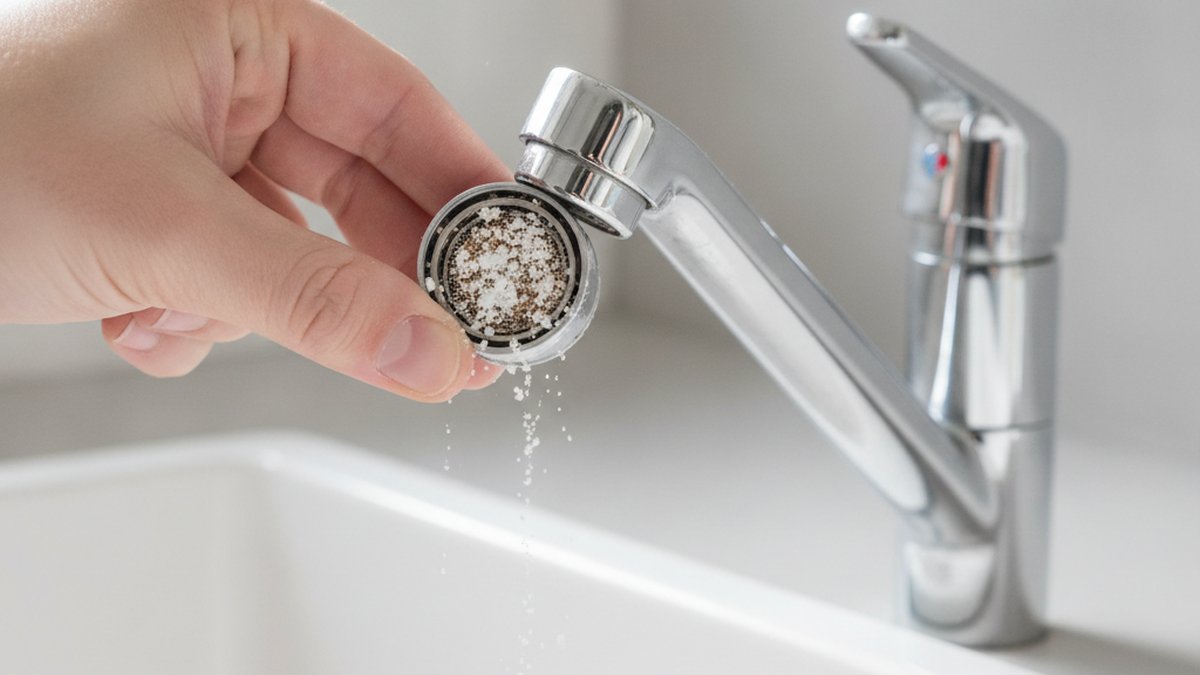
The catch is that “2.0” is a rated maximum measured under lab conditions, not a promise for every kitchen. The aerator — that little screen at the tip of the spout — is what limits and shapes the flow. It mixes air into the water so the stream feels full and splash-free while using less water. If your house runs at 45 psi instead of 60, that same 2.0 GPM faucet will deliver a bit less. If a pressure-boosting pump pushes you to 70–80 psi, it may deliver slightly more. So think of 2.0 GPM as the honest baseline, not a guarantee down to the drop.
Here’s a concrete feel for it: at a true 2.0 GPM, a standard 12-quart (3-gallon) stockpot fills in about 90 seconds. A typical dinner-plate rinse takes a couple of seconds under the stream. That’s brisk, everyday performance — not a fire hose, not a trickle.
Is a 2.0 GPM kitchen faucet strong enough for washing dishes and filling pots?
Yes — for the overwhelming majority of kitchens, 2.0 GPM is plenty for dishes, pot-filling, and rinsing produce. It’s the flow rate most new mid-range and premium kitchen faucets ship with precisely because it balances speed and efficiency without feeling stingy.
Where people get nervous is the comparison to the old faucets they grew up with. Faucets made before the mid-2010s often ran 2.2 to 2.5 GPM or higher, so if you’re replacing a 20-year-old tap, a 2.0 GPM model can feel slightly softer at first. In practice, most folks stop noticing within a day. The reason: a well-designed aerator makes 2.0 GPM feel like more water than it is by aerating the stream and keeping pressure consistent across the spray pattern.
You’ll appreciate 2.0 GPM most if you:
- Fill large pots regularly — enough volume to be quick, without overflowing splash.
- Hand-wash dishes daily — a strong, controllable rinse stream.
- Want a lower water bill — every minute of running water uses half a gallon less than a 2.5 GPM faucet.
- Have a pull-down or pull-out sprayer — the spray mode concentrates the same 2.0 GPM into a punchier rinse for stuck-on food.
If you specifically want that firm, high-volume rinse for a busy family kitchen, look at a model that pairs 2.0 GPM with a strong pull-out spray. Our guide to a brushed nickel faucet kitchen with pull out spray walks through exactly which spray heads deliver the most usable pressure at this flow rate.
How does 2.0 GPM compare to 1.5 and 2.5 GPM flow rates?
Short answer: 1.5 GPM is the eco/low-flow tier, 2.0 GPM is the balanced everyday standard, and 2.5 GPM is the old high-flow maximum that many regions no longer allow for new faucets. Here’s how they stack up in real kitchen terms.
| Flow rate | Best for | Pot-fill speed (3-gal pot) | Water use per 10 min running | Trade-off |
|---|---|---|---|---|
| 1.5 GPM | Water-conscious homes, drought regions, small households | ~120 sec | 15 gallons | Noticeably slower pot-filling; can feel weak on low pressure |
| 2.0 GPM | Most family kitchens — the balanced default | ~90 sec | 20 gallons | Very few; the practical sweet spot |
| 2.5 GPM | Heavy-use kitchens where fill speed matters most | ~72 sec | 25 gallons | Higher water/energy bills; restricted or banned in CA, CO, WA and others |
Notice the difference between 2.0 and 2.5 is only about 18 seconds on a full pot — but it’s 5 extra gallons every 10 minutes of runtime, which adds up fast across a year of cooking and cleaning. That’s the core reason building codes and efficiency standards have converged around lower numbers. Several U.S. states cap new kitchen faucets at 1.8 GPM, and the federal maximum is 2.2 GPM. A 2.0 GPM faucet threads the needle: legal almost everywhere, efficient, and still satisfying to use.
Why does my 2.0 GPM faucet feel weaker than the rating — and how do I fix it?
If a 2.0 GPM faucet feels weak, the flow rate rating is almost never the real problem — it’s usually low household water pressure, a clogged aerator, or a partially closed shutoff valve. All three are easy to diagnose and fix yourself.
Run through these in order:
- Check the aerator first. Hard-water minerals and debris build up on the aerator screen and choke the flow. Unscrew it from the spout tip, rinse it, soak it in white vinegar for an hour to dissolve scale, and reinstall. This alone fixes most “sudden weak flow” complaints. If you’re not sure how the aerator shapes your stream, our explainer on what a faucet aerator for a kitchen sink actually does shows how to read the GPM stamped on it and pick the right one.
- Open the shutoff valves fully. The two valves under your sink should be turned all the way counter-clockwise. A half-open valve throttles flow before it ever reaches the faucet.
- Test your home pressure. A cheap screw-on gauge tells you if you’re below the 60 psi standard. Under 40 psi, every faucet in the house will underperform, and that’s a whole-home issue, not a faucet defect.
- Inspect the pull-down hose and quick-connect. A kinked hose or a not-fully-seated spray head restricts flow at the very end of the line.
Hard water is the usual culprit behind gradual weakening, and it leaves telltale white crust on the spout. If you’re battling mineral buildup on the finish too, here’s how to remove hard water stains on a stainless steel faucet without scratching it — the same minerals staining the outside are clogging the aerator inside.
Can I change the flow rate of a kitchen faucet I already own?
Yes — you can usually lower (or restore) a faucet’s flow rate by swapping the aerator, because the aerator’s flow restrictor is what sets the GPM, not the faucet body. Aerators are a standardized, inexpensive part.
Most kitchen faucets use one of two thread sizes: a standard male (about 15/16″-27) or female (about 55/64″-27) thread. Aerators are sold pre-labeled with their flow rate — you’ll see “2.0 GPM,” “1.8 GPM,” or “1.5 GPM” printed on the packaging or the insert itself. To go greener, drop in a 1.5 GPM aerator; to bump a too-gentle stream back up, install a 2.0 or 2.2 GPM one (within your local legal limit). It’s a two-minute, tool-free job in most cases — hand-tight, or a gentle turn with pliers wrapped in a cloth.
One caveat: you can never exceed what your plumbing and pressure physically supply. Putting a 2.5 GPM aerator on a home running 40 psi won’t magically produce 2.5 gallons a minute. The aerator caps the maximum; your pressure sets the reality.
Who should choose a 2.0 GPM kitchen faucet — and who shouldn’t?
Choose 2.0 GPM if you want the best all-around balance of speed, feel, and water savings — which describes the vast majority of households. Consider a different number only if you have a specific edge-case need.
A 2.0 GPM faucet is the right call when:
- You cook and clean daily and want pots filled fast without water waste.
- Your home water pressure is normal (roughly 50–70 psi).
- You want a faucet that’s compliant with efficiency codes nearly everywhere in the U.S.
- You share a well or septic system and want to keep water draw reasonable.
Lean toward 1.5 GPM instead if you live in a strict drought/efficiency region, you’re a one- or two-person household, or shaving the water bill matters more than a few seconds of fill time. Lean toward a higher flow (where legal) only if you run a genuinely high-volume kitchen and fill oversized stockpots constantly — and even then, a strong 2.0 GPM pull-down with a good spray mode usually satisfies. If you’re weighing top models across flow rates and price points, our roundup of the highest rated kitchen faucets of 2026 lists which ones nail the 2.0 GPM balance best.
Does a lower flow rate save money — and how much?
Yes, and the math is simple: a 2.0 GPM faucet uses 0.5 fewer gallons per minute than a 2.5 GPM one, and dropping to 1.5 GPM saves a full gallon per minute. Over a year of typical kitchen use, that’s real money on both your water and water-heating bills.
Say your household runs the kitchen faucet about 30 minutes a day between dishes, cooking, and cleanup. Moving from an old 2.5 GPM faucet to a 2.0 GPM model saves roughly 15 gallons a day — about 5,475 gallons a year. Because a good chunk of that is hot water, you’re also cutting the energy your water heater burns. Exact dollar savings depend on local water and energy rates, but most homes see a modest but steady reduction, and the faucet effectively pays for part of itself over its lifespan. That’s efficiency you never have to think about — it just happens every time you turn the handle.
What to look for when buying a 2.0 GPM kitchen faucet
Beyond the flow rate itself, the parts that decide whether you love the faucet are the valve cartridge, the finish, and the spray head. Prioritize these:
- A ceramic disc cartridge — the internal valve that controls water. Ceramic lasts far longer and drips far less than rubber-washer designs.
- A durable finish — brushed nickel and stainless resist water spots and fingerprints better than polished chrome in a busy kitchen.
- A magnetic dock for pull-downs — keeps the spray head snapped firmly in place so it doesn’t droop over time.
- Certification marks — look for cUPC/NSF listing and WaterSense labeling, which independently verify the flow rate and lead-safe materials.
- A solid warranty — a limited lifetime warranty on the finish and cartridge signals the maker stands behind it.
FAQ
Is 2.0 GPM the same as 2.0 flow rate?
Yes. “Flow rate” is the general term, and GPM (gallons per minute) is the unit it’s measured in, so “2.0 flow rate” and “2.0 GPM” mean the same thing for a U.S. faucet. Some spec sheets also list liters per minute — 2.0 GPM equals about 7.6 liters per minute.
Is 2.0 GPM good for a kitchen faucet?
Yes, 2.0 GPM is widely considered the ideal balance for a kitchen faucet. It fills pots quickly, gives a strong rinse, uses less water than older 2.5 GPM faucets, and stays within efficiency codes in nearly every U.S. state. It’s the flow rate most new mid-range and premium faucets ship with for exactly this reason.
What is the legal maximum flow rate for a kitchen faucet?
The federal maximum for new kitchen faucets in the U.S. is 2.2 GPM at 60 psi. Several states set stricter limits — California, Colorado, and Washington cap new faucets at 1.8 GPM. A 2.0 GPM faucet is compliant with the federal standard and most state rules, though always check your local code.
Can I make my 2.0 GPM faucet flow faster?
You can restore full flow by cleaning or replacing the aerator and fully opening the under-sink shutoff valves, but you can’t push it past what your home pressure and plumbing supply. If flow is genuinely low, the issue is usually a clogged aerator, low household water pressure, or a partly closed valve — not the faucet’s rating.
Does a 2.0 GPM faucet work with low water pressure?
It works, but it will deliver less than 2.0 GPM if your pressure is below the 60 psi test standard. Under about 40 psi, any faucet feels weak. If your whole house has low pressure, address that at the source — a pressure gauge test and a look at your main shutoff and pressure regulator will tell you what’s going on before you blame the faucet.
Should I choose 1.5 GPM or 2.0 GPM for my kitchen?
Choose 2.0 GPM for the best all-around balance in a typical family kitchen, and 1.5 GPM if maximum water savings or a strict local efficiency code is your priority. The 2.0 GPM fills pots faster and feels stronger; the 1.5 GPM saves an extra gallon per minute. Either way, the aerator is swappable, so you can fine-tune it later.
Author note: This guide was written by the WOWOW Faucet product team, who spend their days testing kitchen and bathroom fixtures for real-world flow, durability, and installation fit. We test faucet flow rates against the 60 psi industry standard and check aerator performance across a range of home water pressures.
About WOWOW Faucet: WOWOW is a dedicated faucet and bathroom fixtures brand offering kitchen faucets, bathroom faucets, shower systems, and accessories built with ceramic disc cartridges and lead-safe, cUPC/NSF-certified materials. Our kitchen faucets are backed by a limited lifetime warranty on finish and function, and are engineered to meet U.S. flow-rate and WaterSense efficiency standards. Learn more at www.wowowfaucet.com.
\n
Related Guides
\n
- \n
- How Faucets Adapt to Changing Plumbing Standards
- How to Test Water Pressure Before Faucet Installation
- Faucet Coating Types Compared: Which Finish Is Best for Your Home?
\n
\n
\n
\n