 WOWOW Faucets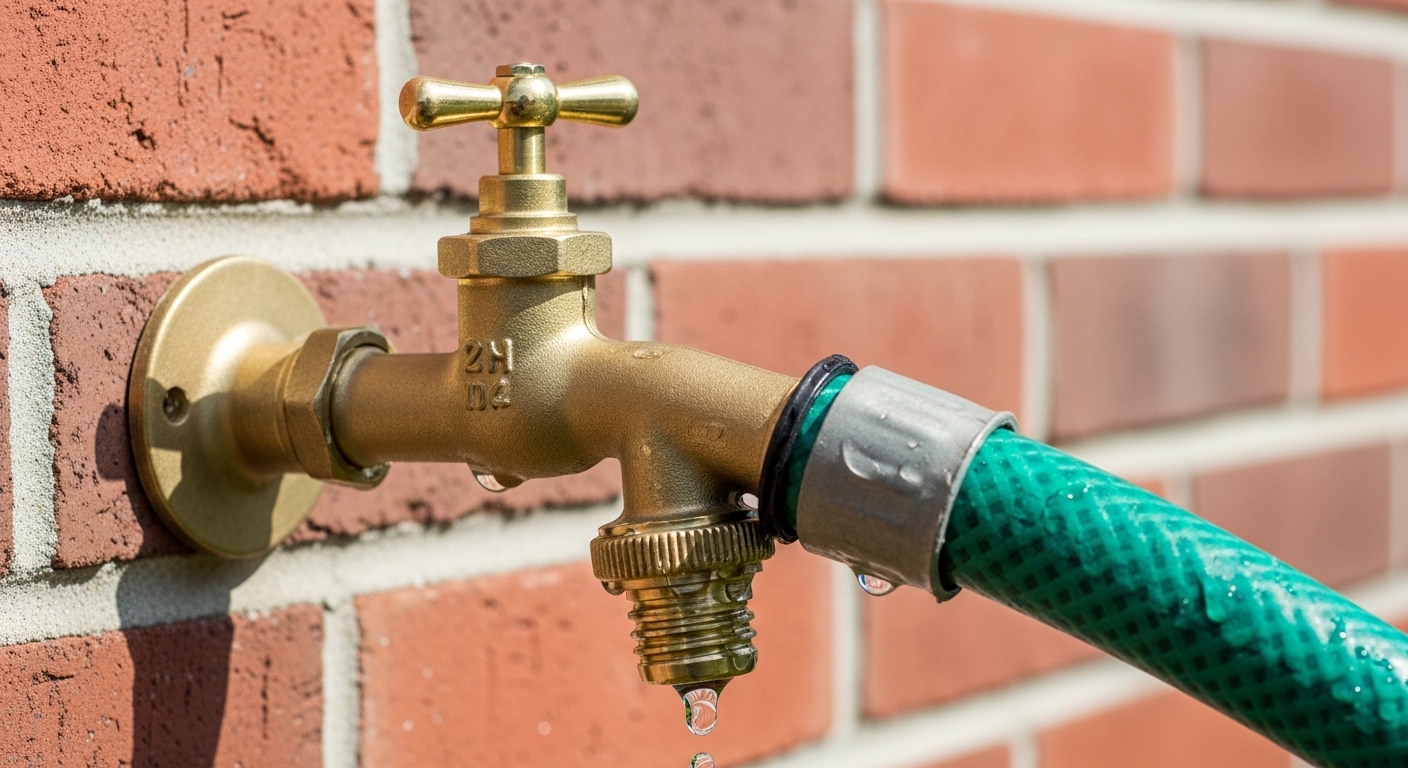
If you have a loud outdoor faucet — a hose bibb that screeches, squeals, hums, or bangs every time you turn it on — the noise is not just annoying, it’s a diagnostic clue. Outdoor faucets (called hose bibbs, sillcocks, or spigots) are mechanically simple, so a specific sound almost always points to a specific worn part. The good news: the fix is usually a 50-cent washer, not a $250 service call. Below I’ll walk you through exactly what each sound means, how to fix it step by step, and when the noise is actually warning you about a bigger plumbing problem.
What does the sound my outdoor faucet makes actually mean?
The pitch and rhythm of the noise tell you which part has failed. A steady high-pitched screech or squeal means a worn washer or stem; a deep bang or thud means water hammer; a hum or vibration means a partially closed valve or high pressure; a chatter or stutter means a loose washer flapping. Match your sound to the table below before you grab a wrench.
| Sound | Most likely cause | Where it’s happening | Typical fix |
|---|---|---|---|
| High-pitched screech / squeal | Worn or hardened rubber washer vibrating on the valve seat | Inside the faucet valve | Replace washer + O-ring |
| Squeak only when turning the handle | Dry, corroded metal stem threads | Handle stem | Clean & grease stem with plumber’s grease |
| Loud bang / knock when you shut it off | Water hammer — sudden pressure shock | Pipes inside the wall | Install water hammer arrestor; check pressure |
| Humming or vibrating | Water pressure too high (over 80 psi) or valve half-open | Whole supply line | Open valve fully; add pressure regulator |
| Chattering / stuttering | Loose washer screw or packing nut | Stem assembly | Tighten packing nut, replace washer screw |
Why is my outdoor faucet screeching like a tea kettle?
A screeching or whistling outdoor faucet is almost always a worn-out rubber washer at the end of the valve stem. As the washer hardens and deforms with age, water rushing past it makes it vibrate at high frequency — the same physics as a reed in a whistle. Replace the washer and the noise disappears.
Here’s why it happens: every time you open the faucet, the stem lifts a small rubber washer off the brass valve seat. Over a few seasons of sun, freezing, and chlorinated water, that washer gets stiff, cracked, or grooved. Instead of seating cleanly, it flutters in the fast-moving water and screams. This is the single most common cause of a loud outdoor faucet, and it’s the cheapest to fix. The same vibrating-washer principle is behind a lot of indoor faucet noises too — if you’re also hearing odd sounds inside, our guide on a faucet making clicking sounds breaks down those related causes.
How do I replace the washer on a noisy hose bibb? (step by step)
You can replace an outdoor faucet washer in about 20–30 minutes with two wrenches and a screwdriver. Here’s the exact sequence:
- Shut off the water. Find the indoor shutoff valve that feeds the outdoor line (often in the basement, crawlspace, or near the water meter). Close it, then open the outdoor faucet to drain the pressure.
- Remove the handle. Unscrew the screw on top of the handle and pull it off.
- Loosen the packing nut. Use an adjustable wrench to turn the large hex nut (the packing nut) counterclockwise. Hold the faucet body steady with a second wrench so you don’t twist the pipe inside the wall.
- Pull out the stem. The entire stem assembly should unscrew or slide out. At the very end you’ll see the rubber washer held by a small brass screw.
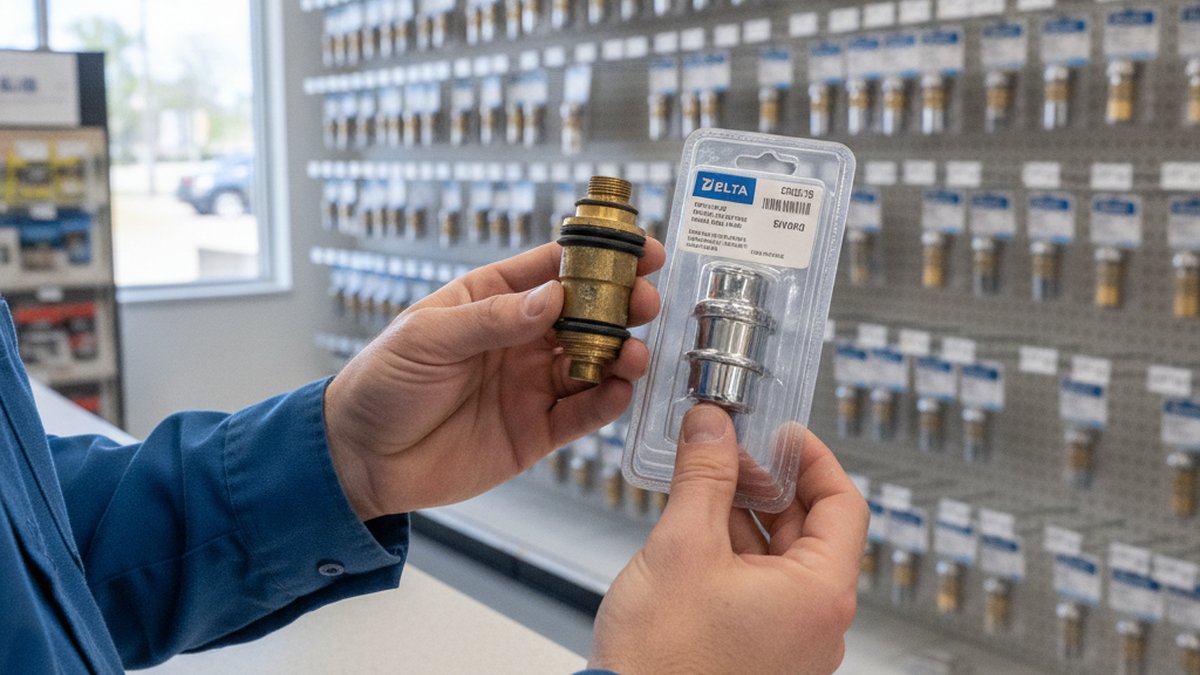
- Replace the washer and O-ring. Remove the screw, swap in a new washer of the exact same size (bring the old one to the hardware store), and replace the O-ring around the stem while you’re in there.
- Grease and reassemble. Coat the stem threads and O-ring with food-safe plumber’s grease, reinsert the stem, hand-tighten the packing nut, then snug it a quarter-turn with the wrench.
- Turn the water back on slowly and test. The screech should be gone.
Why does my outdoor faucet bang or knock when I turn it off?
A loud bang or knock the instant you shut the faucet is water hammer — a pressure shockwave created when fast-moving water slams to a stop and the energy ricochets back through the pipes. It’s not the faucet itself failing; it’s the plumbing behind it. The fix is to absorb or reduce that shock, not to replace the spigot.
Water hammer is more than a noise nuisance — repeated shocks can loosen pipe joints and stress fittings over time. There are three practical fixes, in order of effort:
- Close the faucet more slowly. Quarter-turn ceramic-disc bibbs shut off instantly, which makes hammer worse. Simply easing the handle closed can stop the bang on the spot.
- Install a water hammer arrestor. This is a small piston-and-spring (or air-chamber) device that threads onto the line and cushions the shockwave. They cost $10–$20 and screw on at the hose bibb or where the line is accessible.
- Check and lower your water pressure. Home water pressure should sit between 40 and 60 psi. Anything above 80 psi causes hammer, humming, and premature washer wear. A $10 gauge that screws onto the hose bibb tells you instantly; if it’s high, a pressure-reducing valve (PRV) on your main is the permanent fix.
Why does my outdoor faucet hum or vibrate the whole time it’s running?
A continuous hum or vibration while water flows usually means your water pressure is too high, or the valve is only partway open so water is forced through a narrow gap. Open the valve fully first — if the hum stays, test your pressure. Excess pressure is the usual culprit, and it shortens the life of every washer and seal in your house, not just the outdoor one.
One more sneaky cause: a hum that only appears when a garden hose or adapter is attached. A mismatched or over-tightened hose-thread adapter can create a turbulent restriction that resonates. If the noise disappears the moment you unscrew the hose, the connection is the problem — our faucet adapter outside buyer’s guide covers how to pick an adapter that actually seals and flows cleanly without buzzing.
Could the noise be coming from the aerator or hose connection instead?
Yes — sometimes the “faucet” noise isn’t in the valve at all but at the outlet. If your hose bibb has a screen or an attached splitter, mineral buildup there can whistle as water squeezes through. Unscrew any attachment and run the faucet bare for a few seconds; if it goes quiet, the noisemaker is downstream. Limescale-clogged outlets cause the same high-pitched whistle indoors, which is exactly why a leaking, clogged aerator so often comes with a hiss. Soak the part in white vinegar for an hour to dissolve the scale, then reattach.
Is a loud outdoor faucet dangerous, or can I just ignore it?
A loud outdoor faucet isn’t dangerous in the moment, but ignoring it usually costs you money later. The screech of a worn washer means water is also slowly leaking past it, and a banging pipe (water hammer) can loosen joints inside your wall over months until you get a hidden leak. Treat the noise as a free early-warning system: it’s cheaper to fix a washer now than to repair water damage or a burst frost-proof sillcock later.
There’s also a seasonal angle. In cold climates, a noisy faucet heading into winter is worth fixing before the first freeze, because a worn washer or stem can prevent a frost-proof sillcock from draining properly — and trapped water freezes, expands, and splits the pipe. If you’re not sure your outdoor faucet is the frost-proof type, look for a longer body (6–12 inches) and a handle that you must open and close fully; that design relies on healthy internal seals to drain correctly.
When should I just replace the whole outdoor faucet?
Replace the entire hose bibb when the body is cracked, the threads are stripped, the valve seat is corroded beyond cleaning, or you’ve already swapped the washer and stem and it’s still noisy or leaking. A new standard hose bibb costs $12–$30; a frost-proof sillcock runs $20–$50. At that price, fighting a corroded 20-year-old spigot rarely makes sense.
Here’s a quick comparison of repair-vs-replace decisions and the typical brass-vs-plastic trade-off, since material affects both noise and longevity:
| Situation | Repair or replace? | Approx. cost | Notes |
|---|---|---|---|
| Screech + minor drip, body intact | Repair (washer + O-ring) | $2–$8 | 30-min DIY, most common |
| Squeaky handle only | Repair (grease stem) | $5 | Plumber’s grease fixes it |
| Cracked body or stripped threads | Replace | $12–$50 | Brass outlasts plastic 2–3x |
| Frost-proof bibb won’t drain / froze | Replace with new sillcock | $20–$50 | Pitch downward when installing |
| Constant hammer house-wide | Add PRV / arrestor | $10–$150 | It’s a system issue, not the bibb |
On material: a solid brass hose bibb resists corrosion and holds its valve seat far longer than a zinc or plastic one, which means fewer noisy washers down the road. If you’re weighing materials for any faucet upgrade, the difference is real and worth understanding — our deep dive on brass vs zinc faucets explains why the cheaper alloy tends to fail and rattle sooner.
Quick checklist before you call a plumber
Before you pay for a service call on a loud outdoor faucet, run through this in order — most people stop at step 2 because the noise is gone:
- Open the valve fully — a half-open valve hums.
- Remove any hose, splitter, or adapter and test the bare faucet.
- Shut off the water and replace the rubber washer and O-ring.
- Grease the stem threads if the handle squeaks.
- Test your home water pressure (target 40–60 psi).
- Add a water hammer arrestor if it bangs on shutoff.
- If it still screams after a washer swap, replace the whole bibb.
FAQ
Why is my outdoor faucet loud only when the hose is attached?
When the noise appears only with a hose connected, the problem is at the connection, not inside the valve. A mismatched hose-thread adapter, an over-tightened coupling, or mineral buildup in the hose washer creates turbulence that resonates into a hum or whistle. Remove the hose, clean or replace the rubber hose washer, and use a properly sized adapter. If the bare faucet is silent, you’ve confirmed the valve itself is fine.
Can high water pressure make my outdoor faucet noisy?
Yes. Water pressure above 80 psi forces water through the valve fast enough to make worn washers vibrate and pipes hum or hammer. Normal residential pressure is 40–60 psi. Screw a $10 pressure gauge onto the hose bibb to check; if it reads high, install a pressure-reducing valve on your main line. Lowering pressure also extends the life of every faucet, toilet, and appliance in the house.
Is a screeching outdoor faucet the same as a leaking one?
They usually share the same root cause — a worn washer — so a screech often becomes a drip and vice versa. The vibrating washer that whistles is also no longer sealing tightly, so water seeps past. Replacing the washer and O-ring typically cures both the noise and the leak at once. The same logic applies indoors; if you’re chasing drips elsewhere, our guides on a leaky faucet cartridge handle use the identical diagnose-and-replace approach.
How much does it cost to fix a loud outdoor faucet?
If you DIY, expect to spend $2–$8 on a washer-and-O-ring kit plus a small tube of plumber’s grease — total under $15, and about 30 minutes of work. A full faucet replacement is $12–$50 in parts. A plumber’s service call typically runs $100–$250, which is why the washer swap is almost always worth trying first.
Why does my outdoor faucet squeak when I turn the handle?
A squeak that happens only as you twist the handle — not while water flows — comes from dry, corroded metal threads on the valve stem rubbing inside the faucet body. It’s friction, not water. Remove the stem, clean the threads with a brush, and coat them with food-safe plumber’s grease (never oil or WD-40, which wash away and can contaminate water). The handle will turn smoothly and silently again.
Will fixing the noise stop my pipes from freezing in winter?
It can help, especially with a frost-proof sillcock. If a worn washer or damaged stem keeps the valve from sealing and draining fully, water stays trapped in the faucet body where it can freeze and split the pipe. Replacing the internal seals so the faucet closes and drains properly is an important winterizing step. Always disconnect hoses before the first freeze, regardless of faucet type.
About the author: This guide was written by the WOWOW Faucet product and technical team, who design, pressure-test, and service residential faucets and fixtures every day. Our outdoor and indoor faucet bodies are built from lead-free brass and tested to meet cUPC and ANSI/NSF performance standards, and our hose bibbs and kitchen and bath faucets are backed by a manufacturer’s limited warranty. We write these repair guides from real bench testing and customer service cases — not generic filler — so you can fix the problem correctly the first time.
\n
Related Guides
\n
- \n
- What are The Different Types of Bathroom Faucets
- Best White Kitchen Faucets – Buying Guide & Reviews
- The Best Faucet Brands to Consider in 2026
- What is The Standard Size Hole for A Kitchen or Bathroom Faucet
\n
\n
\n
\n
\n