 WOWOW Faucets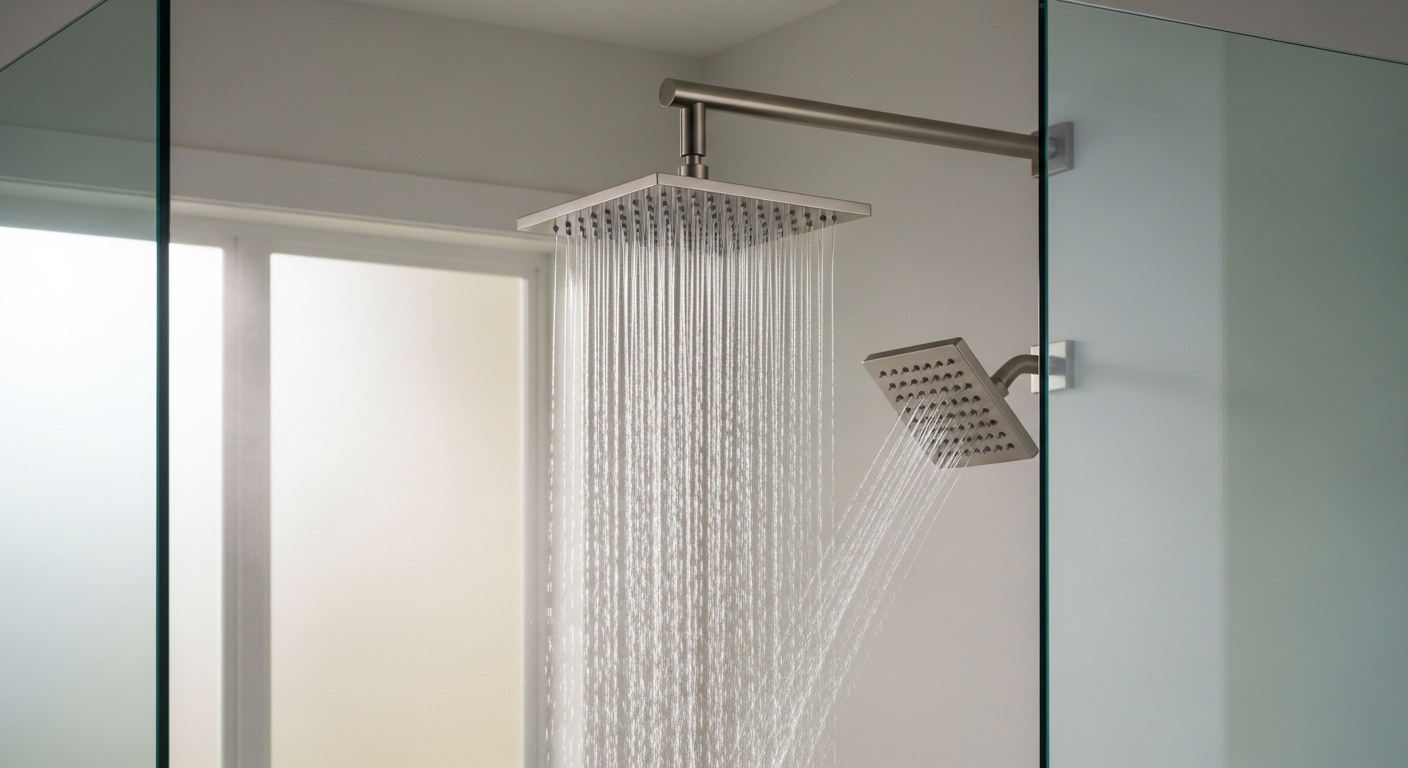
If you love the wide, immersive feel of an overhead rain spray but you don’t love the chlorine smell, the crunchy limescale, or the dull look it leaves on your hair and skin, a rainfall shower head filter is the upgrade you’ve been looking for. These hybrid fixtures keep the broad, gentle rainfall pattern people love while quietly filtering out the contaminants most municipal water lines carry. In this guide we’ll break down how filtered rain showers actually work, what to look for in 2026, how they compare against standard rainfall heads, and the installation and maintenance details our engineering team at WOWOW Faucet recommends.
What Is a Rainfall Shower Head Filter and Why It Matters in 2026
A rainfall shower head filter is a ceiling-mounted or wall-arm rain shower fixture that houses an internal filtration cartridge — usually directly behind the face plate or inside the inlet neck. Unlike a separate inline filter that sits between the pipe and the head, an integrated rainfall shower head filter keeps the silhouette clean and the installation flush against the wall or ceiling, which is critical for modern, minimalist bathrooms where exposed canisters break the design language.
The reason this category is exploding in 2026 is simple. Municipal water in most U.S. metros is treated with chloramine or chlorine, both of which strip the natural oils from your hair and skin. Hard-water regions add a second problem: calcium and magnesium carbonates that build up scale on tile, glass, and the shower head itself, slowly clogging nozzles and weakening flow. A high-quality rainfall shower head filter solves both issues at the point of use, so every drop that hits your shoulders has already been polished.
How the Filtration Actually Works
Most modern rainfall shower head filters use a stacked multi-stage cartridge. Water enters the top, then travels through a sequence of media — typically:
- PP cotton or micro-mesh pre-filter — captures sediment, rust flakes, and pipe debris (5–10 micron rating).
- KDF-55 (kinetic degradation fluxion media) — a copper-zinc alloy that uses redox to neutralize chlorine, chloramine, and dissolved heavy metals like lead and mercury.
- Calcium sulfite — particularly effective at chlorine removal at higher water temperatures, where carbon alone underperforms.
- Activated carbon — reduces odors, organic compounds, and residual taste/smell.
- Maifan or tourmaline mineral balls — some premium models add these to slightly remineralize the water and balance pH.
- Final polishing screen — keeps any spent media from reaching the nozzles.
This stacked design is what separates a serious filtered rain head from a gimmick. Cheap units that contain only a single layer of carbon will not handle hot-water chlorine release, which is one of the main reasons people install one in the first place.
Rainfall Shower Head Filter vs. Standard Rainfall Head vs. Inline Filter
Buyers usually weigh three options when shopping. Here’s how they really compare in everyday use:
| Feature | Rainfall Shower Head Filter | Standard Rainfall Head | Inline Filter + Rain Head |
|---|---|---|---|
| Chlorine removal | Yes — multi-stage media | No | Yes — depends on inline cartridge |
| Heavy-metal reduction | Yes (KDF-55 equipped models) | No | Limited |
| Sediment/rust capture | Yes | No | Yes |
| Aesthetics | Clean, integrated look | Clean | Visible canister between pipe and head |
| Typical flow rate (GPM) | 1.8 – 2.5 | 2.0 – 2.5 | 1.5 – 2.0 (extra pressure drop) |
| Cartridge life | 4–6 months | N/A | 3–6 months |
| Average cost (2026) | $45 – $150 | $25 – $90 | $60 – $180 (combined) |
| Best for | Sensitive skin, hard water, design-conscious buyers | Renters, budget builds | Whole-shower retrofits where head can’t be changed |
For most homeowners, the integrated rainfall shower head filter wins on price, looks, and ease of installation. Inline systems still have their place in rentals or when the existing rain head is hardwired into a ceiling tile you don’t want to disturb.
Key Features to Look for in a Quality Filtered Rain Shower
1. Face Plate Material and Finish
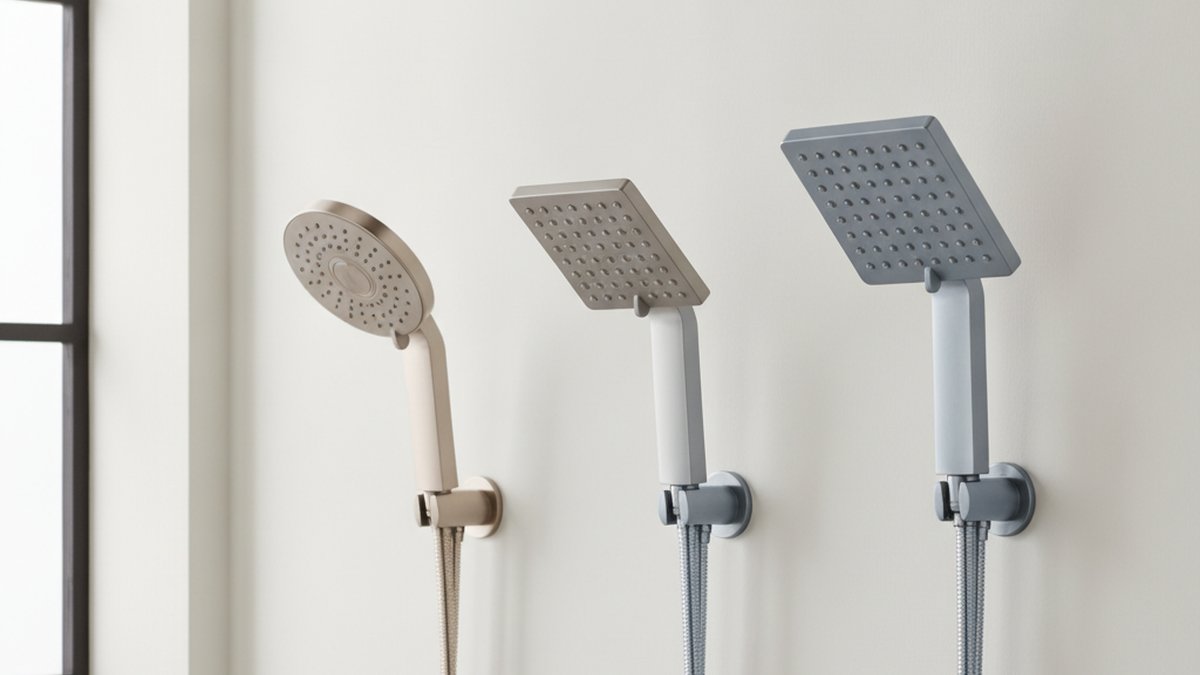
The face plate carries the nozzles and takes the brunt of mineral exposure. Stainless steel 304 and solid brass faces with PVD finishes (brushed nickel, matte black, brushed gold) hold up dramatically better than chrome-plated ABS plastic. If you live in a hard-water area, look for an anti-clog silicone nozzle array — a quick finger wipe clears any buildup before it sets. If you want a deeper dive into how different finishes age, our team has a full breakdown of faucet coating types compared that applies directly to shower hardware too.
2. Face Size and Spray Pattern
A rainfall head’s diameter dictates the drench experience. Anything under 8 inches won’t deliver true rain coverage; 10–12 inches hits the sweet spot for most standalone showers, and 14–16 inches is reserved for larger walk-ins where you want full shoulder-to-shoulder coverage. Verify the nozzle density too — premium heads pack 90+ silicone nozzles across a 10-inch face, producing a soft, uniform drop pattern instead of jet-like streams.
3. Flow Rate and WaterSense Certification
U.S. federal law caps shower flow at 2.5 GPM, but the EPA WaterSense program rewards heads at or below 2.0 GPM that still pass a high-coverage performance test. Filtered rain heads must balance flow restriction with the natural pressure drop the cartridge introduces. Models tested to ASME A112.18.1 and certified to NSF/ANSI 177 for shower filtration give you third-party proof of both flow integrity and contaminant reduction.
4. Cartridge Accessibility
You’ll be replacing the cartridge two or three times a year, so the head needs a simple twist-off design. The best models let you swap the media in under a minute without tools and without taking the head off the arm. Avoid units where the entire face must be unscrewed — they get harder over time as scale binds the threads.
5. Pressure Compensation
Filter cartridges naturally restrict flow, especially as they load up. Quality rainfall shower head filters include a small air-injection or laminar plenum behind the face that boosts perceived pressure, keeping the drops feeling full even when your inlet pressure drops below 40 psi. If you’ve ever wondered why your rain head feels weak, our diagnostic walk-through on shower head low water pressure fixes is a useful companion read before you replace anything.
Health and Skin Benefits People Notice First
Within two to three weeks of installing a properly specified filtered rain shower, users typically report:
- Softer, less itchy skin — chlorine-induced dryness fades.
- Shinier hair with better color retention, especially for color-treated or chemically straightened hair.
- Reduced eczema and rosacea flare-ups in sensitive individuals.
- Cleaner-smelling water — that swimming-pool note is gone.
- Less limescale ring on the shower floor and glass door.
- Fewer rust specks on white grout (a common complaint in older homes with galvanized pipe).
If you’ve noticed your tap water tastes off elsewhere in the house, the same contaminants likely affect your shower. Our piece on the 7 common reasons your tap water has a bitter taste covers the chemistry behind those complaints — chlorine, chloramine, sulfur, and dissolved metals — which is exactly what a good shower filter is designed to neutralize at the point of use.
Installation: What to Expect
The good news is that nearly every rainfall shower head filter on the U.S. market uses the standard 1/2-inch NPT inlet, the same thread as your existing shower arm. Replacement is a 10-minute job that requires only an adjustable wrench, plumber’s tape, and a soft cloth to protect the finish.
Step-by-Step Replacement
- Turn off the shower and let any standing pressure bleed out.
- Wrap a soft cloth around the existing shower arm where it meets the head to protect the finish.
- Grip the head (not the arm) with an adjustable wrench and turn counter-clockwise to remove.
- Clean old plumber’s tape and debris from the arm threads.
- Apply 3–4 wraps of new plumber’s tape clockwise around the threads.
- Hand-thread the new rainfall shower head filter onto the arm clockwise until snug, then add a quarter turn with the wrench.
- Turn the water on, check for leaks, and run for 60 seconds to flush any factory fines from the cartridge.
If you encounter dripping at the threads, do not over-tighten — add another wrap of tape instead. Over-torquing can crack the inlet neck, especially on units with brass-clad zinc collars.
Maintenance and Cartridge Replacement Schedule
The cartridge is the single most important maintenance item. Replace it every:
- 4 months if you have hard water (above 7 grains per gallon).
- 6 months for soft to moderately hard municipal supply.
- 10,000 – 12,000 gallons if you can track usage — roughly equivalent to a family of four showering daily.
Signs the cartridge is spent include a faint chlorine smell returning, slower flow, darker discharge on first use of the day, or visible discoloration of the face plate. Beyond the cartridge, a monthly five-minute descaling soak in a 1:3 white vinegar solution keeps the silicone nozzles soft and free-flowing. Hard-water buildup on fixtures is more than cosmetic — it’s the same scale that erodes pipe seals and faucet bases. Our guide on cleaning limescale and buildup uses the same techniques for shower heads.
Common Mistakes Buyers Make
Buying on Diameter Alone
A bigger face plate is impressive in photos but useless if it’s a thin chrome-plated plastic shell with a single-layer carbon filter inside. Pair size with cartridge specs.
Ignoring Inlet Water Pressure
Filters add pressure drop. If your home runs below 35 psi at the shower, you may need to upgrade the cartridge stage layout or add a small booster. Anything between 40 and 80 psi works perfectly with a quality filtered rain head.
Mismatching Finish to the Rest of the Bath
A polished chrome rainfall head looks out of place next to a matte black valve trim. Always match the face plate finish to your tub spout, valve handle, and hand shower if applicable.
Skipping the Hand Shower
Many buyers love the drench experience but forget that a rain head can’t easily rinse pets, the tub itself, or hard-to-reach areas. A combination set with a filtered hand shower diverter solves this. Some buyers also experience water temperature swings — if that sounds familiar, the engineering causes are explained in our breakdown of why your faucet water is inconsistent, and they apply to showers too.
WOWOW Faucet’s Engineering Standards
Every WOWOW Faucet rainfall shower head filter ships through a four-point quality protocol: pressure cycle testing at 1.5x rated PSI, salt-spray corrosion testing for 200 hours, NSF/ANSI 177 contaminant reduction verification through an independent lab, and a 10,000-cycle valve life test on any integrated diverter. We back our shower hardware with a limited lifetime warranty against defects in materials and workmanship, and our cartridges with a 6-month performance guarantee. All chrome, brushed nickel, matte black, and brushed gold finishes are applied via multi-layer PVD over solid brass for long-term durability.
Author Note & Brand Credibility
This guide was written by the WOWOW Faucet content engineering desk in collaboration with our product testing team in Foshan and Los Angeles. WOWOW Faucet has shipped certified bathroom and kitchen fixtures to North American customers since 2014, with products carried by major U.S. retailers and listed by the IAPMO under cUPC certification. Our shower category leads are NKBA-affiliated and have a combined 30+ years in residential plumbing fixture design. Specifications referenced (NSF/ANSI 177, ASME A112.18.1, EPA WaterSense) are publicly verifiable through the respective standards bodies.
FAQ
Does a rainfall shower head filter really make a difference?
Yes — when the cartridge contains real multi-stage media like KDF-55, calcium sulfite, and activated carbon. Independent NSF/ANSI 177 testing shows free chlorine reduction of 50–96% depending on cartridge fill, and most users notice softer skin and hair within 2–3 weeks. Cheap single-layer carbon-only filters underperform, especially at typical shower temperatures of 100–105°F.
How often should I replace the filter cartridge?
Plan on every 4–6 months for the average U.S. household, or roughly every 10,000–12,000 gallons. Hard-water areas at the upper end of that hardness scale, or households with daily multi-person use, should err toward 4 months. The cartridge itself is the wear part; the head and face plate last for years.
Will a filtered rain head reduce my water pressure?
There is a small pressure drop — usually 3 to 7 psi — but quality designs offset this with air-injection plenums and optimized nozzle counts so the drench feel remains full. If your home delivers 40 psi or more at the shower valve, you won’t notice a difference. Below 35 psi, consider a pressure-compensating cartridge or address the source pressure first.
Can I install a rainfall shower head filter myself?
Absolutely. It uses the standard 1/2-inch NPT shower arm thread, so it’s a 10-minute swap with an adjustable wrench and a roll of plumber’s tape. No soldering, no professional plumber required. The exception is if you want to convert from a wall-mount arm to a ceiling drop — that’s a plumbing rough-in change best done during a remodel.
Does the filter remove fluoride?
Standard rainfall shower head filters do not effectively remove fluoride. Fluoride removal requires activated alumina or bone char media that aren’t practical inside a shower-head cartridge due to flow rate demands. If fluoride is a concern, address it at the whole-house or point-of-use drinking water stage. A shower filter’s job is chlorine, chloramine, heavy metals, sediment, and odor — and it does those well.
Are filtered rain heads safe for tankless water heaters?
Yes. The added pressure drop is well within the operating range of any modern tankless unit. In fact, the sediment pre-filter inside the cartridge can extend the life of your heater’s heat exchanger by trapping particulate before it ever reaches the unit.
Can I use a rainfall shower head filter with a hand shower diverter?
Yes, but the filter is built into the overhead head only — the hand shower will receive unfiltered water unless you choose a system with a second cartridge in the diverter base or a separate filtered hand shower. For most users, filtering the overhead is enough since that’s where 80%+ of contact time happens.
\n
Related Guides
\n
- \n
- Six Different Types Of Shower Handles: Choose The Right For Your Bathroom
- Understanding Shower Valve Types: A Comprehensive Guide
- What Is The Standard Height Of A Shower Head
\n
\n
\n
\n