 WOWOW Faucets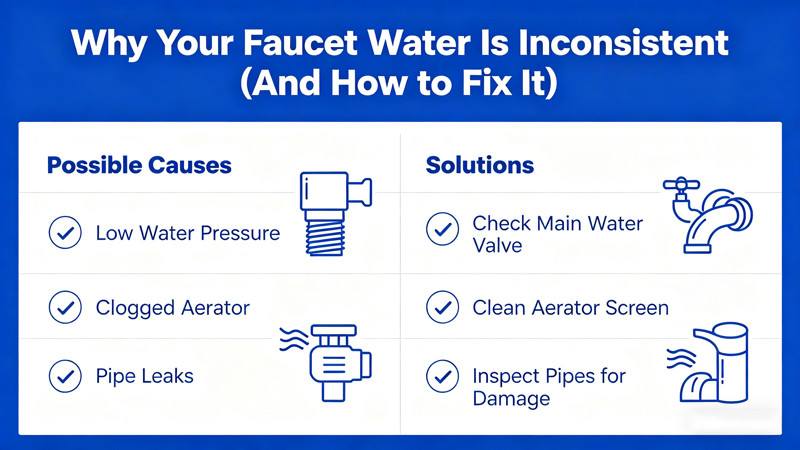
Few things are more frustrating than turning on your faucet and getting unpredictable water flow—sometimes strong, sometimes weak, sometimes hot, then suddenly cold. Inconsistent faucet water is a common household issue, and while it can seem complicated, the cause is usually something simple and fixable.
This guide explains why your faucet water is inconsistent and walks you through practical solutions to restore steady, reliable flow.
What Does “Inconsistent Water” Mean?
Before diagnosing the problem, it helps to define it. Inconsistent water can show up in several ways:
- Fluctuating water pressure (strong → weak → strong)
- Sudden temperature changes
- Pulsing or sputtering water
- Intermittent flow or brief stops
Each symptom points to a different underlying issue.
1. Clogged Aerator
The aerator is the small screen at the tip of your faucet. It mixes air with water to create a smooth stream—but it can easily become clogged with debris or mineral deposits.
Signs:
- Uneven or splashing flow
- Reduced pressure
- Water spraying in different directions
Fix:
- Unscrew the aerator
- Rinse it thoroughly
- Soak it in vinegar for 10–15 minutes
- Reinstall and test
This is often the quickest and easiest solution.
2. Mineral Buildup (Hard Water)
If you live in a hard water area, minerals like calcium and magnesium can build up inside your faucet and pipes.
Effects:
- Restricted water flow
- Pressure fluctuations
- Internal blockages
Fix:
- Clean the aerator and internal parts
- Use vinegar to dissolve mineral deposits
- Consider installing a water softener
Over time, buildup can affect the entire plumbing system, not just the faucet.
3. Faulty Cartridge
The cartridge controls water flow and temperature. If it becomes worn or clogged, it can cause inconsistent output.
Signs:
- Sudden changes in water pressure
- Difficulty controlling temperature
- Irregular flow when adjusting the handle
Fix:
- Turn off the water supply
- Remove the faucet handle
- Inspect and clean or replace the cartridge
Replacing a cartridge is a common and effective fix.
4. Air in the Water Lines
Air trapped in your plumbing system can cause sputtering or pulsing water.
Signs:
- Spitting or gurgling water
- Sudden bursts of pressure
- Air bubbles in the stream
Causes:
- Recent plumbing work
- Water supply interruptions
- Leaks in the system
Fix:
- Turn on all faucets in your home
- Let water run for a few minutes
- This helps flush out trapped air
5. Water Pressure Problems
Inconsistent pressure may come from your home’s water system.
Possible causes:
- Faulty pressure regulator
- Sudden demand changes (multiple fixtures in use)
- Municipal supply fluctuations
Fix:
- Check your home’s water pressure (ideal: 40–60 PSI)
- Adjust or replace the pressure regulator if needed
- Avoid running multiple water-heavy appliances simultaneously
6. Partially Closed Shut-Off Valves
Under your sink are shut-off valves for hot and cold water. If they’re not fully open, water flow can become uneven.
Signs:
- Weak or inconsistent flow
- One side (hot or cold) weaker than the other
Fix:
- Locate the valves under the sink
- Turn them fully open (counterclockwise)
- Test the faucet again
7. Kinked or Blocked Supply Lines
Flexible hoses connect your faucet to the water supply. If they’re bent or blocked, water flow can fluctuate.
Signs:
- Sudden pressure drops
- Inconsistent flow when moving the faucet
Fix:
- Inspect hoses for kinks or bends
- Straighten or replace damaged lines
Proper installation ensures smooth water delivery.
8. Temperature Imbalance Issues
If your faucet alternates between hot and cold unexpectedly, the issue may involve temperature regulation.
Causes:
- Faulty mixing valve
- Cartridge problems
- Water heater issues
Fix:
- Inspect and replace the cartridge
- Check your water heater settings
- Ensure consistent hot water supply
9. Leaks in the Plumbing System
Hidden leaks can reduce pressure and cause inconsistent flow.
Signs:
- Drop in overall water pressure
- Unexplained water usage increase
- Damp areas under sinks or behind walls
Fix:
- Inspect visible pipes and connections
- Repair leaks promptly
- Call a plumber for hidden issues
10. Municipal Water Supply Fluctuations
Sometimes the issue is outside your home.
Causes:
- City maintenance work
- Peak usage times
- Temporary supply interruptions
Signs:
- Multiple faucets affected
- Neighbors experiencing similar issues
Fix:
- Wait for supply to stabilize
- Contact your water provider if needed
Step-by-Step Troubleshooting Checklist
If your faucet water is inconsistent, follow this order:
- Clean the aerator
- Check shut-off valves
- Inspect supply lines
- Flush the system for air
- Check water pressure
- Inspect or replace the cartridge
This method helps you identify the issue quickly.
When to Call a Professional
You should consider calling a plumber if:
- Multiple fixtures have inconsistent water
- Pressure problems persist after basic fixes
- You suspect hidden leaks
- The issue involves your water heater
Professional diagnosis ensures long-term solutions.
Preventing Inconsistent Faucet Water
Regular maintenance can prevent most issues:
- Clean aerators every few months
- Remove mineral buildup regularly
- Check connections and valves periodically
- Maintain proper water pressure
- Avoid using harsh chemicals that damage components
Small maintenance steps can prevent bigger problems.
Final Thoughts
Inconsistent faucet water may seem like a major inconvenience, but it’s usually caused by simple issues like clogged aerators, worn cartridges, or minor plumbing problems.
By understanding the root causes and following a step-by-step approach, you can restore steady water flow quickly and avoid unnecessary replacements.
A well-maintained faucet should provide smooth, consistent performance every time you turn it on. With the right care and occasional troubleshooting, you can keep your water flowing exactly as it should—reliable, steady, and stress-free.