 WOWOW Faucets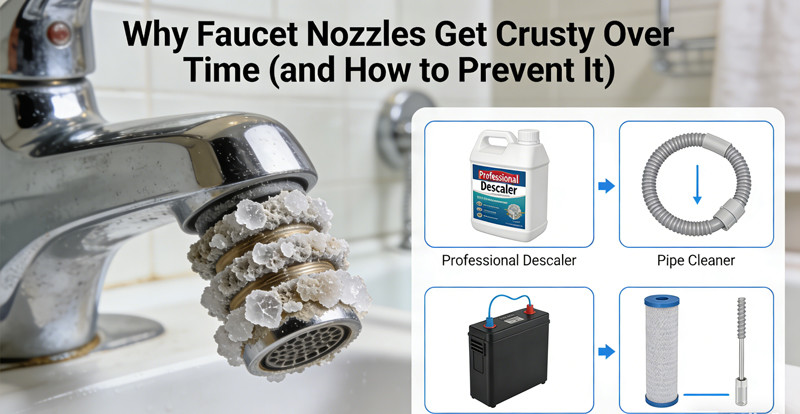
A clean, smooth-flowing faucet is something every homeowner expects, whether in the kitchen, bathroom, laundry room, or utility sink. But over time, the nozzle—or aerator—can start to develop an unpleasant, crusty buildup. White chalk, green or blue residue, brown flakes, and uneven spray patterns are all common signs that your faucet nozzle is gradually accumulating deposits. While the buildup may seem harmless at first, it can lead to reduced water flow, corrosion, and even damage to your faucet if left untreated.
Understanding why faucet nozzles get crusty is the first step toward keeping your fixtures looking clean and functioning like new. Below, we break down the main causes, how they affect performance, and what you can do to fix and prevent them long-term.
1. Hard Water Mineral Buildup — The Main Culprit
The number one reason faucets develop crust is mineral buildup caused by hard water. Hard water contains naturally occurring minerals such as:
- Calcium
- Magnesium
- Iron
When water flows through your faucet and then evaporates, it leaves behind these minerals in solid form. Over time, they accumulate on the aerator screen and around the nozzle opening, forming:
- White, chalky limescale (calcium deposits)
- Brown or orange stains (iron oxidation)
- Green or blue crust (copper oxidation from plumbing components)
Because aerators have tiny holes to regulate flow, even a small amount of mineral buildup can have a noticeable impact. As layers grow thicker, water spray becomes uneven and pressure drops.
Why buildup gets worse over time
Mineral deposits layer on top of each other with every use. Each time water dries on the spout, a new film forms. Over weeks or months, this turns into hardened scale that becomes increasingly difficult to remove.
If you live in a region with very hard water, this buildup can appear in a matter of weeks—even faster on frequently used faucets.
2. Corrosion of Faucet Components
Faucets contain internal metal parts, often made of brass or copper alloys. With time and exposure to water, cleaning products, and oxygen, these metals oxidize. Oxidation can appear as:
- Green patina (typical of copper)
- Blue streaking or residue
- Brown or rust-colored flaking
Corrosion may not start on the faucet surface itself—it can begin inside the aerator or threaded sections, eventually working its way to the nozzle exterior.
Signs corrosion is causing the crust
- The buildup is green, blue, or brown instead of white.
- You notice a metallic smell around your faucet.
- The finish around the nozzle looks pitted or dull.
- Internal aerator parts appear deteriorated.
Corrosion often indicates aging parts or that the aerator has reached the end of its useful life.
3. Soap Scum and Cleaning Product Residue
Faucets are constantly exposed to soaps, detergents, toothpaste, shampoo, and general cleaning products. Over time, these substances create a filmy coating on the faucet surface.
This film:
- Attracts dust and dirt
- Provides a sticky surface for minerals to latch onto
- Speeds up crust buildup dramatically
Bathroom faucets are especially prone to crusty nozzles caused by soap scum because splashes and overspray occur frequently.
If you see white flakes mixed with greasy or filmy residue, soap scum may be contributing to the buildup.
4. Microbial Growth and Biofilm
Although less common, biological growth like biofilm can also lead to crust around faucet nozzles. Biofilm is a slimy layer formed by bacteria and microorganisms in moist environments.
Biofilm can act as a glue that traps minerals over time, resulting in:
- Slimy residue under mineral crust
- Pink or black spots
- Uneven buildup that reappears quickly after cleaning
Homes with well water or older plumbing systems tend to experience this more often due to higher organic content in the water.
5. Aging or Damaged Aerators
As aerators age, their internal screens, rubber gaskets, and threadings begin to deteriorate. When these components corrode or warp, minerals accumulate faster and may even break through the screen.
Signs your aerator is the root cause:
- Water sprays sideways
- Flow suddenly drops
- Threads are stuck or crusted
- Pieces of scale fall out during cleaning
If your faucet is more than 5–10 years old, replacing the aerator may be the easiest long-term fix.
6. Inadequate Cleaning Habits
Even the best faucets need periodic cleaning, especially the aerator. Many homeowners wipe the outside of their faucet but forget the internal parts where mineral buildup often starts.
Without proper maintenance:
- Hidden scale accumulates inside the nozzle
- Buildup becomes thicker and harder over time
- Spray patterns become distorted
- Corrosion develops unnoticed
Routine cleaning is essential to keeping crusty buildup under control.
How Crusty Nozzles Affect Water Performance
Crust around a faucet nozzle is more than an eyesore—it can affect the entire performance of your faucet.
Common issues include:
- Uneven or splashing spray due to clogged aerator holes
- Reduced water pressure as buildup restricts flow
- Thread leaks caused by pressure changes behind blocked screens
- Accelerated corrosion where moisture stays trapped under scale
- Potential contamination from rust, biofilm, or mineral flakes entering the water
The longer buildup is ignored, the more damage it can cause.
How to Clean a Crusty Faucet Nozzle

Fortunately, removing crust from a faucet nozzle is usually simple. Here’s the most reliable method:
1. Remove the aerator
Use your fingers or a wrapped wrench to avoid scratching the finish.
2. Soak all parts in white vinegar
Vinegar naturally dissolves calcium and magnesium.
Let parts soak for 30–60 minutes.
3. Scrub gently
Use a toothbrush or soft bristle brush to clean screens and nozzles.
4. Rinse thoroughly
Flush debris with warm water.
5. Reassemble and test
You should immediately see improved pressure and a more even spray.
If deposits are too stubborn, a descaling solution or aerator replacement may be necessary.
How to Prevent Crust Buildup Long-Term
Keeping your faucet nozzle clean is easier with consistent habits:
- Wipe the nozzle dry after use
- Clean the aerator at least every 1–3 months
- Install a water softener in hard-water regions
- Use gentle cleaning products to minimize residue
- Replace old aerators every few years
Routine maintenance keeps your faucet looking new and performing smoothly for years.