 WOWOW Faucets
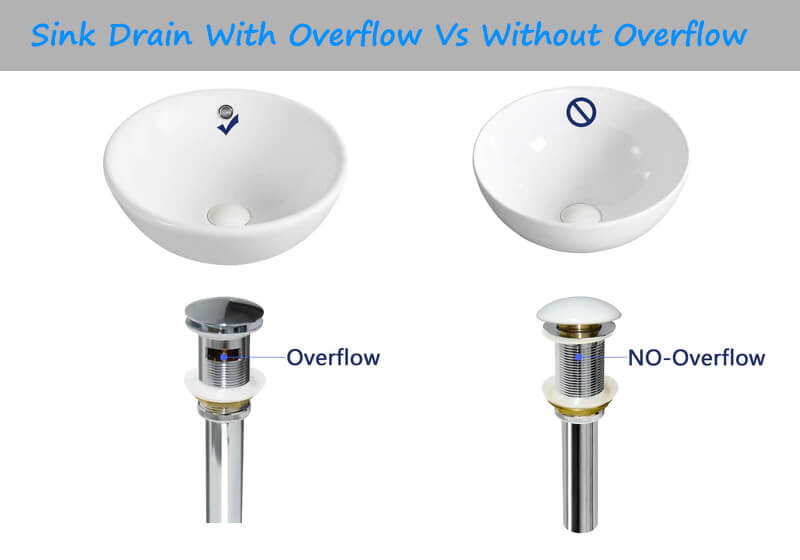
Sink drains are an essential component of any bathroom or kitchen. They allow the water to drain from the sink, preventing the buildup of stagnant water that can harbor bacteria and unpleasant odors. When choosing a sink drain, you’ll typically have the option of selecting one with an overflow or without an overflow. But what are the differences between the sink drain with overflow vs without overflow, and which is the better choice for your needs? In this post, we’ll explorer it!
What is an overflow
First, let’s define what an overflow is. An overflow is a small opening or channel located near the top of the sink bowl, just below the rim. Its purpose is to allow excess water to drain out of the sink if the water level rises too high, preventing water from spilling over the sides of the sink and onto the counter or floor. Without an overflow, the sink bowl would simply fill up with water until it reached the level of the rim, potentially causing a mess and water damage.
Now, let’s discuss the main differences between sink drains with overflow and those without overflow.
Drainage Capacity
One of the most significant differences between sink drains with and without overflow is their drainage capacity. Sink drains with overflow have a higher drainage capacity than those without. This is because the overflow channel allows water to drain out of the sink, even when the water level is higher than the drain. Without an overflow, the water would have to reach the level of the drain before it could start draining out, reducing the drainage capacity of the sink.
Water Usage

Sink drains with overflow typically use more water than those without. This is because the overflow channel requires water to flow through it to keep the sink from overflowing. While the amount of water used may not seem significant, it can add up over time and lead to higher water bills.
Cleaning and Maintenance
Sink drains with overflow can be more challenging to clean and maintain than those without. The overflow channel can collect dirt, grime, and soap scum, which can lead to clogs and unpleasant odors. Cleaning the overflow channel can be difficult, as it is often narrow and hard to access. Sink drains without overflow are generally easier to clean and maintain, as there are fewer parts to worry about.
Aesthetics
Sink drains without overflow typically have a more streamlined and minimalist appearance than those with overflow. This can be a desirable feature for those who prefer a clean and modern look in their bathroom or kitchen. Sink drains with overflow can appear bulky and detract from the overall appearance of the sink.
Cost
Sink drains with overflow are generally more expensive than those without. This is because they require more materials and are often more complex to manufacture. The added cost may not be significant, but it is something to consider when choosing a sink drain.
Choose a drain that matches your basin
Start with the basin manufacturer’s drain requirements and whether the basin has an overflow opening. Match the drain design, opening dimensions and mounting thickness; appearance or price alone does not determine compatibility.
For a complete faucet-and-drain set, the WOWOW matte black widespread bathroom faucet with overflow pop-up drain includes a drain intended for an overflow basin. The faucet requires three mounting holes with 8–16 in. outer-hole spacing. If your basin has no overflow opening, contact WOWOW about a suitable drain before ordering.
A faucet set for a bathroom sink with overflow
Check your basin and drain dimensions first. The included pop-up drain on this model requires an overflow sink.

Matte black widespread bathroom faucet with drain
3 holes, 8–16 in. spacing; included pop-up drain requires an overflow sink.