 WOWOW Faucets
Here is the complete, publish-ready HTML article:
“`html
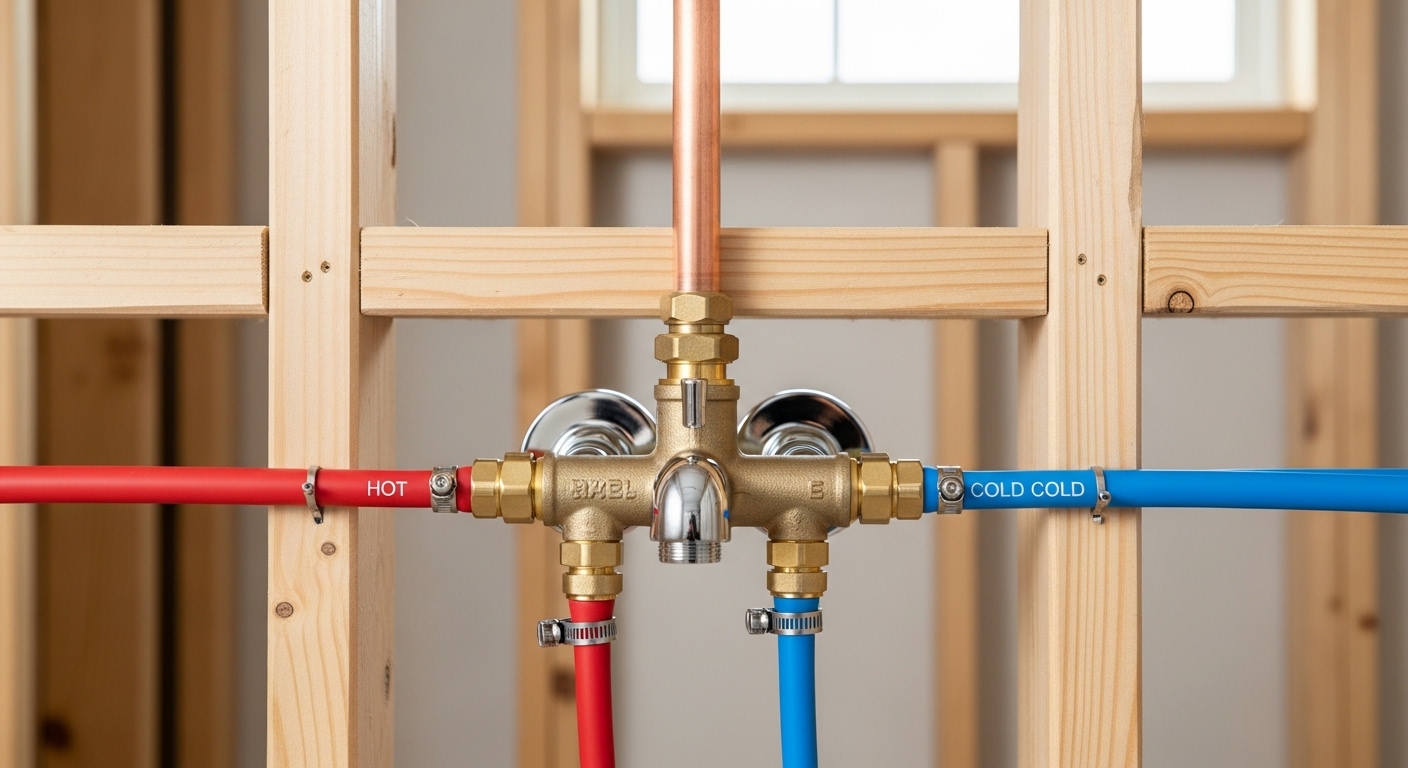
If you’re planning a shower valve installation with PEX, you’re choosing one of the easiest and most forgiving ways to rough-in a shower — no torch, no flux, no scorched studs. PEX (cross-linked polyethylene) is flexible, it shrugs off freezing far better than copper, and the crimp tools are cheap to rent. But “easy” doesn’t mean “no rules.” Get the valve depth wrong, run PEX too close to the brass body, or skip the pressure test, and you’ll be cutting open finished tile to fix a drip. This guide walks through exactly how to do it right the first time, with real numbers, the fittings that actually work, and the mistakes that send people back to the hardware store.
Can you actually connect a shower valve directly to PEX?
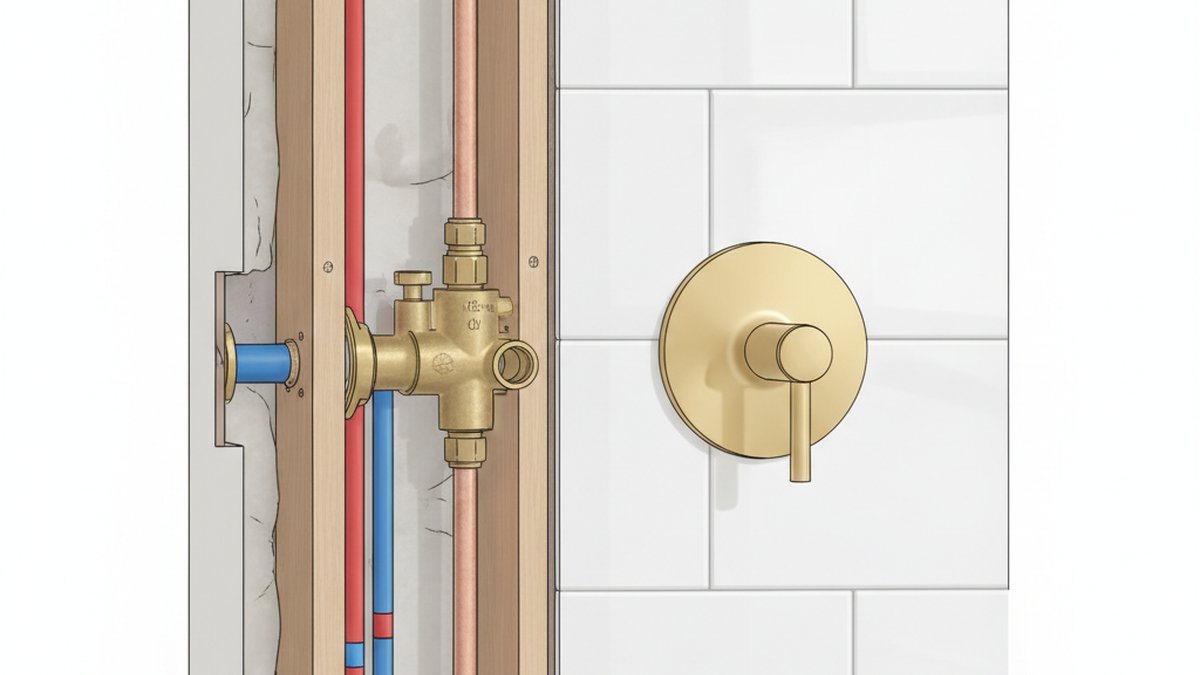
Yes — almost every modern pressure-balance and thermostatic shower valve is rated to connect directly to PEX, as long as you respect the manufacturer’s heat clearance and use approved fittings. The valve body has threaded or sweat inlets (½” NPT female threads are most common on DIY-friendly valves), and you simply thread on a PEX adapter or sweat on a short copper stub, then crimp your PEX to that.
The one thing to watch is heat. If your valve has sweat (solder) connections and you solder a copper transition fitting onto it, the brass body gets hot enough to melt PEX or its fittings. That’s why the standard rule is to keep the actual PEX tubing and crimp rings at least 6 to 8 inches away from any point you’re soldering, or — better for beginners — buy a valve with threaded inlets so there’s no torch involved at all. Thread on a brass ½” female-NPT-to-PEX adapter, crimp, and you’re done.
Three connection styles dominate, and they all work with PEX:
- Threaded inlets (easiest): Screw a male-thread PEX adapter into the valve, wrap the threads with 3–4 wraps of PTFE tape, snug it, and crimp your PEX on.
- Sweat inlets: Solder a 6–8″ copper stub into the valve first, let it fully cool, then crimp PEX to the cooled copper end with a copper-to-PEX coupling.
- Push-to-connect (SharkBite-style): No tools beyond a cutter and deburrer — push the fitting on until it clicks past the depth mark. Great for tight spots, more expensive per connection.
PEX vs. copper for a shower valve: which should I use under $200?
For a typical single-shower rough-in under $200 in materials, PEX wins on cost, speed, and freeze resistance, while copper wins on longevity and looks where pipe is exposed. For a hidden, in-wall shower valve, PEX is the smarter pick for most homeowners.
Here’s the honest side-by-side:
| Factor | PEX | Copper |
|---|---|---|
| Material cost (typical shower rough-in) | $40–$80 | $90–$160 |
| Tools needed | Cutter + crimp tool (~$40 rental) | Torch, flux, solder, sandcloth |
| Skill level | Beginner-friendly | Intermediate |
| Freeze resistance | Excellent (expands without bursting) | Poor (cracks) |
| Heat tolerance near valve | Needs 6–8″ clearance from solder heat | Handles direct heat |
| Lifespan | 40–50 years | 50+ years |
| Water flow | Slightly more restrictive (smaller ID) | Slightly better flow |
The flow difference is worth a quick word: PEX has a slightly smaller inside diameter than nominally same-size copper, so running ½” PEX everywhere can cost you a little pressure on a high-flow rain head. If you want strong flow at the shower head, run ¾” PEX to the valve and let the valve step down, or simply use ½” PEX for a standard head — it’s fine. If pressure is already a problem in your home, that’s a separate fix worth reading up on before you blame the pipe.
What PEX fittings and tools do I need for a shower valve rough-in?
You need PEX tubing, a transition fitting to mate PEX to your valve, a connection system (crimp, clamp, expansion, or push-to-connect), a cutter, and the matching tool for your system. That’s it — most people spend $60–$120 on materials and rent the tool.
A concrete shopping list for a standard valve:
- ½” PEX tubing — red for hot, blue for cold, or white for both (color is just labeling; the pipe is identical). Buy 25% more than you measure.
- Two ½” PEX-to-½”-MNPT brass adapters for the valve’s threaded hot/cold inlets.
- Copper stub-out for the shower-arm riser (this gives you a rigid, threaded point to mount the drop-ear elbow for the shower arm — never run flexible PEX straight to a shower arm).
- Crimp rings + crimp tool (copper rings, $4 a bag; tool rents for ~$20–$40) OR stainless clamp rings + cinch tool OR push-to-connect fittings if you want zero special tools.
- PEX cutter — a clean, square cut is non-negotiable; a hacksaw leaves burrs that cause leaks.
- Drop-ear (winged) elbow screwed to blocking, for the shower arm.
- PTFE thread tape for all threaded joints.
- A go/no-go gauge — usually built into the crimp tool — to verify every crimp.
One rule that saves callbacks: the shower head riser and the tub spout drop should terminate in a solidly anchored, threaded fitting (a drop-ear elbow), not bare PEX. PEX is flexible by design, and a shower arm sticking out of the wall needs something rigid behind it so it doesn’t wobble every time someone hangs a loofah on it. If you’re newer to fixture work in general, our walkthrough on how to install a kitchen faucet covers the same kind of thread-tape and supply-line fundamentals you’ll use here.
How do I install the shower valve with PEX step by step?
The short version: mount the valve at the right depth and height on solid blocking, connect hot to the hot side and cold to the cold, run a stub-out to the shower arm, crimp every PEX joint, then pressure-test before closing the wall. Here’s the full sequence.
Step 1 — Set the valve at the correct depth and height
This is the step people get wrong. Every valve has a plaster guard with marks showing the minimum and maximum finished-wall surface. Set the valve so the finished tile or surround will land between those marks — too deep and your trim won’t reach; too shallow and the trim won’t seat. Standard rough heights: 28–48″ off the floor for the valve (45–48″ is common for a comfortable handle), and 6’6″–7′ for the shower-arm outlet. Screw the valve to a 2×6 brace nailed between studs — never let the valve hang from the pipe.
Step 2 — Identify hot and cold (don’t reverse them)
Valves are stamped “H” and “C.” Hot connects to the left side as you face the valve, cold to the right — match the stamps, not your assumption. Reversing them makes the handle work backward and, on some pressure-balance units, throws off the scald protection. Use red PEX for hot and blue for cold so it’s obvious at a glance.
Step 3 — Make the PEX connections
Thread your brass PEX adapters into the valve inlets with PTFE tape. Cut your PEX square, slide a crimp ring on, push the tubing fully onto the adapter’s barbed end until it bottoms out, slide the ring to 1/8″–1/4″ from the tube end, and crimp. Check every crimp with the go/no-go gauge. If you’re using push-to-connect, push until the tube passes the insertion-depth mark you drew with a marker — under-insertion is the #1 cause of push-fitting leaks.
Step 4 — Run the shower-arm stub-out
From the valve’s top outlet, run up to a drop-ear elbow anchored to blocking at your chosen height. If your valve outlet is sweat, solder a short copper riser; if threaded, thread on an adapter and crimp PEX up to the elbow’s transition. The elbow must be rigidly mounted so the shower arm stays put.
Step 5 — Pressure-test before you close the wall
Cap the outlets, turn the water back on, and watch every joint for 15–30 minutes — ideally longer. Many pros leave it pressurized overnight. Dry every fitting with a paper towel and recheck; a slow weep won’t show as drips at first. Only once it’s bone dry do you insulate, install backer board, and tile. The moment your valve disappears behind tile, every leak becomes a demolition job — so don’t rush this.
What mistakes cause leaks in a PEX shower valve install?
The leaks almost always trace back to five things: a bad crimp, PEX run too close to solder heat, reversed or cross-threaded fittings, no rigid backing for the valve and shower arm, and skipping the pressure test. Fix those five and PEX is extremely reliable.
- Under- or over-crimped rings: Always verify with the go/no-go gauge. A ring that’s too far from the tube end or crimped on a barb ridge will weep.
- Melted PEX from soldering: If your valve is sweat-type, solder the copper stubs first and let them fully cool before bringing PEX anywhere near. Keep tubing 6–8″ back from any flame.
- Cross-threaded brass adapters: Start every threaded fitting by hand, not with a wrench, and use PTFE tape — don’t overtighten brass into the valve or you can crack it.
- No blocking: A valve or shower arm that flexes will eventually loosen a joint. Anchor everything to wood.
- UV exposure: Don’t store or run PEX where sunlight hits it for long; UV degrades it. Inside a wall it’s perfectly protected.
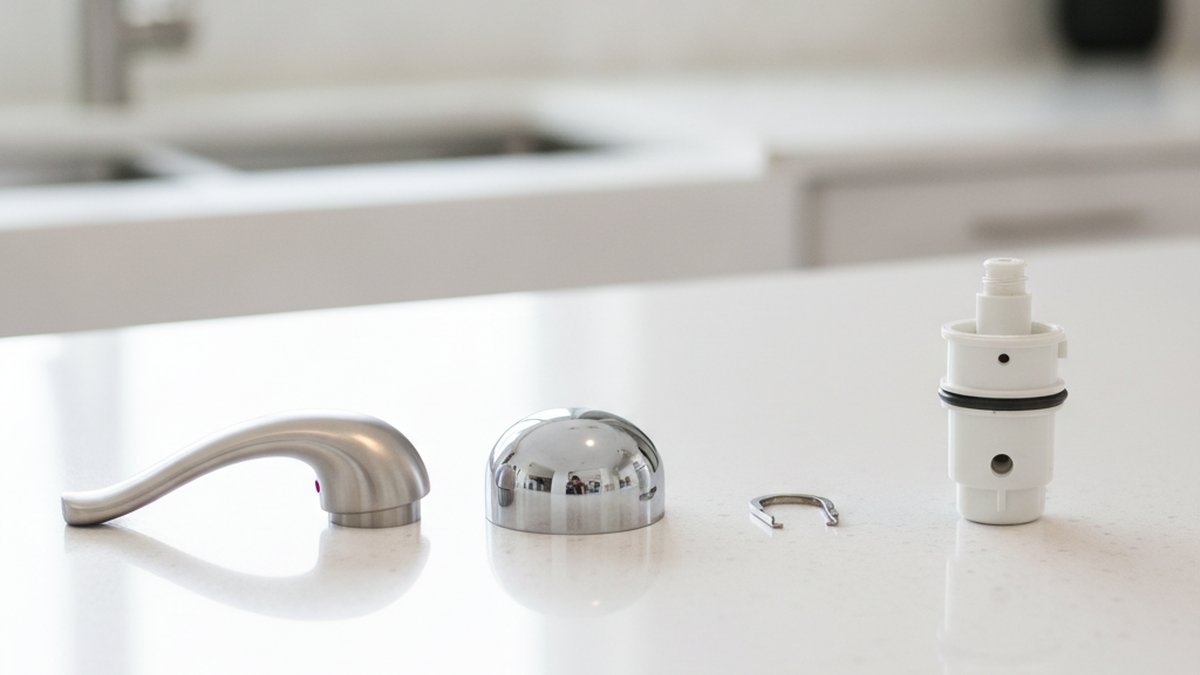
If after everything you still get a drip from the trim side rather than the rough-in, the culprit is usually the cartridge or handle, not the PEX — that’s a totally different repair. Our guide on fixing a leaky faucet cartridge handle covers that case, and if you ever chase a mystery shower drip later, our bathroom faucet leak diagnosis guide walks through finding the real source before you start replacing parts. Once your new shower is running, keeping the head clear of buildup matters too — see how to clean a clogged shower head to keep flow strong.
Do I need a pressure-balance or thermostatic valve with PEX?
The valve type is independent of using PEX — both pressure-balance and thermostatic valves connect to PEX the same way — but most U.S. codes now require at least a pressure-balance (anti-scald) valve for new showers. PEX doesn’t change that requirement.
A pressure-balance valve keeps water temperature steady if someone flushes a toilet, by balancing the hot/cold pressure ratio. A thermostatic valve goes further, holding a precise set temperature and often allowing separate volume control — nice for multi-head systems. For a standard single-head shower, a quality pressure-balance valve is the practical, code-compliant choice, and it crimps to PEX in minutes. Whichever you choose, buy a valve from a brand that lists ASME A112.18.1 / CSA B125.1 compliance and offers a real warranty — that certification is your assurance the anti-scald function was actually tested.
FAQ
Can PEX touch a hot shower valve body during normal use?
Yes — the heat clearance rule is only about soldering. Hot shower water (typically 105–120°F) is nowhere near hot enough to damage PEX, which is rated for continuous use at 200°F and 80 psi. The only danger is an open flame during installation, not the hot water running through it afterward.
What size PEX should I run to a shower valve?
Use ½” PEX for a standard single shower head — it’s the norm and works fine. If you have a high-flow rain head or a multi-head system, run ¾” PEX to the valve to preserve pressure, since PEX has a slightly smaller inside diameter than copper. For most homes, ½” is correct.
Is crimp or push-to-connect better for a shower valve in the wall?
Crimp (or clamp) connections are the standard for permanent in-wall use because they’re inexpensive, low-profile, and proven over decades. Push-to-connect fittings are reliable too and code-approved for in-wall use, but they cost more and are bulkier, so most pros reserve them for tight spots or repairs. Either is safe behind tile if installed correctly.
Do I still need a copper stub-out if I’m using PEX everywhere?
For the shower arm, yes — you want a rigid, threaded drop-ear elbow rather than flexible PEX poking out of the wall, so the shower arm stays firmly in place. For the tub spout, the same applies. Everywhere else inside the wall, PEX is fine on its own.
How long should I pressure-test before closing the wall?
At minimum 15–30 minutes, but leaving it pressurized overnight is the gold standard for catching slow weeps. Wipe every joint dry with a paper towel and recheck — a connection that’s merely damp, not dripping, will still ruin tile over time. Never close the wall until everything is completely dry.
Will a PEX shower valve install pass inspection?
Yes, PEX is accepted by virtually all U.S. plumbing codes for hot and cold supply, including in-wall shower rough-ins, as long as you use approved fittings, an anti-scald valve, and proper support. Always confirm your local code and pull a permit if your jurisdiction requires one for shower work — and have it inspected before you tile.
A final word from our team
PEX has quietly become the default for shower rough-ins because it removes the scariest part of plumbing — the torch — without sacrificing reliability. Mount your valve at the right depth on solid blocking, respect the heat clearance, crimp clean and gauge every joint, run a rigid stub-out to the shower arm, and pressure-test like your tile depends on it (because it does). Do that, and a PEX shower valve will outlast most renovations.
About the author & WOWOW Faucet: This guide was written and reviewed by the WOWOW Faucet product team, who design, test, and support shower valves, faucets, and bathroom fixtures for everyday homeowners. Our shower valves are built and tested to ASME A112.18.1/CSA B125.1 standards for flow and anti-scald performance and are backed by a limited lifetime warranty on the valve body. We’ve installed and serviced thousands of valves with both copper and PEX, and the steps above reflect what actually holds up behind the wall — not just the theory.
“`
\n
Related Guides
\n
- \n
- Understanding Shower Valve Types: A Comprehensive Guide
- Six Different Types Of Shower Handles: Choose The Right For Your Bathroom
- How to Fix a Broken Shower Diverter: A Comprehensive Guide
\n
\n
\n
\n