 WOWOW Faucets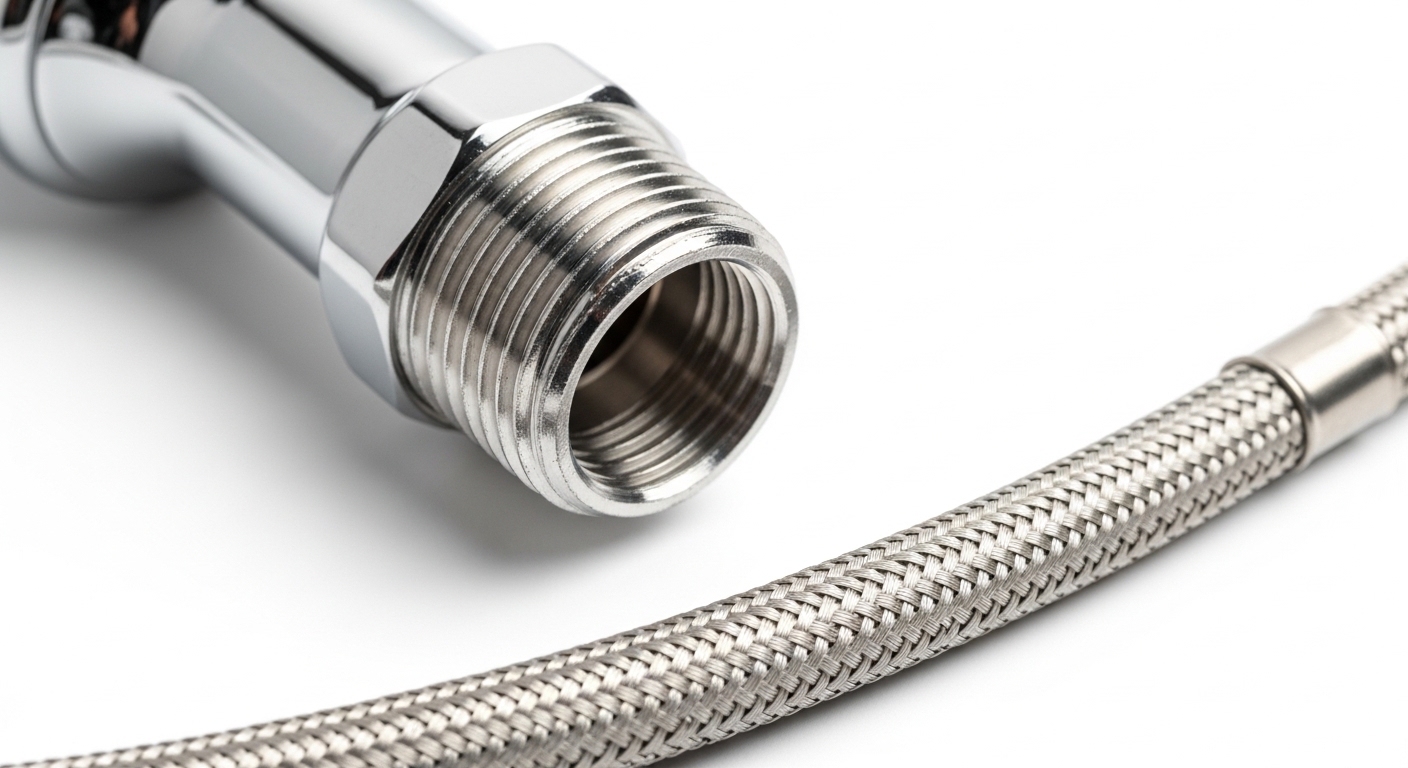
Choosing the correct bar tap thread size is the single most overlooked step when installing or upgrading a bar, prep, or wet-bar faucet. Whether you’re outfitting a commercial cocktail station, a basement entertainment area, or a kitchen island prep sink, the wrong thread spec will either leak, cross-thread, or simply refuse to engage — and the differences between NPT, BSP, UNS, and metric standards aren’t always printed on the box. This guide breaks down every thread you’ll encounter on a bar faucet, how to measure it accurately, and how to match accessories, supply lines, and replacement parts with confidence.
At WOWOW Faucet, we engineer bar and prep faucets to ANSI/NSF 61 and ASME A112.18.1 standards, and our technical support team handles thread-compatibility questions every day. The good news: once you understand the four or five common thread families used on bar taps, identifying yours takes about ten seconds with a caliper or a simple gauge.
What Is a Bar Tap Thread Size and Why It Matters
A “bar tap thread size” refers to the precise diameter, pitch, and standard of the threaded connections on a bar faucet — the inlet shanks that mount under the sink, the outlet where the aerator screws on, and any side-spray or pot-filler accessory ports. Bar faucets are smaller than full kitchen faucets, typically with a shorter spout (8″–10″) and a more compact mounting footprint, but they still use the same plumbing thread standards as their larger cousins. The catch: because bar taps are compact, manufacturers sometimes spec smaller or non-standard threads to save space, which is exactly why mismatched parts are so common in this category.
Getting the bar tap thread size right matters for three reasons:
- Leak prevention — even a half-pitch mismatch between NPT and BSP will seat once but fail under pressure within weeks.
- Code compliance — commercial bars in most U.S. jurisdictions must meet IPC or UPC standards that specify approved thread connections for potable water.
- Accessory compatibility — aerators, filter adapters, swivel sprayers, and quick-connect couplings all assume a specific thread. Buy the wrong one and you’ll be back at the hardware store.
The Most Common Bar Tap Thread Sizes in 2026
There are really only five thread families you need to know to confidently service or install any modern bar faucet sold in North America. The table below summarizes them, where you’ll find each one on a typical bar tap, and which accessories they accept.
| Thread Spec | Diameter (Nominal) | Where It’s Used on a Bar Tap | Common Region/Standard | Typical Use Case |
|---|---|---|---|---|
| 1/2″ NPT (Male/Female) | ~0.840″ OD | Inlet shank, wall-mount stub-out | North America (ANSI B1.20.1) | Connecting supply lines, hot/cold inlets |
| G1/2 (BSP Parallel) | ~0.825″ OD | Inlet shanks on imported bar faucets | EU, Asia (ISO 228) | European brands, imported designer taps |
| 3/8″ Compression | ~0.500″ OD | Supply riser to angle stop | North America | Connecting flexible braided hose to shut-off valve |
| 55/64″-27 UNS | ~0.859″ OD (Male) | Aerator outlet (standard male) | North America (ASME A112.18.1) | Standard kitchen/bar aerator, filter adapters |
| 15/16″-27 UNS | ~0.937″ OD (Male) | Aerator outlet (large male) | North America | Higher-flow commercial bar taps |
| M22 x 1 / M24 x 1 | 22 mm / 24 mm | Aerator outlet on European bar taps | EU (ISO metric) | Imported European faucets, filter pitcher adapters |
1/2″ NPT vs. G1/2 BSP — The Most Confusing Pair
This is the single biggest source of installation headaches we see in customer support. NPT (National Pipe Tapered) and G1/2 (British Standard Pipe Parallel) look nearly identical to the naked eye — both are about 21 mm in outer diameter — but NPT threads are tapered at 1.7895°, while G1/2 threads are perfectly parallel. They will partially engage with each other, which fools DIYers into thinking the connection is good, but the thread flanks don’t seal and you’ll get a slow drip within days.
If your bar faucet was imported from Europe, Japan, or China and the box mentions “DIN” or “ISO 228,” assume G1/2. If it’s a domestic U.S. brand with cUPC certification, it’s almost certainly 1/2″ NPT. When in doubt, count the threads per inch: NPT 1/2″ is 14 TPI, while G1/2 is 14 TPI — same count, but pitch and taper differ. The easiest test is to try a standard U.S. braided supply line: if it threads on perfectly square with no wobble for at least four full turns, it’s NPT.
The 55/64″-27 Aerator Standard
Almost every American-made bar faucet manufactured since the 1990s uses the 55/64″-27 UNS thread on the spout outlet for the aerator. This is the same thread you’ll find on standard kitchen faucets, which is why most aftermarket aerators, water-saving inserts, and filter adapters fit a bar tap without any conversion piece. The exception is older or imported designs that use the 15/16″-27 “large male” or 13/16″-24 “small female” variants — these need an adapter ring.
How to Measure Your Bar Tap Thread Size at Home
You don’t need a machinist’s kit to identify a bar tap thread. With three inexpensive tools — a digital caliper, a thread pitch gauge, and a small notepad — you can ID any connection in under a minute. Here’s the process we recommend to every customer who calls in unsure.
- Shut off water and remove the faucet — or, if measuring the outlet aerator, unscrew the aerator housing using cloth-wrapped pliers to avoid scratches.
- Measure the outside diameter (OD) of male threads with the caliper at the widest point. Record to the nearest 0.01″.
- For female threads, measure the inside diameter (ID) across the thread crests.
- Count threads per inch using a pitch gauge — slide each leaf against the threads until one sits perfectly flush.
- Compare to the table above and confirm with a test fitting of the suspected adapter.
If you don’t have a thread gauge, a quick visual check works: NPT threads visibly taper from base to tip, while parallel threads (BSP, UNS aerator threads) are perfectly cylindrical. Hold the faucet shank against a straight edge — any visible taper means NPT.
Bar Tap vs. Standard Kitchen Faucet Threads — Are They Different?
This is one of the most common questions our team gets, and the short answer is: usually no, but with notable exceptions. Bar faucets and standard kitchen faucets typically share the same inlet thread standard (1/2″ NPT in the U.S.) and the same aerator thread (55/64″-27), which means most accessories cross over freely. The differences appear in three places:
- Spout outlet diameter — bar taps often have a narrower spout, so the aerator housing may be a smaller form factor even if the thread itself matches.
- Supply line length — bar faucets sometimes ship with shorter 16″–20″ supply lines, while standard kitchen faucets use 24″–30″. The thread on the end is the same; only the length differs.
- Side-spray ports — some commercial-style bar taps include a quick-connect port for a pull-down sprayer, which uses a proprietary thread (often 1/4″ or M14) specific to that brand.
For a deep dive on the broader install considerations, our complete kitchen faucet installation guide walks through every step in detail — the inlet thread connections are identical for the vast majority of bar taps. If you’re comparing commercial-style versus pull-down geometries before you buy, our breakdown on pull-down vs commercial style faucets covers how thread placement differs across those two body styles.
Matching Supply Lines and Adapters to Your Bar Tap
Once you’ve identified the inlet thread, picking a supply line is straightforward. The vast majority of residential bar taps in the U.S. use a 3/8″ compression fitting at the angle stop end and a 1/2″ or 3/8″ female threaded swivel nut at the faucet end. Braided stainless steel hoses are the current industry default — they’re rated to 150 psi and tolerate higher temperatures than vinyl. PEX flex risers are also code-approved in most jurisdictions and offer easier hand-tightening, which matters when you’re working in the tight under-cabinet space of a bar setup.
When You Need an Adapter
The two most common adapter scenarios for bar taps are:
- Imported faucet on U.S. plumbing — G1/2 to 1/2″ NPT brass adapters cost about $4 and are stocked at most plumbing suppliers. Always use thread sealant tape (PTFE) on the NPT side and an O-ring or fiber washer on the BSP side.
- Adding an inline filter or instant-hot accessory — these usually splice between the supply line and the angle stop using 3/8″ compression tees, no thread conversion required.
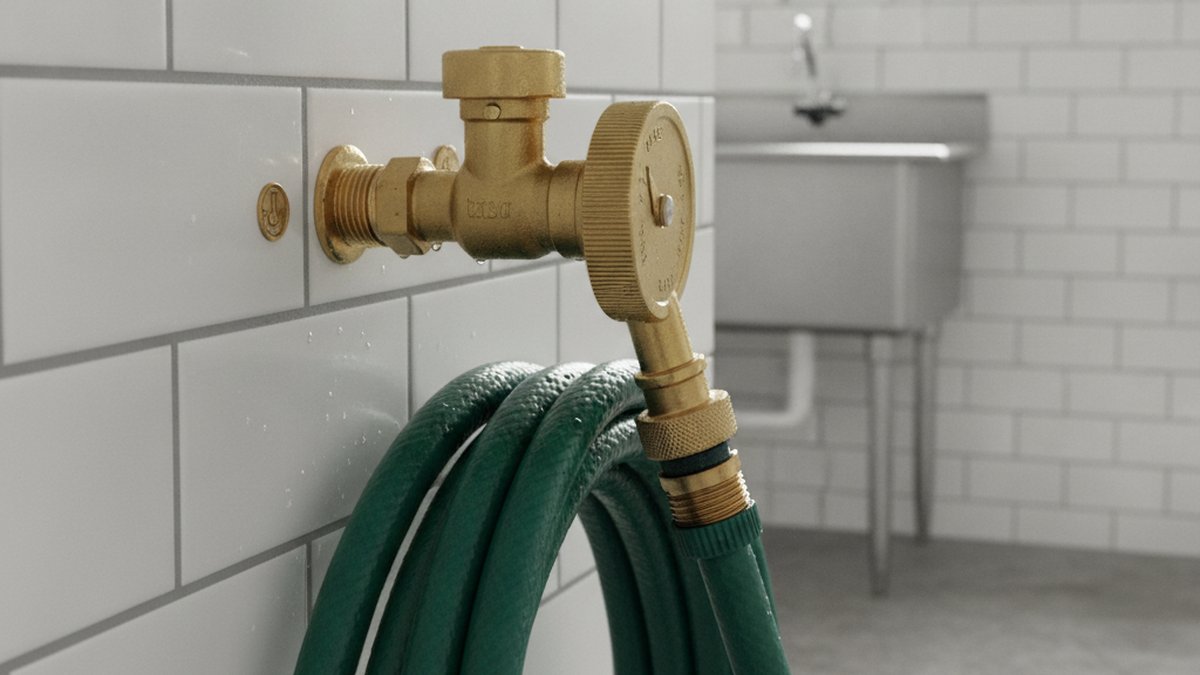
If you’re connecting an outdoor garden hose to a bar tap for a backyard wet bar — yes, people do this — you’ll need a male aerator-to-GHT (Garden Hose Thread, 3/4″-11.5 NH) adapter. Our guide on faucet adapters for outside use covers the full range of options for these cross-standard conversions.
Materials, Sealing, and Why Brass Still Wins on Bar Taps
The thread itself is only half the story — the material it’s machined into determines whether the seal holds for ten years or ten months. Bar tap threads are typically cut into one of three materials:
| Material | Thread Durability | Corrosion Resistance | Typical Lifespan | Best For |
|---|---|---|---|---|
| Forged/Solid Brass | Excellent — holds shape under repeated tightening | Excellent | 20–30 years | Commercial bars, hard-water regions |
| Stainless Steel (304/316) | Very good — resistant to galling with proper lubrication | Excellent | 15–25 years | Coastal areas, food-service prep stations |
| Zinc Alloy (Zamak) | Poor — strips after 2–3 tightening cycles | Fair — degrades in hard water | 3–7 years | Budget builds, low-use bar carts |
If you’re specifying a bar tap for a commercial or high-use setting, brass is the default for a reason. Our comparison of solid brass vs forged brass faucets explains the manufacturing differences and how they affect long-term thread integrity, especially at the inlet shanks where torque stress is concentrated. For an even broader look at corrosion and lifespan, our brass vs zinc faucets comparison shows just how dramatically thread material affects the lifespan of any plumbing fixture.
Sealing the Connection Correctly
Even a perfectly matched thread will leak if it’s not sealed properly. For NPT connections, wrap 2–3 turns of PTFE (Teflon) tape clockwise around the male threads before tightening, or apply a pipe-dope joint compound. For BSP parallel threads and compression fittings, use the included rubber or fiber washer — never apply tape, since the seal is made by the washer compression, not the threads. Over-torquing is the most common cause of seal failure on bar taps; hand-tight plus a quarter to half turn with a wrench is plenty.
Standards, Testing, and What WOWOW Certifies
Every WOWOW bar faucet sold in North America is tested to ASME A112.18.1 / CSA B125.1 for mechanical performance and meets NSF/ANSI 372 for lead-free compliance (≤0.25% weighted lead content). Thread tolerances on our inlet shanks are held to ±0.002″ on diameter and ±1 TPI verification with calibrated ring and plug gauges. Each batch is also pressure-tested to 1.5× operating pressure (typically 90 psi static) before shipping, and our bar tap line carries a limited lifetime warranty against thread and seat defects.
That level of testing matters because thread failures don’t usually announce themselves — they appear as slow weeping over time, leading to cabinet water damage that’s far more expensive than the faucet itself. Choosing a fixture from a manufacturer that publishes its test standards (and stands behind them) is the easiest way to avoid that scenario.
Common Bar Tap Thread Problems and How to Fix Them
Three issues account for nearly 80% of the thread-related calls our support team handles. Knowing the symptoms saves a service call.
1. Cross-Threading on the Inlet Shank
If the supply nut won’t spin freely after one turn, stop immediately and back it off. Cross-threading on brass shanks can usually be cleaned up with a thread file or a re-tap, but on zinc shanks it almost always means a replacement faucet. Always start the nut by hand and only switch to a wrench once you’ve made at least three full hand-tight turns.
2. Leaking Aerator
An aerator that drips around its housing (not just the spout) usually means the rubber washer inside has perished. Unscrew the aerator, replace the washer — they’re standardized for the 55/64″-27 thread — and reinstall hand-tight. If the leak persists, the housing threads themselves may be worn; full replacement housings are $5–$8.
3. Wobbling Faucet Base
Often blamed on the threads, this is actually a mounting nut issue. The threads holding the faucet body to the deck are fine — the lock nut underneath has loosened. Our detailed walkthrough on tightening a loose faucet base applies equally to bar and prep faucets and takes about five minutes with a basin wrench.
Bar Tap Thread Size Quick-Reference Checklist
Print this list and keep it in your toolbox. It covers 95% of bar tap installation scenarios in North American homes.
- Inlet shanks: 1/2″ NPT male (U.S.) or G1/2 male (imported)
- Supply line at faucet end: 1/2″ or 3/8″ female swivel nut
- Supply line at angle stop: 3/8″ compression
- Aerator outlet: 55/64″-27 male (standard) or 15/16″-27 male (large)
- Side spray (if equipped): proprietary quick-connect, brand-specific
- Required tools: basin wrench, adjustable wrench, PTFE tape, bucket
- Torque target: hand-tight + ¼ to ½ turn — never crank
FAQ
What is the standard bar tap thread size for U.S. residential installations?
For inlet shanks, the U.S. standard is 1/2″ NPT (male), connecting to a 3/8″ compression supply line at the angle stop. The aerator outlet uses a 55/64″-27 UNS male thread. These three specs cover nearly every residential bar faucet sold under cUPC certification.
Are bar tap threads the same as kitchen faucet threads?
In most cases, yes — inlet and aerator thread sizes are identical because both fixture types meet the same ASME A112.18.1 standard. The differences are usually in spout length, supply line length, and form factor rather than thread spec. Bar faucet aerators will physically interchange with standard kitchen faucet aerators.
How can I tell if my bar faucet uses NPT or BSP threads?
NPT threads visibly taper from base to tip; BSP (G-thread) threads are perfectly parallel. Also check the country of origin — U.S. and Canadian brands use NPT, while European, Chinese, and Japanese imports often use BSP. A 1/2″ NPT will measure approximately 0.840″ OD, while G1/2 measures about 0.825″ OD.
Can I use Teflon tape on every bar tap thread connection?
No. Use PTFE tape only on tapered NPT threads, where the seal is made by metal-on-metal compression. For parallel BSP and compression fittings, the seal is made by a rubber, fiber, or copper washer — adding tape can actually prevent the washer from seating correctly and cause leaks.
What size adapter do I need to connect a European bar tap to U.S. plumbing?
You’ll typically need a G1/2 female to 1/2″ NPT male brass adapter. Use a fiber or rubber washer on the BSP (parallel) side and PTFE tape on the NPT (tapered) side. These adapters are inexpensive (around $4 each) and available at any well-stocked plumbing supplier.
My new bar faucet aerator is leaking — is it a thread issue?
Usually no. Leaks around the aerator housing are almost always caused by a missing or perished rubber washer inside the aerator, not damaged threads. Replace the washer first; only if the leak persists should you suspect thread damage. Our guide on why a new faucet might still leak covers the full diagnostic checklist.
Do commercial bar taps use different thread sizes than residential ones?
The inlet shank threads are typically identical (1/2″ NPT), but commercial bar taps often use the larger 15/16″-27 aerator thread to support higher flow rates and accommodate spray-rinse attachments. Always check the spec sheet before ordering replacement aerators or spray-rinse heads for commercial fixtures.
About This Guide
Author note: This guide was written by the WOWOW Faucet technical content team in collaboration with our product engineering group, which specifies and tests every faucet we sell. We’ve installed, serviced, and tested thousands of bar and prep faucets across residential and light-commercial settings, and we keep this guide updated annually as ANSI, ASME, and ISO standards evolve.
About WOWOW Faucet: WOWOW is a U.S.-based kitchen and bath fixture brand specializing in solid-brass faucets, shower systems, and bathroom accessories. Every product is engineered to ASME A112.18.1, NSF/ANSI 61, and NSF/ANSI 372 standards, and backed by a limited lifetime warranty on drip-free operation and finish. Visit www.wowowfaucet.com for the full bar and prep faucet collection.
\n
Related Guides
\n
- \n
- What are The Different Types of Bathroom Faucets
- Best White Kitchen Faucets – Buying Guide & Reviews
- The Best Faucet Brands to Consider in 2026
- What is The Standard Size Hole for A Kitchen or Bathroom Faucet
\n
\n
\n
\n
\n