 WOWOW Faucets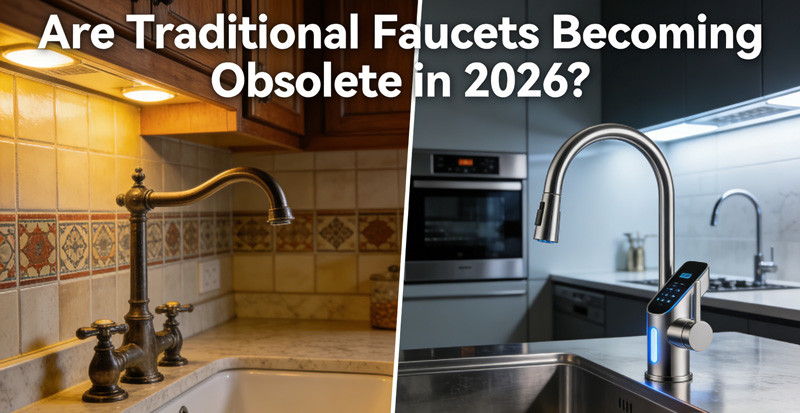
In 2026, kitchens and bathrooms look more advanced than ever. Voice assistants manage lighting. Refrigerators track groceries. Thermostats learn your habits. And now, even faucets are becoming smart.
With touchless activation, voice control, water measurement features, and app integration entering mainstream homes, many homeowners are asking a serious question:
Are traditional faucets becoming obsolete in 2026?
At first glance, it might seem that way. But the reality is more complex.
The Rapid Rise of Smart Faucets
Over the last few years, smart faucets have shifted from luxury upgrades to practical household tools. Major brands now offer models that can:
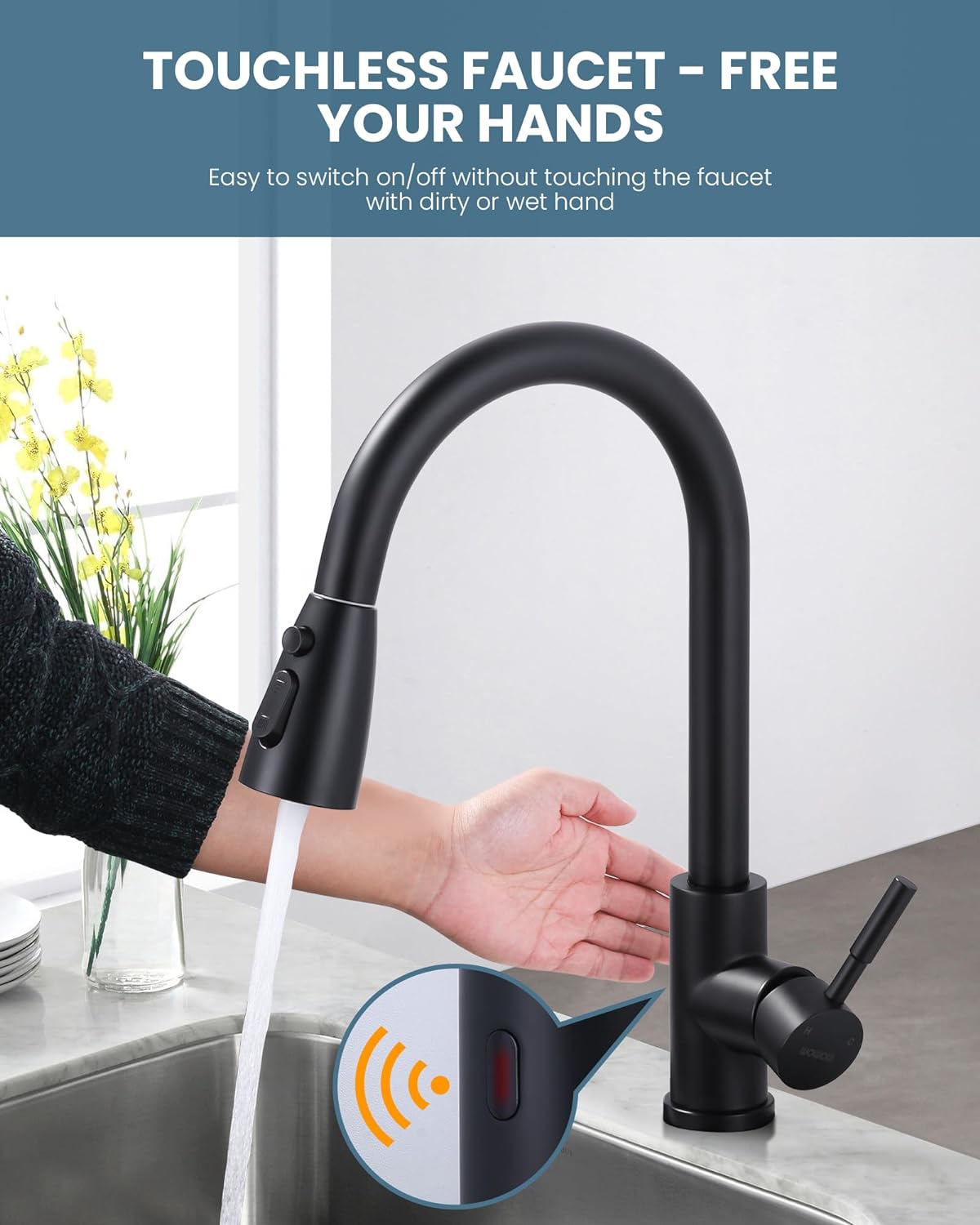
- Turn on with a wave of your hand
- Dispense precise water measurements
- Remember temperature preferences
- Shut off automatically to prevent waste
- Connect to Alexa or Google Assistant
In busy households, these features provide real convenience. Parents preparing baby formula can request exact temperatures. Home cooks can measure water without grabbing a measuring cup. Touchless activation improves hygiene — a feature that remains important even years after the global pandemic reshaped health awareness.
In new construction homes and high-end remodels in 2026, smart faucets are increasingly standard.
This growth makes traditional manual faucets appear dated by comparison.
But appearance doesn’t equal extinction.
Traditional Faucets Still Do Their Job — Extremely Well
The primary purpose of a faucet has never changed: deliver water reliably.
Traditional faucets — whether single-handle, double-handle, pull-down, or wall-mounted — accomplish this task efficiently and consistently. Over decades, manufacturers have refined ceramic cartridges, aerators, and valve systems to improve durability and water flow control.
Modern traditional faucets in 2026 are not the same as those from 20 years ago. They are:
- More water-efficient
- Built with corrosion-resistant materials
- Designed with sleek, contemporary aesthetics
- Easier to install and maintain
While they may lack digital features, they excel in mechanical reliability.
For many homeowners, that reliability is enough.
Cost Remains a Major Factor in 2026
Smart faucet prices have gradually declined, but they are still significantly more expensive than traditional options.
In 2026:
- A high-quality traditional kitchen faucet costs between $150 and $300.
- A smart faucet from a reputable brand often ranges from $400 to $1,000.
For budget-conscious homeowners, landlords, and house flippers, the price gap matters.
When upgrading multiple bathrooms or remodeling an entire kitchen, choosing traditional fixtures can save hundreds — sometimes thousands — of dollars.
Obsolete products typically disappear because consumers stop buying them. That hasn’t happened with traditional faucets. They remain strong sellers in mid-range and budget markets.
The Simplicity Advantage
One of the strongest arguments for traditional faucets in 2026 is simplicity.
Smart faucets rely on:
- Sensors
- Circuit boards
- Power supplies or batteries
- Software systems
When everything works, they’re impressive. But when something fails, repairs can be complicated and costly.
Traditional faucets, by contrast:
- Require no electricity
- Continue working during power outages
- Have easily replaceable mechanical parts
- Are widely understood by plumbers
In rural areas, rental units, and homes where technology fatigue is real, simplicity feels like an advantage — not a limitation.
There is also a growing trend in 2026 toward “low-tech living,” where homeowners intentionally reduce digital dependency in certain areas of the home. For these consumers, a manual faucet aligns perfectly with their values.
Design Trends Keep Traditional Faucets Relevant
Another reason traditional faucets aren’t disappearing is design.
The biggest faucet trends in 2026 include:
- Brushed gold and champagne bronze finishes
- Matte black minimalist silhouettes
- Soft curves replacing sharp industrial angles
- Mixed-metal kitchen designs
Importantly, these styles are available in both smart and traditional models.
For many homeowners, aesthetics drive purchasing decisions more than technology. A beautifully designed manual faucet can transform a kitchen just as effectively as a voice-activated one.
In fact, some designers argue that the cleanest minimalist kitchens look better without visible sensor windows or digital elements.
Traditional faucets have adapted visually to modern tastes, which helps them stay competitive.
Sustainability and Water Efficiency in 2026
Environmental concerns remain strong in 2026, and water conservation continues to influence fixture design.
Traditional faucets now commonly include:
- Low-flow aerators (1.5 GPM or less)
- Precision ceramic cartridges to prevent leaks
- Durable materials that extend product lifespan
Smart faucets may add automatic shut-off and water usage tracking, but manual models already meet strict efficiency standards.
For eco-conscious homeowners who want reduced water consumption without added electronics, traditional faucets still make sense.
Sustainability does not automatically require smart technology.
Where Traditional Faucets May Lose Ground
While they are far from obsolete, traditional faucets are gradually losing dominance in specific segments:
- Luxury Custom Homes – Smart fixtures are becoming expected features.
- Tech-Integrated Smart Homes – Fully connected ecosystems favor connected appliances.
- Commercial-Inspired Residential Kitchens – Hygiene-focused buyers often prefer touchless options.
In these markets, manual-only faucets may feel outdated.
However, the majority of homes worldwide are not ultra-modern smart homes. They are practical living spaces with balanced budgets and varying priorities.
Consumer Choice Has Expanded — Not Narrowed
The most accurate way to describe 2026 is not replacement, but diversification.
Consumers now have three broad faucet categories:
- Fully traditional mechanical faucets
- Hybrid faucets (touch-activated but not voice-controlled)
- Fully smart, voice-integrated faucets
Instead of traditional faucets disappearing, they now occupy one segment of a wider spectrum.
That spectrum allows homeowners to choose based on budget, lifestyle, and comfort with technology.
Are Traditional Faucets Becoming Obsolete in 2026?
The short answer: No.
They are evolving, not vanishing.
Smart faucets are growing in popularity, especially in tech-forward homes. But traditional faucets continue to dominate mid-range markets, rental properties, and homeowners who value simplicity.
As long as people need affordable, durable, easy-to-repair plumbing fixtures, traditional faucets will remain relevant.
Technology may reshape expectations, but it hasn’t eliminated the appeal of mechanical reliability.
Final Thoughts
In 2026, the faucet market reflects a broader trend in home design: innovation alongside practicality.
Smart faucets represent convenience and integration.
Traditional faucets represent dependability and cost efficiency.
Obsolete products disappear when they can no longer compete.
Traditional faucets are still competing — and winning — in many households.
Rather than asking whether they are becoming obsolete, a better question might be:
Which type of faucet fits your lifestyle best in 2026?
Because for now, traditional faucets are still very much part of the conversation.\n
Related Guides
\n
- \n
- What are The Different Types of Bathroom Faucets
- Best White Kitchen Faucets – Buying Guide & Reviews
- The Best Faucet Brands to Consider in 2026
- What is The Standard Size Hole for A Kitchen or Bathroom Faucet
\n
\n
\n
\n
\n