 WOWOW Faucets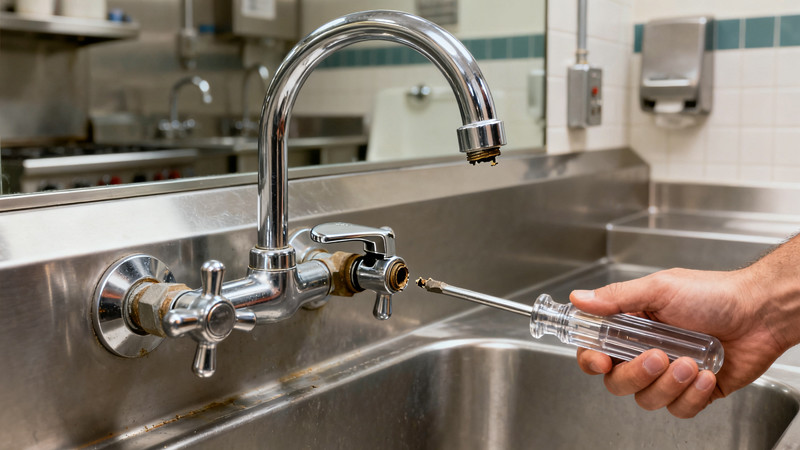
Commercial faucets are built for durability, high-volume use, and long-term reliability. Yet even the strongest commercial-grade faucets can encounter wear and tear—especially on the handles. In busy environments like restaurants, hotels, hospitals, shopping centers, and office buildings, faucet handles are used hundreds or even thousands of times each day. Eventually, this heavy usage can lead to wobbling, stiffness, leaks around the handle base, or complete handle failure. When this happens, immediate repair is essential to keep operations running smoothly and avoid further plumbing damage.
This comprehensive guide explains the most common types of commercial faucet handle damage, how to diagnose the issue, and the step-by-step repair methods you can use to restore proper function.
Common Types of Commercial Faucet Handle Damage
Before jumping into repair steps, it’s important to understand the types of damage you may encounter. Commercial faucet handle issues usually fall into these categories:
1. Loose or Wobbly Handles
Over time, handle screws and mounting hardware loosen due to repeated use. Wobbly handles can eventually damage the faucet cartridge or stem.
2. Stiff or Hard-to-Turn Handles
Accumulated mineral deposits, worn cartridges, or internal friction can cause the handle to feel rigid or grind when turned.
3. Leaking Around the Handle Base
Seals, O-rings, or cartridges may be worn or cracked, allowing water to escape from the handle area.
4. Broken Handle Components
Commercial handles made of metal or ABS plastic can crack, strip, or break entirely—especially in high-traffic environments.
5. Misaligned Handles
The handle no longer points in the correct direction or moves past its intended stopping point, often due to loose hardware or a damaged cartridge stem.
By identifying the type of damage early, you can prevent costly repairs later.
Tools You’ll Need for Most Repairs
Most commercial faucet handle repairs can be completed with basic tools:
- Allen wrenches or hex keys
- Screwdrivers (Phillips and flathead)
- Adjustable wrench
- Basin wrench (for tight spaces)
- Plumber’s grease
- Replacement O-rings or cartridges
- Descaling solution
- Clean cloths
Having these tools ready will make the repair process much smoother and quicker.
Step-by-Step Guide to Repairing Commercial Faucet Handle Damage
Below are the most effective methods for repairing each type of handle issue.
1. Fixing Loose or Wobbly Handles
This is the most common and easiest commercial handle problem to fix.
Step 1: Turn off the water supply
Use the shutoff valves under the sink. If there are no shutoff valves, you may need to disable water for the entire building zone.
Step 2: Remove the handle
Most commercial faucets have a set screw on the side or under the handle. Use an Allen wrench to remove it.
Step 3: Tighten the handle screw or nut
Once the handle is off, you’ll see the mounting screw or nut that secures the handle to the cartridge or stem. Tighten it firmly—but avoid overtightening to prevent damage.
Step 4: Reassemble and test
Reattach the handle, tighten the set screw, and test for stability. If the handle still wobbles, the cartridge may be worn and require replacement.
2. Repairing Stiff or Hard-to-Turn Handles
Stiffness in commercial faucets usually comes from mineral buildup or a failing cartridge.
Step 1: Remove the handle and access the cartridge
Detach the handle and the decorative collar (if present) to expose the cartridge or valve stem.
Step 2: Inspect for limescale buildup
Hard water minerals accumulate in commercial settings, especially in restaurants and hotels. Use descaling solution to remove buildup.
Step 3: Lubricate the cartridge
Apply plumber’s grease to moving parts to restore smooth motion.
Step 4: Replace the cartridge if needed
If the cartridge is cracked, stiff, or leaking, replace it with a manufacturer-approved part.
3. Fixing Leaks Around the Handle Base
Water leaking from the handle base is a sign of worn internal seals.
Step 1: Disassemble the handle
Remove the handle and trim pieces to access the internal valve assembly.
Step 2: Replace worn O-rings
Inspect O-rings for dryness, cracking, or flattening. Replace them with the exact size specified by the manufacturer.
Step 3: Re-grease and reassemble
Coat new O-rings in plumber’s grease and reinstall everything securely.
Step 4: Test for leaks
Turn on the water and check if the leak persists. If so, the cartridge may also need replacement.
4. Replacing Broken Handle Components
Commercial environments often face abusive use, which can crack or strip handles.
Step 1: Identify the broken part
Common break points include the handle base, set screw threads, or stem connection.
Step 2: Remove the faulty component
Handle bases and levers often detach with a small screw or hex bolt.
Step 3: Install the replacement handle
Use a genuine, commercial-rated replacement part. Low-quality substitutes may fail quickly.
Step 4: Secure firmly
Make sure all screws and bolts are fully tightened to ensure long-lasting performance.
5. Correcting Misaligned Handles
Misaligned handles are more than a cosmetic issue—they indicate looseness or internal wear.
Step 1: Remove the handle
Loosen the set screw to detach it.
Step 2: Align the handle with the cartridge stem
The stem may have a flat surface or spline that must match the handle’s grip pattern.
Step 3: Reset the handle orientation
Reattach the handle in its proper directional position.
Step 4: Tighten and test
If alignment drifts again, the cartridge stem may be worn and require replacement.
When to Replace Instead of Repair
Commercial faucets are engineered for longevity, but some signs indicate replacement is a better option:
-
- The faucet leaks even after replacing O-rings or cartridges
- Handle damage recurs frequently
- Components inside the faucet body are stripped or corroded
- The faucet is older and replacement parts are difficult to find
- Repair downtime disrupts operations
Sometimes installing a new handle or entire faucet is more cost-effective than repeated repairs.
Preventing Future Handle Damage
A few simple maintenance habits can greatly extend the lifespan of commercial faucet handles:
- Train staff to avoid excessive force when turning handles
- Perform quarterly inspections, especially in high-traffic facilities
- Replace O-rings and cartridges as preventive maintenance
- Use only certified commercial replacement parts
- Install water softeners in high-mineral regions
Preventive care ensures smoother operation, reduced downtime, and fewer emergency repairs.
Final Thoughts
Commercial faucet handle damage is common but highly manageable with the right tools and techniques. Whether the problem is looseness, stiffness, leakage, misalignment, or breakage, most repairs can be performed quickly and affordably. By understanding the causes and applying the appropriate fixes, you can keep your commercial facility running efficiently and protect your plumbing system from further wear.\n
Related Guides
\n
- \n
- Fixed: How to Tighten A Loose Kitchen Faucet Base
- How Do I Fix a Leaky Faucet Cartridge Handle Myself in Under an Hour?
- When Your Faucet Handle Spins Without Resistance: Causes, Fixes, and Prevention
\n
\n
\n
\n