 WOWOW Faucets

A standard bathtub holds about 40 to 50 gallons (roughly 150 to 190 liters) of water when filled to a comfortable bathing level, and close to 60 gallons if filled all the way to the overflow drain. Larger soaking, freestanding, and garden tubs hold far more — anywhere from 60 to well over 100 gallons. In short, how much water a bathtub holds depends on its size, shape, and depth. How many gallons can a bathtub hold? Let’s dive into the details and explore how many gallons a typical bathtub can hold and the factors that influence this capacity.
Standard Bathtub Sizes
The most common bathtubs found in homes are standard or alcove bathtubs. These tubs are typically 60 inches long, 30 inches wide, and 14 to 16 inches deep. On average, a standard bathtub can hold about 40 to 50 gallons of water when filled to a normal bathing level, and up to roughly 60 gallons when filled to the overflow drain. However, this figure can vary slightly depending on the exact dimensions and the design of the tub.
For a more specific example, let’s consider a standard bathtub with the following dimensions:
- Length: 60 inches
- Width: 30 inches
- Depth: 15 inches
Using these dimensions, you can calculate the volume in cubic inches: Volume=Length×Width×DepthVolume = Length times Width times Depth Volume=60×30×15=27,000 cubic inchesVolume = 60 times 30 times 15 = 27,000 text{ cubic inches}
To convert cubic inches to gallons, you divide by 231 (since there are 231 cubic inches in a gallon): Volume(ingallons)=27,000231≈116.88 gallonsVolume (in gallons) = frac{27,000}{231} approx 116.88 text{ gallons}
This calculation gives a theoretical maximum capacity if the tub were a perfect rectangular box filled to the absolute top. In reality, tubs have sloped, rounded, and tapered sides, so usable volume is much lower. Because bathtubs are also rarely filled to the brim — to prevent overflow when a person gets in — the practical capacity is usually about 60% of this volume. Therefore, the practical water holding capacity is approximately: PracticalVolume=116.88×0.6≈70 gallonsPractical Volume = 116.88 times 0.6 approx 70 text{ gallons}
However, it’s important to remember that real-world usage often means the tub is filled to around 60-70% of its full capacity to account for displacement by the person bathing and to avoid overflow. For a typical standard tub, that works out to the familiar 40 to 50 gallons per bath.
How Much Water Does a Bathtub Hold?
A standard bathtub holds about 40 to 50 gallons of water at a comfortable bathing level, and roughly 60 gallons when filled all the way to the overflow drain. A smaller or shallower tub may hold closer to 30 to 40 gallons, while deep soaking and freestanding tubs commonly hold 60 to 100+ gallons. The actual water you use for a single bath is usually less than the tub’s full capacity, since your body displaces water and most people stop filling well below the rim.
Factors Influencing Bathtub Capacity
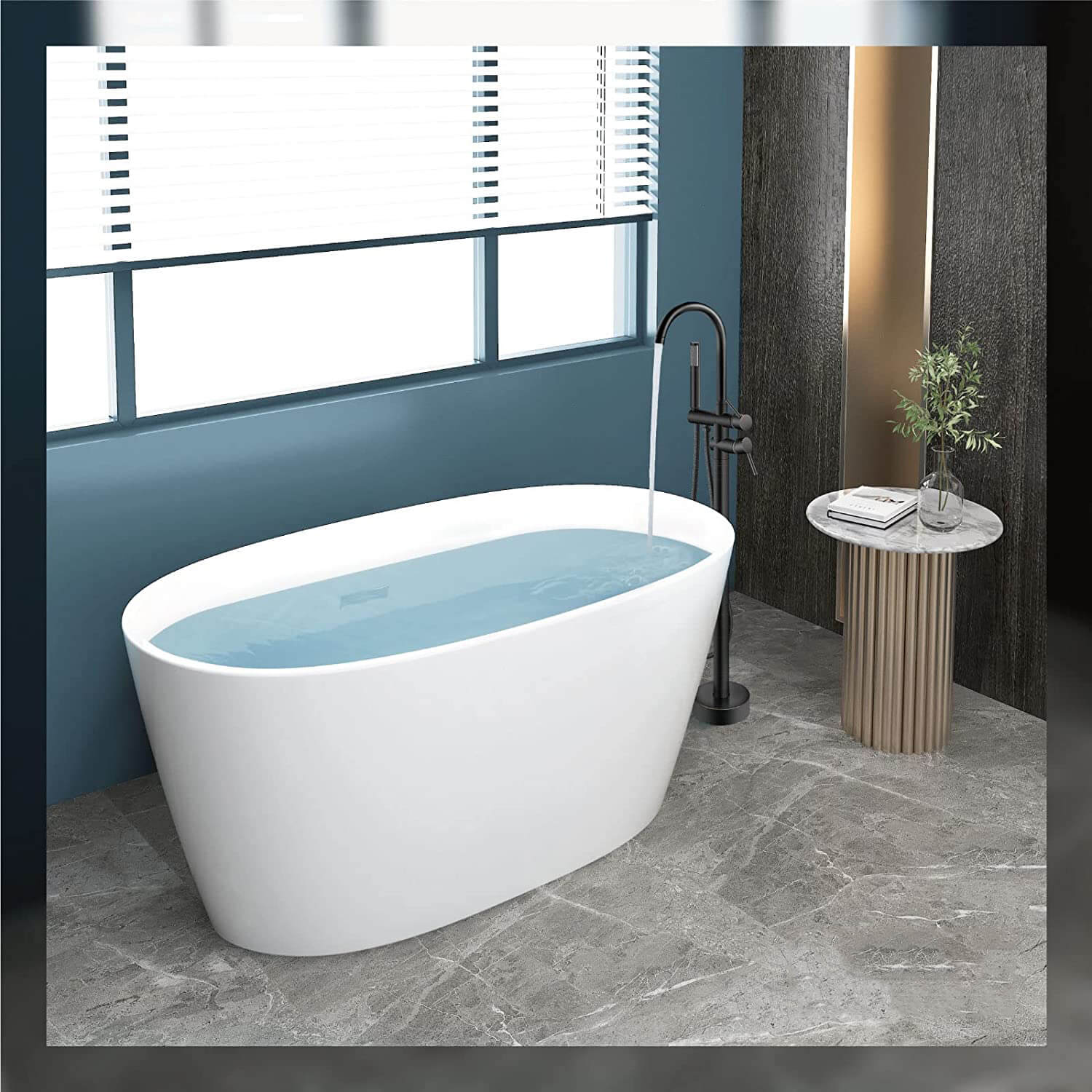
Several factors influence how many gallons a bathtub can hold:
- Shape and Design: The shape and contour of the bathtub significantly affect its capacity. For example, a clawfoot tub or a soaking tub, which often have more rounded and deeper designs, can hold more water than a standard rectangular tub.
- Depth: The depth of the tub is a major factor. Soaking tubs and Japanese-style bathtubs are designed to be deeper, allowing for a full-body soak, and they can hold between 60 to 80 gallons of water or more.
- Size: Larger bathtubs, such as garden tubs or whirlpool tubs, can hold considerably more water. These can range from 70 gallons to over 100 gallons, depending on their dimensions.
- Installation Style: The way a bathtub is installed can also play a role. For instance, drop-in or freestanding bathtubs often have different capacities compared to built-in or alcove tubs due to varying shapes and designs.
Examples of Different Bathtub Capacities
To provide a clearer picture, let’s look at some examples of different types of bathtubs and their typical capacities:
- Standard Alcove Tub: As mentioned, these tubs generally hold between 40 to 50 gallons when filled to a practical level.
- Soaking Tub: These deeper tubs, designed for a more immersive experience, usually hold between 60 to 80 gallons of water.
- Clawfoot Tub: Known for their elegant design and depth, clawfoot tubs typically hold around 60 to 70 gallons.
- Corner Tub: Often larger and more spacious, corner tubs can hold between 60 to 100 gallons or more, depending on their specific dimensions.
- Whirlpool Tub: Equipped with jets and often larger in size, these tubs can hold anywhere from 70 to 120 gallons.
Water Usage and Conservation
Understanding the capacity of your bathtub is not only important for enjoying a comfortable soak but also for managing water usage. Bathtubs can be significant consumers of water, and being mindful of how much water you use can help with conservation efforts. For instance, filling a standard bathtub to half its capacity uses approximately 20 to 25 gallons of water. By being conscious of this, you can make efforts to reduce water waste.
How Many Liters Are in a Bath?
An average bath uses about 80 to 120 liters of water (roughly 21 to 32 gallons). A standard bathtub filled to a comfortable bathing level holds about 150 to 190 liters (40 to 50 gallons), and a full standard tub filled to the overflow drain holds close to 220 liters.
The conversion is simple: 1 US gallon equals about 3.785 liters. So to turn any gallon figure into liters, multiply by 3.785. A few common examples:
- Half-full standard tub (about 20-25 gallons): roughly 75 to 95 liters
- Standard alcove tub at bathing level (40-50 gallons): roughly 150 to 190 liters
- Soaking tub (60-80 gallons): roughly 225 to 300 liters
- Freestanding or garden tub (80-120 gallons): roughly 300 to 455 liters
Most people in the US and UK don’t fill a tub to the top, so a real-world bath usually lands in the 80 to 120 liter range once you account for the water your body displaces.
Practical Tips for Measuring Bathtub Capacity

If you’re curious about the exact capacity of your bathtub, here’s a simple method to measure it:
- Fill the Bathtub: Fill the tub to your typical bathing level.
- Use a Container: Use a container of known volume (like a gallon jug) to remove water from the tub.
- Count the Containers: Count how many containers it takes to empty the tub to estimate its capacity.
This method gives you a practical measurement of how much water you use for a typical bath, helping you manage your water usage more effectively.
Conclusion: How Many Gallons Can A Bathtub Hold
The capacity of a bathtub can vary widely based on its size, shape, and design, but most standard bathtubs hold between 40 to 50 gallons of water (about 150 to 190 liters). Larger and deeper tubs can hold significantly more. Knowing the capacity of your bathtub is useful for water conservation and enhancing your bathing experience. By understanding and measuring the water usage, you can take steps to enjoy a relaxing bath while being mindful of the environment.n
Average Bathtub Capacity: How Many Gallons Does a Standard Tub Hold?
The average bathtub capacity is between 40 and 60 gallons. A standard alcove bathtub typically holds about 42 to 58 gallons of water when filled to the overflow drain, while a smaller or shallower tub may hold closer to 30 to 40 gallons.
Average bathtub capacity in gallons depends on the tub style:
- Standard alcove tub: 42-58 gallons
- Soaking tub: 60-80 gallons
- Freestanding or Japanese soaking tub: 70-100+ gallons
- Garden tub: 80-120 gallons
Keep in mind that the actual amount of water used is usually less than the tub’s full capacity, because a person displaces some water and most people do not fill the tub completely to the overflow drain.
Related Guides
n
- n
- From Soaking to Spa: Exploring Different Bathtub Types
- Drop-In vs Alcove Tub: What Are the Differences?
- What Is a Bathtub Faucet Set 3 Handle, and Should You Still Buy One in 2026?
n
n
n
n